Church of the Assumption in Biestrzykowice: A Timber Parish Church
Site at a Glance
- Popularity
- Very Low
- Country
- Poland
- Primary era
- Early Modern
- Eras represented
- Early Modern, Modern
- Civilizations
- Holy Roman Empire, Kingdom of Prussia
- Site type
- Religious
- Remains
- Church
On this page10 sections
History
The Church of the Assumption in Biestrzykowice is a timber church in Poland, completed in 1639. It initially served Protestant worship and became a Catholic church in 1654. Today it is a Roman Catholic parish church dedicated to the Assumption of the Blessed Virgin Mary, the Catholic belief that Mary was taken into heaven. The feast is celebrated on August 15. The parish belongs to the Namysłów West deanery, a regional grouping of parishes, and the Archdiocese of Wrocław, an ecclesiastical jurisdiction headed by an archbishop.
Changes and repairs
The church’s original wooden tower was dismantled in 1838, and a masonry tower replaced it the following year. Repairs took place in 1888 and 1915.
A fire during the night of October 20–21, 1991, destroyed the roof and part of the interior furnishings. Repairs followed in 1993, when Cardinal Henryk Gulbinowicz, then Archbishop of Wrocław, reconsecrated the church.
Remains
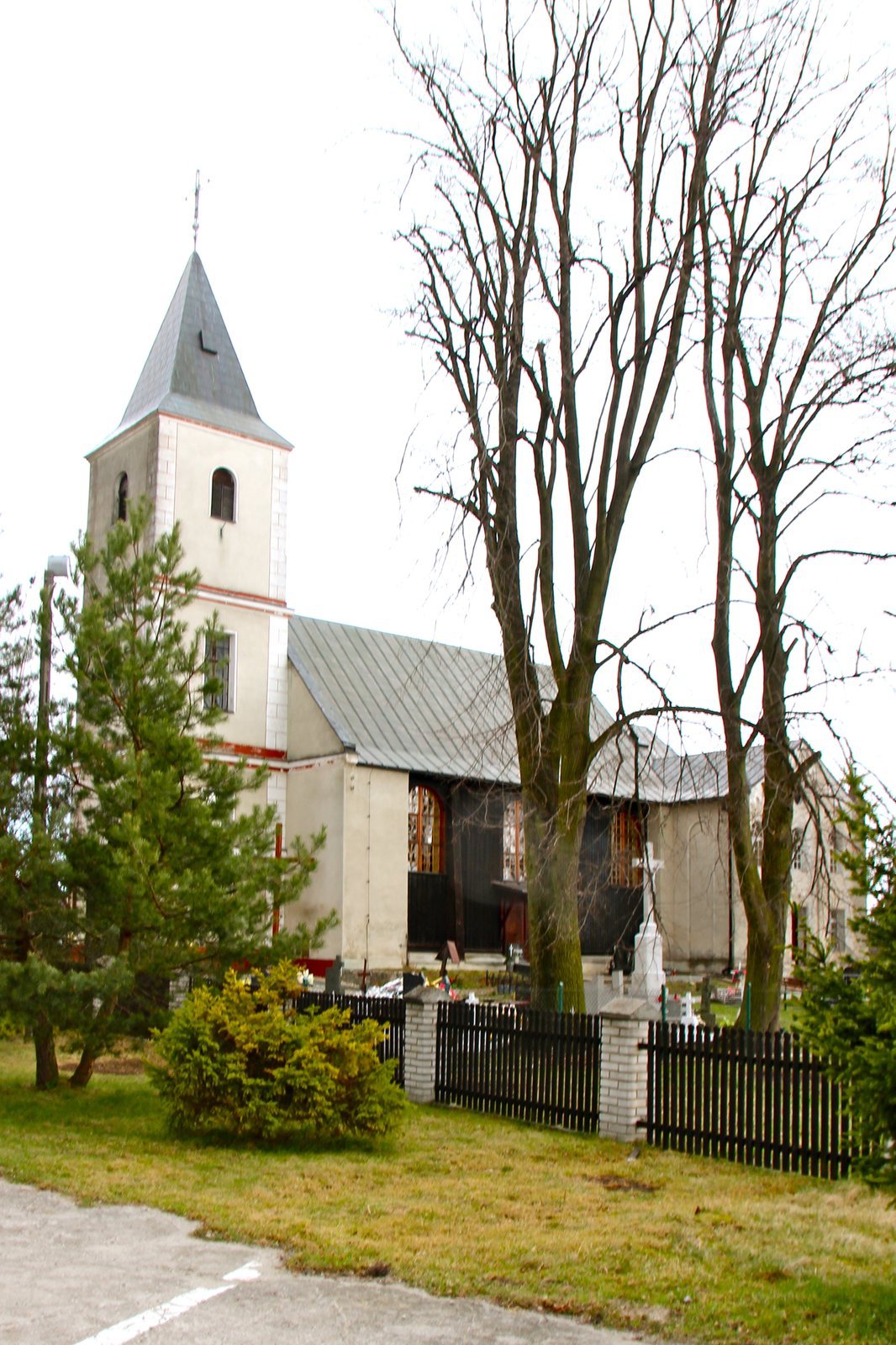
The church is an east-oriented timber building, with its sanctuary end facing east. Its frame uses upright posts and horizontal members. The plan has one main nave and a smaller chancel, the sanctuary end of the church, which closes on three sides.
Structure and exterior
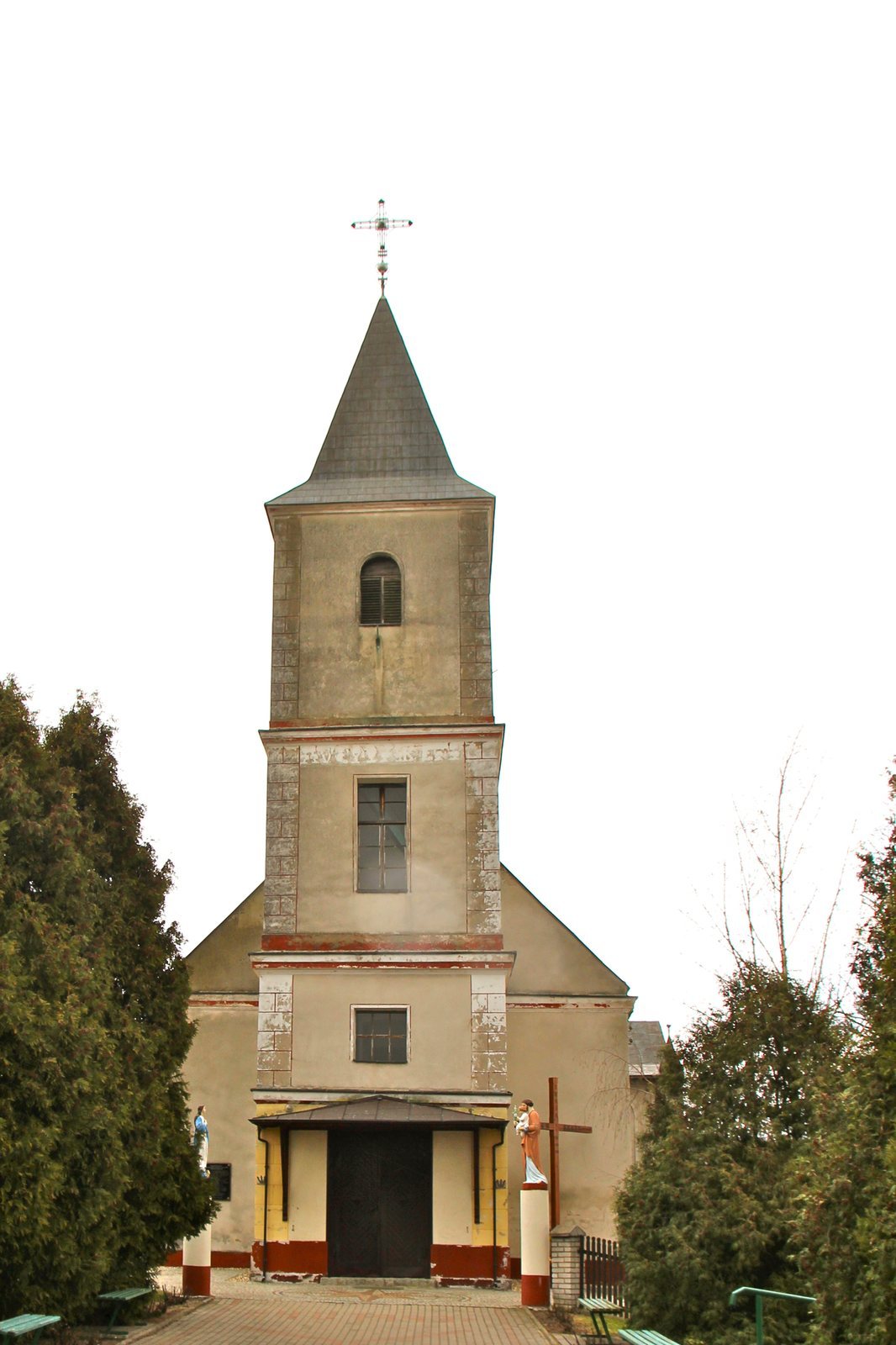
A two-storey masonry sacristy, a room for clergy and church objects, adjoins the chancel on one side. At the front stands a square-plan masonry tower with a pyramidal sheet-metal roof. The church roof is also sheet-metal covered and has two ridges.
Interior and furnishings
Interior finish
The interior has plastered walls, a flat ceiling, and three altars. Leszczyński created a multicolored painted decoration in 1918; it has since been destroyed.
Historic furnishings
The choir loft holds an 18th-century Baroque organ case, the decorative housing for an organ’s pipes and mechanism. Baroque was a European artistic and architectural style prominent in the 17th and 18th centuries. The pulpit dates to the mid-17th century, and the baptismal font to the mid-18th century.
Memorials and figures
Tomb slab
A surviving tomb slab dated 1611 commemorates Ewa Poser. It carries a raised likeness of her and four ornamental frames containing coats of arms. Her son, Daniel Poser, commissioned the slab.
Figures before the church
Figures of the Virgin Mary, the mother of Jesus, and Saint Joseph, traditionally regarded as Jesus’s earthly guardian, stand on columns in front of the church.