Saint Martin Church in Strzelce: A Gothic Parish Church in Poland
Site at a Glance
- Rating
- 5
- Popularity
- Very Low
- Country
- Poland
- Primary era
- Medieval
- Eras represented
- Medieval, Early Modern, Modern
- Civilizations
- German, Holy Roman Empire
- Site type
- Religious
- Remains
- Church
On this page11 sections
History
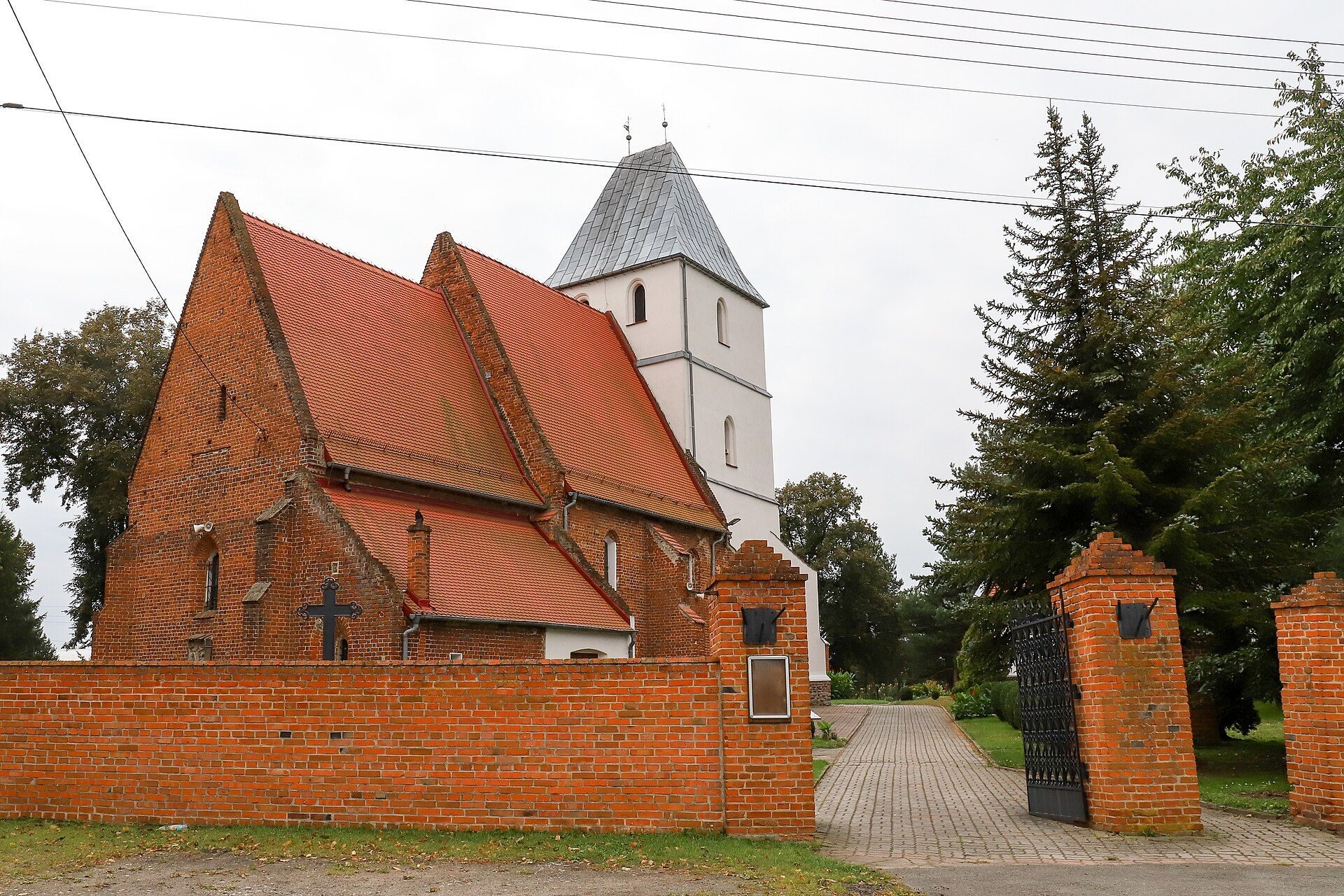
Saint Martin Church in Strzelce is a Roman Catholic parish church in Poland, dedicated to the Nativity of the Virgin Mary and Saint Martin. A Gothic building whose origins reach back to the late thirteenth century, it remains in use as the parish church of the same dedication in the eastern Namysłów deanery of the Archdiocese of Wrocław.
Medieval origins
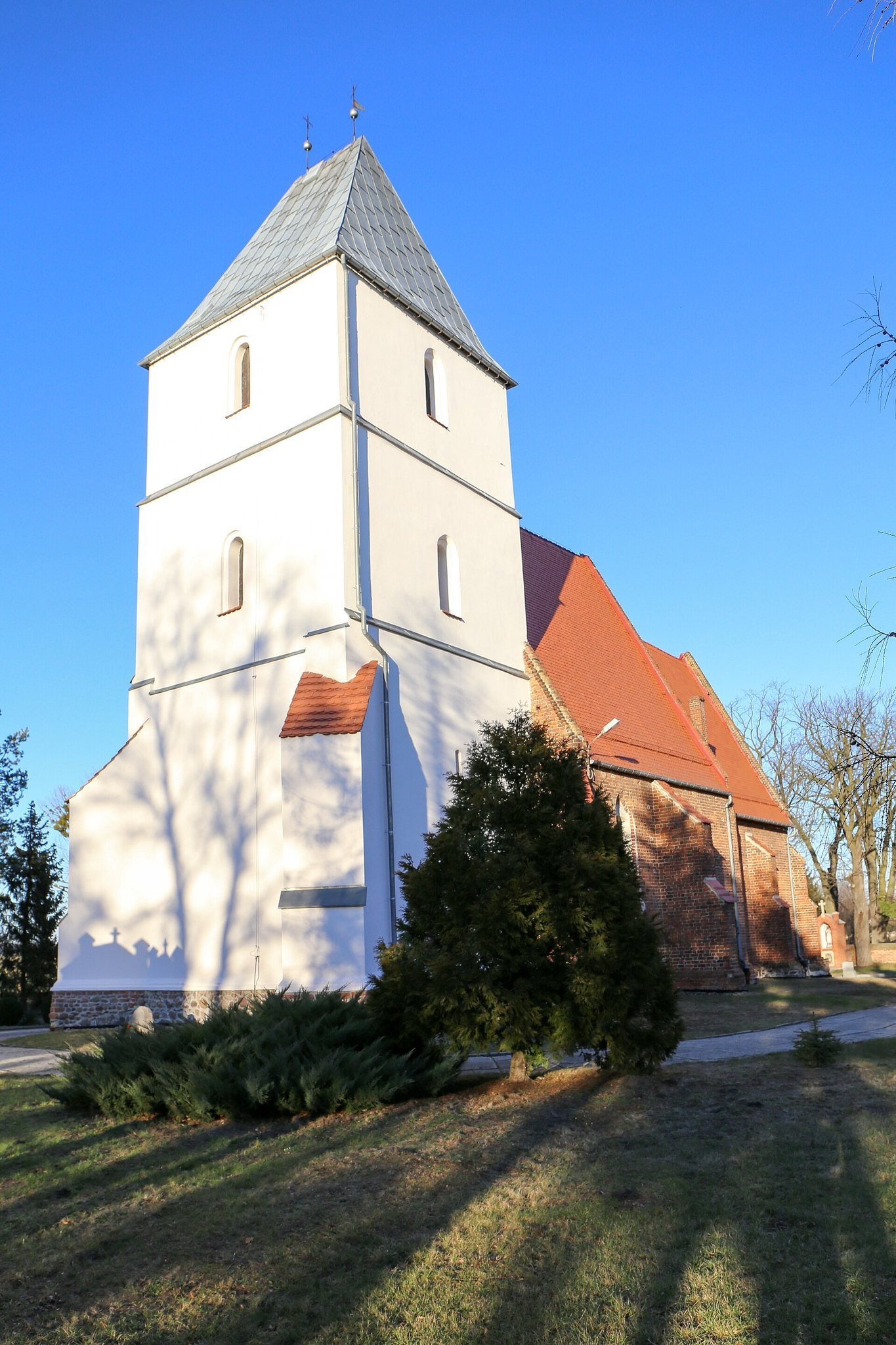
A church at Strzelce was first mentioned in 1326. The earliest building dates from the late thirteenth century. During the fourteenth century, a stone chancel, the part of a church traditionally reserved for the altar and clergy, was added to a presumably wooden predecessor. The nave and its stone vaulting followed in the fifteenth century, and a quadrangular tower was added around 1500, at the turn of the fifteenth and sixteenth centuries.
Changes in religious use
In the seventeenth century, the church passed to Protestant use through the agency of the Frankenberg family. Its earlier dedication was to Saint Martin. The church’s present dedication also commemorates the Nativity of the Virgin Mary, with liturgical commemorations held on 8 September and 11 November.
Fire, rebuilding, and conservation
A late-nineteenth-century fire destroyed, among other elements, the earlier painted decoration. The church was rebuilt and renewed between 1874 and 1877, and its interior was comprehensively refurbished in the nineteenth century with Neo-Gothic furnishings. Neo-Gothic refers to the nineteenth-century revival of Gothic architectural and decorative forms. Major renovation work followed in 1923, while conservation of the furnishings and surroundings has continued successively for several years.
The church was entered in the register of monuments of the Opole Voivodeship on 26 May 1964 under number 906/64. It continues to serve as a parish church.
Remains
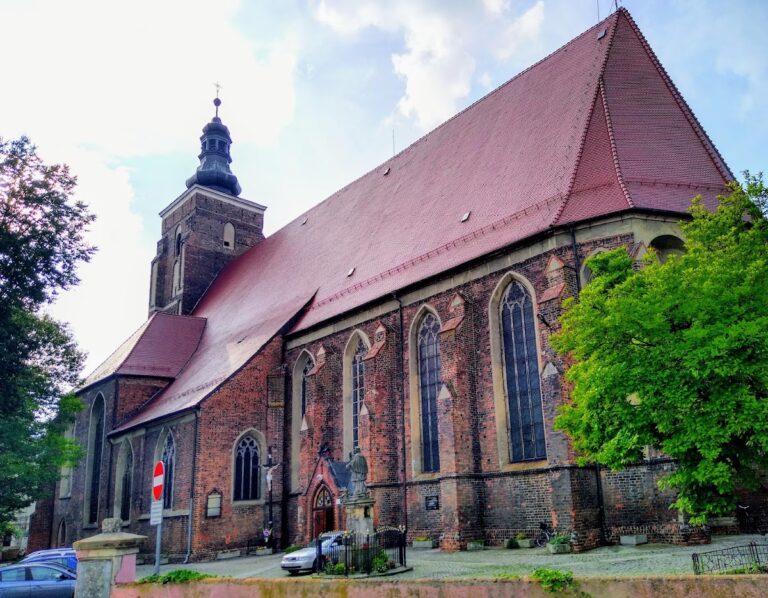
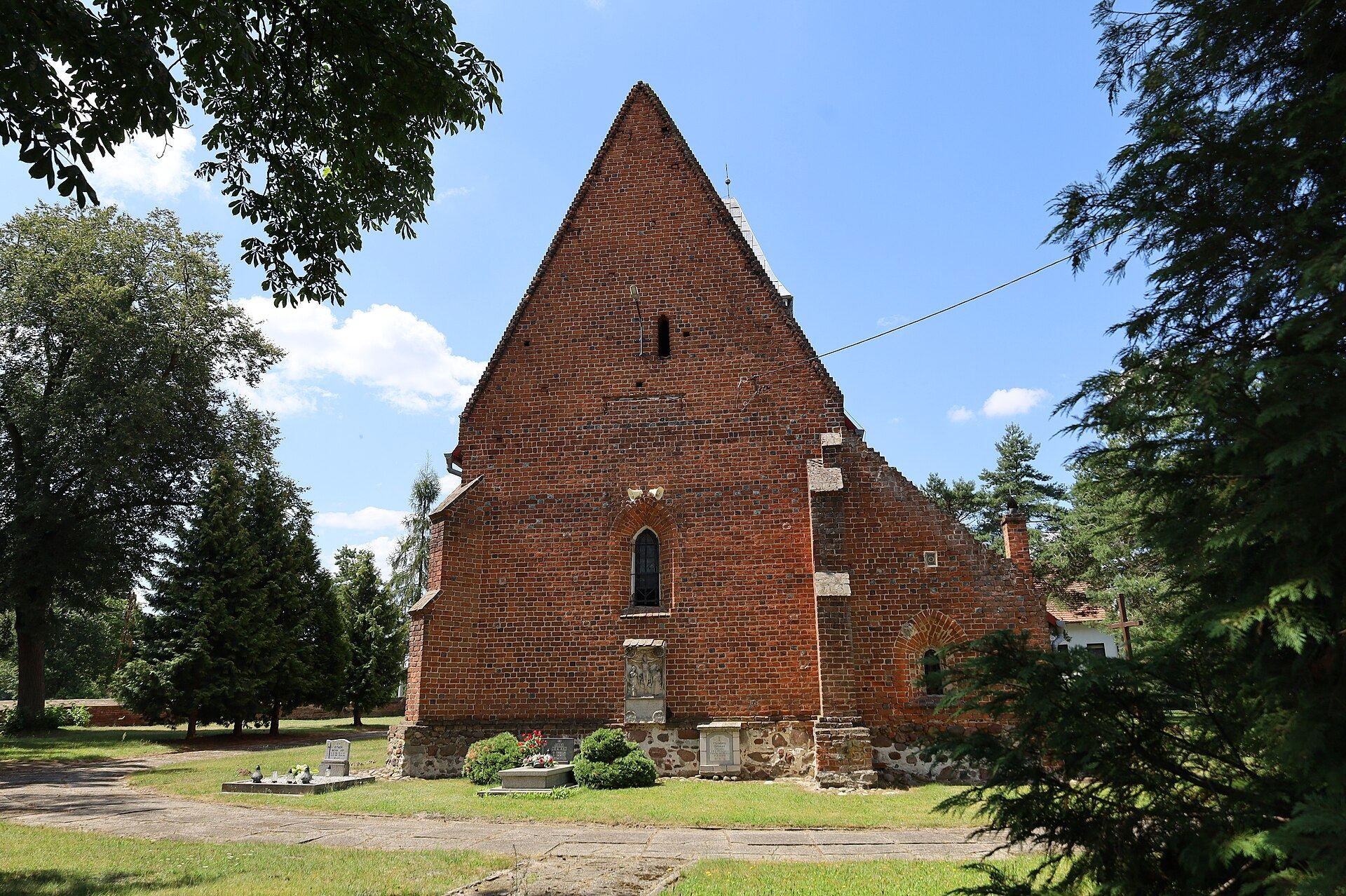
The surviving church is an oriented, buttressed brick building, aligned according to the traditional eastward liturgical orientation and partly resting on a stone base. Its plan consists of a two-bay rectangular nave, a slightly narrower and lower two-bay chancel, a northern sacristy with a porch, and a quadrangular tower. Pointed-arch window openings articulate the elevations. The church is a single-nave Gothic building with one tower and one altar, with a stated capacity of 1,232 worshippers.
Exterior and churchyard
Church structure
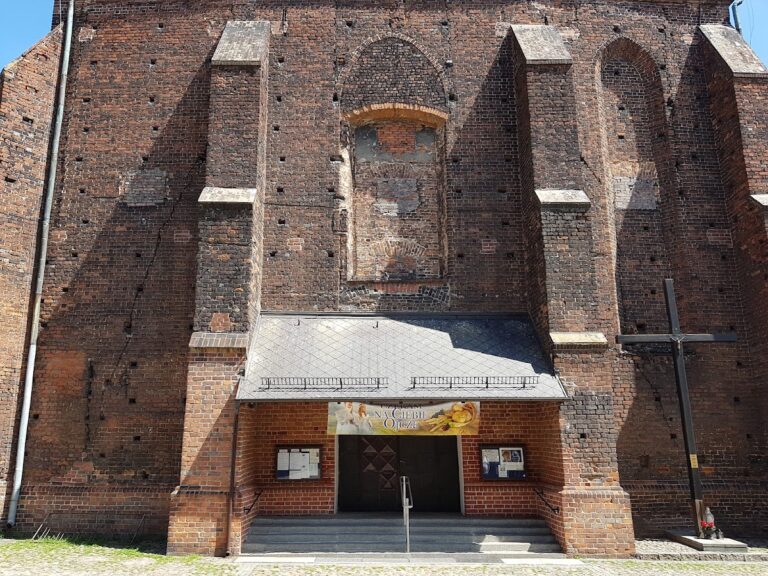
The chancel is covered by a gabled roof and has a cross-ribbed vault, a masonry ceiling carried by intersecting ribs with supports at the corners. The nave has a flat coffered ceiling divided into recessed panels. The sacristy and porch share one lean-to roof. The tower has distinct set-backs and contains the entrance in its lower section. Its doorway retains sixteenth-century doors with metal fittings.
Churchyard and commemorative monument
A partly plastered brick wall encloses the churchyard, where Neo-Gothic chapels stand near the church. A rectory is also situated nearby. Mounted on the chancel façade is a Renaissance epitaph to Adam von Prittwitz-Gaffron. An epitaph is a commemorative monument or inscription for a deceased person. This one includes a relief of the Crucifixion, coats of arms, and an inscription.
Interior furnishings
Main altar and organ gallery
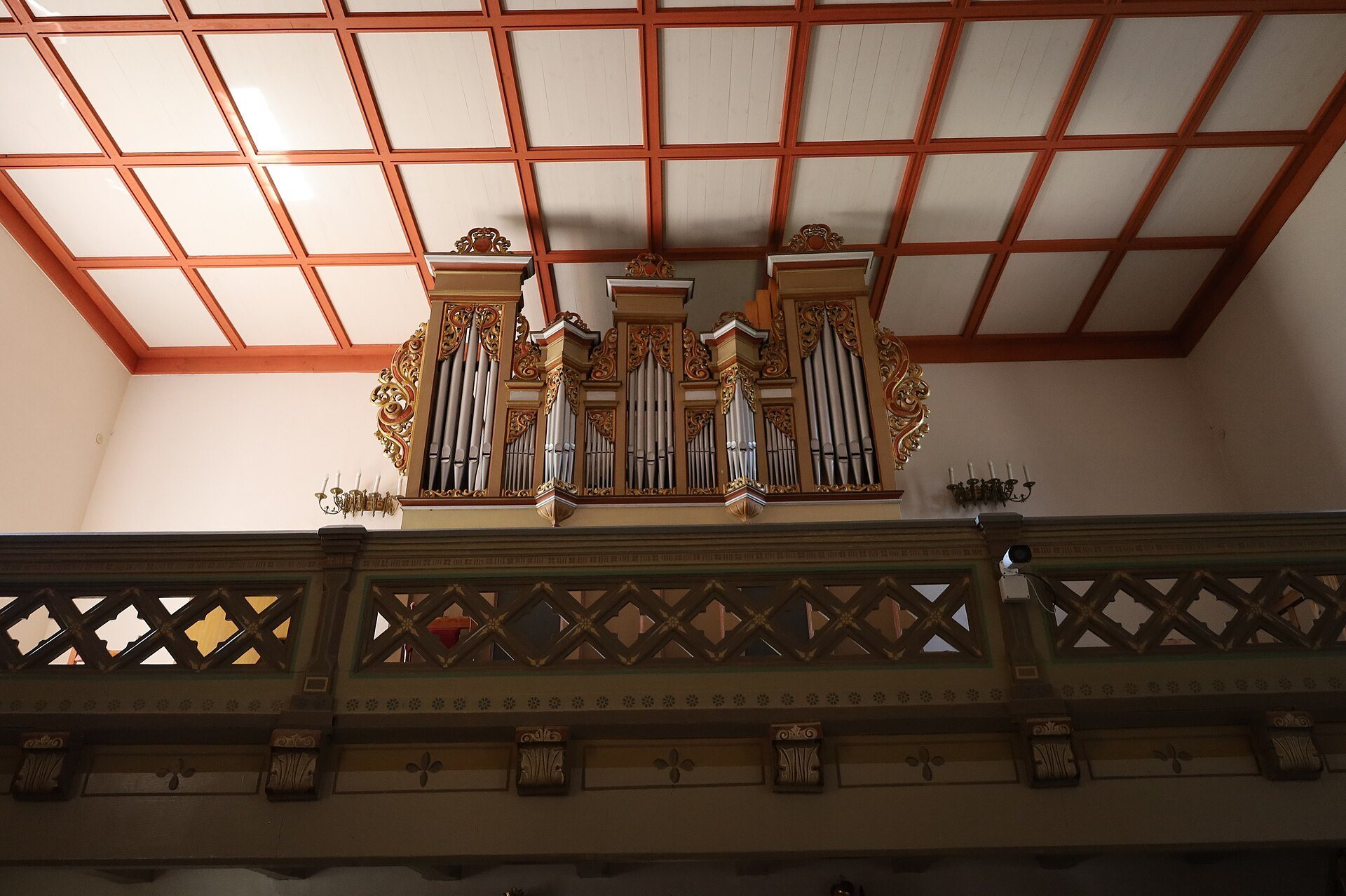
The Neo-Gothic main altar was made between 1874 and 1880. It incorporates six reliefs of apostles from a Late Gothic triptych, a three-part altarpiece, and also includes figures of the Virgin and Child, Saint Catherine, and Saint Barbara. The nineteenth-century organ gallery has an openwork balustrade and supports the organ case, the visible housing of a pipe organ.
Sculptures and liturgical objects
The interior preserves a Gothic sculpture of Saint Anne with the Virgin and Child, together with a sculpture of Saint Nicholas. Late Gothic herms, sculptural figures or busts used as decorative supports, represent Saint Hedwig and Saint Margaret. A Neo-Gothic baptismal font incorporates a Baroque group depicting the Baptism of Christ. Figures of the Evangelists from a Baroque pulpit are also preserved, with the pulpit serving as the raised structure used for religious readings or sermons.