Church of Saint George in Old Luchniki in Moscow: A Russian Orthodox Church
Site at a Glance
- Popularity
- Low
- Country
- Russia
- Primary era
- Early Modern
- Eras represented
- Early Modern, Modern
- Civilizations
- Russian
- Site type
- Religious
- Remains
- Church
On this page11 sections
History
The Cow Yard and early church
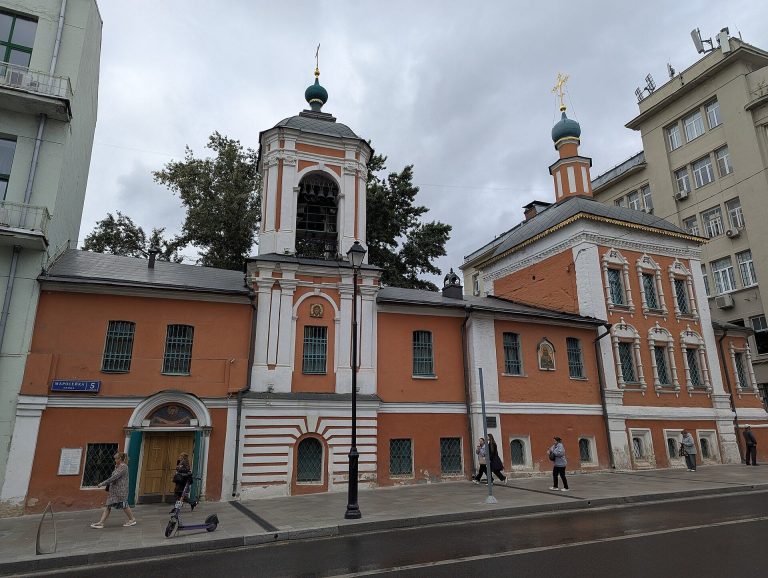
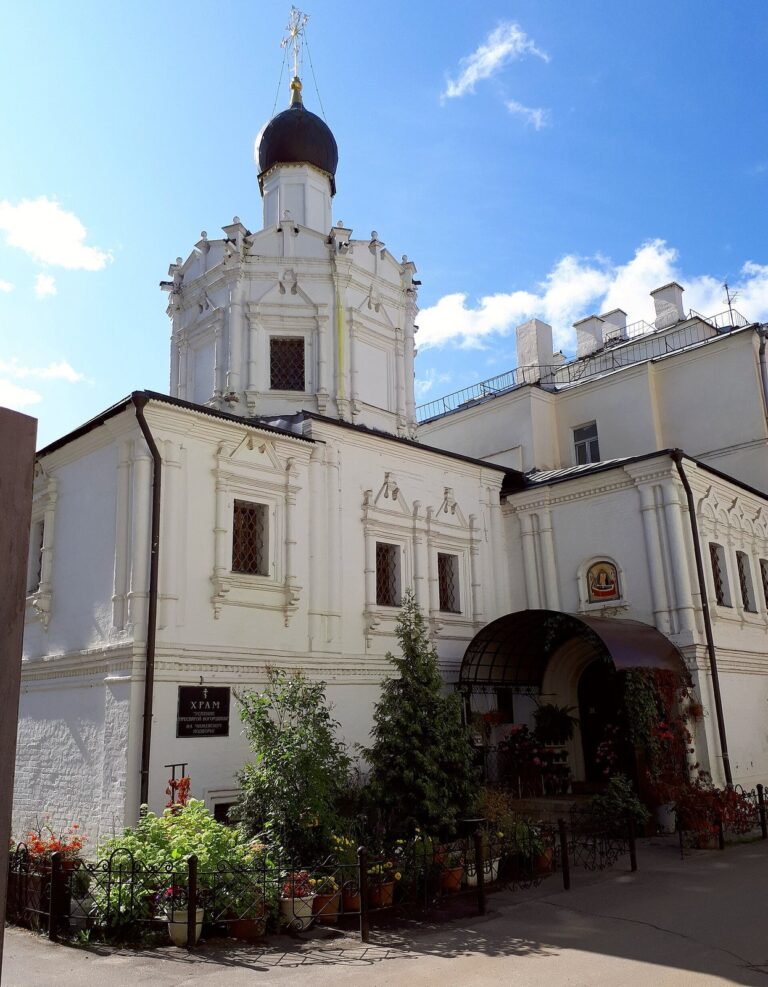
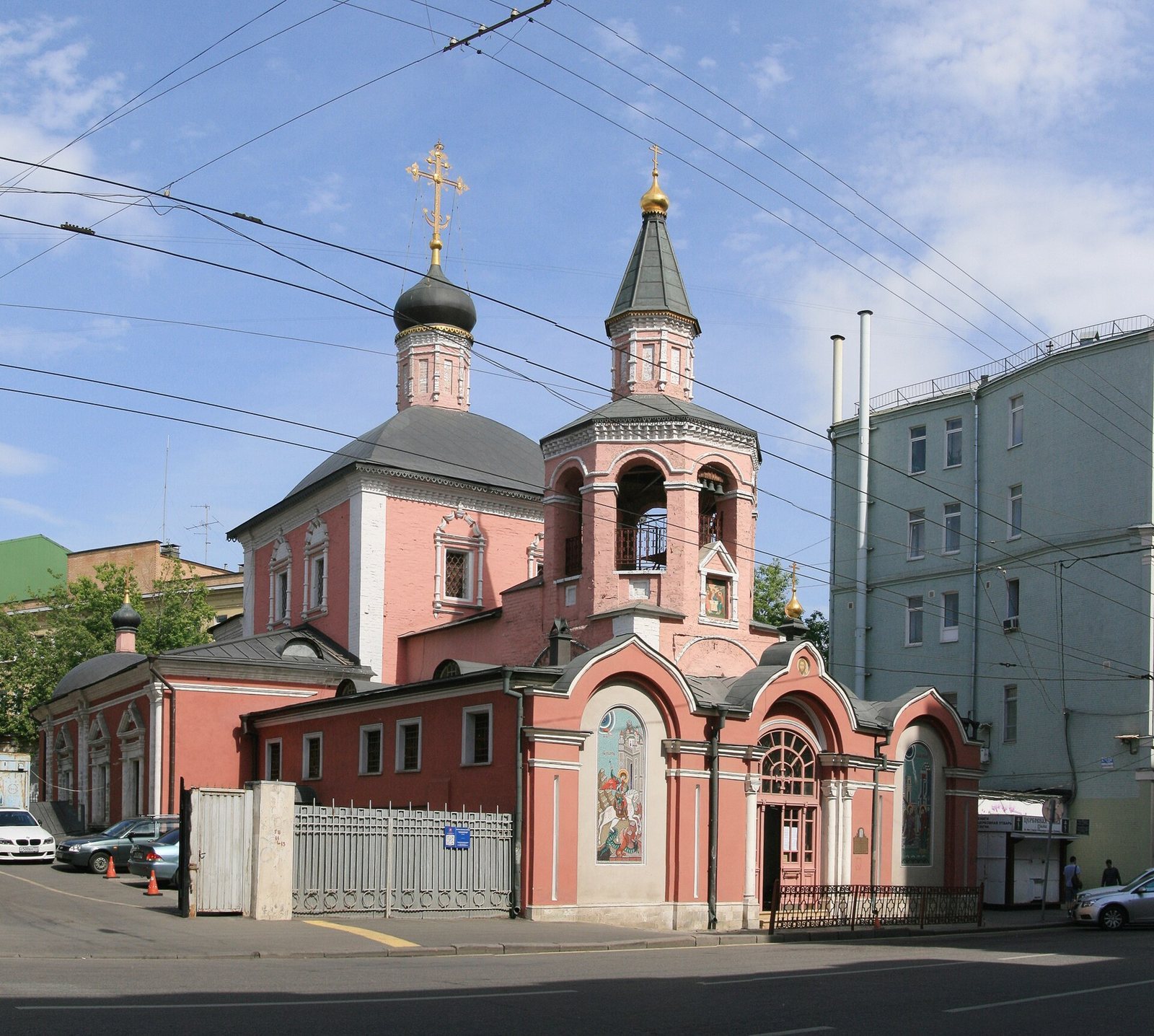
The Church of Saint George in Old Luchniki in Moscow, Russia, is a Russian Orthodox brick church whose eclectic design combines elements from different styles. A major building campaign in 1692–1694 shaped its development. Saint George, an early Christian martyr widely venerated in Eastern Orthodox Christianity, was regarded as a patron of cattle, linking the church with the nearby Cow Yard, a cattle market.
The church and Luchniki Lane take their name from a locality associated with bow-makers, although another explanation connects the name with onion sellers. A wooden church at the Cow Yard is first recorded in the 1460s. After the cattle market moved away from the city center, the area was also known as the Old Cow Yard, the Old Prison Yard, and Lubyanka. A stone church stood on the site by the early seventeenth century and was in place before 1657.
Rebuilding and later alterations
Merchant Gavrila Romanov financed a major building campaign in 1692–1694. In the nineteenth century, the church was damaged by the fire that swept through Moscow during the French occupation of 1812. Repairs and redecorating followed in 1825–1829, including new interior paintings.
Further nineteenth-century work rebuilt the altar end and added side chapels dedicated to Theodore of Sykeon and Nil Stolobensky, Orthodox saints associated with monastic life. A. K. Sadomov funded the Theodore chapel, while Aleksandra Mazurina funded the one dedicated to Nil. The surrounding gallery was removed around 1848–1862.
Closure, persecution, and restoration
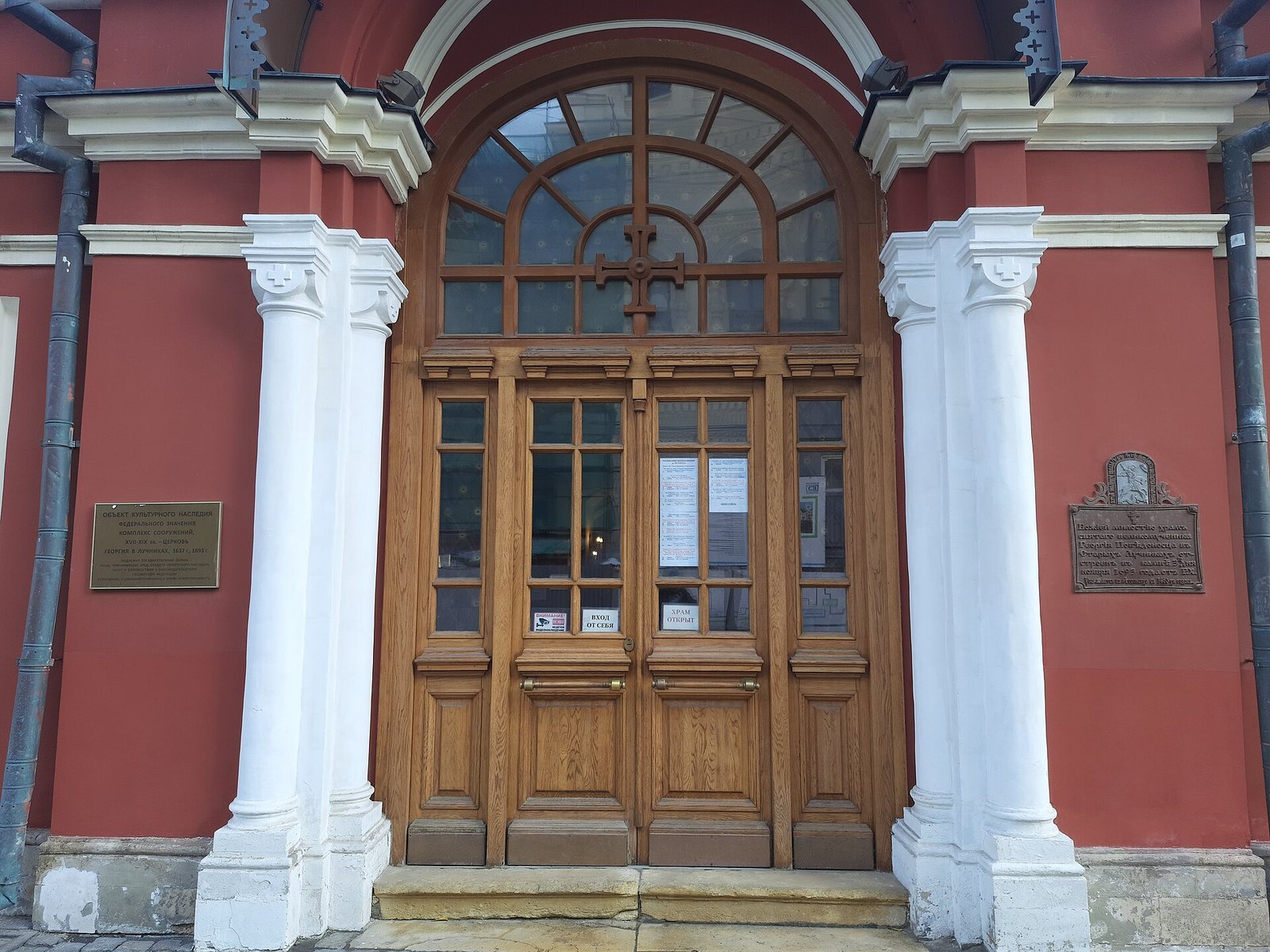
The church closed in 1932. The building first served as an NKVD dormitory and later housed a footwear factory for the KGB. Its conversion removed crosses, domes, and the bell tower’s tent roof, blocked the main entrance and cut a new one, and damaged exterior decoration. Wall paintings and icon screens were destroyed; new floors, an elevator, and toilets were installed, and the surrounding fence and gate were dismantled.
Vladimir Proferansov, the rector for about three decades and the last before the closure, was arrested and exiled, then shot at the Butovo firing range in 1937. In 2000, the Russian Orthodox Church canonized him among its New Martyrs and Confessors, Christians killed for their faith in the modern era. The church entered Russia’s cultural-heritage register in 1974 and holds federal-level heritage status. By the mid-1980s it had been abandoned and was in severe disrepair.
The Russian Orthodox Church recovered the building in 1993, when it was close to ruin, and restoration and reconstruction of its earlier appearance began. Services resumed at the Theodore side altar in 1996 and at the principal altar from 2001. The upper church was restored by 2001, the lower church’s main icon screen by 2005, and a north chapel dedicated to Proferansov by 2007; work on the other altars remained unfinished. The church is active and belongs to Moscow Diocese and the Epiphany Deanery, a grouping of parishes.
Remains
Building and bell tower
Main church
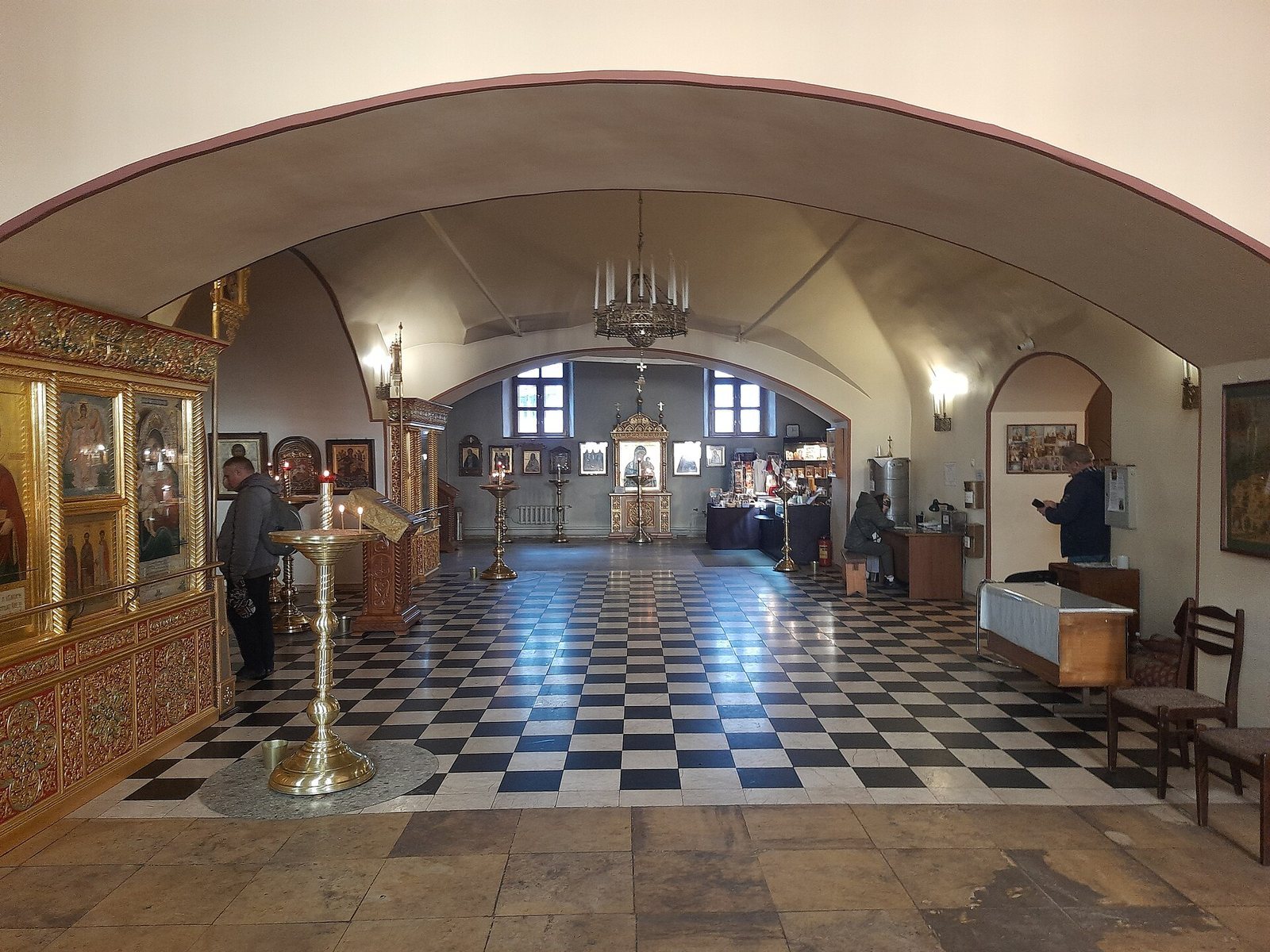
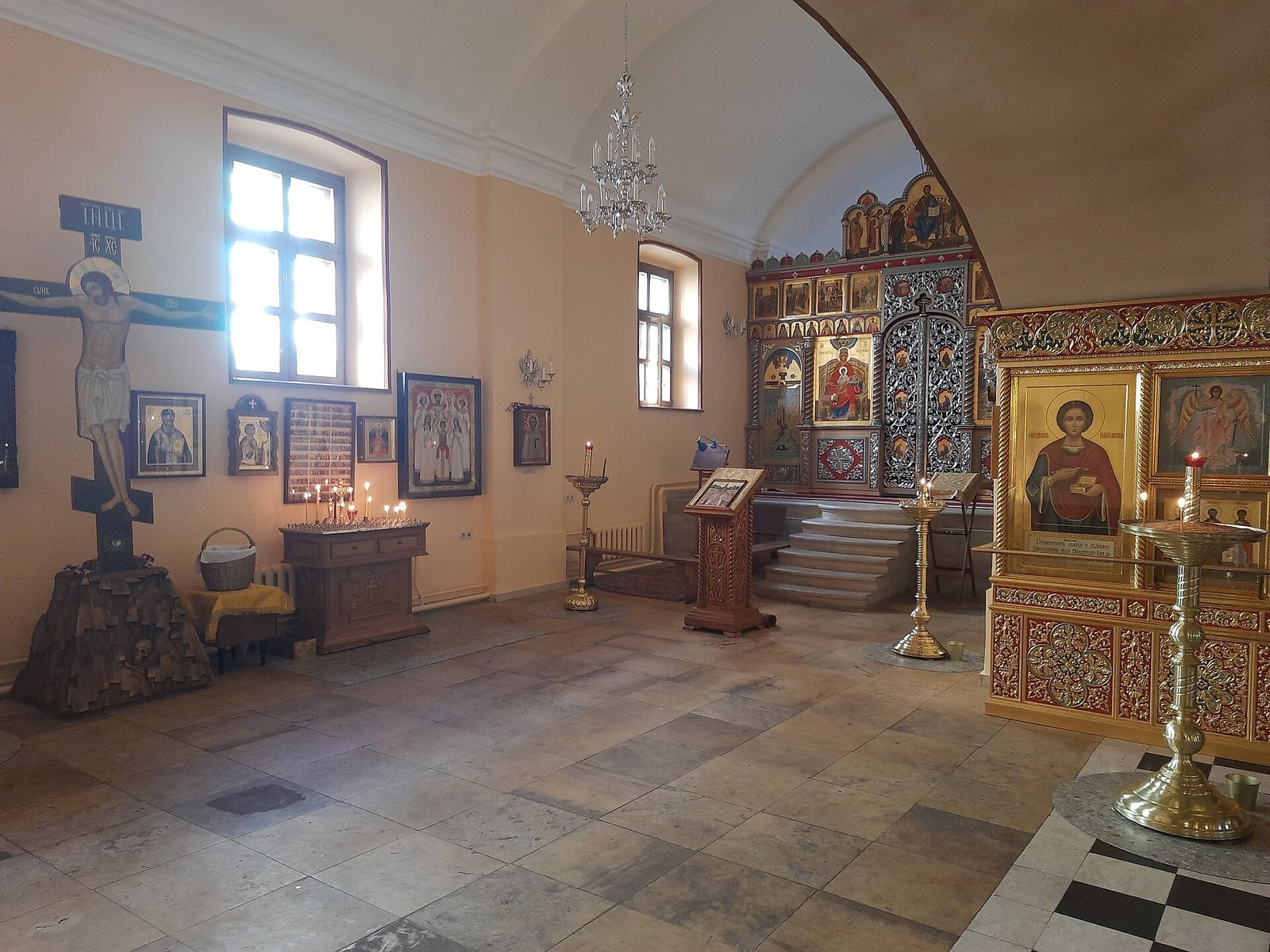
The brick church’s main block has two levels and a square plan, with five domes above it. A refectory, or communal dining hall, and a two-tier bell tower form part of the building group. The interior is arranged in two naves, or lengthwise sections, and has two icon screens, called iconostases, separating the sanctuary from the main worship space. The church’s upper level is dedicated to the Annunciation, and the lower one to Saint George.
Bell tower and gallery
The bell tower’s upper level is octagonal, with an arch opening on each of its eight sides. It was topped by a steep, pointed tent roof over an umbrella vault, whose curved sections spread outward from a central support. This roof-and-vault construction was the first known example of its kind in Moscow. A gallery once surrounded the church and joined it to the formerly freestanding tower. A white-stone staircase rising from beneath the tower toward the former gallery survives.
Altars and furnishings
Altars and worship spaces
The four altars are dedicated to the Annunciation, Saint George, Theodore of Sykeon, and Nil Stolobensky. The Theodore and Nil chapels are side chapels, and a north chapel is dedicated to Proferansov. The church’s restored spaces include the upper church and the lower church’s main icon screen; restoration of the other altars remained unfinished.
Bells, icons, and relics
Before the 1917 Revolution, the church had 11 bells, two of them cast in the seventeenth century. Its furnishings also included a seventeenth-century chandelier, a full set of vessels used in worship, and many icons from the seventeenth and eighteenth centuries. These included images of Saint George and Saint Nicholas, as well as copies of the Iveron and Golubitskaya icons of the Mother of God.
Icons specially venerated at the church include images of Saint George, Alexei Mechev, the Optina Elders, a succession of spiritual guides associated with Optina Monastery, and Nil Stolobensky. They are associated with fragments of relics. A gilded cross copied from the church’s historic cross has been installed on the building.