Monastery of Komnenion: A Byzantine Monastery in Greece
Site at a Glance
- Popularity
- Medium
- Country
- Greece
- Primary era
- Early Modern
- Eras represented
- Classical, Medieval, Early Modern, Modern
- Civilizations
- Byzantine, Ottoman
- Site type
- Religious
- Remains
- Monastery
On this page10 sections
History
The Monastery of Komnenion is an Eastern Orthodox monastery between Stomio and Karitsa in Greece. Tradition places its foundation in the reign of Byzantine emperor Justinian I (527-565), but archaeological evidence does not support that date. A monumental monastery was built under Alexios I Komnenos (1081-1118), during the Byzantine Komnenian period. The monastery later sheltered Greeks pursued by Ottoman authorities and supported resistance to Ottoman rule.
Monastic life and names
A patriarchal official who visited monasteries in 1576-1577 counted 300 monks at Komnenion. Thessaly was then under Ottoman rule, and the monastery belonged to the bishopric of Platamon rather than those of Larissa and Elassona. Bishop Ambrose of Platamon interpreted the name Komnenion as indicating that the imperial Komnenian dynasty had founded the monastery.
The monastery was dedicated to the Dormition of Mary, the Christian tradition of her death, and Saint Demetrios. Its other names included Panagia of Komnenion, using a title for Mary, Oikonomion, and the Monastery of Saint Demetrios. The name Oikonomion may derive from a nearby settlement that disappeared in the 1860s; the monastery’s steward lived there. Russian cleric Porphyry Uspensky proposed that monks arriving from another monastery dedicated to Saint Demetrios introduced that association around 1578.
Refuge and resistance under Ottoman rule
The monastery’s setting made it difficult to reach, and Ottoman forces rarely approached except in substantial numbers. It offered refuge to Greeks pursued by the authorities. During the 1821 Greek uprising, it aided klephts, armed insurgents, and armatoles, locally recruited armed forces serving Ottoman authorities, though the groups could overlap.
In 1822, after Ottoman forces massacred Greek civilians on Chios, families escaped in two boats to Stomio Bay and settled in the forest around the monastery. Komnenion continued to support resistance after the uprising and came under suspicion from Ottoman officials. In June 1831, Hasan Aga, an Ottoman military officer, surrounded it with 500 soldiers while searching for klephts.
Fires and the loss of the monastery’s collections
The monastery burned in 1821, and Ottoman raids damaged relics and manuscripts. In 1868, its abbot set fire to the complex, after which its lands and movable property were seized. A further fire destroyed the monastery in 1881, and its principal church remained in ruins for more than a century. Fires, raids, and the 1868 destruction caused major losses to the library, archive, and other valuables.
A French traveler who visited in 1852 left with 15 manuscript codices and 20 printed books. Some monastery manuscripts were later sold to dealers and are now held by the National Library of France in Paris. A parchment book containing the four Gospels, traditionally attributed to Achilles of Larissa, a bishop who took part in the Council of Nicaea in 325, also drew visitors. The French traveler could not pay the 4,000 Turkish piastres demanded for it; Uspensky saw the book in 1859. It was later lost through dealings involving itinerant dealers and a monk.
Names after Thessaly joined Greece
Official records listed the institution in 1889 as the Monastery of Saint Demetrios or Komnenion, in 1913 as the Monastery of Komnenion, and from 1971 as the Monastery of Saint Demetrios. It is an Eastern Orthodox monastery under the Ecumenical Patriarchate, a leading institution of Eastern Orthodox Christianity, and the Diocese of Larissa and Tyrnavos.
Remains
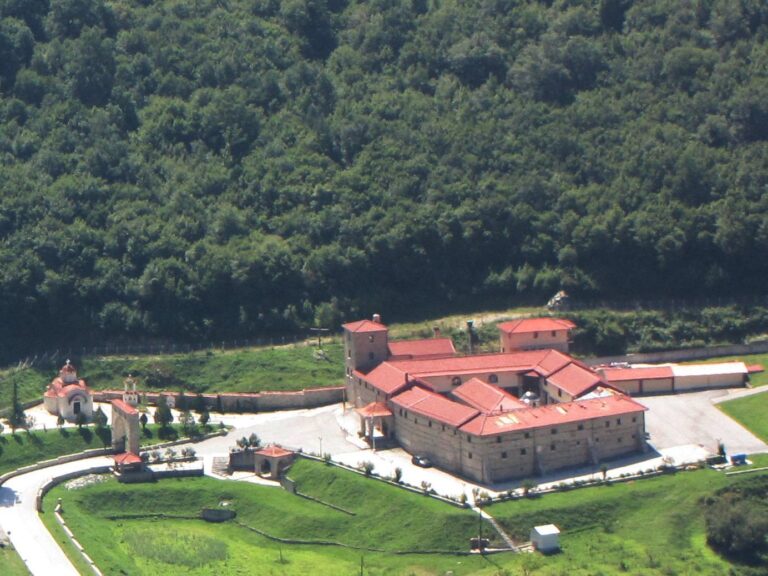
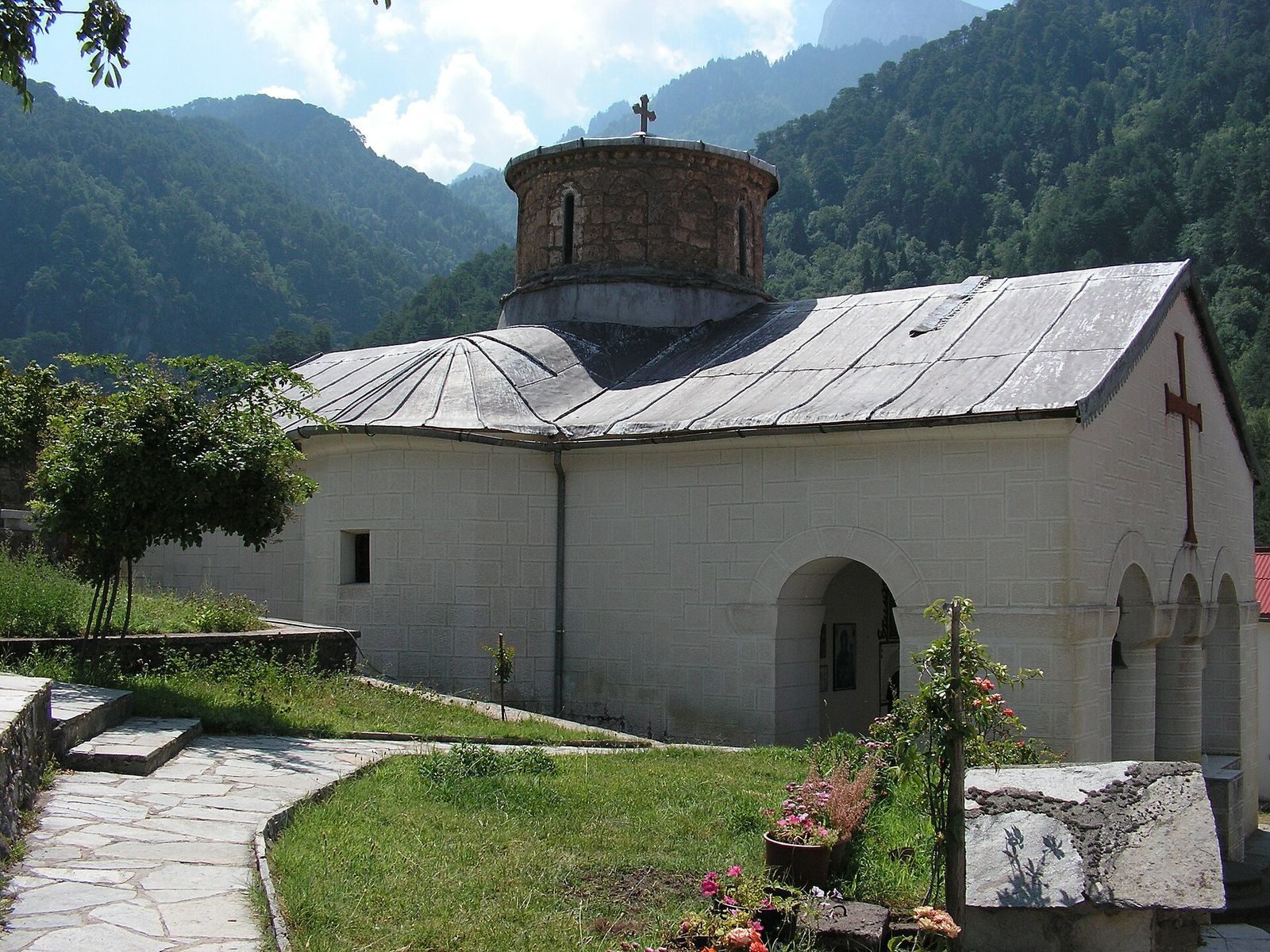
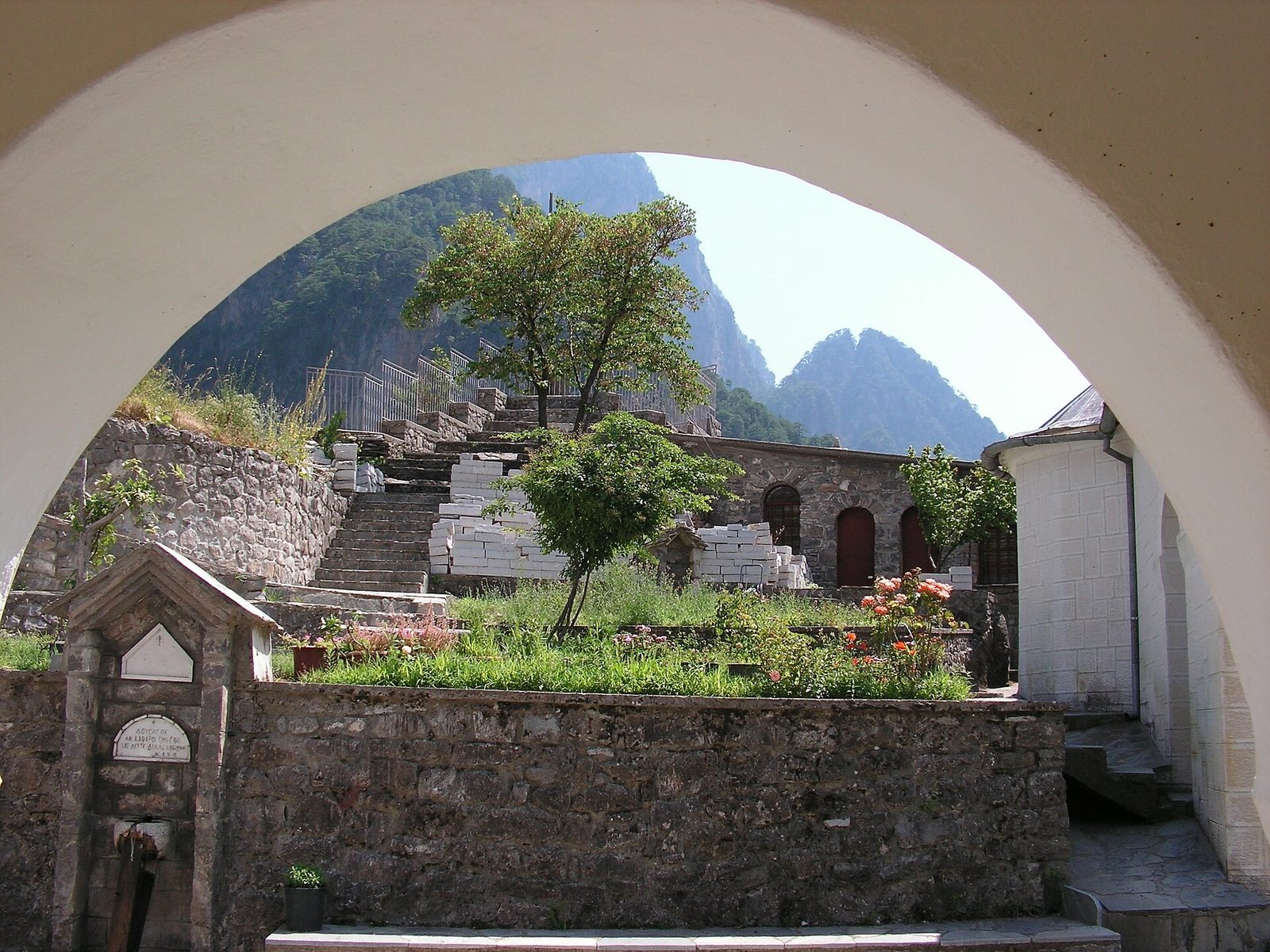
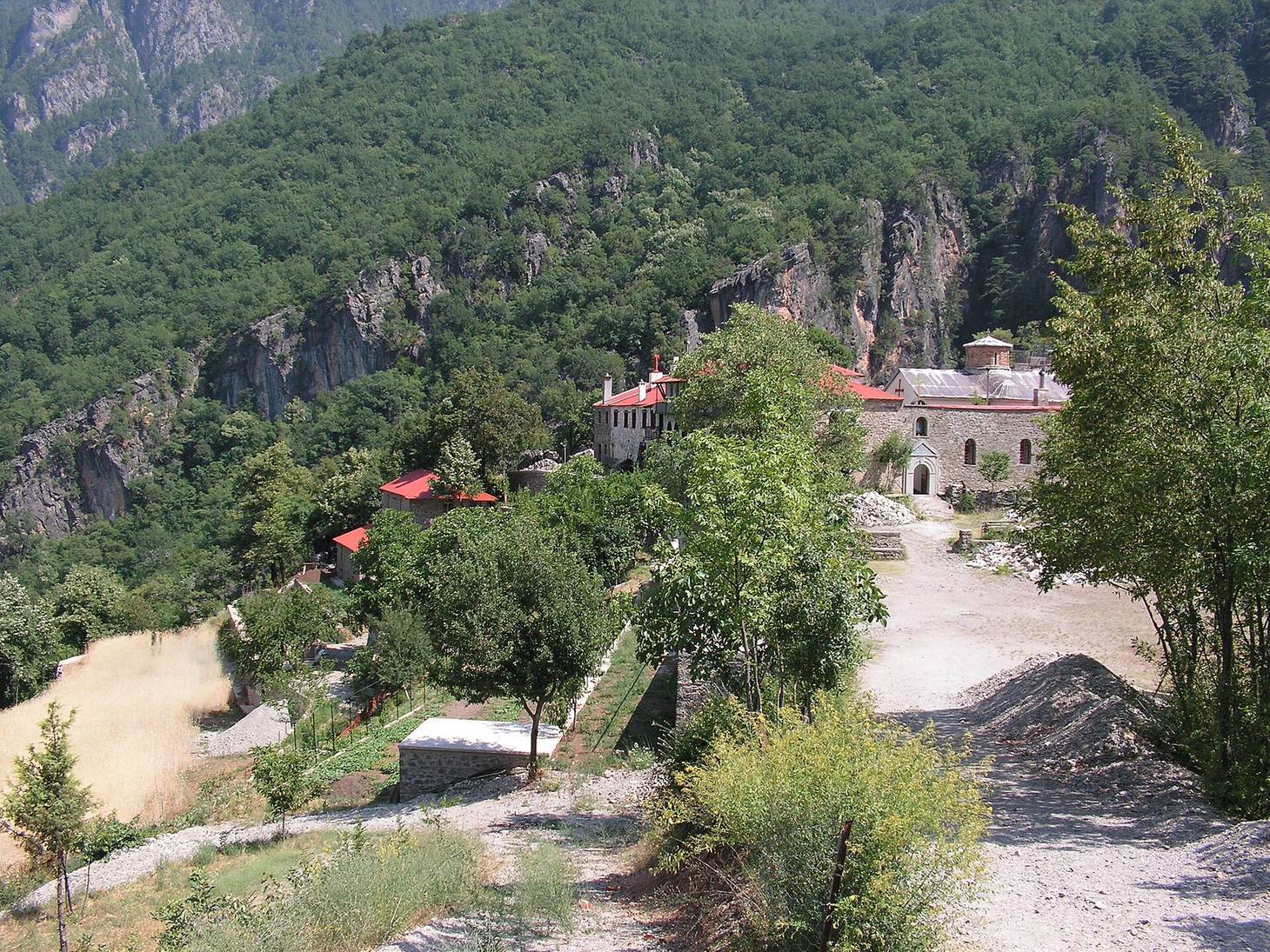
The complex lies on the wooded eastern side of Mount Ossa, also called Kissavos, about 170 metres above sea level near the coast and the mouth of the Peneus River. The modern monastery is built around the older structure, at a lower elevation than its mountainside chapel. The surviving church remains show successive building phases and the use of brick, cut stone, and reused architectural pieces.
Earlier archaeological remains
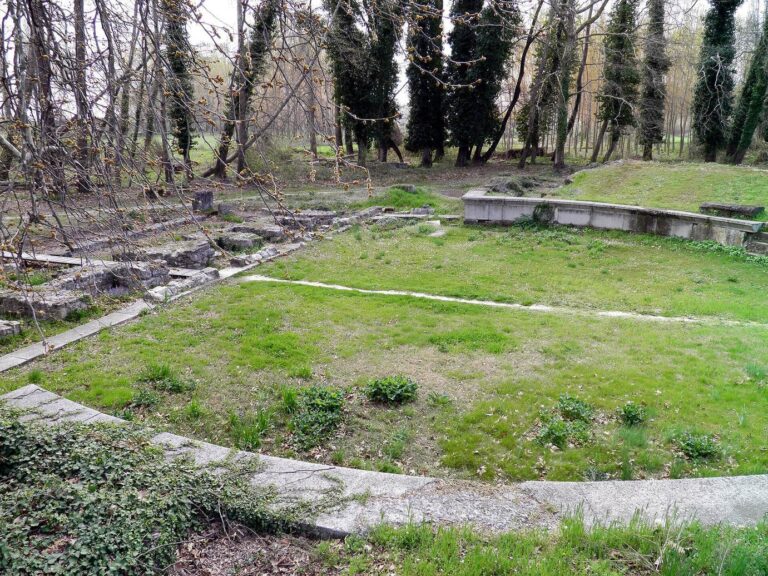
An ancient pagan sanctuary preceded the monastery. Its deity is unknown, though it may have been Poseidon Petraion, a proposed title for Poseidon, the Greek god associated with the sea and earthquakes. Tombs dating to the 6th century BC have been found near the coast and may have belonged to the ancient city of Eurymenai. A Byzantine church at the site dates to the 4th or 5th century.
Monastery churches
Earlier monastery church
The monumental church measured about 26 by 16 metres and had a cross-shaped plan with three rounded sanctuary projections. Four chapels were incorporated into its corners. Its carefully finished exterior used alternating bands of brick and cut stone. Excavations have revealed traces of this church beneath the present principal monastery church.
Present principal church
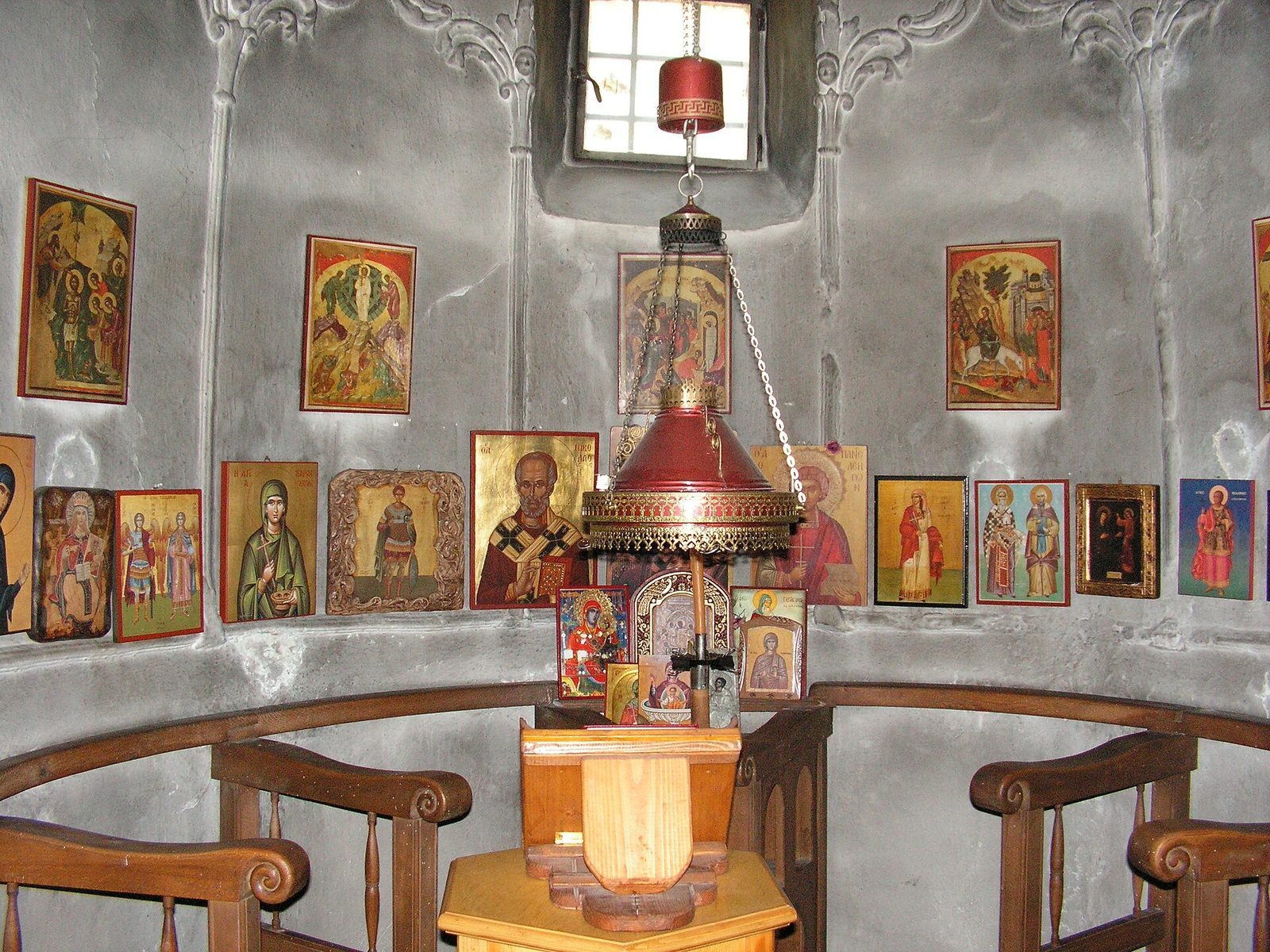
The present principal church, or katholikon (the main church of a monastery), dates mainly to the 16th century and incorporates parts of a 14th-century structure. Its exterior walls contain ancient and Byzantine architectural pieces reused from earlier buildings. Interior frescoes date to 1758. The church was restored in the early 2000s by the 7th Ephorate of Byzantine Antiquities, with European Union funding.