Saint Stanislaus Church in Mokrsko: A Late Renaissance Parish Church
Site at a Glance
- Popularity
- Very Low
- Country
- Poland
- Primary era
- Early Modern
- Eras represented
- Early Modern, Modern
- Civilizations
- Polish–Lithuanian Commonwealth
- Site type
- Religious
- Remains
- Church
On this page14 sections
History
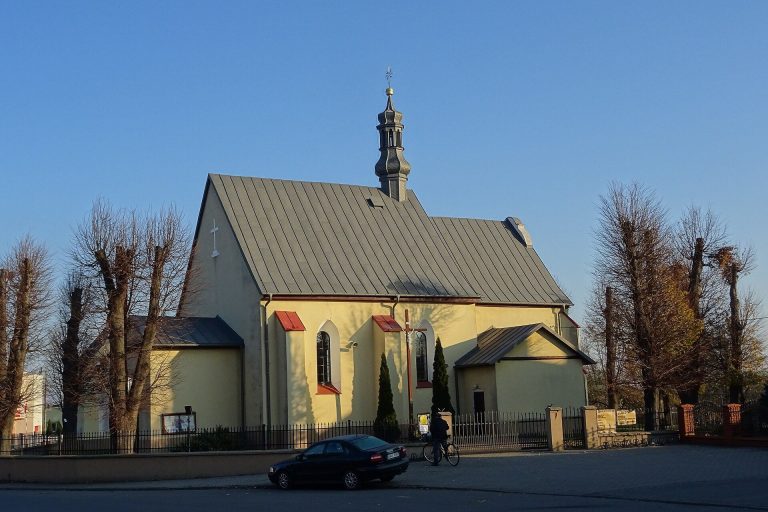
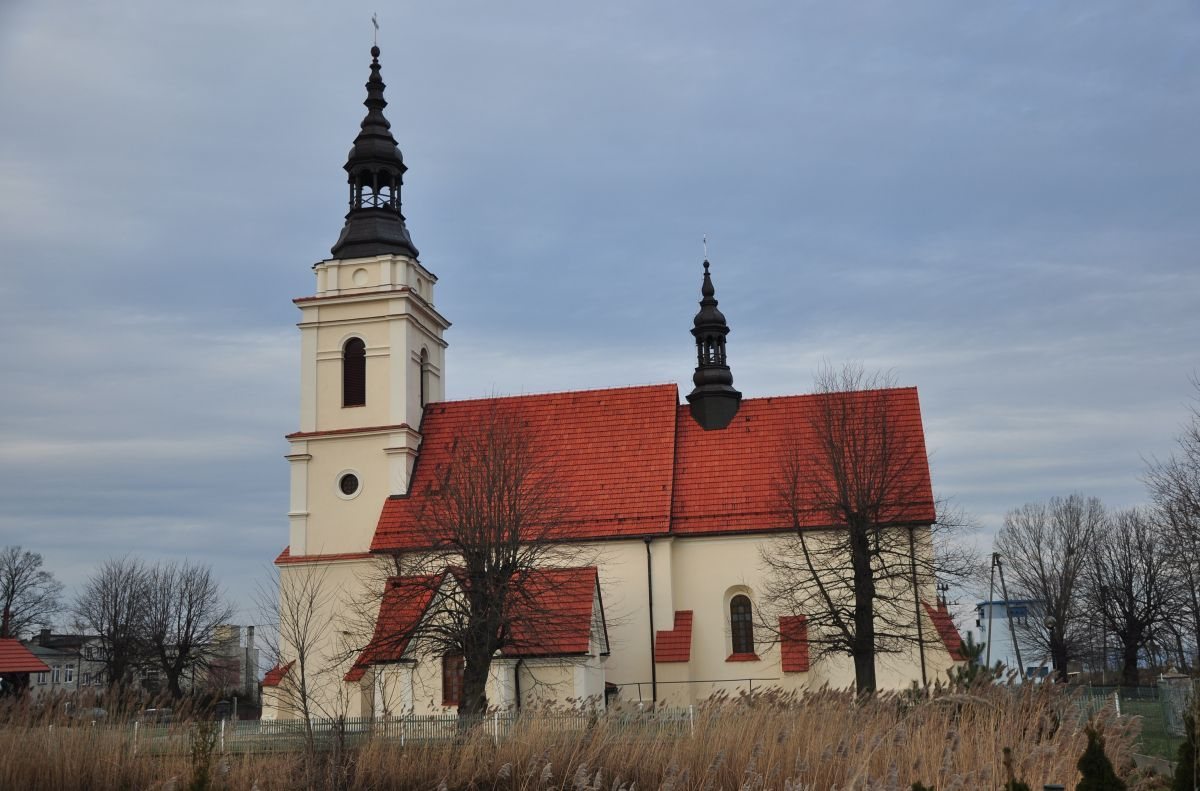
Saint Stanislaus Church in Mokrsko is a Roman Catholic parish church in Poland, built in 1626 in the late Renaissance style. It serves a parish dedicated to the same saint, whose patronal feast is observed on 8 May.
Seventeenth-century enlargement
In 1629, the nave was lengthened. The extension was first made of wood, then rebuilt in brick. Aleksander Kożuchowski, a judge of the Kraków castle court, supported the enlargement.
Baroque expansion
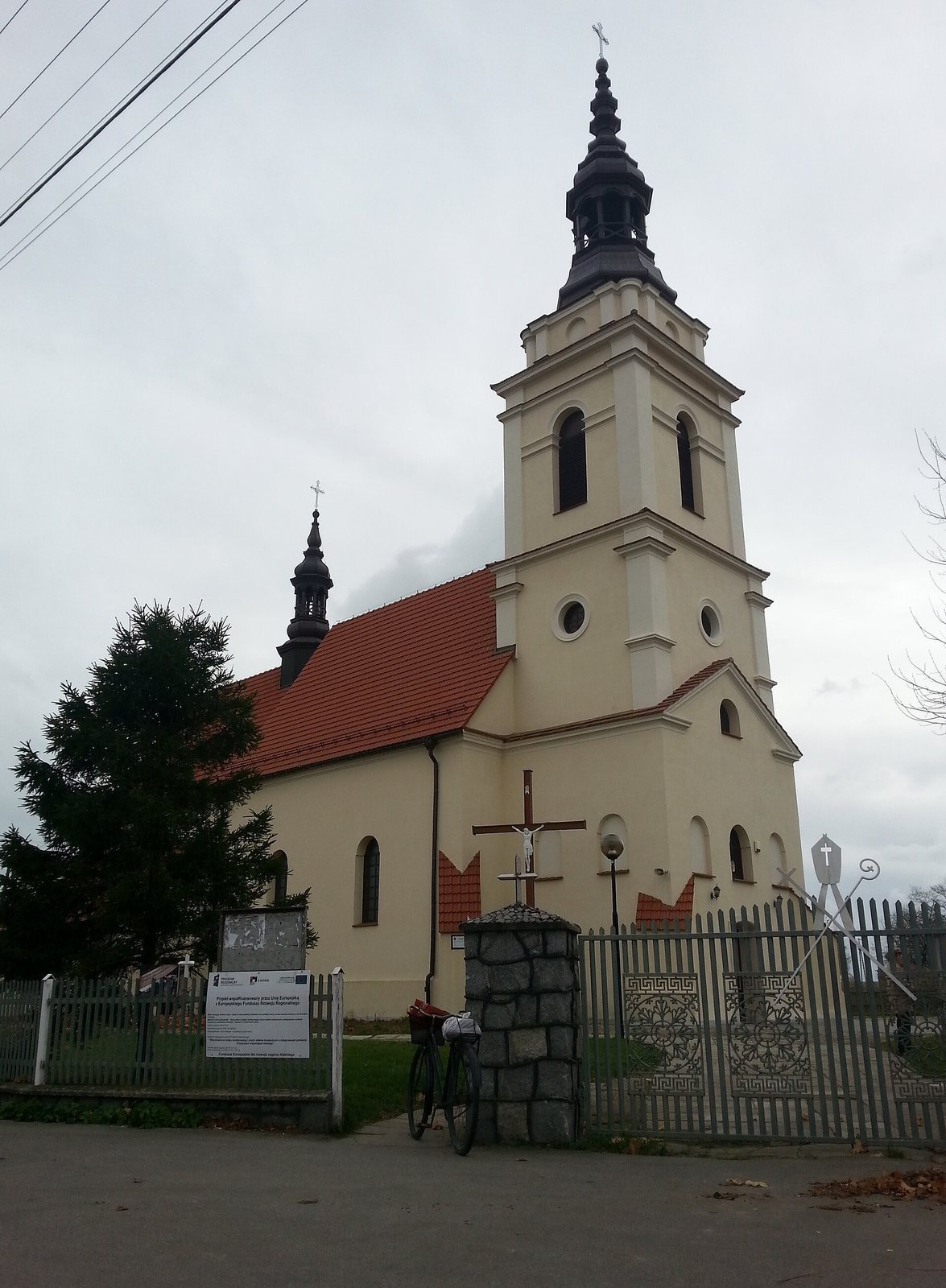
The church was enlarged again in the late eighteenth century, when a tall Baroque tower was added at its western end.
Repairs and later changes
Repairs took place in 1924–1925 and again after the Second World War. Bishop Zdzisław Goliński consecrated the church on 19 April 1959. Through the efforts of priest Władysław Praski, the altars were renovated in 1971 and the two towers in 1972. A side chapel was added in 1974.
Remains
Plan and walls
The church is a masonry building with a chancel, the area around the altar, slightly narrower than the nave, the main space for the congregation. Buttresses, projecting supports against the walls, strengthen the exterior, while the windows have rounded tops.
Ceilings and roofs
The chancel and the part of the nave extending to the pulpit are built of stone. Their concrete barrel vaults, curved ceilings, include lunettes, curved sections set into a vault. The newer brick-built part of the church has wooden ceilings shaped as false barrel vaults, which resemble masonry vaults without being solid masonry. The gabled roofs were first covered with shingles and are now tiled with ceramic.
Tower and roof turret
A 31-metre-high Baroque tower stands at the west end. Its helmet-shaped roof carries a lantern, a small structure at the top. A smaller roof turret, also topped by a helmet-shaped roof and lantern, rises from the lower roof.
Interior furnishings
The interior has late Baroque furnishings. Its three richly carved wooden altars and pulpit date to the second half of the eighteenth century.
Main altar
The central painting shows Saint Joseph with the Child Jesus. Sculptures of Saint Anne and Saint Joachim, traditionally regarded as Mary’s parents, accompany larger figures of the archangels Gabriel and Michael. Michael is shown spearing a dragon. Above them, an oval painting of the Holy Trinity, the Christian belief in God as Father, Son, and Holy Spirit, is surrounded by angels.
Left side altar
The central painting depicts the Immaculate Conception, the Catholic belief that Mary was preserved from original sin from the moment of her conception. Sculptures of two saints flank it. Above, the Creator is shown seated on a globe with clouds and two childlike figures.
Right side altar
The central painting depicts Saint Stanislaus and was made by Karol Dąbrowski in 1934. It is flanked by Saint Anthony holding the Child Jesus and Saint John of Nepomuk, who holds a cross and palm branch and wears a square clerical cap. Above is a painting of Saint Thecla, with the Holy Spirit represented as an eye.
Pulpit
The pulpit is richly carved in wood and dates, like the altars, to the second half of the eighteenth century.
Organ
The Scheffler company built the organ in 1791. It has nine sound controls, one keyboard, and a pedalboard.