Sheikh Ilahi Mosque: An Ottoman Mosque in Giannitsa, Greece
Site at a Glance
- Popularity
- Low
- Country
- Greece
- Primary era
- Medieval
- Eras represented
- Medieval
- Civilizations
- Ottoman
- Site type
- Religious
- Remains
- Mosque
On this page8 sections
History
Ottoman foundation and pilgrimage
The Sheikh Ilahi Mosque is an Ottoman-period mosque in Giannitsa, Greece, built by Ahmed Bey, a grandson of Gazi Evrenos. Its construction is dated either to shortly before 1450 or to the second half of the fifteenth century. The Ottoman period was the era of rule by the Ottoman Empire. Ahmed Bey was an Ottoman notable, and bey was a title of rank or authority. The mosque is among the oldest in Giannitsa and Greece. Ahmed Bey gave it his name, and it is also known as the Sheikh Ilahi Mosque.
By about 1540, the building was serving as a mosque, a role it retained until the twentieth century. In its early years, it also drew pilgrims because the grave of Sheikh Ilahi, a fifteenth-century scholar, and the tomb of Gazi Evrenos were located there. Sheikh is a title for a respected Muslim religious figure or learned person. Evrenos, an Ottoman frontier commander, was honored after his death in a manner comparable to a saint; gazi was an honorific associated with a Muslim warrior. Giannitsa’s Muslim residents established religious and civic institutions, including Sufi lodges, Islamic schools, and mosques.
Twentieth-century use and survival
During the twentieth century, the Greek Army used the mosque for non-religious purposes. It later transferred the building to the local municipality, along with the military camp that had developed around it. Of the twenty mosques once in Giannitsa, three survive, including the Sheikh Ilahi Mosque.
Remains
Plan and masonry
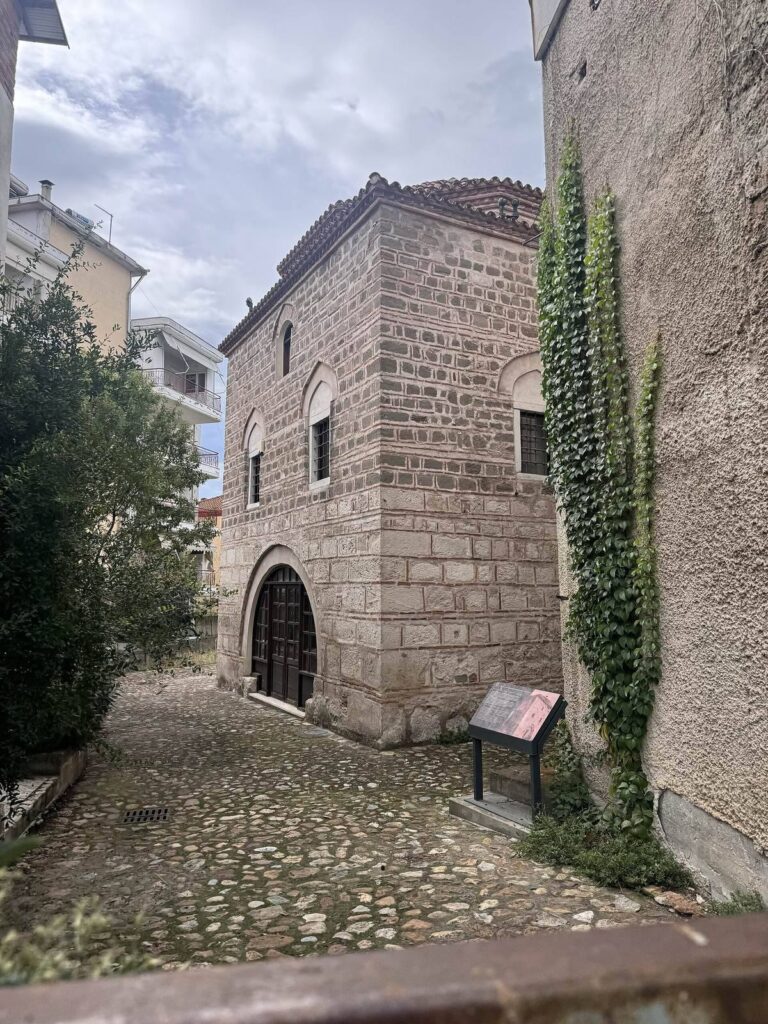
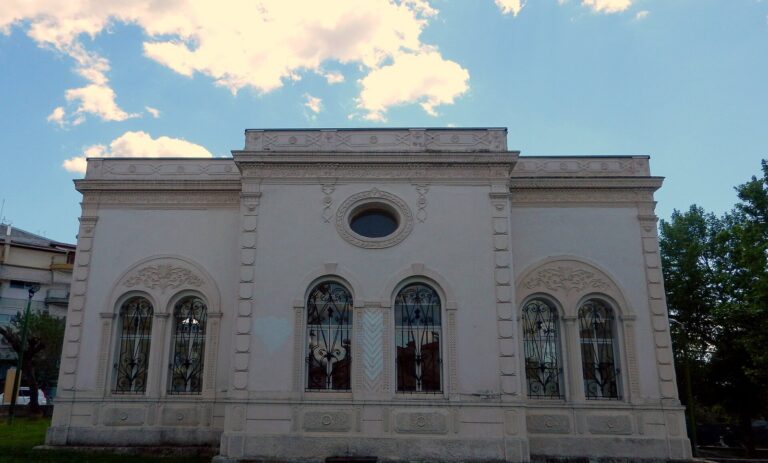
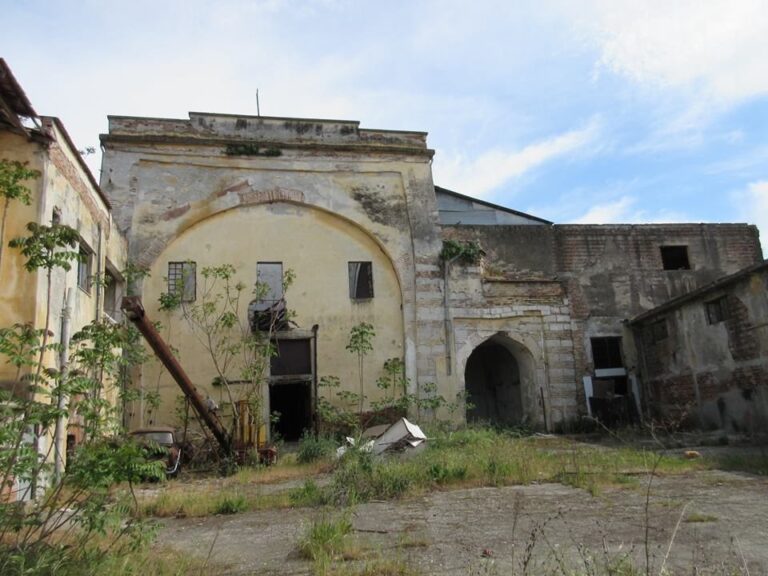
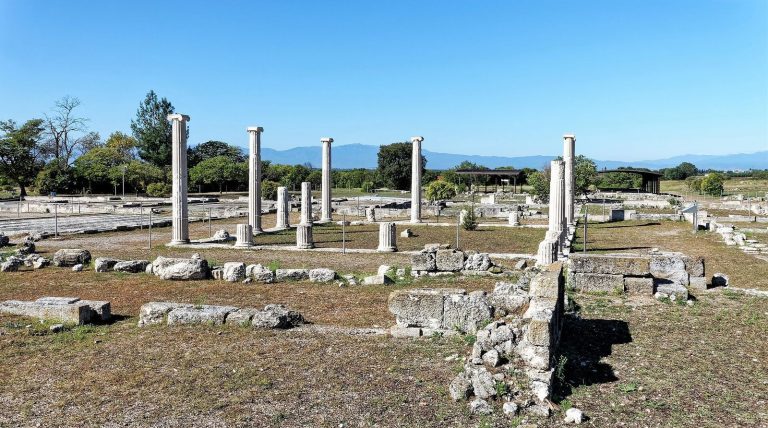
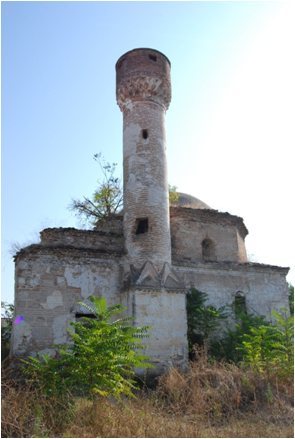
The mosque has a simple plan, with a square prayer hall, a portico (covered entrance porch), and a minaret (a tower associated with a mosque). Its masonry combines stone sections with bands of three or four rows of brick, arranged in an incomplete pattern around the building. The structure survives as a fragile partial ruin, heavily overgrown with vegetation that makes entry difficult.
Prayer hall and surviving features
Dome and prayer niche
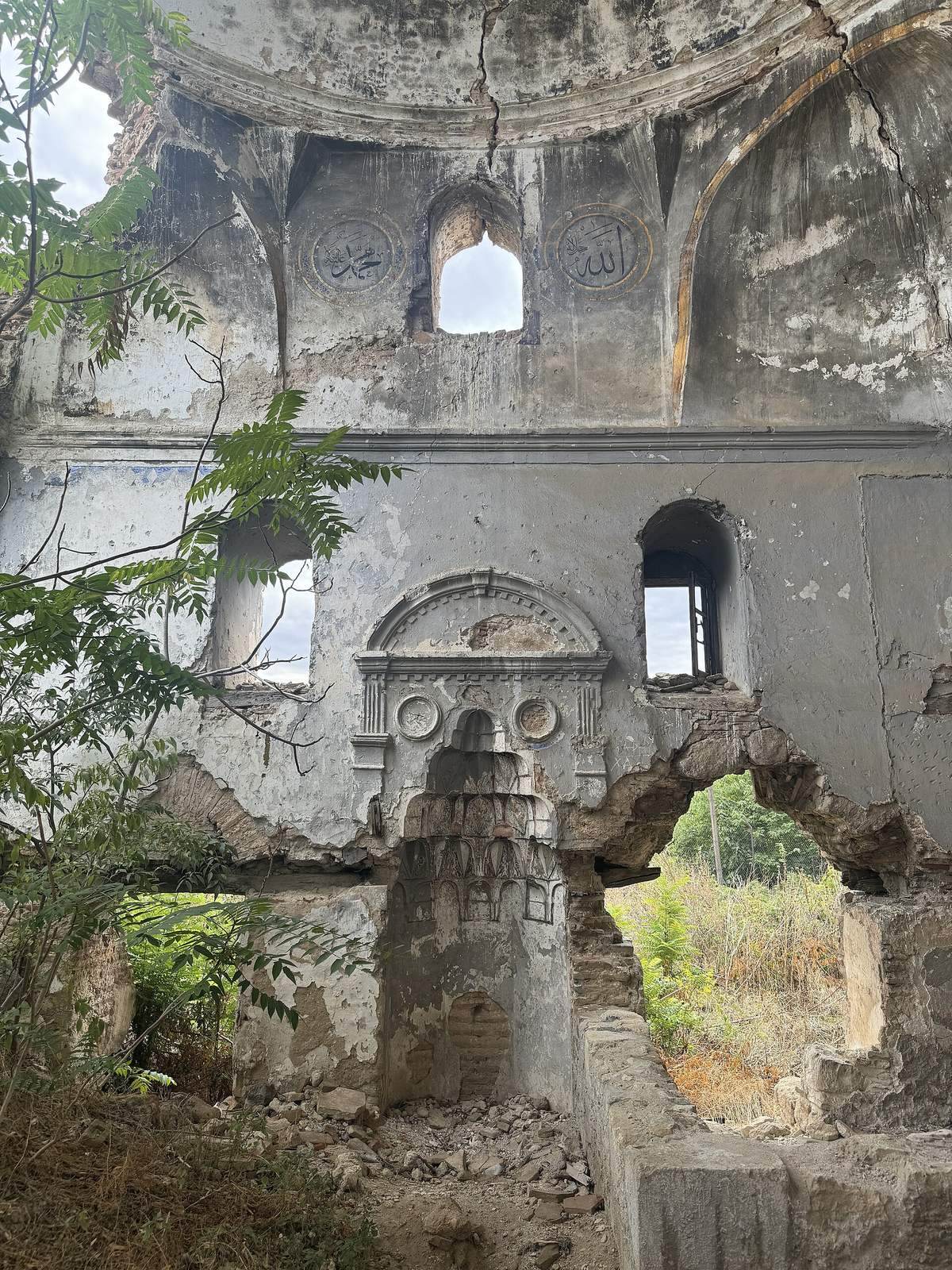
A single dome, about seven metres high, covers the prayer hall. An explosion in the 1970s caused roughly half of it to collapse, though traces of painted decoration remain visible. Inside, the mihrab, a niche indicating the direction of prayer, survives with traces of its decoration still visible in places.
Minaret
The minaret is 15.87 metres high and survives up to its balcony.