Church of Noordwijk: A Medieval Romanogothic Church in the Netherlands


Site at a Glance
- Rating
- 4.6
- Popularity
- Very Low
- Country
- Netherlands
- Primary era
- Medieval
- External website
- Open
- Eras represented
- Medieval, Early Modern, Modern
- Civilizations
- Dutch, Holy Roman Empire
- Site type
- Religious
- Remains
- Church
On this page11 sections
History
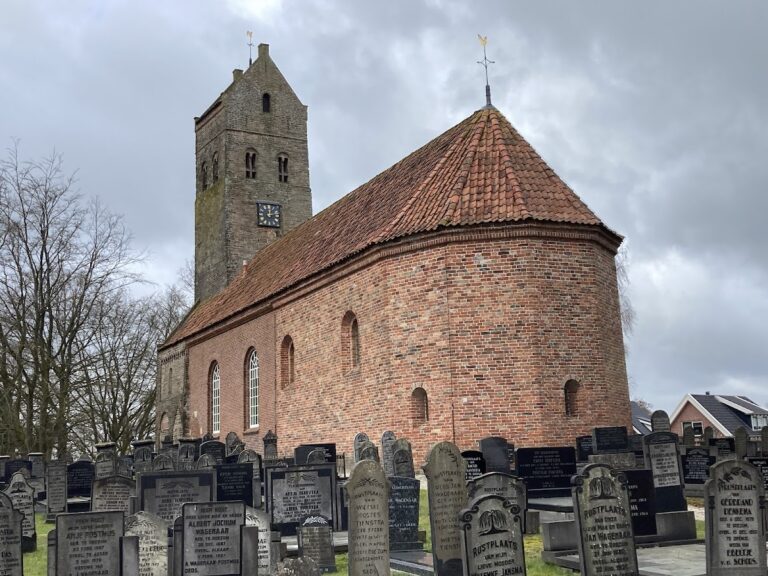
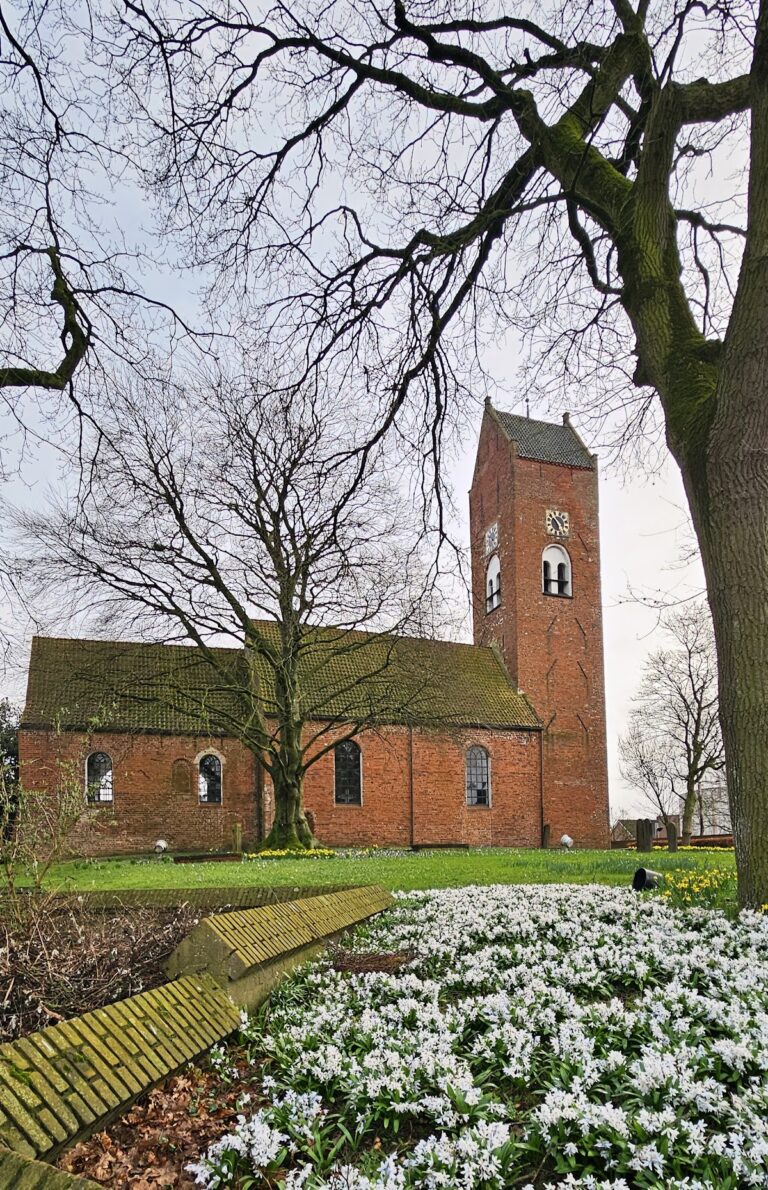
The Church of Noordwijk is a medieval church in the Netherlands, in Noordwijk, Groningen, probably built around the beginning of the fourteenth century in the Romanogothic style. This regional medieval style combines the heavy masonry and round arches of Romanesque architecture with the pointed arches and vertical emphasis of Gothic design. The church remains associated with the Dutch Reformed Church, a major Reformed Protestant denomination in the Netherlands, and is now owned by the Stichting Oude Groninger Kerken.
Medieval church and later changes
The church stands at the center of the village and has served as its principal place of worship across several centuries. It is protected as a national monument under registration number 28293. A comprehensive renovation in 1868 repaired the north wall, altered all the windows, and covered the exterior with plaster scored to resemble natural stone.
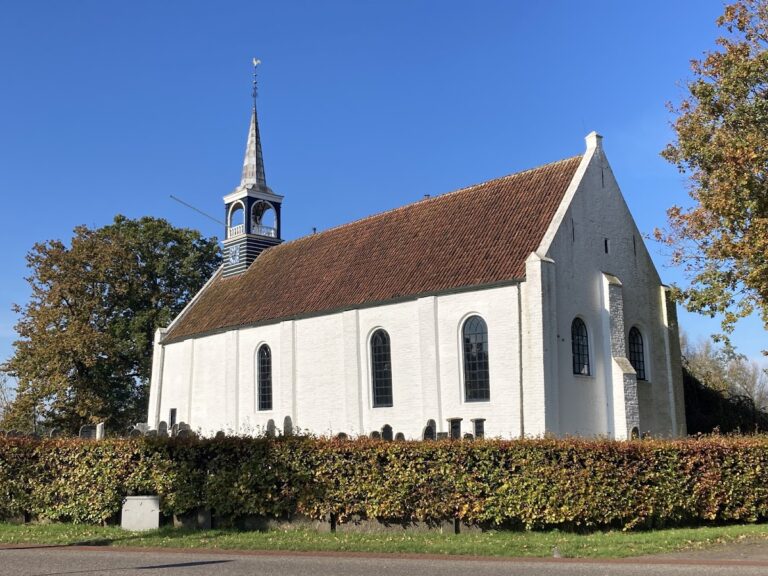
The building’s later appearance was reconsidered during restoration in 2005. The exterior was returned to its original ochre-yellow color, while the interior was arranged in a nineteenth-century style. These changes shaped the church’s present appearance while retaining evidence of its medieval construction and later adaptations.
Bell, organ, and wartime history
The roof turret dates from 1710. Its bell was cast in Amsterdam in 1712 and given to the church in 1714 by Carel Ferdinand von Inn- und Kniphausen, lord of Nienoord. As the church’s collator, a person with the right to nominate clergy and exercise patronage, he was closely connected with its administration. The weather vane was made in the form of a lion, referring to his coat of arms.
Peat sales provided the money for the purchase of the church organ in 1871. The instrument received a provisional restoration in September 2005 and a thorough restoration in 2010 by the organ builder Bert van den Heuvel of Soest.
In February 1944, a Lancaster bomber returning from a mission to Leipzig crashed near the church. Three of its eight occupants died. Two were recovered and buried at Tolbert, while the 32-year-old radio operator Cass Waight, born in what was then British Honduras, was buried in Noordwijk’s cemetery. His Commonwealth war grave remains there.
Remains
Exterior and medieval structure
The Church of Noordwijk is a simple rectangular hall church with a single nave and a straight-ended east end. It measures approximately 16 metres long and 7 metres wide and is built from large medieval bricks known as monastery brick. The raised church mound in the middle of the village forms its physical setting. The entrance is on the north side, where a blocked priest’s entrance survives in the choir wall, partly hidden beneath the plaster.
Recessed panels with arched tops lie between the windows beneath the plaster, and the panels are filled with latticework. The west wall is windowless and has seven wall anchors. The east wall contains five wall anchors, a semicircular window, and two smaller round-arched windows, which may preserve Romanesque elements. Its upper section has concealed stepped recessed panels, a feature found in the Romanogothic architecture of Groningen. Four pointed-arch windows are set in each of the north and south walls.
Roof turret and interior structure
The roof turret, a small bell structure built on the roof rather than rising from the ground, dates from 1710. It houses the Amsterdam bell cast in 1712, while the lion-shaped weather vane crowns the structure.
Interior and furnishings
Vault and supporting beams
The single-nave interior has a white-plastered barrel vault. Several tie beams were added later to counteract the outward pressure exerted by the vault, preserving the stability of the building’s interior structure.
Pulpit and baptismal furnishings
The pulpit dates from around 1600 and follows the Holland Renaissance style. It has a backboard and sounding board, twisted corner columns with Ionic capitals, and ebony inlay. The pulpit first came from the church of Midwolde and was later moved to Noordwijk after a period in the church of Leek.
The baptismal screen was returned to its former position after restoration work. It had been moved several times, including a period when it stood in a farm at Drachten. The furnishings also include a seventeenth-century baptismal font and an eighteenth-century chandelier.
Organ
The organ was built in 1871 by the P. van Oeckelen firm of Harendermolen. It has one manual and an attached pedal. A hand pump originally supplied its wind, but an electric wind machine was installed in 1931. Its specification includes Prestant 8, Bourdon 8, Vioala di Gamba 8, Octaaf 4, Woudfluit 2, Fluit 4, Quint 3, Fagot 8, Trompet 8, and a wind release.
Cemetery
The cemetery beside the church contains the Commonwealth war grave of Cass Waight, the Lancaster bomber’s radio operator who died in the February 1944 crash. A mortuary house also stands beside the cemetery.