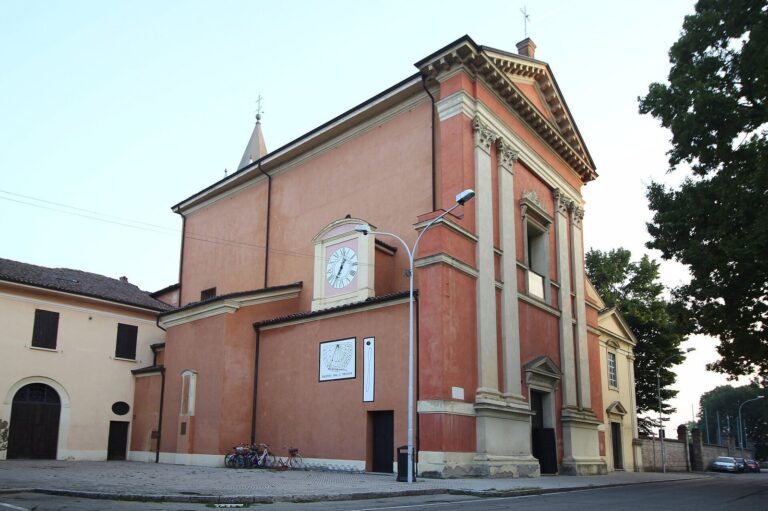
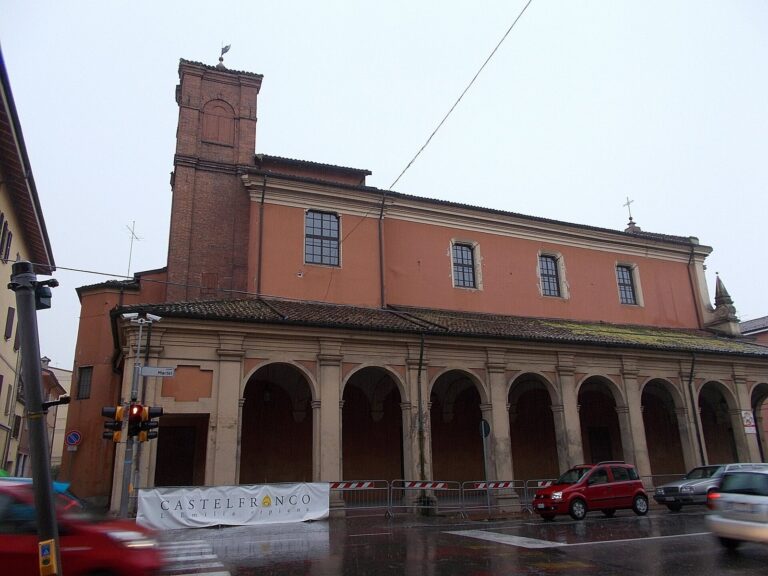
Church of Santo Stefano: The Roman Catholic Parish Church of Bazzano
Site at a Glance
- Popularity
- Very Low
- Country
- Italy
- Primary era
- Modern
- Eras represented
- Early Modern, Modern
- Civilizations
- Italian, Papal States
- Site type
- Religious
- Remains
- Church
On this page13 sections
History
The Church of Santo Stefano is the Roman Catholic parish church of Bazzano, Italy, dedicated to Saint Stephen Protomartyr, traditionally regarded as Christianity’s first martyr. It belongs to the Archdiocese of Bologna and the Vicariate of the Reno, Lavino, and Samoggia Valleys, a grouping of parishes within a diocese.
Early chapel and church administration
A chapel at Bazzano may have begun in the Byzantine period, the history and cultural sphere of the Eastern Roman Empire, but its existence is attested from the eighth century. Over the following centuries, it passed repeatedly between the Archdioceses of Bologna and Modena. In 1398, Pope Boniface IX assigned it permanently to the Archbishop of Bologna. It then came under the Pieve of Sant’Andrea in Corneliano, a historic parish church serving a surrounding district.
A drawing from 1585 shows the apse, the end of the church containing the altar, facing east and the entrance facing west. Within a few decades, the church’s orientation had been reversed by 180 degrees.
Expansion and rebuilding
Don Leonardo Cilli commissioned a bell tower, built between 1721 and 1728. The presbytery, the area around the main altar, was constructed between 1782 and 1784 to a design by Francesco Tadolini. The sacristy was enlarged in 1793–94.
In 1889, Don Adolfo Zamboni decided to expand the church as Bazzano’s population grew. Vincenzo Brighenti designed the right aisle, built in 1894. From 1913 to 1916, workers raised the central nave, the church’s main longitudinal space, and constructed a new façade to a design by Adolfo Pasti. Work on the left aisle began in 1925 but, because of a lack of funds, was not finished until 1939.
A bombing on 25 February 1945 destroyed almost the entire church. The cornerstone of its replacement parish church was laid in 1948, and construction was completed in 1960. In 1965, liturgical changes led to the removal of the presbytery balustrade and the installation of an altar facing the congregation. The church underwent repairs and restoration in 2005–06.
Remains
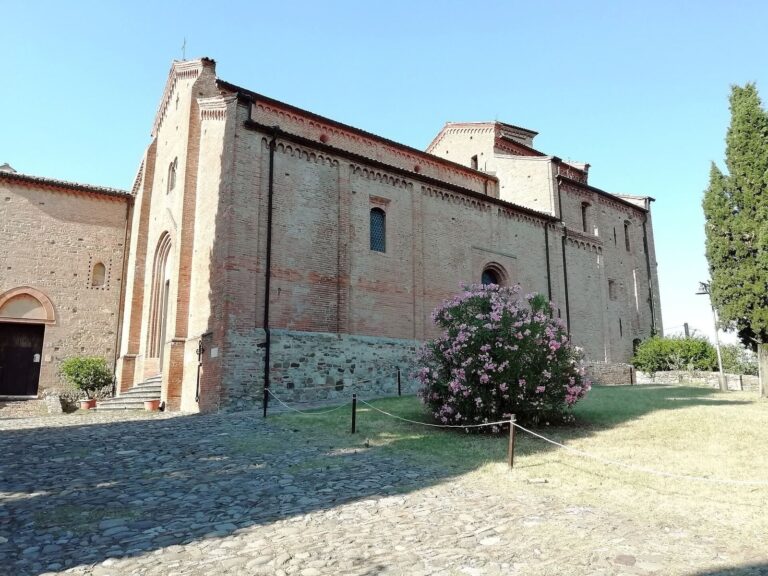
The church combines a brick façade and an attached bell tower with an interior divided into three aisles. Round arches separate the aisles, while the central space rises beneath a barrel vault, a continuous tunnel-shaped ceiling.
Exterior and interior
Façade
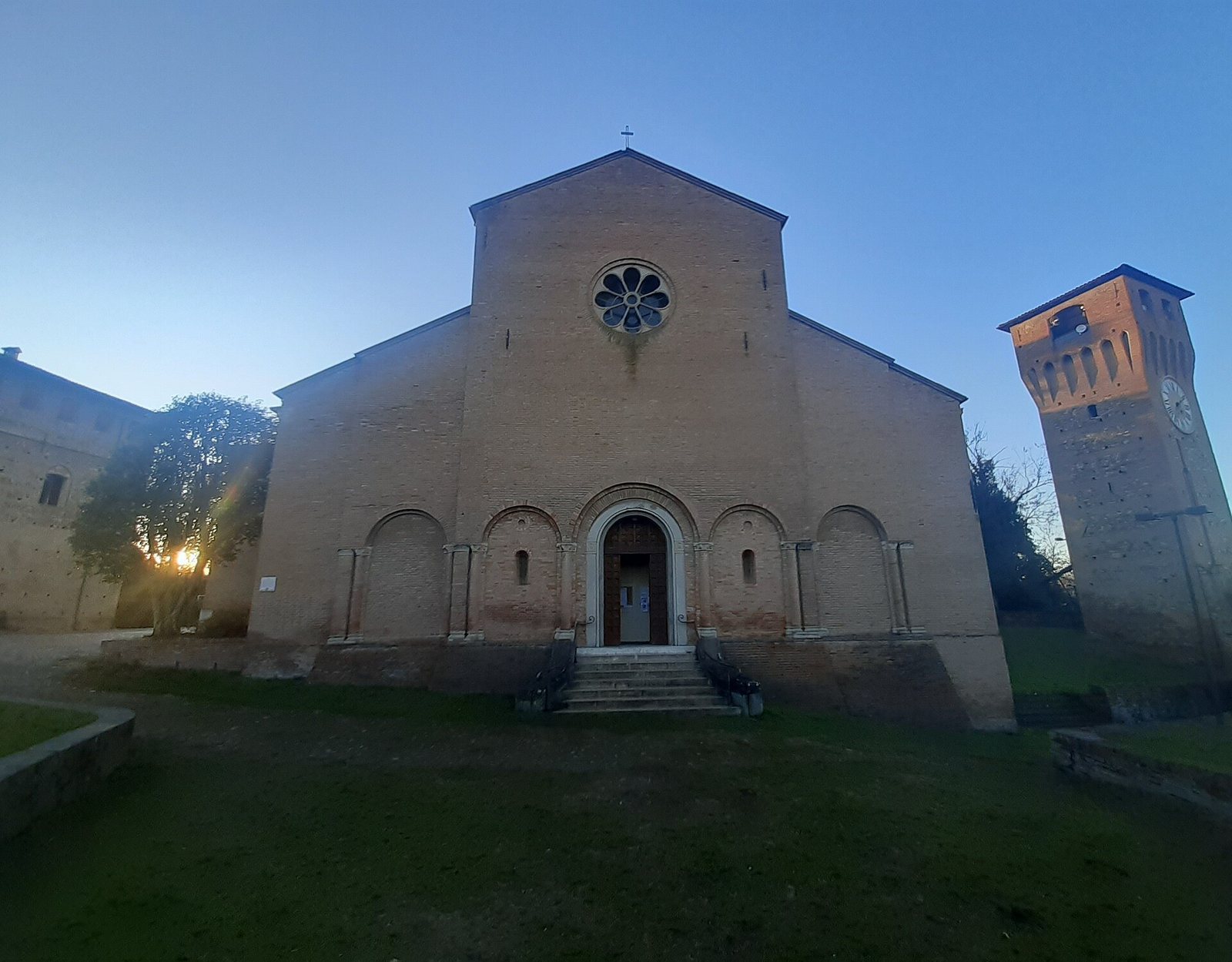
The brick façade has a stepped roofline. Steps lead to the central entrance, which is flanked by four arcades, or runs of arches, supported on masonry columns. A rose window, a circular window, is set above the entrance.
Bell tower
The attached tower has a belfry, the part that houses the bells, with one window opening on each side. A pyramidal spire crowns the structure.
Interior
Round arches divide the interior into three aisles. Between them, shallow Corinthian pilasters, wall projections with leaf-decorated classical capitals, support a cornice. Above it, the barrel vault has lunettes, curved sections formed where openings or recesses meet the vault.
Paintings and devotional works
Altarpiece of Saint Stephen
An altarpiece, a work placed at or behind an altar, depicts Saint Stephen Protomartyr. Simone Cantarini, who came from the Marche region, painted it in 1637.
Stations of the Cross
The fourteen Stations of the Cross, which depict episodes associated with Jesus’ Passion, date to the early nineteenth century. They are by Gaetano Gandolfi, Francesco Giusti, Pietro Fancelli, Francesco Capuri, Jacopo Alessandro Calvi, Luigi Ruvadini, Filippo Pedrini, and Ercole Petroni.
Other paintings
An eighteenth-century painting by Gaetano Gandolfi shows the Trinity with Saints Peter and Paul. Fifteen oval paintings portray the Mysteries of the Rosary, episodes from the lives of Jesus and Mary contemplated in Catholic devotion; they date to either the late eighteenth or early nineteenth century. A painting by Antonio Crespi depicts the Passing of Saint Joseph, surrounded by Jesus, the Virgin Mary, Saint Anthony the Abbot, and Saint Anthony of Padua.
Sculpture and crucifix
The church preserves an eighteenth-century terracotta group depicting the Lamentation over Christ, an image of grief over his dead body, as well as a wooden crucifix dating to the sixteenth century.