Chiesa di Santo Stefano: The Historic Parish Church of Mezzana Superiore
Site at a Glance
- Rating
- 4.3
- Popularity
- Very Low
- Country
- Italy
- Primary era
- Early Modern
- Eras represented
- Medieval, Early Modern, Modern
- Civilizations
- Duchy of Milan
- Site type
- Religious
- Remains
- Church
On this page8 sections
History
Chiesa di Santo Stefano is a Catholic parish church in Italy, serving Mezzana Superiore, a hamlet of Somma Lombardo in Lombardy. Dedicated to Saint Stephen, traditionally regarded as Christianity’s first martyr, it follows the Ambrosian rite of the Archdiocese of Milan. Founded at an unspecified date in the thirteenth century, the church may have existed by 1228. Its present architectural character is chiefly Baroque, although the building reflects several later phases of alteration.
Medieval foundation and parish organization
During the thirteenth century, Santo Stefano ceased to depend on the parish district of Sant’Agnese in Somma and became an independent ecclesiastical district. This historical district, known as a pieve, supervised several local churches attached to it. The medieval building was modest, with a single nave and a raised choir, and information about it comes chiefly from the will of the provost Giacomo de Garzonis, also called Giacomo Garzonio or Grossoni, dated 23 May 1326.
Visconti rebuilding
The Visconti of Somma Lombardo, a branch of Milan’s ruling Visconti dynasty, became patrons of the church around the middle of the fifteenth century. They initiated a complete rebuilding from 1458 onward. No part of the earlier medieval structure is known to survive, so the present church represents the result of later construction and renovation rather than a preserved medieval fabric.
Later changes and parish status
Renovations continued over the following centuries, with work on the facade beginning in the mid-sixteenth century and continuing almost to the end of the eighteenth. The parish-district organization lasted until the early 1970s, when such districts were transformed into deaneries, later administrative groupings of parishes. Santo Stefano then became an ordinary parish while retaining its prepositural title, which reflects its historical association with a provost.
The church’s furnishings and equipment also changed over time. During the Second World War, its original bells were melted down for military use. New bells were installed in 1950, while a clock fitted in the early 1970s replaced an earlier nineteenth-century mechanism. Two paintings associated with Bramantino, the artistic name of the Lombard Renaissance painter Bartolomeo Suardi, were first noted in the church in 1636. They were moved several times and appeared again in 1899 at the Sanctuary of Madonna della Ghianda before returning to Santo Stefano after restoration in 1931. The Assumption of the Virgin with Saints John the Baptist and Stephen, probably commissioned by Battista Visconti and attributed to Marco d’Oggiono, is now preserved at the Diocesan Museum of Milan.
Remains
Exterior and structure
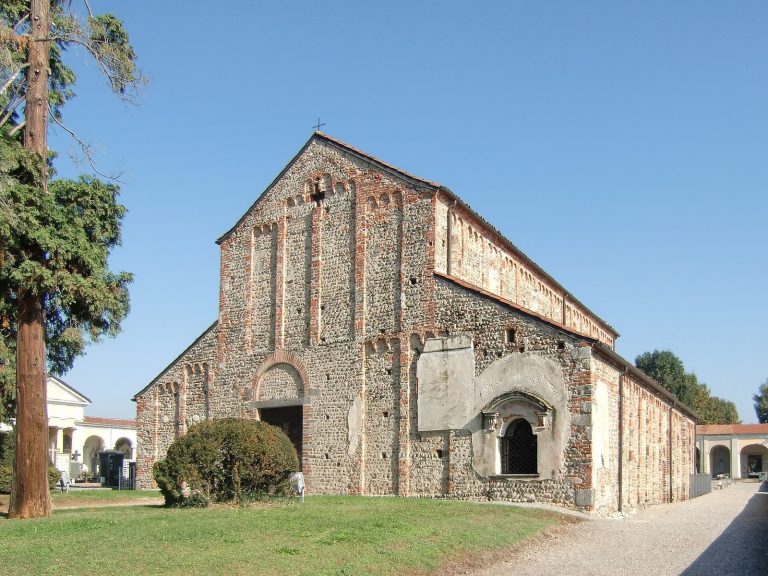
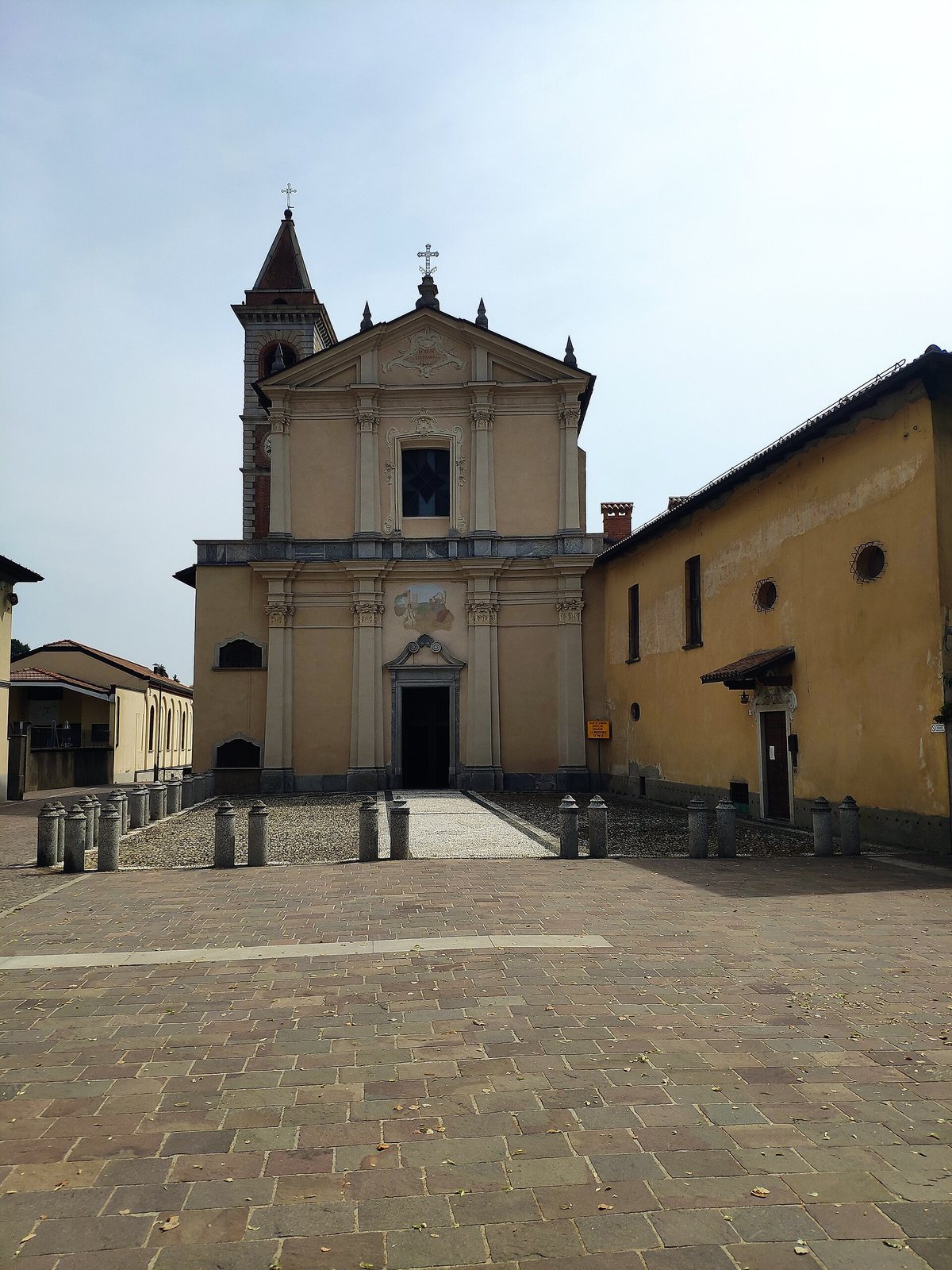
The present church retains a single-nave layout with two small side chapels. Its facade preserves evidence of repeated renovation from the mid-sixteenth through the late eighteenth century. Behind the church stands a bell tower built in 1844, crowned by a pyramidal spire. Its bells date from 1950, and the tower also contains the clock installed in the early 1970s.
Interior and altars
The right-hand chapel was built in 1741. Dedicated today to the Madonna del Rosario, it was formerly dedicated to the Holy Spirit and contains a statue of the Virgin Mary. The chapel on the left is dedicated to Saint Anthony the Abbot. The high altar dates from the early eighteenth century and is made of black marble from Varenna. Two iron gates were added during the second half of the nineteenth century.
The vault carries numerous late seventeenth-century frescoes and stucco decorations depicting Catholic saints, including Joan of Arc, Saint Agatha, and Saint Roch. A late seventeenth-century painting of Christ Crucified among Angels is mounted on the architrave, the horizontal member above an opening or supporting structure, above the high altar. The church also contains a seventeenth-century Deposition of Saint Antoninus by an unknown artist.
Paintings and organ
Two panels attributed to Bramantino hang on the right wall. One represents Pentecost, while the other shows the Lamentation over the Dead Christ with Saints Sebastian and Roch and other figures. Their simple compositions are deteriorated, probably as a result of poorly executed earlier cleanings and unsuccessful restoration attempts. Once assigned to the final period of Bramantino’s career, they are now more probably dated to 1510–1512 following documentary discoveries and research in the early twentieth century.
The Assumption of the Virgin with Saints John the Baptist and Stephen, dated 1510 and attributed to Marco d’Oggiono, was formerly displayed on the left wall and is now held by the Diocesan Museum of Milan. Above the entrance stands an old organ. Its case is original to the seventeenth century, while the instrument has undergone several restorations. It has 21 pipes arranged in a cusp and a keyboard with 58 notes.
The medieval church had several unconsecrated altars, while its high altar stood near the raised choir. The building apparently had no doors, permitting unrestricted access at night, although the choir was enclosed. A cemetery occupied the exterior, and some burials probably also took place inside the church.