Church of San Giorgio al Corso in Italy
Site at a Glance
- Popularity
- Medium
- Country
- Italy
- Primary era
- Early Modern
- Eras represented
- Early Modern, Modern
- Civilizations
- Italian, Kingdom of Naples, Spanish
- Site type
- Religious
- Remains
- Church
On this page13 sections
History
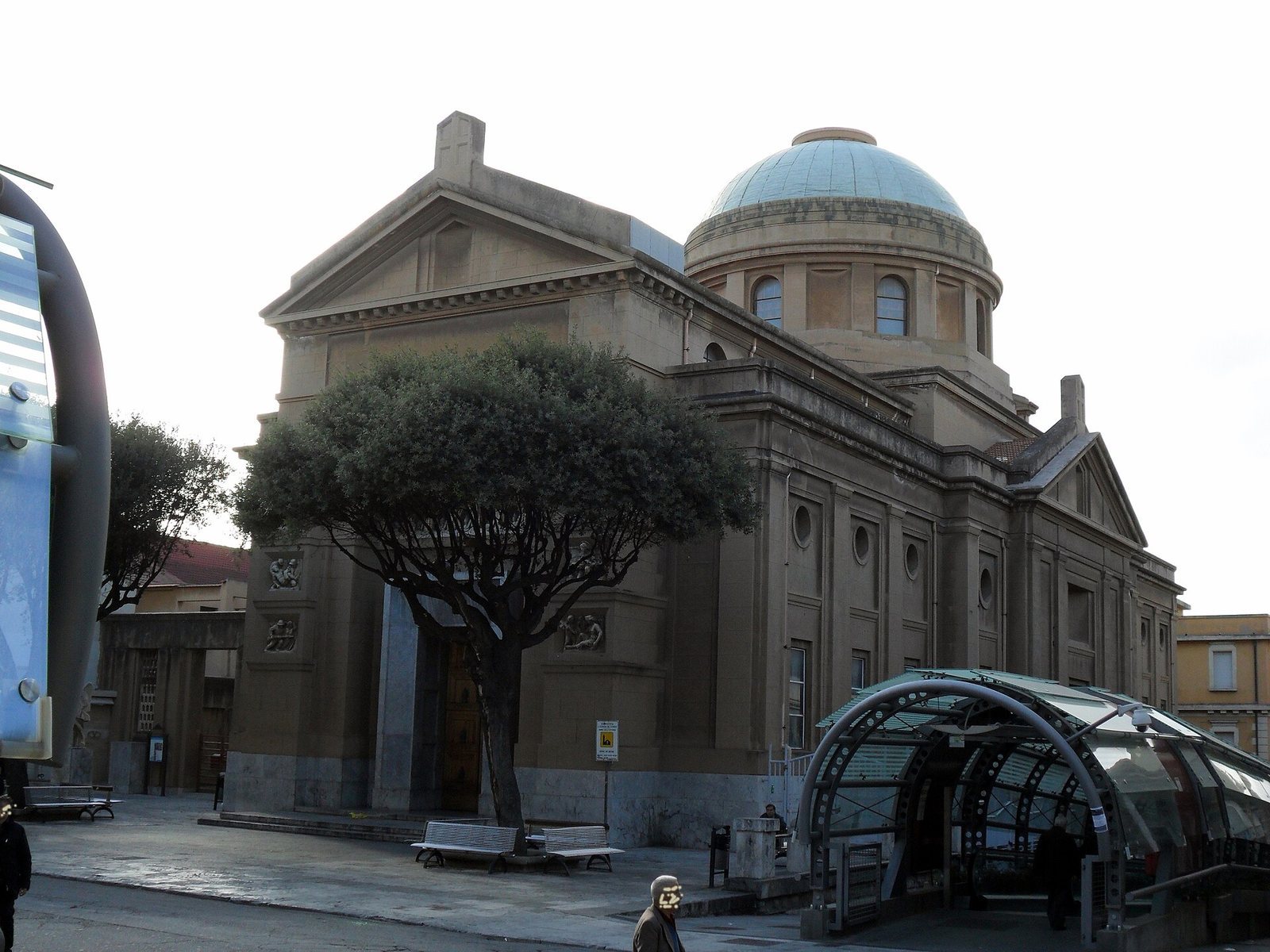
The Church of San Giorgio al Corso is a Roman Catholic church in Italy dedicated to Saint George, patron saint of Reggio Calabria. It was consecrated and established as a parish in 1596; the present building, with its classical-style façade, was inaugurated in 1935 after the church was destroyed in the 1908 earthquake. The church belongs to the Archdiocese of Reggio Calabria-Bova.
Devotion to Saint George
Devotion to Saint George in Reggio Calabria is traced to the early eleventh century and associated with the threat of Saracen forces along the Calabrian coast. The term “Saracen” was used in medieval European contexts for Muslims, especially Arabs. In 1086, Bonavert of Syracuse landed at Reggio, destroyed the monastery of San Nicolò on Punta Calamizzi and the church of Saint George, and damaged images of saints. The Norman duke Roger Borsa counterattacked, pursued and killed Bonavert in battle, and captured Syracuse. After the victory, the people of Reggio adopted Saint George as their protector. Tradition holds that the saint helped Roger.
The church has also been called San Giorgio Intra Moenia, meaning Saint George within the walls, to distinguish it from San Giorgio Extra Moenia, outside the walls. Other names include San Giorgio de Gulpheriis and San Giorgio in la Judeca, a reference to its position in the Jewish quarter, as well as the Temple of Victory.
Parish and civic ceremony
On 12 October 1596, Archbishop Annibale D’Afflitto established the church as a parish; this is also its stated consecration date. The altar of Saint George was also the setting for a yearly municipal election custom. After electoral lists were published at city hall, councillors were chosen by lot. Six names were placed in silver balls and sorted into separate purses according to social class, then set on the altar. Following a Mass of the Holy Spirit on the final day, a child drew the names of three mayors, who served for a year.
Earthquake and rebuilding
The 1908 earthquake completely destroyed the church. Architect Camillo Autore designed its replacement, which was inaugurated in 1935 in the presence of Prince Umberto of Savoy.
Remains
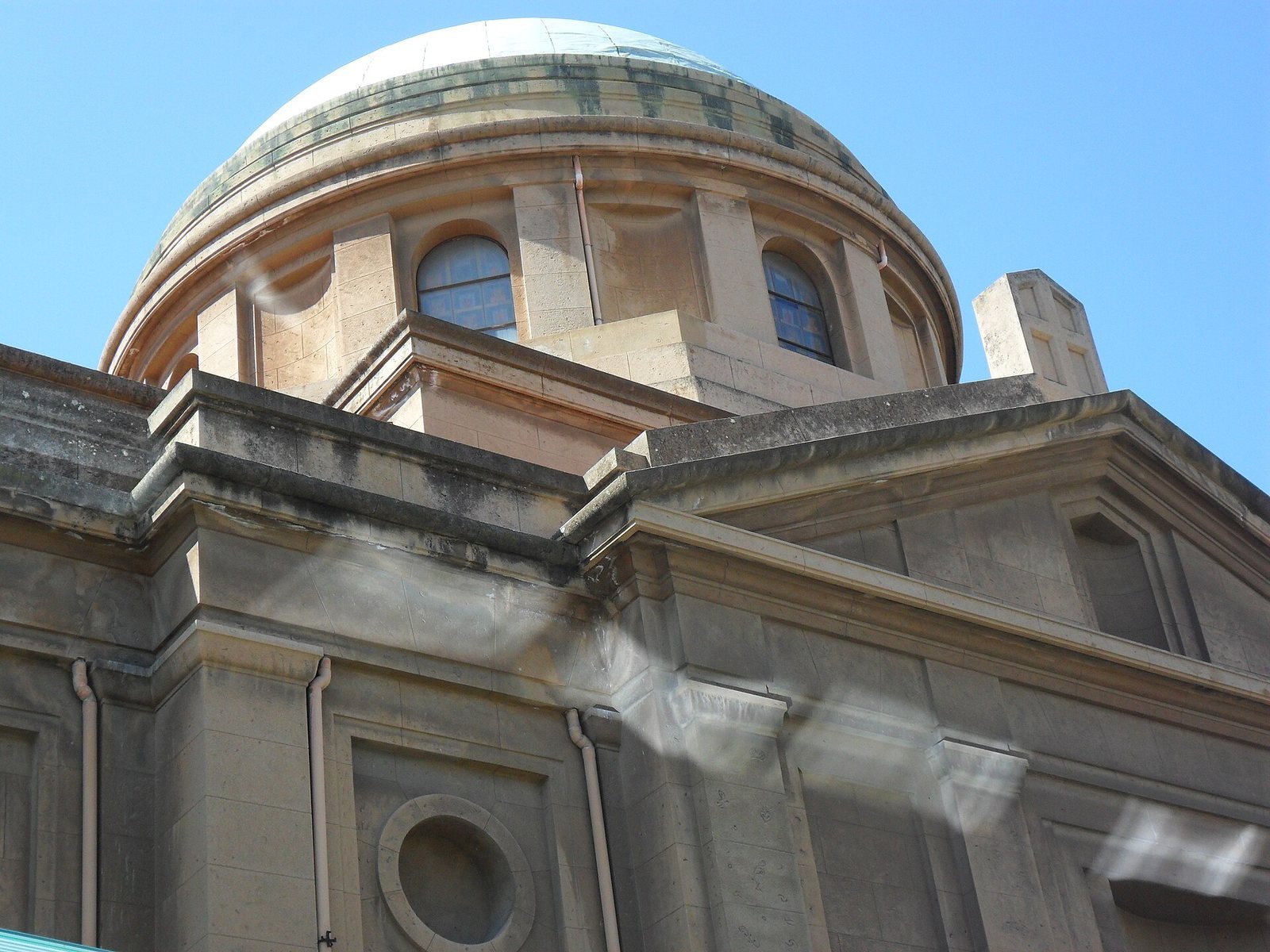
The present church has a cross-shaped plan, with a single nave, the main interior space, and four chapels on each side. Its classical-style exterior faces Corso Garibaldi, while the building extends alongside Via Giudecca. The interior is organized around the sanctuary and the altar-end apse.
Exterior and nearby features
Façade and portal
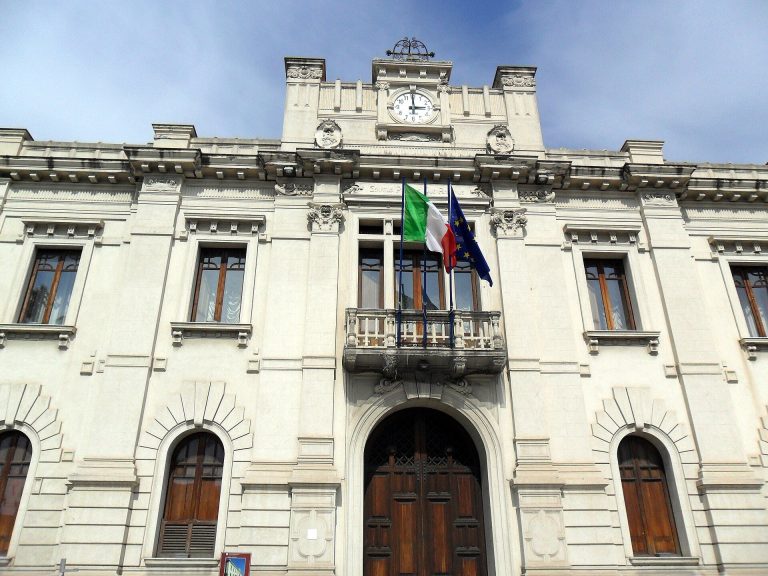
A monumental portal dominates the façade, with a large window above it depicting Saint George slaying a dragon. Sculpted reliefs on the portal and its sides show scenes from the First World War and name battle locations.
Guardian Angel statue
A statue dated to 1637 stands in the square in front of the church. It depicts the Guardian Angel, identified as the Archangel Michael, and was originally placed near the Customs Gate to protect the city.
Interior
Sanctuary and materials
Barrel vaults, or continuous arched ceilings, form the upper structure, interrupted by arches aligned with the pillars. Arches also frame all four sides of the sanctuary. A triumphal arch frames the apse, which has a semicircular base and a spherical vault, a curved ceiling shaped from part of a sphere. The curved half-dome surface at the end of the apse is decorated with mosaic. Grey Billiemi marble, a stone from Sicily, covers the floor and walls, with pale Trani stone, a limestone from Apulia, used for decoration. At the sanctuary’s center, Trani stone is carved into a cross oriented toward the main altar. The Chapel of the Crucifix is dedicated to the fallen.
Sculpture and painting
Along the nave are modern statues of Saint Joseph with the Child, the Virgin of the Immaculate Conception, Blessed John, and Saint Anne with the Child Mary. The interior also contains a bust of Saint George and a painting in the nineteenth-century school tradition depicting Our Lady of the Rosary with the Saints.
Organ
The organ stands on two elevated choir galleries beside the dome. Built by the Balbiani firm in 1930 for the cathedral, it was installed in the church in 1968. Michelotto restored it in 2000 and enlarged it in 2003. The instrument has two keyboards, each with 61 notes, and a pedalboard with 32 notes.
Medieval remains
Beside the church are archaeological remains of a religious structure from medieval Reggio.