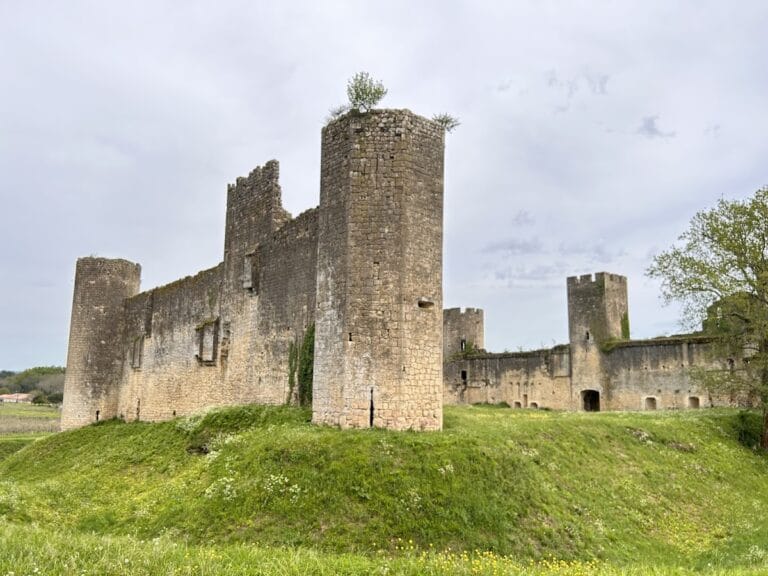
Château La Tour Blanche: A Sauternes Wine Estate in France

Site at a Glance
- Rating
- 4.9
- Popularity
- Very Low
- Country
- France
- Primary era
- Early Modern
- External website
- Open
- Eras represented
- Early Modern
- Civilizations
- French
- Site type
- Economic
- Remains
- Production Complex
On this page11 sections
History
Château La Tour Blanche is an eighteenth-century wine estate in France, located in Bommes within the Sauternes appellation of the Bordeaux wine region. Its name derives from its first owner, Monsieur de Latour Blanche, an écuyer, or squire, and counsellor at the Parliament of Bordeaux. Archival tradition also connects the property with Jean Saint-Marc du Latourblanche, described as treasurer-general to Louis XIV, the king of France from 1643 to 1715.
Origins and nineteenth-century reputation
After the French Revolution, the estate passed to Pierre Pécherie in 1795. Frederic Focke, a German-born wine merchant, acquired it in 1815 and helped raise its reputation. Tradition credits Focke with recognizing the value of Botrytis cinerea around 1836. This fungus can produce noble rot, which dehydrates grapes while concentrating their sugars and flavors. Focke is also associated with late-harvest methods linked to the Rhine region.
Another tradition calls La Tour Blanche the first Sauternes estate to produce sweet white wine, even before Château d’Yquem. These claims remain traditional rather than firmly established. The estate’s position within the regional hierarchy was formalized in the Bordeaux classification of 1855, when La Tour Blanche was designated a Sauternes Premier Cru, a high-ranking category, and placed second among the Sauternes wines behind Château d’Yquem, which held the classification’s highest Premier Cru Supérieur rank.
Focke died in 1855, after which his widow, Delphine, managed the property. She sold it in 1862 to her nephews Georges Mermann, a broker, and Albert Capdeville, a merchant. They later joined forces with stockbroker Hugues Godefroy and Bordeaux merchant Paul Maître.
State ownership and agricultural education
Financier Daniel Iffla, known as Osiris, bought La Tour Blanche in 1876. At his death in 1907, he left the property to the French state with instructions that an institution for viticulture and winemaking be established there. The Ministry of Agriculture became its owner in 1909, and a seasonal school of viticulture and oenology opened on the estate in 1911.
The La Tour Blanche agricultural vocational school continued to train students in vineyard and winery work while the estate operated as a commercial Sauternes producer. The school and château function as distinct entities. The school receives operating assistance, while winery revenue is reinvested in the estate. Students learn the basic trades but do not take part in production, which remains under the supervision of the cellar master, the specialist responsible for winery and cellar operations.
Environmental management and production
Organic cultivation began in vineyard areas near residences, particularly those close to the school, in 2010. The estate entered an Environmental Management System in 2011, a structured framework for managing and reducing environmental impacts, and received the highest level of High Environmental Value certification in 2014. It formally applied to convert the entire vineyard to organic farming in 2021, with the first certified-organic vintage expected in 2023.
Yields averaged approximately 12 to 15 hectolitres per hectare over the preceding decade. Wine was not marketed from the 1992, 1993, or 2000 vintages because their quality was judged insufficient. Severe April frost reduced the 2008 yield to 3 hectolitres per hectare. In 2008, La Tour Blanche also joined sixteen Bordeaux estates, including Château d’Yquem, Château Olivier, and Château Suduiraut, in a cooperative project to propagate their own grape clones during a shortage of planting material.
Remains
Estate landscape and buildings
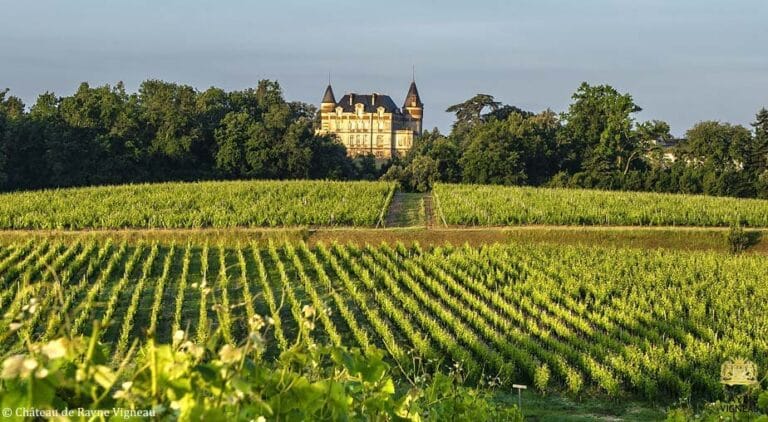
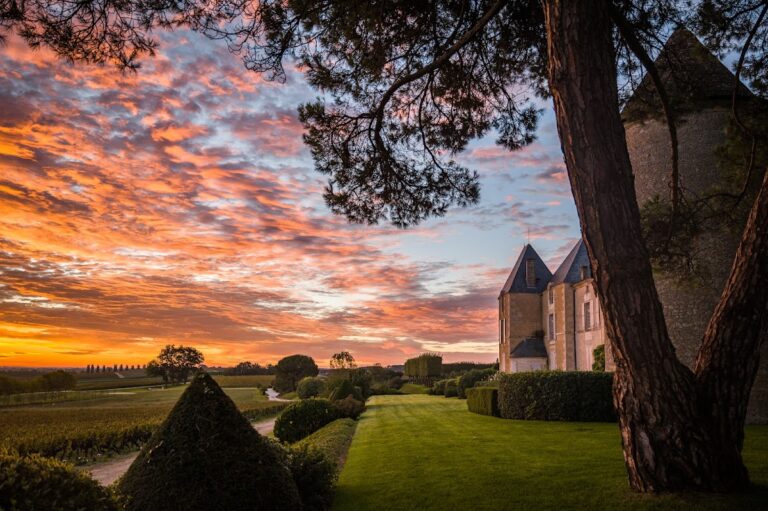
The estate covers approximately 65 to 70 hectares, including about 40 hectares of vines and extensive stands of poplar and pine. The land slopes westward toward the Ciron, a river in the Bordeaux region. Gravelly surface soil provides good drainage, while alternating limestone and clay layers in the subsoil support drainage below ground.
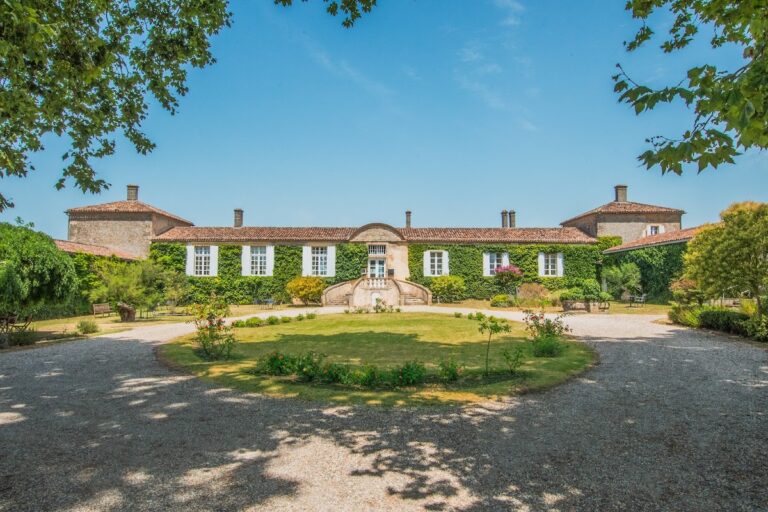
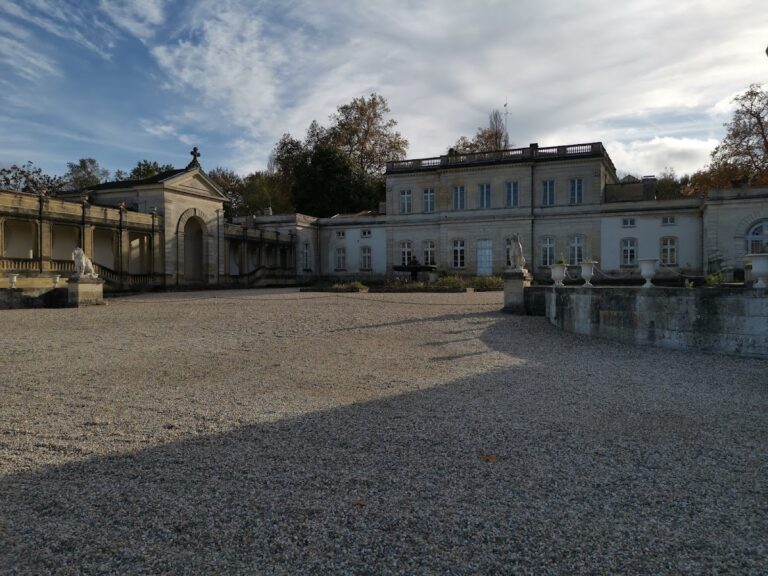
Historic estate building
The historic estate building was constructed by Monsieur de Latour Blanche, the property’s founder. The estate also contains the château’s winery and cellar, which remain part of the working property.
Vineyards and wine production
Of the planted area, approximately 36 hectares are authorized for AOC Sauternes production and 4 hectares for red wine. AOC, or Appellation d’Origine Contrôlée, is the French system defining a wine’s geographic origin and production requirements. The vineyard is planted mainly with Sémillon, which represents about 80 to 83 percent of the vines, alongside 12 to 15 percent Sauvignon Blanc and 5 to 6 percent Muscadelle. Smaller plantings of Merlot, Cabernet Franc, and Cabernet Sauvignon support red-wine production.
Autumn conditions alternate between humid morning mists and sunny afternoons, allowing noble rot to develop on selected grapes. This process concentrates the sugars, and the resulting must, freshly pressed grape juice before or during fermentation, can reach about 25 degrees of potential alcohol, equivalent to approximately 350 to 450 grams of sugar per litre. Harvesting takes place by hand in five or six passes, with pickers selecting berries affected by noble rot. The most concentrated musts go into Château La Tour Blanche, while less concentrated lots are used for the second wine.
Château La Tour Blanche
The principal wine is a sweet white Sauternes made from Sémillon, Sauvignon Blanc, and Muscadelle. Its Sémillon matures for approximately 14 to 18 months in French-oak barrels. Annual production is about 40,000 bottles, or roughly 4,000 cases on average.
Les Charmilles de Tour Blanche
The second wine, Les Charmilles de Tour Blanche, is also an AOC Sauternes produced from the same approximate blend of grape varieties. The three varieties mature in stainless-steel tanks for a fresher, fruitier style. Average production is about 1,250 cases per year.
Additional estate wines
Other wines include Les Jardins de Thinoy, a dry white Bordeaux made entirely from Sauvignon Blanc; Cru du Cinquet, a red Bordeaux made from Merlot and Malbec; and Horus, a rosé table wine. The estate is also associated with the names Isis and Osiris, including a dry white Isis and a semi-dry Osiris. Osiris was Daniel Iffla’s nickname, and the name also refers to an ancient Egyptian god associated especially with the afterlife and regeneration.