Château d’Arche: A Historic Sauternes Wine Estate


Site at a Glance
- Rating
- 4.7
- Popularity
- Low
- Country
- France
- Primary era
- Early Modern
- External website
- Open
- Eras represented
- Early Modern, Modern
- Civilizations
- French
- Site type
- Domestic
- Remains
- Manor House
On this page11 sections
History
Château d’Arche is a wine estate in Sauternes, France, whose building complex developed from a sixteenth-century charterhouse and whose principal historic structure is a seventeenth-century chartreuse, a French country estate residence historically associated with a charterhouse. The estate produces wines under the Sauternes, Graves, and Bordeaux appellations and was classified as a Deuxième Grand Cru, or Second Growth, in the 1855 Classification of the Wines of Bordeaux.
From Braneyre to Château d’Arche
The estate takes its name from François, Comte d’Arche (1674–1749), who acquired the Braneyre cru in 1733. A cru is a recognized estate, vineyard, or wine-producing designation. François renamed the property after himself, establishing the name that it continues to bear.
The French Revolution brought a major change in ownership. The royalist d’Arche family emigrated, and the estate was confiscated as national property. On 1 August 1795, it was sold as the Braneyre estate to Monsieur Dublanc for 331,000 livres.
Division, classification, and reunification
After the sale, the property was divided among the Dubourg, Lacoste, Lafaurie, and Pentalier families. In 1855, the Lafaurie portion was classified as a Deuxième Grand Cru among the white wines of Gironde. The 1855 Bordeaux Classification places leading Bordeaux wines in growth categories, with a Deuxième Grand Cru forming the second-highest tier. The post-Revolutionary divisions and the associated decline from the estate’s eighteenth-century quality were linked to its position in that second tier.
In 1925, Armand Bastit-Saint-Martin (1900–1984) succeeded his father-in-law in control of one part of the estate. He later served as mayor of Sauternes from 1934 to 1971. After the Second World War, he began the process of reunifying the divided property.
Around 1980–1981, Pierre Perromat (1926–2012), president of France’s National Institute of Origin and Quality, took the estate on lease and worked to improve its production standards. The institute regulates and protects appellations of origin and other official food and wine quality designations. During Perromat’s tenure, production of the former second wine, d’Arche-Lafaurie, ended.
Modern expansion and management
Philippe Boël acquired the estate in 1996 and expanded its vineyard area from 50 to 90 hectares. From that year, parts of the property received improved drainage, partial consolidation of landholdings, and soil cultivation with horse-drawn ploughing. An incomplete attempt was made to convert the estate to organic agriculture. Floréal, a disease-resistant grape variety developed for changing climatic conditions, was later introduced experimentally in response to climate warming and disease risks.
Production practices also changed. Whereas about one-third of the harvest had been kept in tanks, the wines later came to be released after barrel ageing. The estate began wine tourism and tourist accommodation in 2002, and in 2009 introduced a 100-millilitre, test-tube-shaped bottle as a marketing initiative aimed at young nightclub-goers.
After Philippe Boël’s death in 2024, ownership passed to his daughters Caroline and Nathalie Boël. Caroline Boël’s husband, Guillaume d’Arschot Schoonhoven, directs the company. Matthieu Arroyo, Solène Loutter, and Julie Naud-Raillard oversee technical, marketing and hospitality, and administrative and financial operations respectively. A new wine cellar opened in 2019, while work on a hotel complex incorporating the historic buildings has been under way since 2025.
Remains
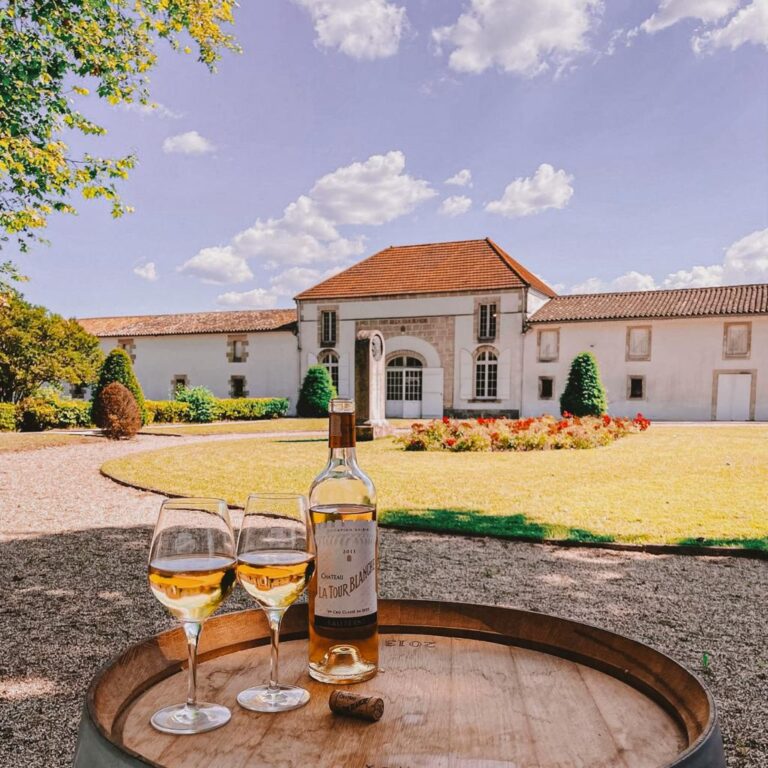
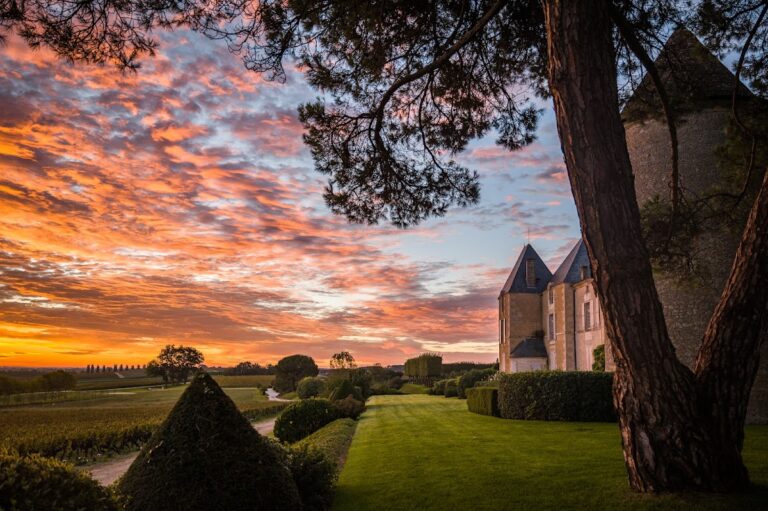
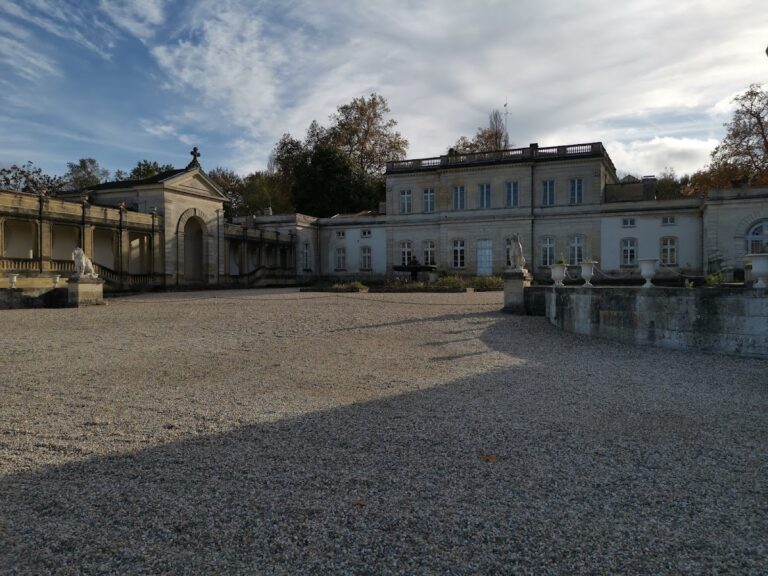
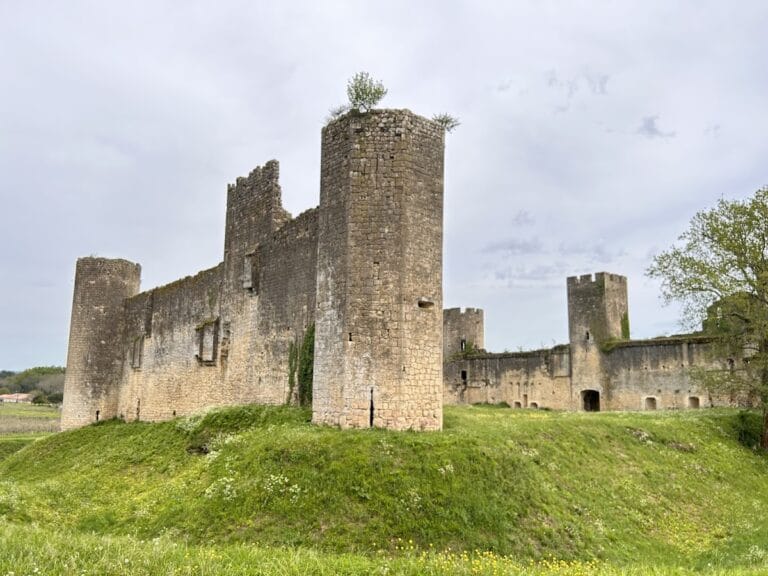
Château d’Arche occupies a high plateau north of Sauternes. The ground slopes gently southward, giving the estate a favourable exposure, and the château overlooks the village. The historic complex is organized around elongated, single-storey buildings that form a garden courtyard and a service courtyard. Originally a seventeenth-century chartreuse, the complex was later modernized in the Classical style.
Historic buildings and estate setting
Chartreuse and courtyards
The chartreuse remains the principal historic building. Its low, extended form and paired courtyards reflect the arrangement of the former estate residence and its service spaces. Parts of the complex accommodated nine guest rooms into the mid-2020s, and the hotel complex under development from 2025 incorporates these older structures.
Vineyards and soils
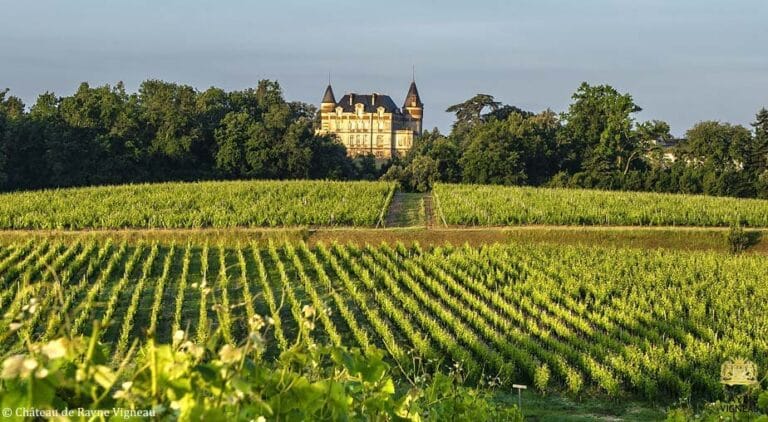
The estate’s vineyards covered 75 hectares in 2024, including 10 hectares outside the classification planted for red wine. Sémillon and Sauvignon form the main plantings, with Floréal also tested experimentally. The vines average 45 years of age, while some are approximately a century old. Grapes from two hectares of vines of up to 100 years in age mature for 24 months in entirely new oak barrels.
Gravel dominates the highest vineyard ground, clay occurs mainly on the slopes, and silt lies at their feet. These warm, well-drained soils heat and cool quickly, supporting different blends according to annual weather and quality conditions.
Winemaking structures
2019 wine cellar
The wine cellar inaugurated in 2019 covers 2,300 square metres and contains 33 stainless-steel vats. Designed by Benoît Sacaze, it also includes a reception area, shop, and reception room. Grapes are sorted in the vineyard, gently pressed, and moved by gravity into storage vessels, where clear musts collect with little further clarification.
Barrel ageing and wines
For general production, no more than one-third of the barrels are new oak. The wines mature for more than 16 months before bottling, and all are barrel-aged before release. The estate produces Sauternes, other white wines, and dry white and red Bordeaux and Graves bottlings, including Soleil d’Arche, Arche Lafaurie, A de Château d’Arche, L’Arche Perlée, and Prieuré d’Arche.