Château de Rayne-Vigneau: A Historic Sauternes Wine Estate in France


Site at a Glance
- Rating
- 4.8
- Popularity
- Low
- Country
- France
- Primary era
- Modern
- External website
- Open
- Eras represented
- Modern
- Civilizations
- French
- Site type
- Domestic
- Remains
- Elite Residence
On this page10 sections
History
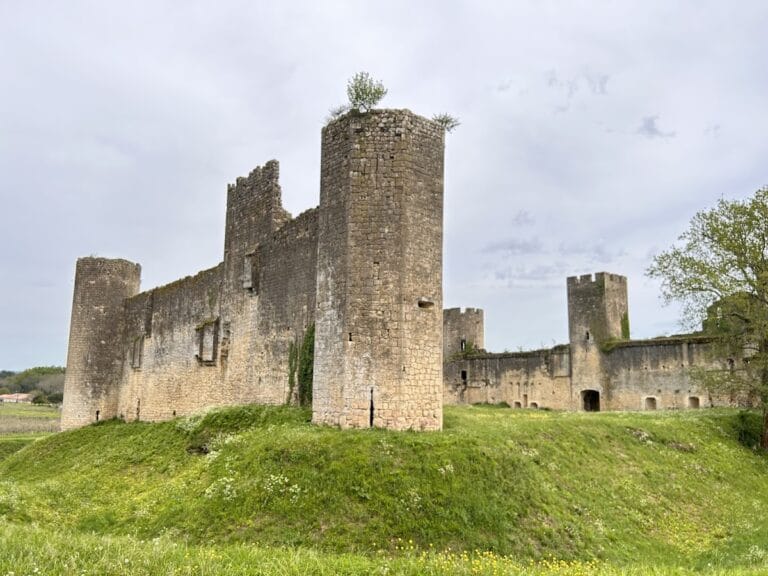
Château de Rayne-Vigneau is a château and wine estate in Bommes, France, producing sweet white wine in the Sauternes appellation of Gironde. Its present principal building dates from a reconstruction begun in 1865, when Louis-Michel Garros combined Neo-Renaissance, Neo-Gothic, and Louis XVI architectural elements. The estate was classified as a Premier Cru Classé, or First Growth, in the 1855 Bordeaux classification of leading estates and remains associated with the history of Sauternes wine.
Origins and the Vigneau estate
The first known owner was Gabriel de Vigneau, recorded at the estate in 1685. His son Étienne married Jeanne Sauvage in 1681. She was the daughter of the owner of Château d’Yquem, another Sauternes estate, and Étienne subsequently assumed management of Vigneau.
By 1742, the property belonged to the Duffour family. After Jean Duffour died in 1750, his widow managed the estate until 1774. Their son then inherited it, but died the following year. His brother Bruno Duffour continued to administer the property until 1817.
The Pontac family and 19th-century reconstruction
Catherine de Pontac, known as the Baroness de Rayne, bought the Vigneau estate from Bruno Duffour’s nephews in 1834. The property later passed to her heir, Gabriel de Pontac. During his ownership, the estate was also known as Vigneau-Pontac.
In 1855, Château de Rayne-Vigneau entered the Sauternes category of the official Bordeaux wine classification as a Premier Cru Classé. Its reputation was reinforced at the 1867 Exposition Universelle, where the estate’s 1861 vintage received a gold medal.
Gabriel de Pontac commissioned Louis-Michel Garros to rebuild the château in 1865. The project gave the principal residence its mixture of Neo-Renaissance, Neo-Gothic, and Louis XVI influences. After Gabriel died in 1892, his nephew Albert de Pontac inherited the estate and adopted the name Château Rayne-Vigneau in memory of the Baroness de Rayne.
Replanting, family ownership, and commercial operation
The vineyard was replanted from 1893 to 1914 after phylloxera, an aphid-like pest that devastated European vineyards in the late nineteenth century. When Albert de Pontac died in 1922, his son-in-law Gabriel de Roton managed the estate for Albert’s four daughters. The château subsequently remained in the de Roton family.
Georges Raoux assumed operation of the vineyard in 1961, while the Pontac family retained ownership of the château. In 1967, the residence passed to François de Roton, Gabriel de Roton’s son. The wine-merchants’ company Mestrezat-Preller bought the vineyard in 1971, and much of it was then replanted with Sauvignon. The cellars underwent a complete renovation in 1982.
Crédit Agricole acquired the wine estate through its subsidiary CA Grands Crus in 2004, and the Trésor du Patrimoine group acquired it in 2015. The château, park, and associated facilities remain owned by the heirs of François de Roton. A decree dated 19 April 2004 protected them as historic monuments, a French heritage-conservation status.
Wine production in the modern estate
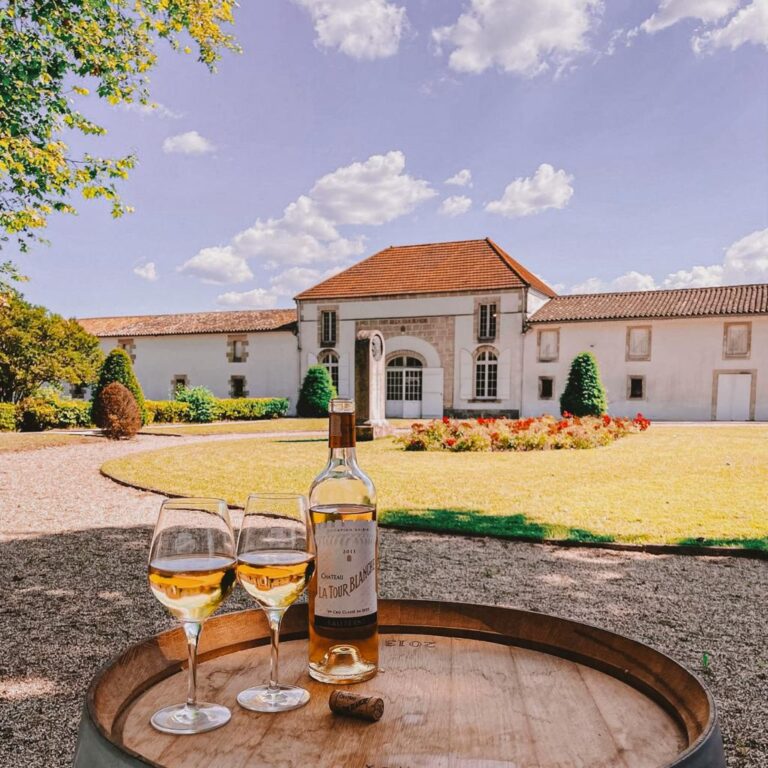
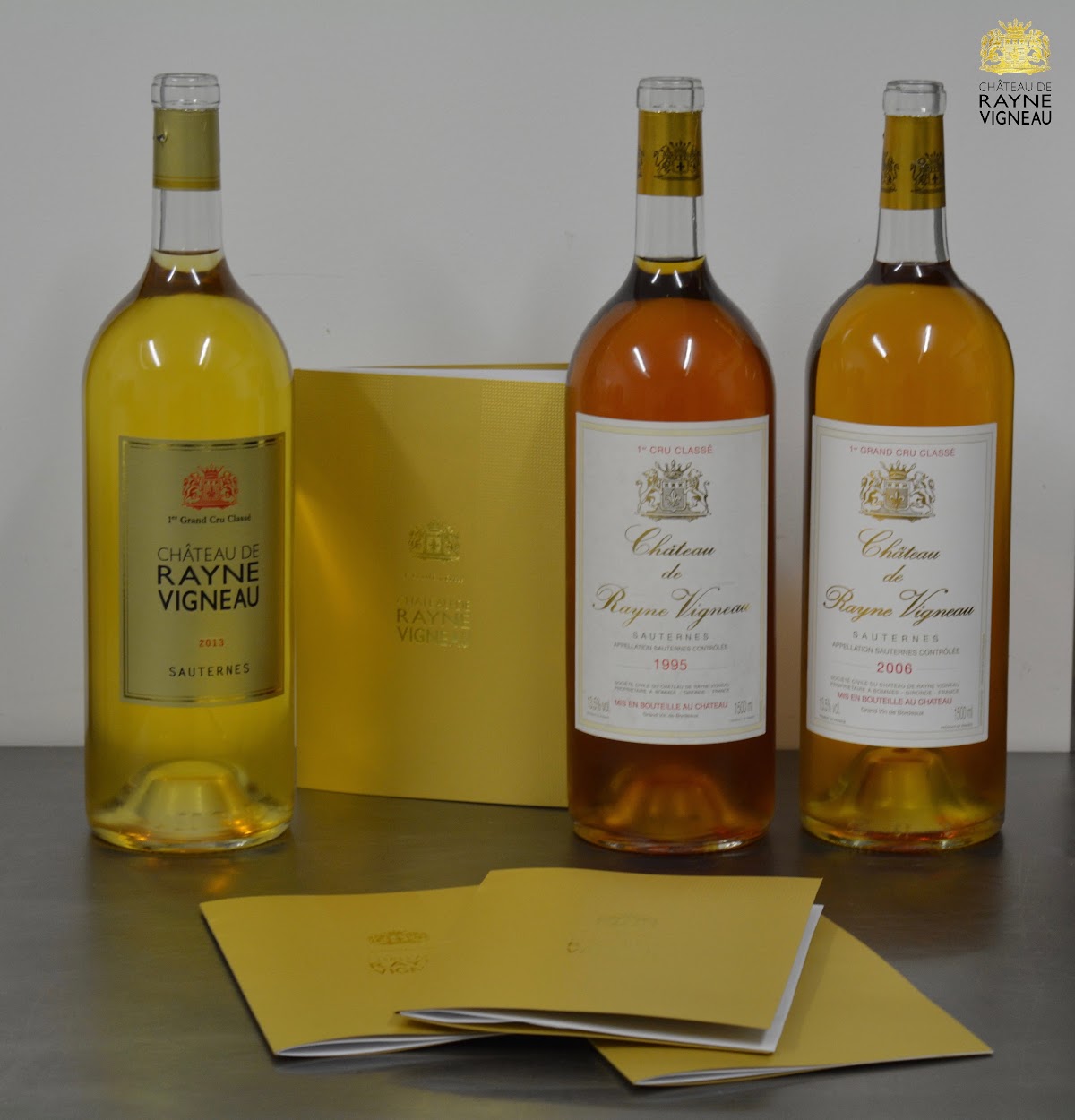
Château de Rayne-Vigneau continues to produce two sweet white wines under the Sauternes appellation, Château de Rayne-Vigneau and the second wine Madame de Rayne. It also produces the dry white Bordeaux wine Sec de Rayne Vigneau. The 2014 Sauternes and Bordeaux wines were made as vegan wines, and the estate introduced Audace, a vegan Sauternes with no added sulfur, in October 2018.
Remains
Château and landscaped grounds
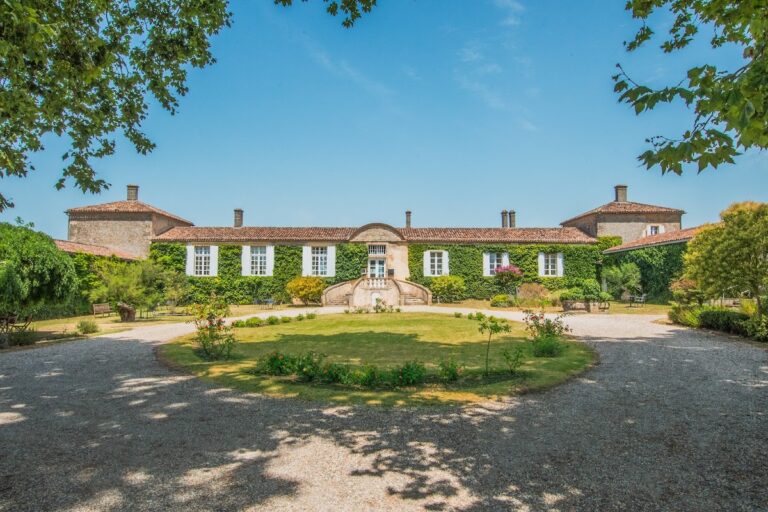
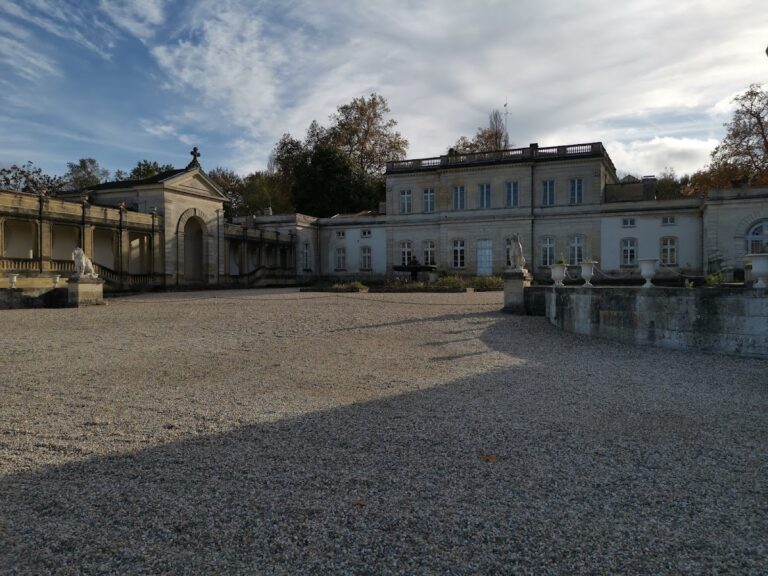
The estate’s principal building is a wine-producing château reconstructed from 1865 under Louis-Michel Garros. Its design brings together Neo-Renaissance and Neo-Gothic forms with the neoclassical character of Louis XVI style, a late-eighteenth-century French architectural language. The surviving estate includes the château, a park, associated landscaping, and related facilities. Views of the building are recorded from the southeast and northeast, while the wider grounds form part of the protected historic-monument property.
Cellars and dovecote
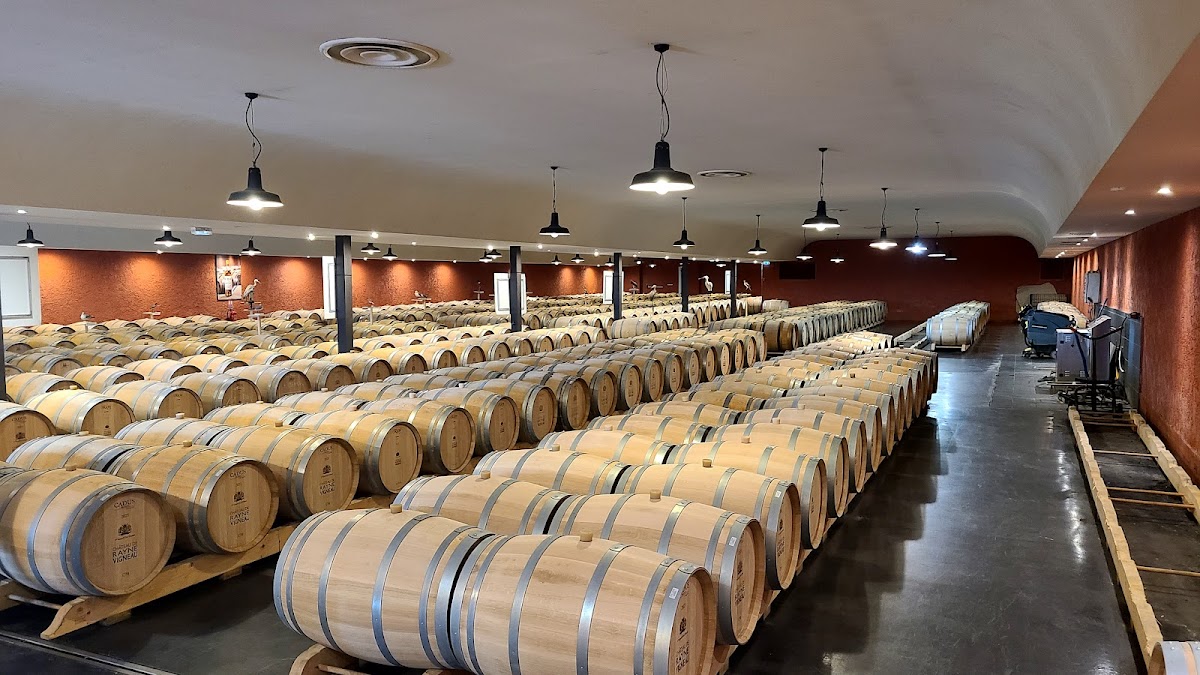
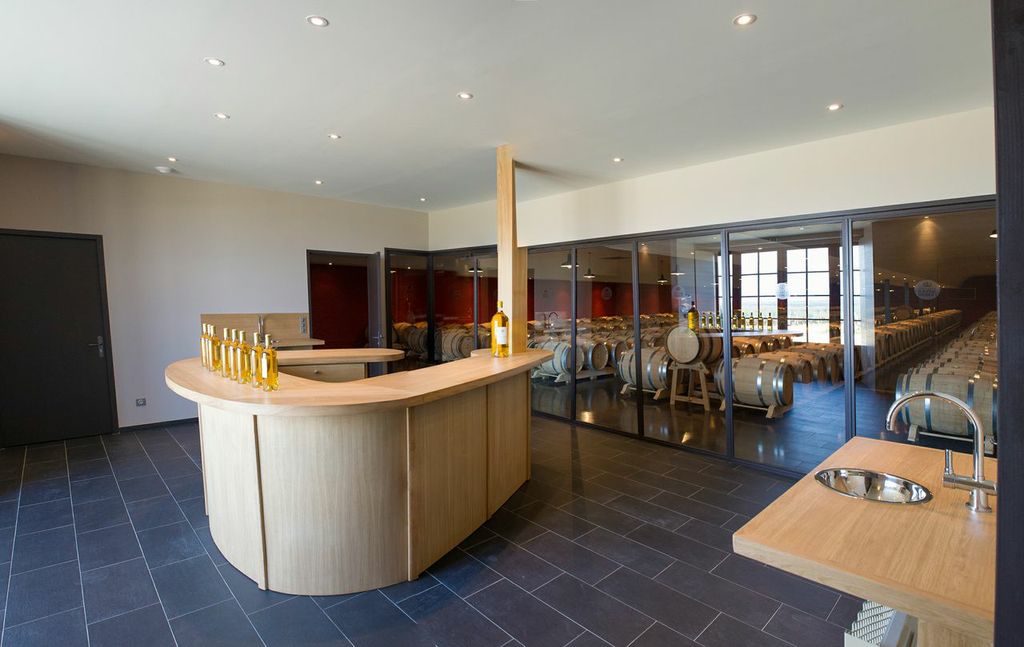
Wine cellars form part of the estate complex, with a dovecote located near them. The cellars were completely renovated in 1982. The estate’s principal wine, or Grand Vin, has an annual production of nearly 120,000 bottles.
Vineyard landscape
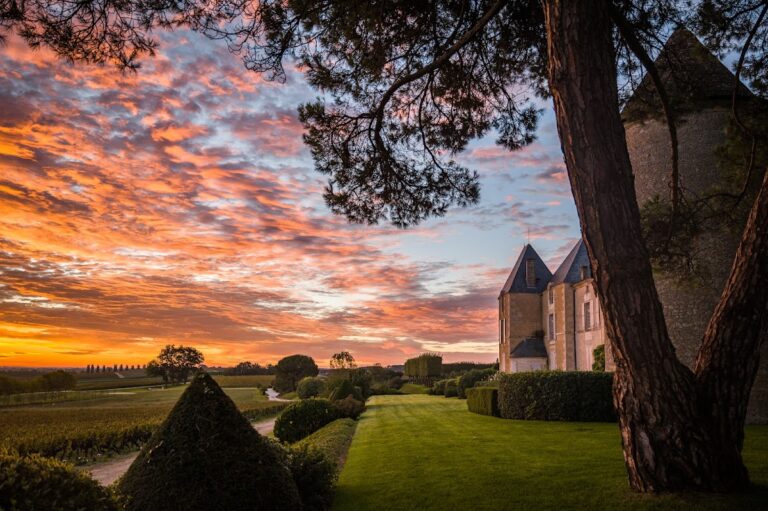
The vineyard occupies approximately 80 to 84 hectares in the southeastern part of Bommes, near the hamlet of Le Haut-Bommes. It lies near Château Sigalas-Rabaud, Château Rabaud-Promis, and Château Lafaurie-Peyraguey. The soil consists of sandy gravel containing stone fragments and limestone, with clay beneath. Plantings comprise 74 percent Sémillon, 24 percent Sauvignon Blanc, and 2 percent Muscadelle, with vines averaging about 30 to 35 years of age.
Harvesting and wine-making facilities
The vineyard’s Sauternes production depends on Botrytis cinerea, commonly called noble rot. Autumn fog associated with temperature differences near the Ciron River encourages the fungus, while later dry, sunny weather promotes evaporation and concentrates sugars in the grapes. Workers therefore harvest by hand in several passes, selectively gathering affected grapes. The harvest may require four to eight separate passes.
The developing wine ferments in wooden barrels until it reaches approximately 13 to 14 percent alcohol. It then moves to stainless-steel tanks, where it is cooled for several days to about 7°C and stabilized. After sulfuring, the wine matures for 12 to 18 months in small oak barrels called barriques, with half of the barrels replaced each year.