Château du Vignault: A Historic French Château in Bourbon-Lancy
Visitor Information
Google Rating: 4.9
Popularity: Very Low
Official Website: www.levigneau.eu
Country: France
Civilization: Early Modern
Site type: Domestic
Remains: Palace
History
The Château du Vignault is situated in the municipality of Bourbon-Lancy in modern France. Its origins trace back to the medieval period when a fortified house stood on this site in the 13th century. This early stronghold belonged to Anceau li Orgens and served as a seigneurial residence typical of its era.
By the late 15th century, specifically in 1474, ownership of the estate had passed to Guichard Breschard. Eventually, the property was transferred to the d’Ambly family, indicating its continued importance as a noble residence. In 1578, Denis de Gévaudan, who held the administrative role of bailli (a kind of local magistrate or governor) of Bourbon-Lancy, purchased the seigneury, consolidating his local authority through possession of the estate. His nephew, Jean Boullery, sold the property in 1640 to Nazaire Challemoux, marking another change of hands among the regional elite.
During the 18th century, in 1756, Marguerite-Charlotte de Challemoux brought the Château du Vignault into the family of Jean-Baptiste de Folin through marriage. De Folin served as president at the court of accounts of Dole, a significant judicial and financial office. Following this union, the old castle was demolished. A new residence was commissioned, designed by the architect Guizot, who had experience working on the Château de Saint-Aubin-sur-Loire. The design plans are attributed to Edme Verniquet, a known architect of the period, signaling a shift from a fortified medieval structure to a refined 18th-century château.
The French Revolution brought a dramatic change in ownership. The château, belonging to emigrated owners, was confiscated as national property during this period of upheaval. Over the following years, it passed through several hands. In 1930, Claude Puzenat acquired the estate and undertook restoration efforts that preserved both the building and its surrounding grounds. Throughout the 20th century, the château remained under the care of the Puzenat family, maintaining its status as a private residence.
Remains
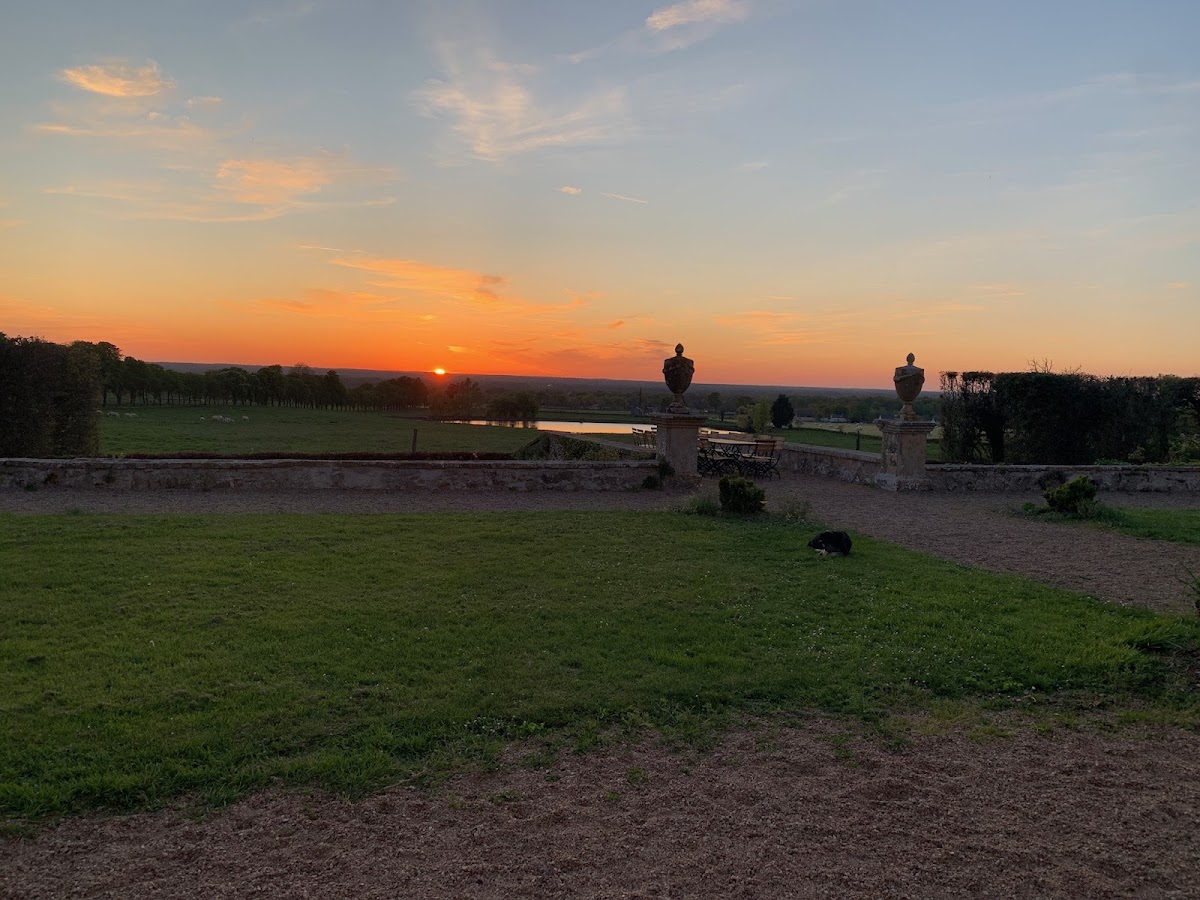
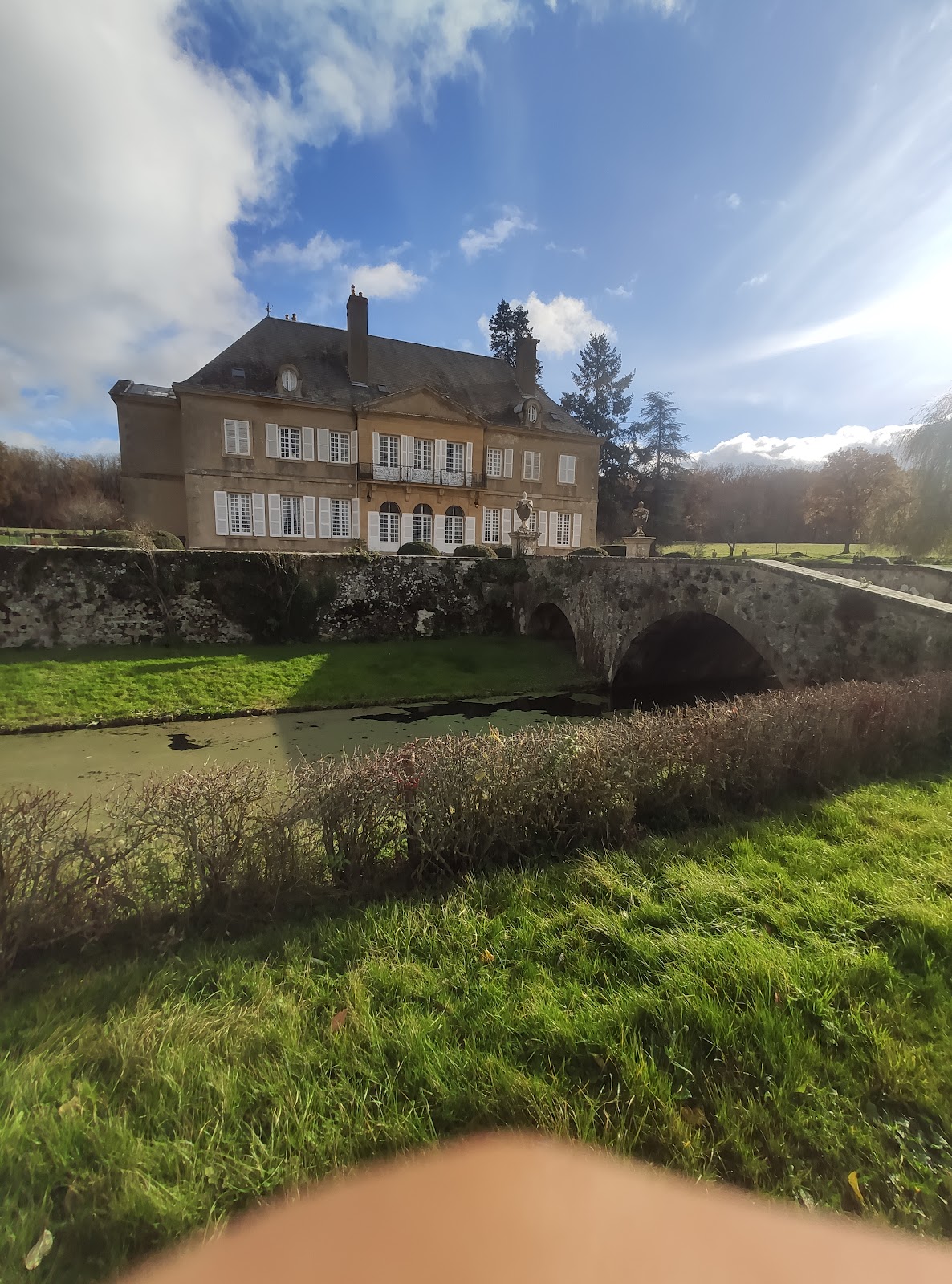
The Château du Vignault occupies a sloped site and features a well-defined arrangement typical of its 18th-century redesign. A terrace lies before the main façade, bordered on the western side by a canal, which is crossed by a two-arched stone bridge. This canal and bridge help frame the approach to the château and emphasize its estate character.
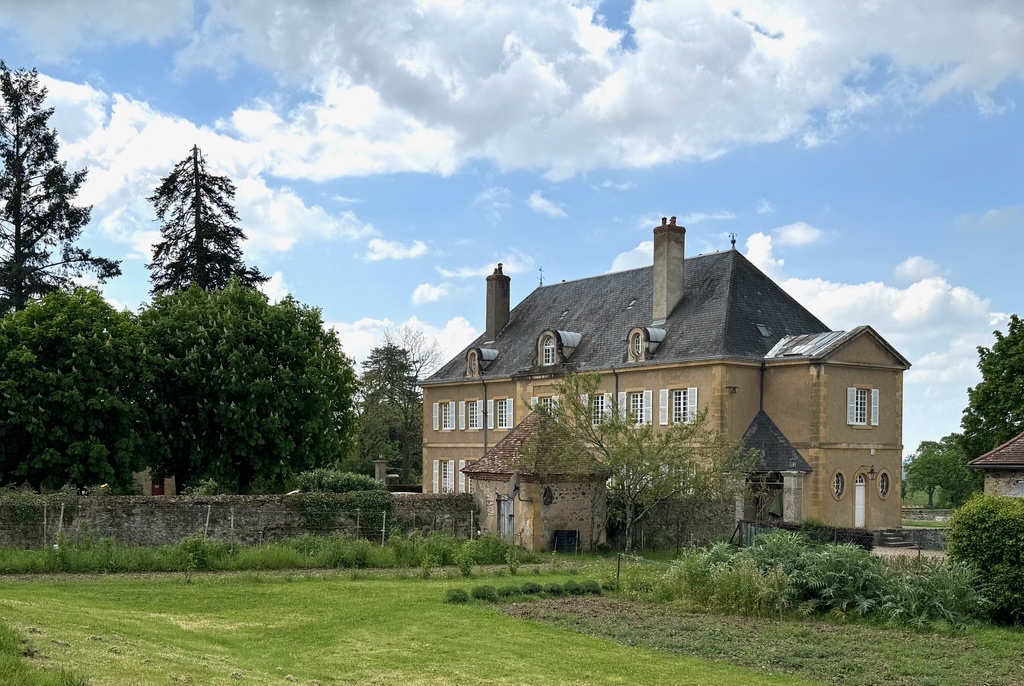
The main building presents a rectangular footprint, composed of three levels: a ground floor, a full upper floor, and an attic illuminated by oculus windows—small, round openings that provide light under the roof. A slate-covered hipped roof tops the structure, a common style in French residential architecture of the time.
On the western front, a central section projects slightly and contains three large French doors with semicircular arches on the ground floor. Above these, the upper story opens to a stone balcony supported by intricately fluted consoles and edged with wrought iron railings. This balcony is crowned by a classical pediment, lending the façade a balanced and elegant appearance.
The eastern side of the château also features a prominent projection, housing a single bay that is set just slightly forward. This area includes a ground-floor door framed by a rectangular recess with a rounded arch, surmounted by a dormer window adorned with semicircular side wings. Attached to the north gable is a small square outbuilding distinguished by a large pediment on its front, adding functional space while maintaining architectural harmony. A horizontal flat band runs continuously around the building at the first-floor level, serving as an unifying decorative element.
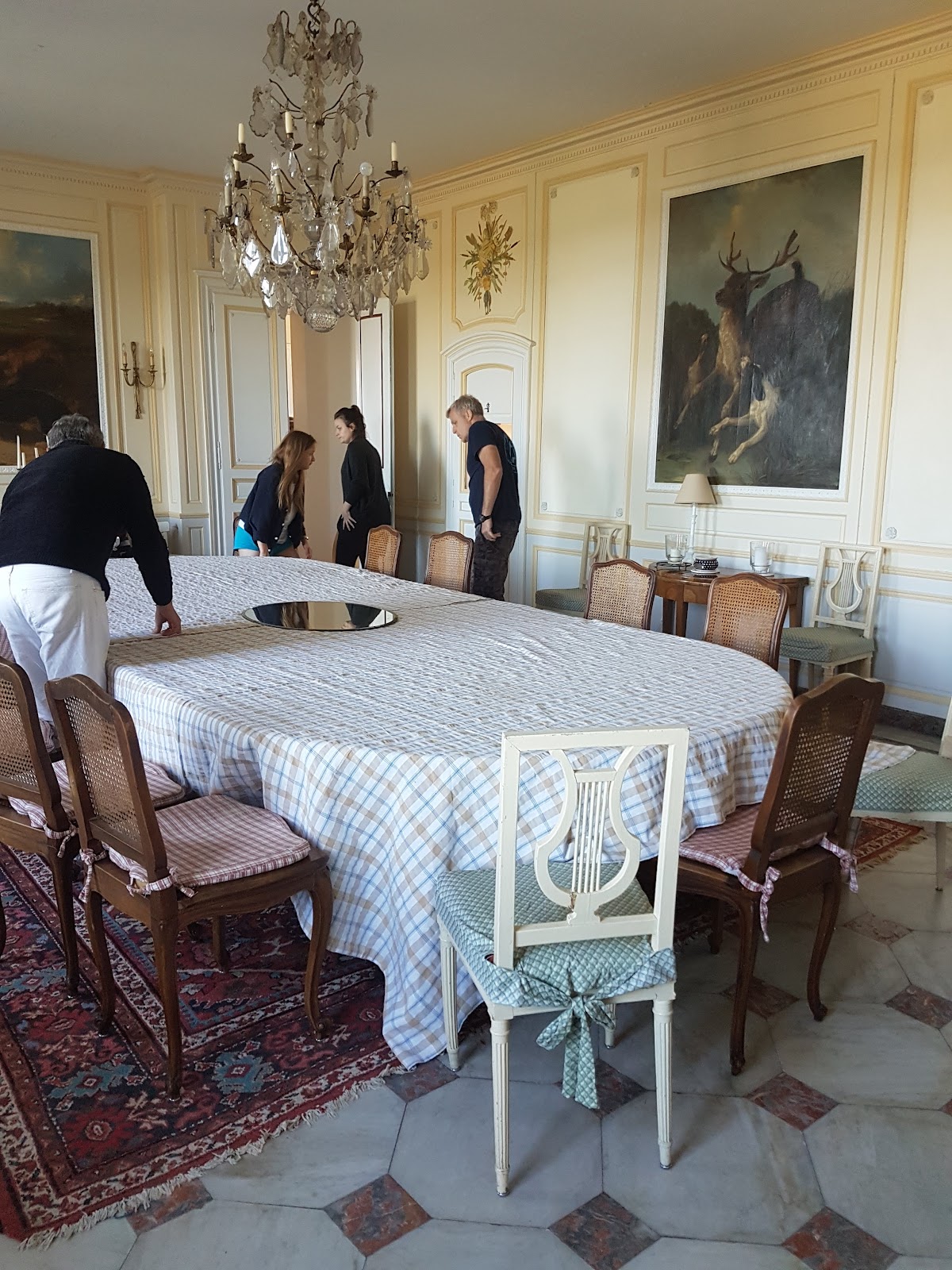
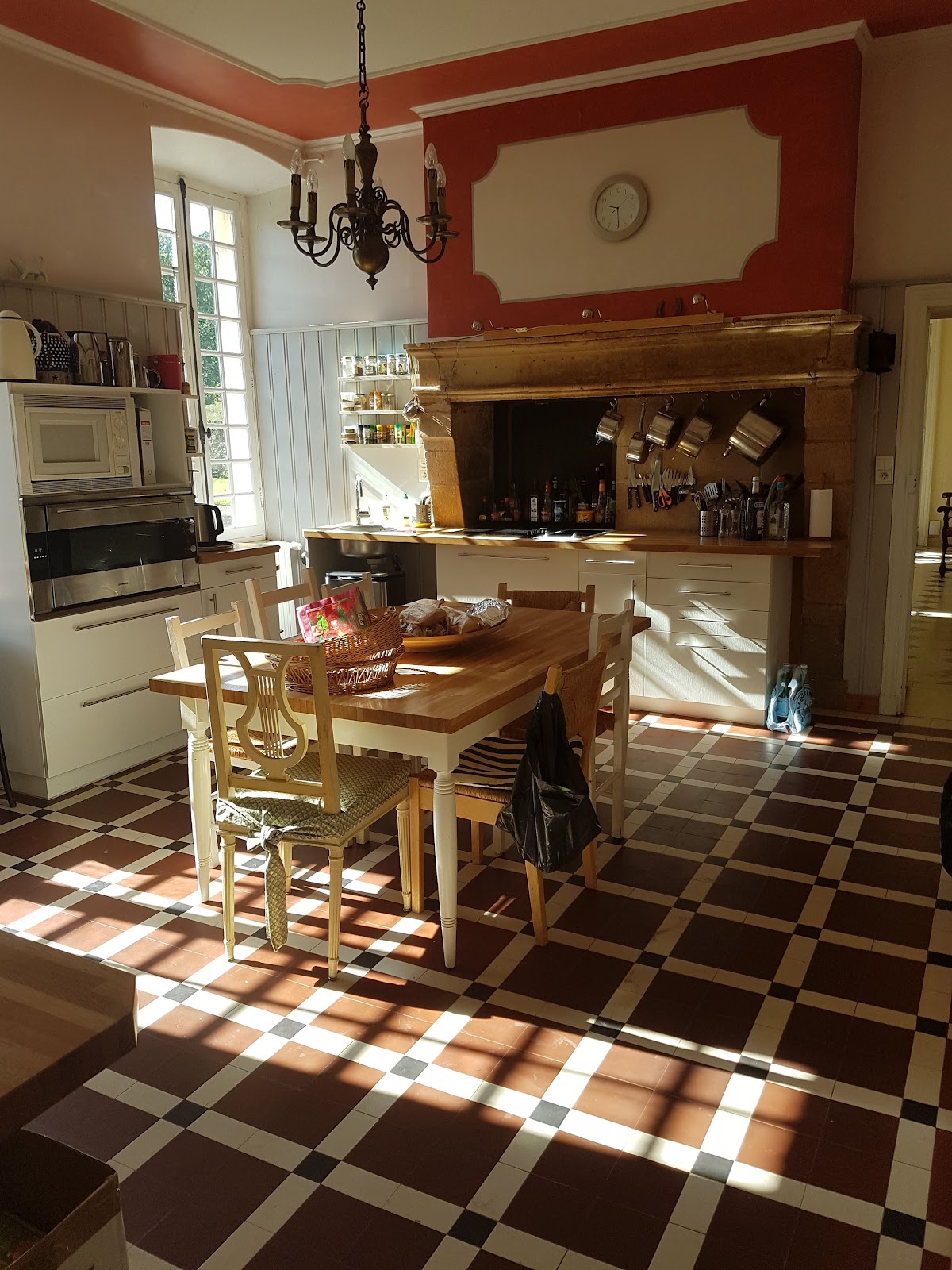
Inside, the décor retains notable features. The vestibule and dining room floors are covered with red and white tiles originally from a townhouse in Neuilly, reflecting a blend of styles and reused materials. Wood paneling within the château was crafted by a specialized Parisian cabinetmaker, highlighting the refined taste of its owners. The main staircase is a three-flight spiral structure fitted with a wrought iron handrail made by a local artisan during restoration work in 1931–1932, combining traditional craftsmanship with later interventions.
One of the château’s few original decorative elements still in place are the fireplace plates found in the salon and dining room. These metal plates bear the coats of arms of the Folin and Challemoux families, serving as enduring emblems of the historical lineage associated with the estate.
Today, the Château du Vignault remains a private property, its architectural features preserved through careful restoration, embodying layers of history from its medieval origins to its 18th-century transformation and 20th-century conservation.
Nearby sites