Château du Tournel: Feudal Seat of the Barons of Tournel in France
Site at a Glance
- Rating
- 4.6
- Popularity
- Very Low
- Country
- France
- Primary era
- Medieval
- Eras represented
- Medieval
- Civilizations
- French
- Site type
- Military
- Remains
- Castle
On this page11 sections
History
Château du Tournel is a feudal castle in France and the former seat of the Barons of Tournel, one of the eight baronies of Gévaudan, the historical region corresponding broadly to present-day Lozère. Built before the thirteenth century, it occupied a strategic position above the upper Lot valley and controlled the central possession of a territory extending from Mont Lozère to Mende and into Valdonnez.
The Tournel barony
The barony was divided into five mandements, territorial jurisdictions linked to a lordship or castle: Tournel, Chapieu, Montialoux, Montmirat, and Montfort. Before the thirteenth century, members of the Tournel family described themselves chiefly as lords rather than barons. Their earlier base appears to have been at Chapieu, where Bishop Aldebert III du Tournel consolidated the fortifications.
The family adopted the name Tournel around 1215. Its first recorded use dates from 1219, when Odilon-Guérin I, Baron of Tournel, paid homage to Bishop Guillaume IV de Peyre. The family may have taken possession of Château du Tournel at about this time. Some of the surviving fabric belongs to the twelfth century, reflecting the castle’s early medieval development.
Relocation and military decline
Around 1307, the family moved away from the defensive castle and favored the more comfortable Château du Boy in Valdonnez. Château du Tournel remained an important refuge during the wars and disputes of medieval Gévaudan, and it was reputed to be impregnable. At the beginning of the Hundred Years’ War, however, the family chose to strengthen Château du Boy rather than return to Tournel.
During the Wars of Religion, the sixteenth-century conflicts between Catholics and Protestants in France, the castle was destroyed for the first time around 1500. Huguenot troops, French Protestants associated chiefly with the Reformed tradition, later attacked it under Matthieu Merle. The castle was relieved when the baron arrived from the Boy mandement. It was then completely abandoned and never restored.
Later preservation
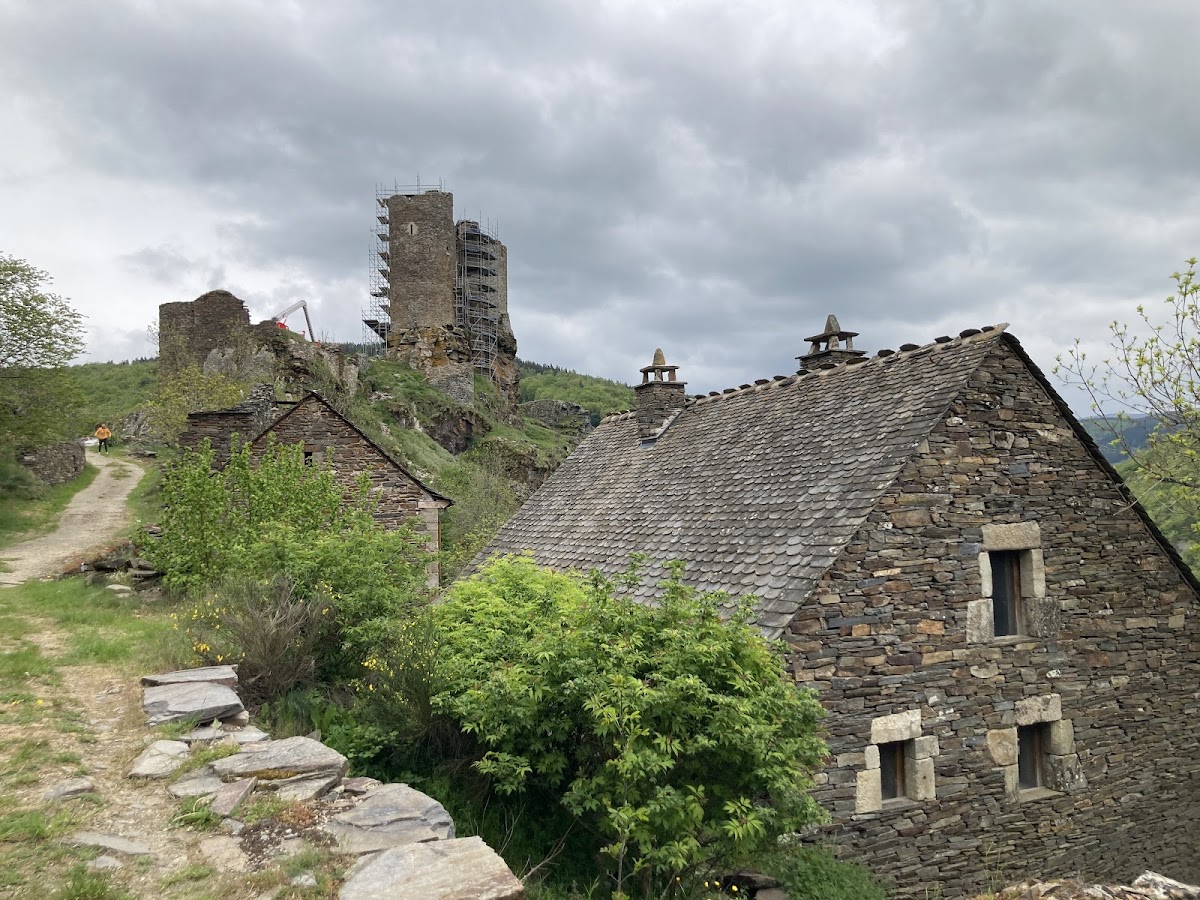
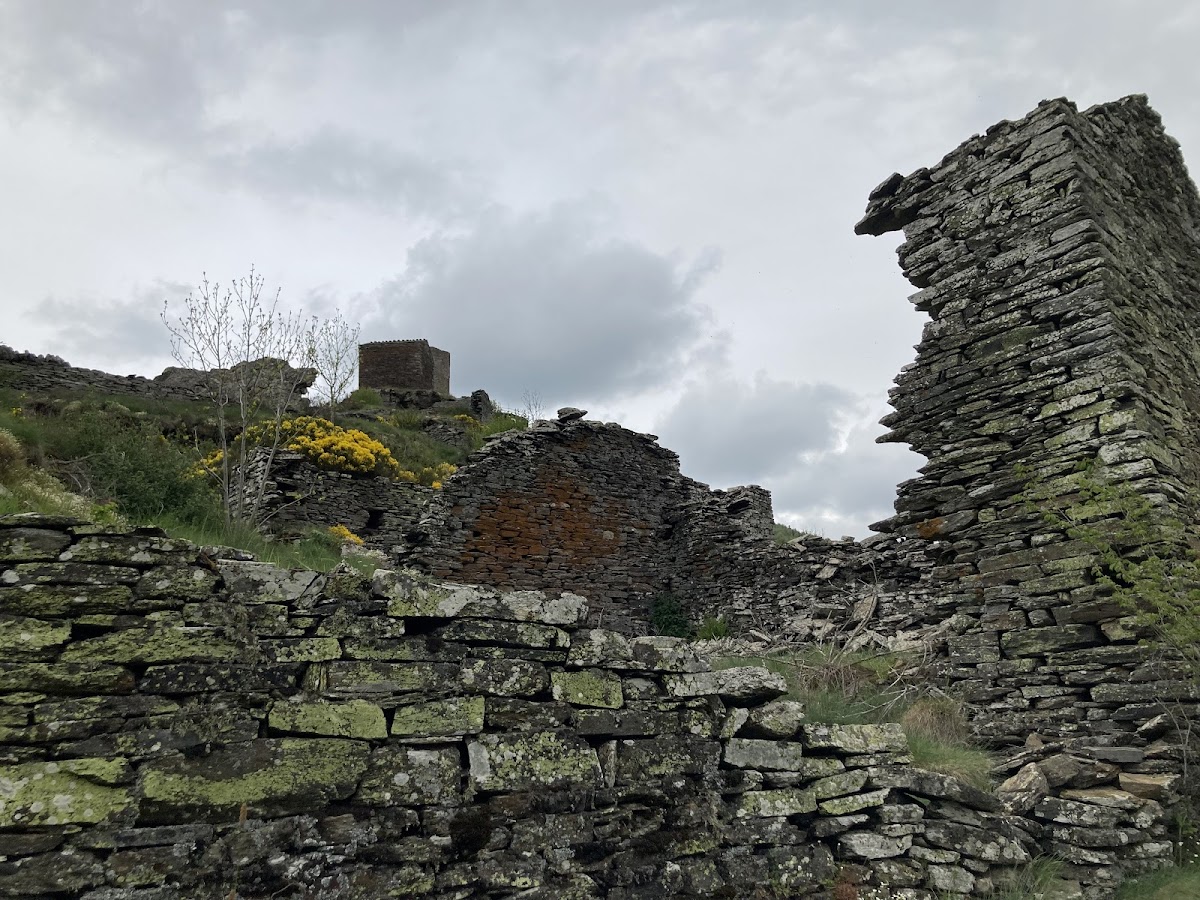
The non-fortified village protected by the castle remained occupied until the beginning of the twentieth century. Consolidation work has maintained the ruins since the twentieth century, while an interpretive trail explains the site. In December 2018, the commune nouvelle of Mont Lozère et Goulet acquired the castle for its consolidation and enhancement. It became a protected registered site in 1967 under France’s heritage and environmental designation system.
Remains
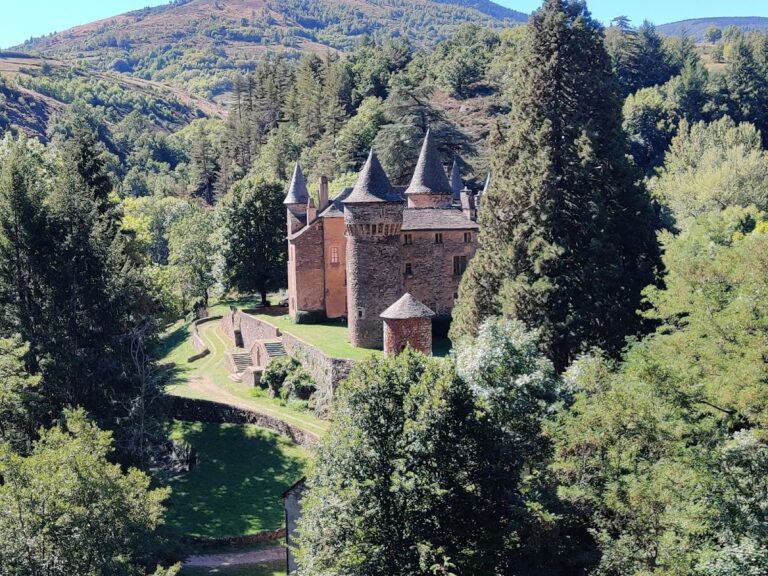
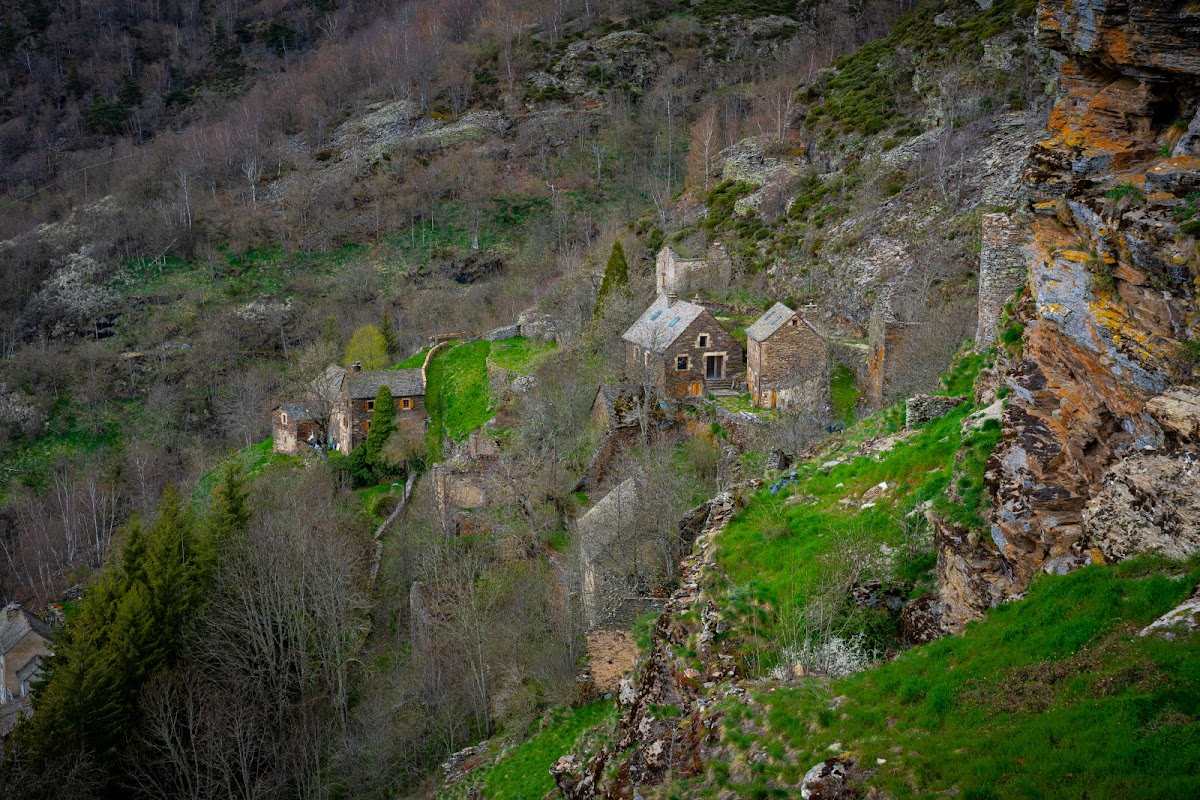
Château du Tournel stands on a rocky outcrop above the upper Lot valley. Its position was strategic in relation to the Tournel family’s possessions, and the towers provide views toward Mont Lozère. The castle was arranged as a strongly defended approach leading through seven successive gates, with some passages running close to the cliff above the Lot. Six towers formed part of the complex, whose surviving masonry includes elements from the twelfth century.
Defensive structures
Gates and approach
Entry to the inhabited castle required passage through seven gates in succession. The route between some of them followed the cliff edge above the Lot, giving the approach a particularly defensive character. These gates and passages organized movement into the rocky stronghold and helped protect access to its inner areas.
Towers
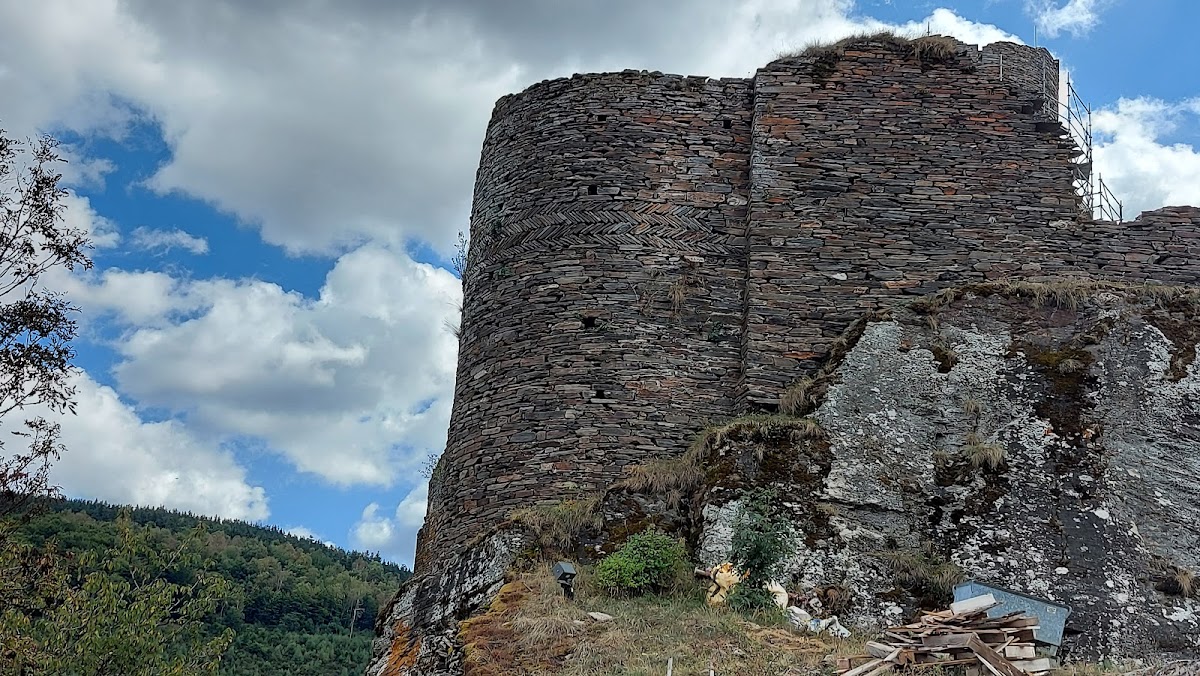
The castle consisted of six towers positioned within its fortified layout. Their elevated locations took advantage of the rocky outcrop and contributed to the defensive system associated with the castle’s commanding position above the valley.
Residential and religious buildings
Habitable keep
The habitable keep, the principal fortified tower combining residential and defensive functions, dates from the thirteenth century. It retains traces of plaster decorated with rosettes near the latrines, providing evidence of the interior treatment of this residential part of the fortress.
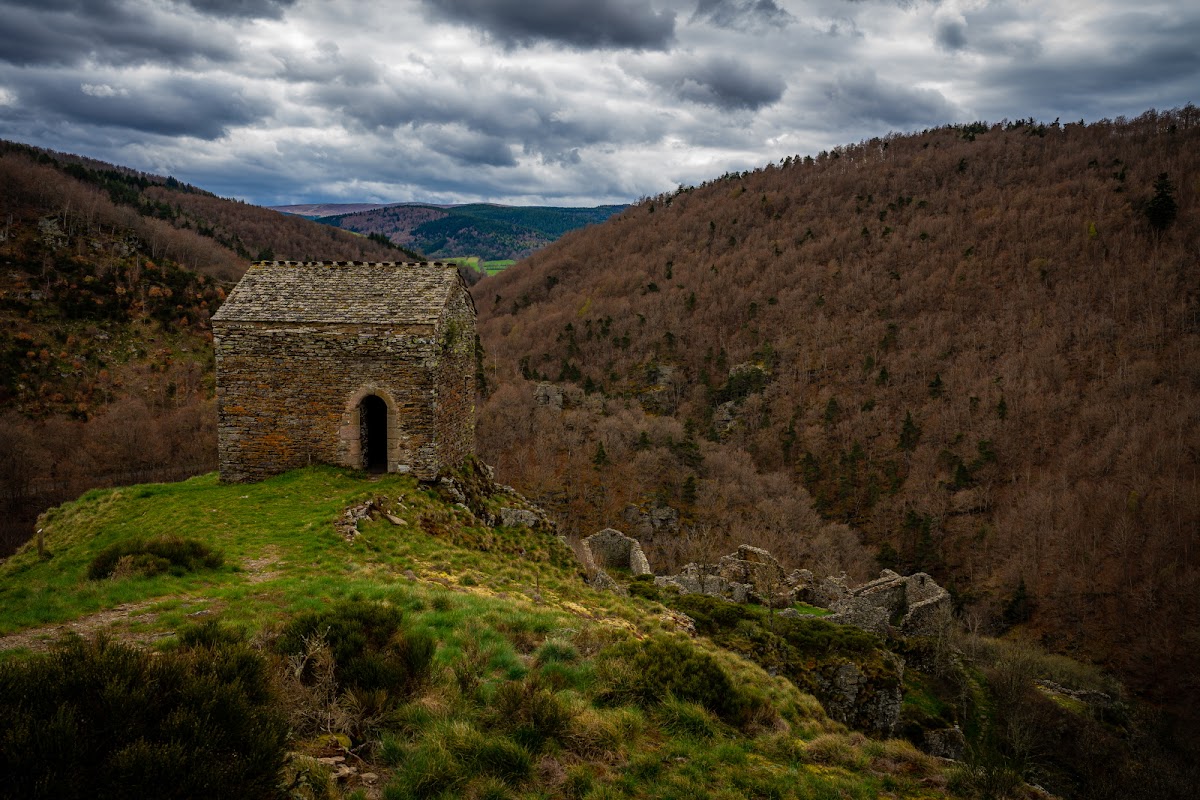
Castle chapel
The castle chapel was dedicated to Saint Peter, one of the principal apostles of Christianity and a traditional early leader of the Christian Church. Its dedication indicates the religious presence maintained within the fortified complex.
Nearby sites