Château de Castanet: A Sixteenth-Century Château in France


Site at a Glance
- Rating
- 4.4
- Popularity
- Low
- Country
- France
- Primary era
- Early Modern
- External website
- Open
- Eras represented
- Early Modern
- Civilizations
- French
- Site type
- Domestic
- Remains
- Manor House
On this page12 sections
History
Medieval origins and seigneurial ownership
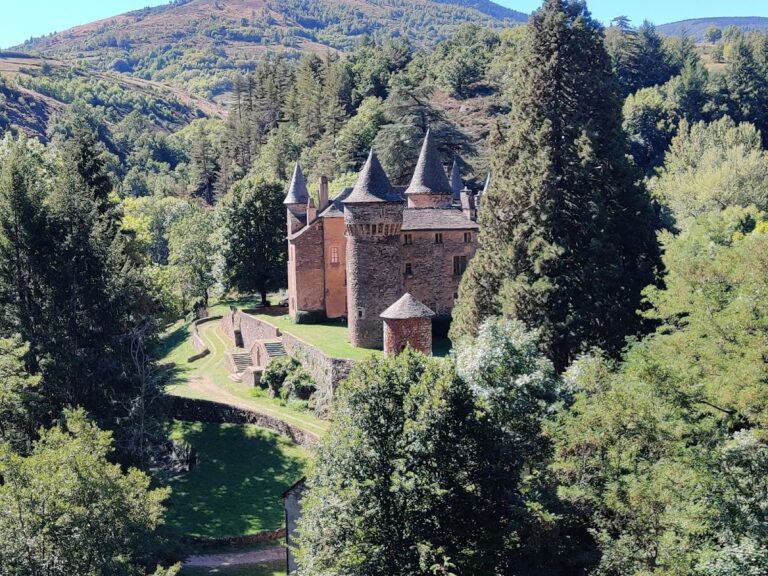
Château de Castanet is a sixteenth-century château in Pourcharesses, France, near Villefort in Lozère. The manor was built in the sixteenth century and takes its name from the Occitan word for a chestnut grove, reflecting the abundance of chestnut trees in the surrounding territory.
The Castanet manse, a landed estate or revenue-bearing holding, is mentioned from the thirteenth century, although it may be older. It stood in the parish of Saint-Victorin-de-Villefort, within the Diocese of Uzès, an ecclesiastical territory governed by a bishop, and depended on Saint-Gilles Abbey. The lord of Hérail, a co-lord of La Garde-Guérin, held the property as a vassal of the Bishop of Mende. Until 1550, the manse passed by inheritance together with the right to exercise shared seigneurial authority at La Garde-Guérin.
Construction under the d’Isarn family
Robert Brun held the property from 1550 and sold it to Jacques d’Isarn of Villefort on 14 December 1571. Jacques began building the manor in the following year. Construction was completed by 1578, and his descendants later enlarged and embellished the building.
By about 1684, the château had become a secondary residence of the d’Isarn family. The heir, Jacques Joseph d’Isarn, married Marie-Suzanne de Valicourt, later known as the Marquise de Villefort. From 1709 to 1744, she served as under-governess to the children of France, after which the family moved to Versailles.
Transfers and revolutionary confiscation
Jean-Louis Baldit, a lawyer in Villefort, bought the château from Louis-François d’Isarn in 1760. In 1784, he sold it to Victorin Bonnet-Ladevèze, a judge in Villefort. During the French Revolution, the former owner emigrated, and the property was confiscated and sold as a national asset to Théodore Borrely and Joseph André, both from Villefort. It later passed among farming families.
Protection, fire, and restoration
Joseph Piton acquired Château de Castanet in 1932, and the property remained in his family until the 1960s. Plans for the Villefort Dam followed studies in 1956 and 1957. The project, undertaken by Electricité de France, France’s state-founded electricity utility commonly known as EDF, threatened to submerge part of the valley, including the château. Registration as a French historic monument in 1964 prevented its destruction.
EDF subsequently entrusted the monument to the Villefort, Pourcharesses, and Prévenchères intercommunal syndicate, which reinforced it against dangers associated with the lake. The château hosted art exhibitions until 1992 and an exhibition of early cameras from 1993 to 1995. In 1997, three associations created exhibitions on daily life in the territory between 1900 and 1950.
A major fire devastated the château in March 2000. Restoration was completed in 2006, allowing visits and exhibitions to resume. Château de Castanet is now owned by the Communauté de Communes Mont-Lozère and contains a permanent exhibition on regional history alongside temporary exhibitions by artists and craftspeople.
Remains
Manor and estate
Château building
The surviving château is a sixteenth-century manor at Castanet, beside the artificial Villefort Lake, formed behind the Villefort Dam. The original building was progressively enlarged and embellished by Jacques d’Isarn’s descendants. A chimney carries Jacques d’Isarn’s coat of arms, with a blue field, a gold horizontal band, three gold roundels above, and a gold crescent below.
Estate grounds
The estate transferred with the château in 1760 included a lower courtyard, a barn, stables, a garden, a mill, meadows, and fields. The site is associated with the Régordane Way, followed by pilgrims travelling from the Massif Central toward Saint-Gilles, and with the Via Soteirana between Mende and Villefort through the Lot and Altier valleys.
Modern physical history
Reinforcement beside the reservoir
The château was reinforced in the twentieth century because the Villefort reservoir threatened the valley. This work preserved the building after the dam project and formed part of the measures that allowed the monument to remain in place beside the lake.
Fire damage and restoration
The fire of March 2000 destroyed the building. Restoration finished in 2006 and returned the château to use for visits and exhibitions, including its permanent presentation of regional history and temporary displays by artists and craftspeople.
Nearby sites