Château du Grand Ringelstein: A Medieval Hill Castle in France


Site at a Glance
- Rating
- 4.3
- Popularity
- Very Low
- Country
- France
- Primary era
- Medieval
- Eras represented
- Medieval
- Civilizations
- Holy Roman Empire
- Site type
- Military
- Remains
- Castle
On this page7 sections
History
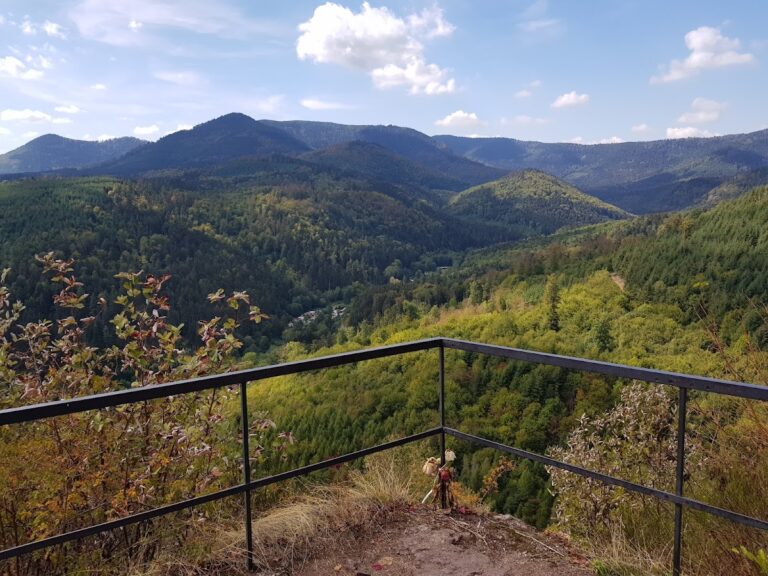
Château du Grand Ringelstein is a ruined medieval hill castle in France, near Oberhaslach, dating from around the turn of the thirteenth century. Also known as Château Ringelsbourg, it occupies the Grand Ringelsberg in the Vosges and may have succeeded the nearby Klein-Ringelstein castle, although that relationship remains uncertain.
Medieval ownership
The site was owned by the counts of Eguisheim, a medieval comital family associated with Alsace, and the castle is recorded from the middle of the twelfth century. After the Eguisheim family became extinct, ownership passed to the Bishop of Strasbourg. In the medieval period, this ecclesiastical and territorial authority governed the Diocese of Strasbourg and also held secular possessions and rights.
Destruction and protection
The castle became associated with brigand knights before it was destroyed in 1470 by troops of the Electoral Palatinate, a major territory of the Holy Roman Empire ruled by the count palatine of the Rhine. After its destruction, the site fell into ruin. The ruins have been protected as a French historic monument since December 1898, and the property is state-owned.
Remains
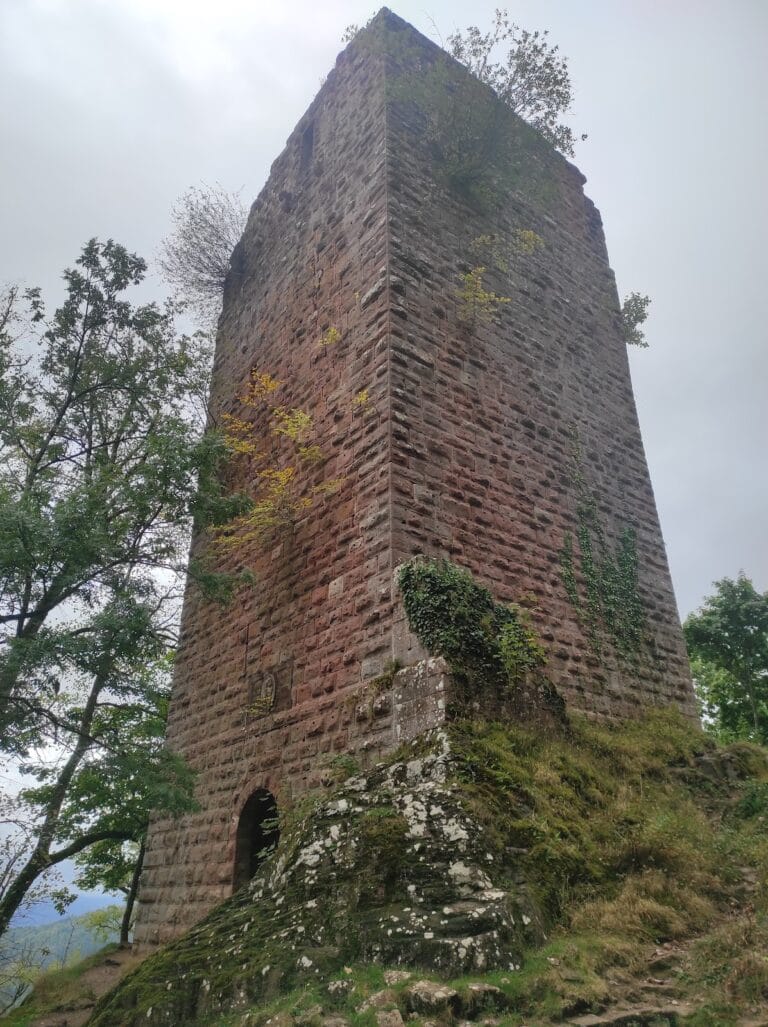
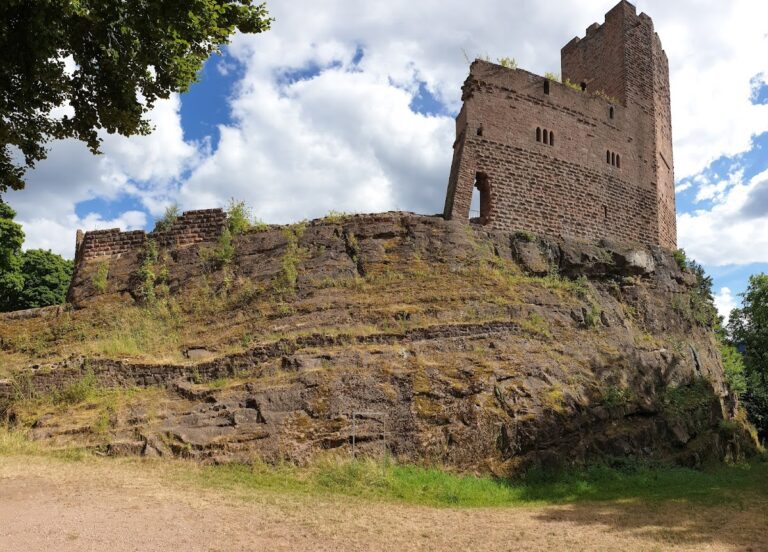
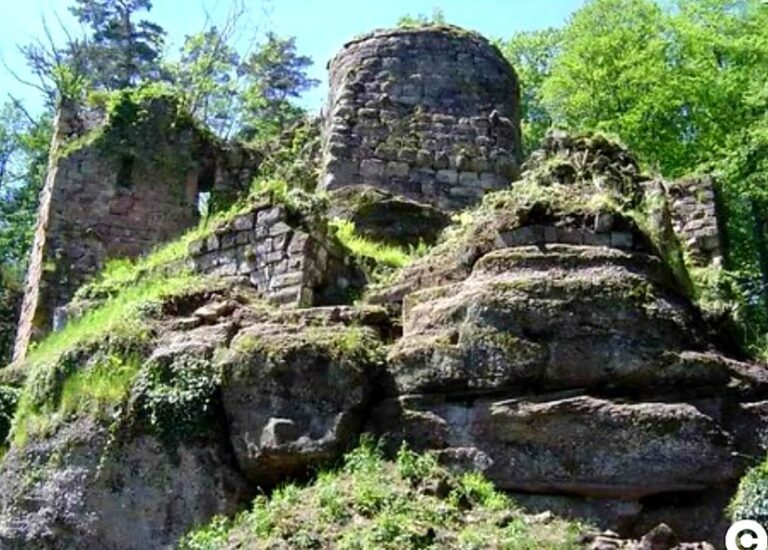
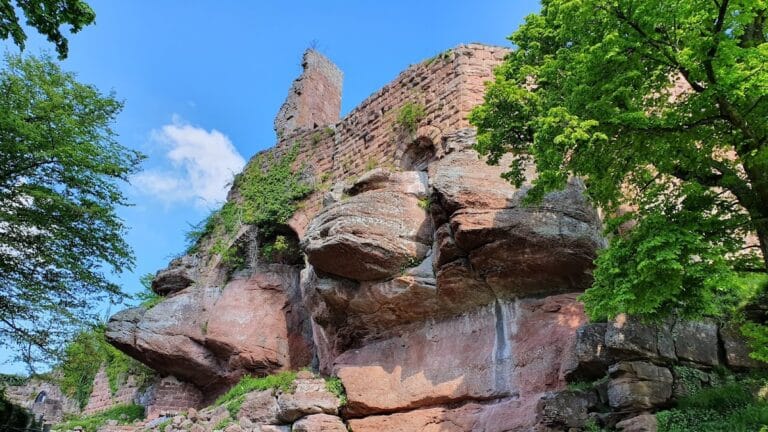
The castle occupies several sandstone rocks on the Grand Ringelsberg, at approximately 644 to 645 metres above sea level. The surviving remains are concentrated on the summits and consist mainly of fragments of the former buildings, together with a polygonal fortified enclosure that surrounds the rocky group.
Fortified structures
Pentagonal keep
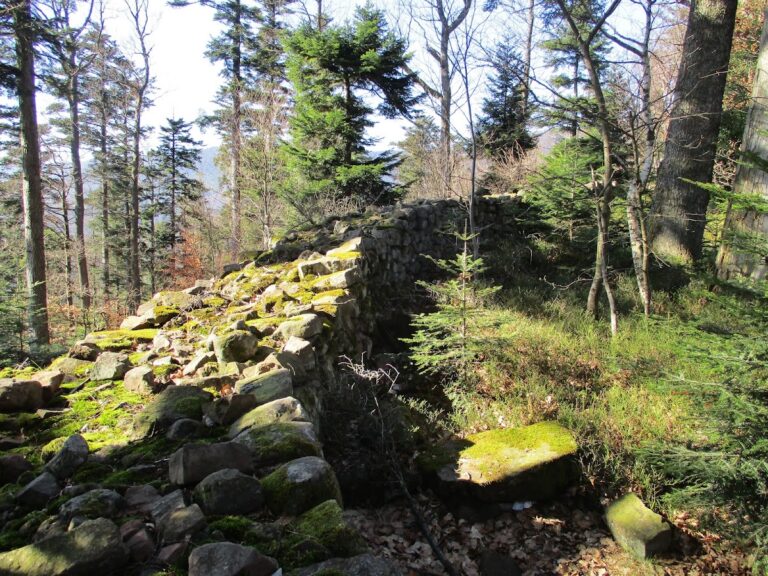
On the northern side, the remains of a pentagonal keep survive on the most accessible part of the site. A keep was the principal fortified tower of a medieval castle, often serving as both stronghold and residence. The surviving structure is scant, preserving only part of the building that once occupied the northern summit.
Polygonal enclosure
The polygonal enclosure, or surrounding defensive wall, remains comparatively well preserved, particularly along the south-west side. Several small round-arched openings are visible in this section, providing surviving details of the wall’s construction.
Nearby sites