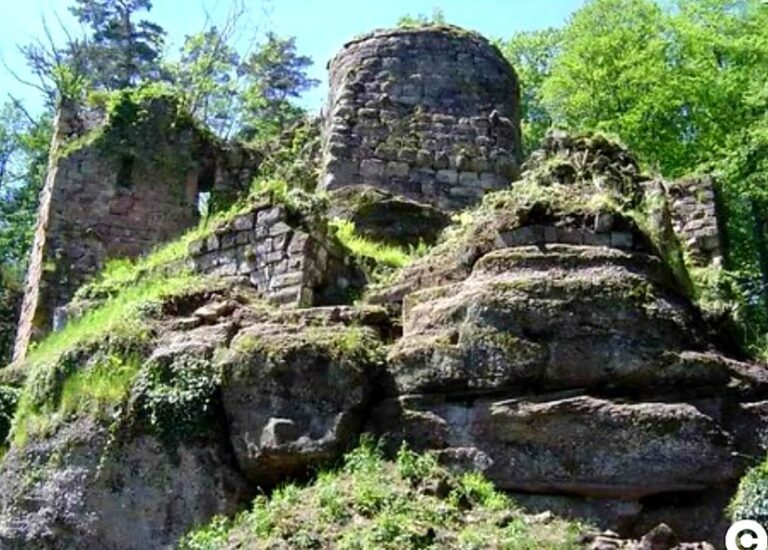
Château du Petit-Ringelstein: A Ruined Castle in France


Site at a Glance
- Rating
- 4.4
- Popularity
- Very Low
- Country
- France
- Primary era
- Medieval
- Eras represented
- Medieval
- Civilizations
- Holy Roman Empire
- Site type
- Military
- Remains
- Castle
On this page8 sections
History
Origins and Medieval Occupation
Château du Petit-Ringelstein is a ruined castle in France, near Oberhaslach, whose surviving masonry places its origins in the tenth or eleventh century. The fortification’s beginnings remain uncertain. It may have been an early form of castle or a predecessor of the neighboring Château du Grand-Ringelstein.
In 1137, Anselmus de Ringelstein was associated with the inhabitants of the castle. He was said to have healed the people of Haslach. The later history of the site is largely unknown, although its present form probably reflects a subsequent alteration, possibly made during a siege of Château de Hohenstein.
Protection and Name
The ruins have held the status of a French monument historique since 1898. This is a formal heritage-protection designation for historically or architecturally significant sites and structures, and Château du Petit-Ringelstein is state property. The alternative name Château du Petit-Ringelsberg reflects the site’s German linguistic background. Petit-Ringelstein combines Ring, meaning “ring” or “circle,” with Stein, meaning “stone.”
Remains
Hilltop Fortification
Dry-Stone Enclosure
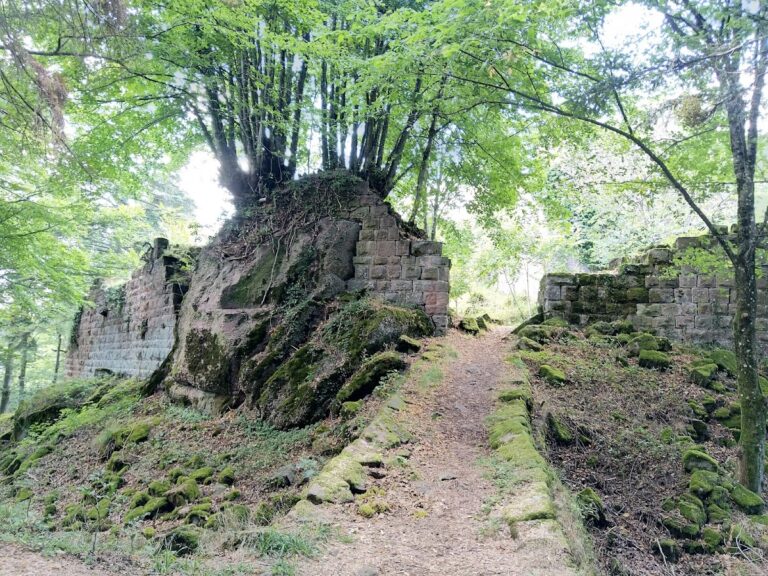
The castle occupies a small summit and is formed mainly by an enceinte, an enclosing defensive wall, that surrounds the hilltop. Built from dry stone, with stones fitted together without mortar, the wall encloses an area measuring about 61 metres by 21 metres. It survives to roughly one metre in height, and a ditch borders the enclosure, including along its northern side. Together, these fragmentary remains define a ruined highland fortification with limited masonry still standing.
Medieval Quarry
Dressed Building Stones
A nearby medieval quarry supplied stones that were extracted, cut, and dressed with bossage. This masonry technique leaves the outer faces projecting from the wall as prominent, roughly dressed blocks. The stones probably date from the first third of the thirteenth century and may have been intended for Château du Grand-Ringelstein, Château de Hohenstein, or both.
Nearby sites