Château de Wangenbourg: A Medieval Fortified Castle in France


Site at a Glance
- Rating
- 4.5
- Popularity
- Low
- Country
- France
- Primary era
- Medieval
- Eras represented
- Medieval, Early Modern, Modern
- Civilizations
- Holy Roman Empire
- Site type
- Military
- Remains
- Castle
On this page8 sections
History
Château de Wangenbourg is a medieval fortified castle in Wangenbourg-Engenthal, France, built by the Lords of Wangen in the thirteenth century. It formed part of a large domain that had belonged to Andlau Abbey since the ninth century and stood near the route linking Obersteigen and Dabo.
Foundation and Wangen lordship
The castle helped the Lords of Wangen establish their position within the domain and seek protection from the local lord. The nobles of Dicka, who acted as advocates for Andlau Abbey, connected the fortress with the abbey’s wider authority. In 1357, two branches of the Wangen family divided Wangenbourg between them. When the Dicka family became extinct in 1386, the Wangen family inherited the abbey’s fief directly.
Sixteenth-century disputes and rebuilding
In 1504, Holy Roman Emperor Maximilian I confiscated the castle from Hans and Stephan von Wangen after defeating Prince-Elector Philipp in the War of the Bavarian Succession, a conflict over succession in Bavaria. Maximilian awarded the property to Count Tiestein, who later gave it to Strasbourg Archbishop Wilhelm III von Hohnstein in 1516. An archbishop was a senior Christian bishop with authority over an archdiocese, and the Archbishops of Strasbourg also held major territorial power in the castle’s history.
Georg and Hartmann, descendants of the Wangen family, continued to occupy the castle despite the transfer. In 1523, Strasbourg Bishop Etienne de Wangen began restoration work financed jointly by the bishopric and the Wangen family. The project caused financial disputes with the bishopric. From 1578, the Strasbourg archbishop and the Lords of Wangen contested ownership. The Wangens were expelled that year but regained their rights in 1595. After 1578, Archbishop Jean de Manderscheid also tried, without success, to make the castle a possession of the Strasbourg bishopric.
French occupation and later preservation
French troops occupied the castle around 1680 during the reign of Louis XIV. On leaving, they blew up the north tower, known as the Chapel Tower, together with the adjoining curtain wall, the section of an enclosing defensive wall between strongpoints. This left the fortress vulnerable, and the castle stood in ruins by 1702.
Restoration began at the start of the twentieth century and was undertaken again in 1931. The ruins have been protected as a French monument historique, a legal heritage designation for historically or architecturally important buildings and ruins, since 6 December 1898. The castle remains privately owned.
Remains
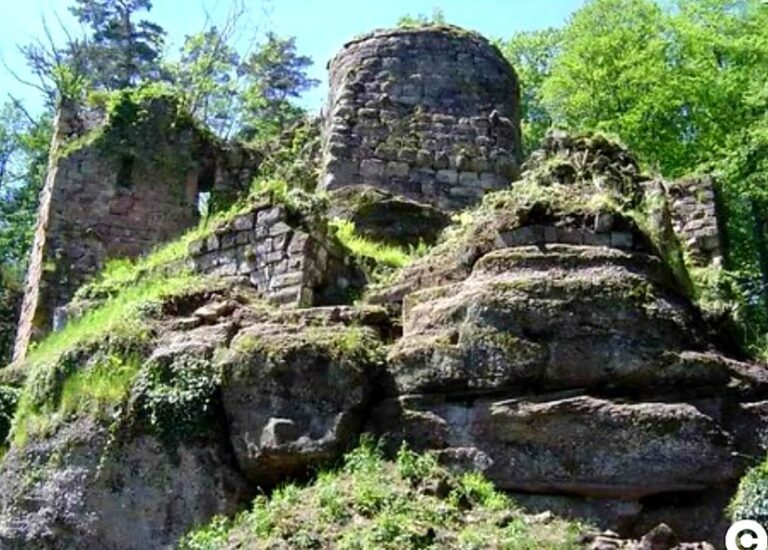
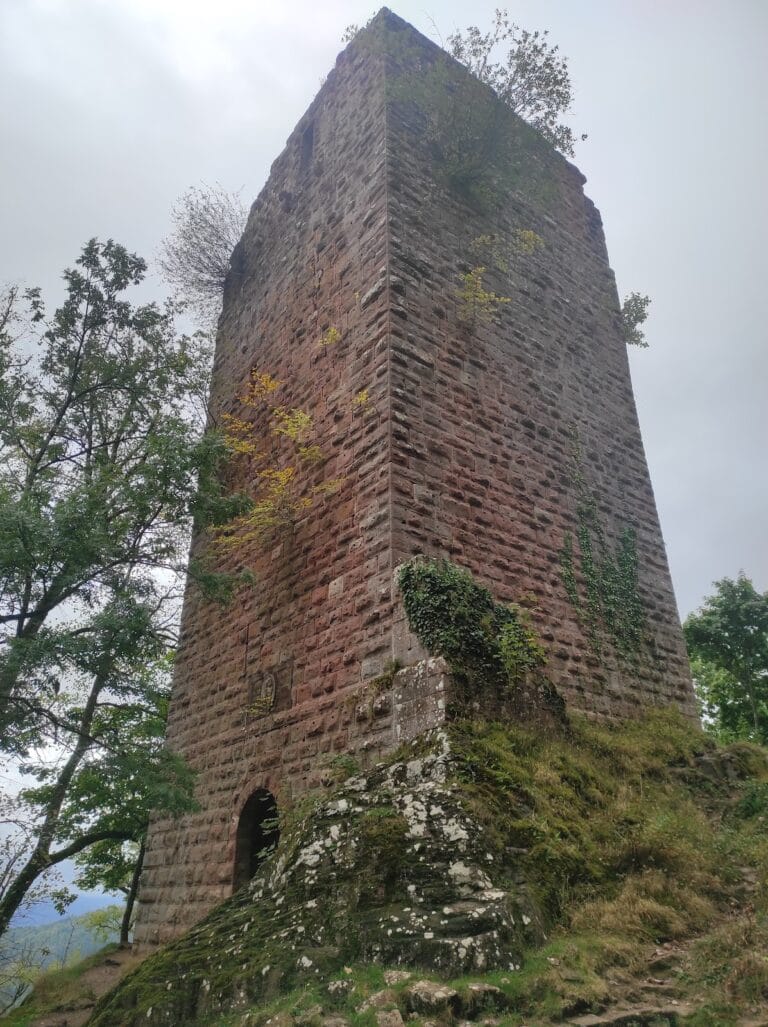
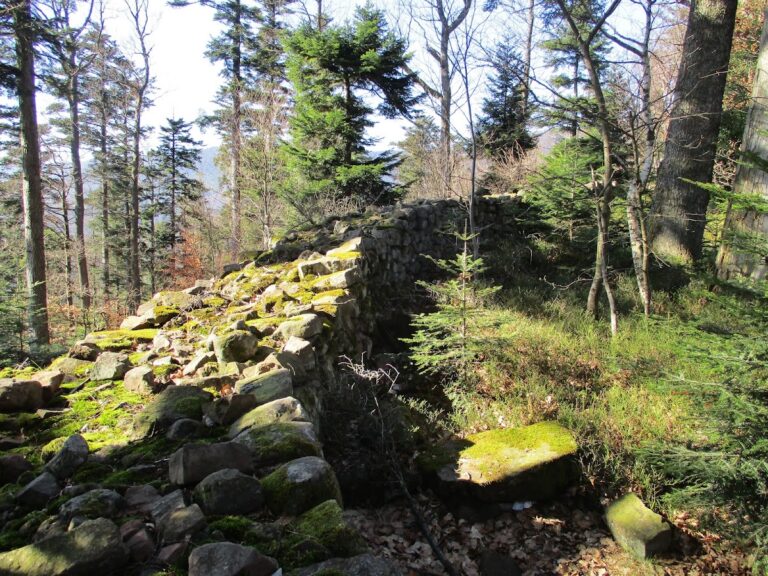
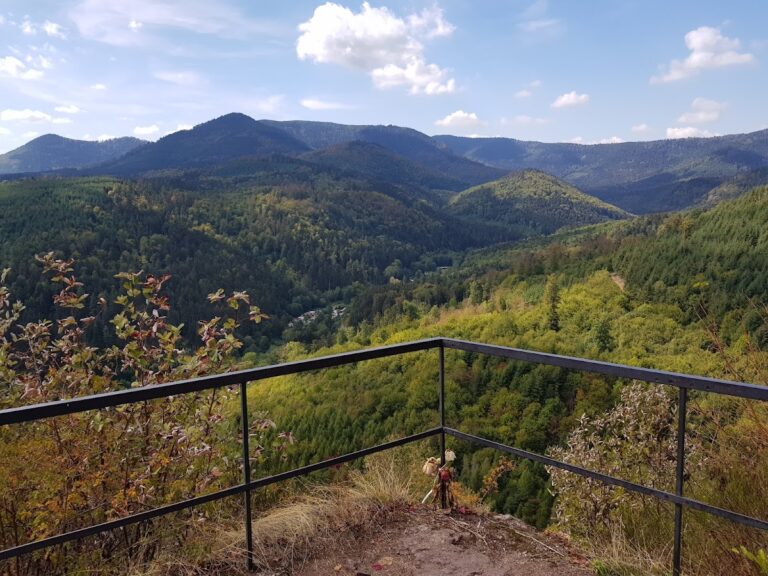
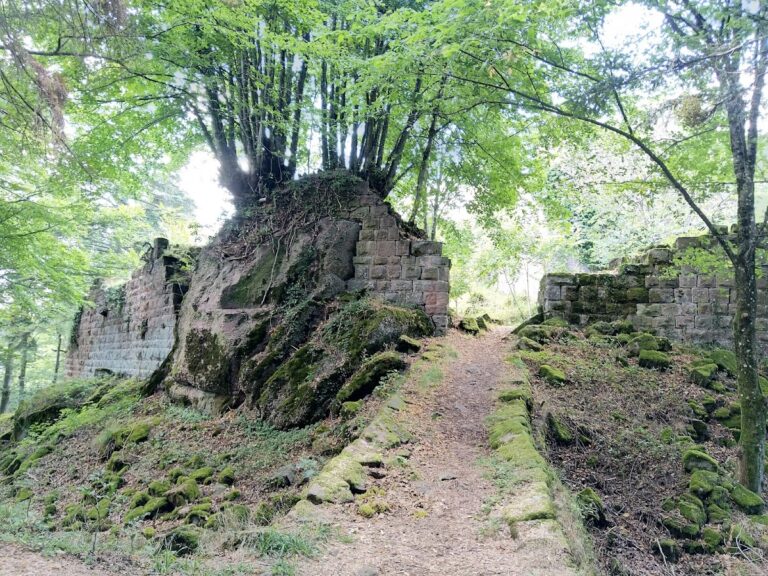
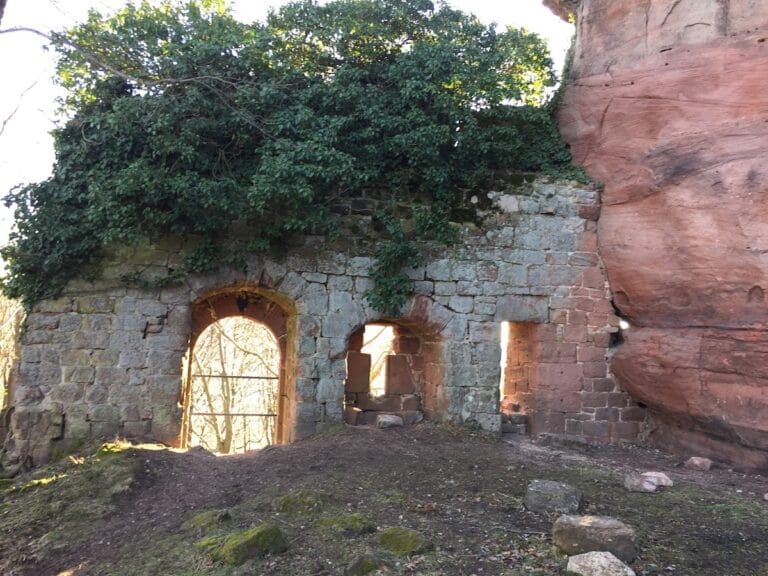
Château de Wangenbourg occupies a rocky promontory in woodland southeast of Wangenbourg village, about 100 metres away. Its position lay near the route toward Obersteigen and Dabo. The large polygonal enceinte, or enclosing fortified wall and defensive circuit, remains visible, along with the foundations of buildings that stood within it.
Enclosure and internal buildings
The surviving enceinte defines the castle’s main fortified area. Inside it, the bases of residential quarters and service buildings show how accommodation and domestic work were arranged within the enclosure. These remains preserve the outline of the castle’s internal buildings while retaining their connection to the larger defensive circuit.
Residential buildings
Georg and Hartmann von Wangen rebuilt a residential building in the Renaissance style between 1535 and 1550. Renaissance architecture revived classical forms and proportions in Europe from the fifteenth century onward. Another residential building, rebuilt at the beginning of the sixteenth century, contained a hearth table, a built fireplace installation used for heating or cooking. Archaeological excavation uncovered this feature.
Chapel Tower and entrance
The north tower, called the Chapel Tower, and the adjoining curtain wall were destroyed by departing French troops around 1680. A footbridge built in 1961 replaced the castle’s former drawbridge, providing the present crossing to the fortified site.
Nearby sites