Château des Bordeaux: An Eighteenth-Century Classical Residence in France
Site at a Glance
- Rating
- 5
- Popularity
- Very Low
- Country
- France
- Primary era
- Early Modern
- Eras represented
- Early Modern
- Civilizations
- French
- Site type
- Domestic
- Remains
- Castle
On this page4 sections
History
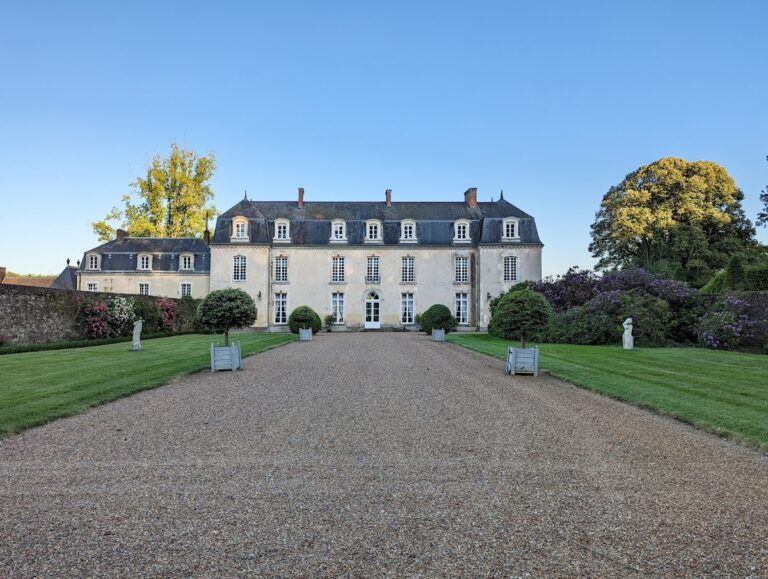
Château des Bordeaux is an eighteenth-century château in Amné, France, built in the Classical architectural tradition. Around the middle of the eighteenth century, André du Bois, Marquis of Courceriers, decided to replace the estate’s old château with a residence shaped by ordered composition, symmetry, proportion, and forms derived from ancient Greek and Roman architecture.
After the death of its builder, the château deteriorated considerably. M. Manoury acquired the estate in 1965 and began restoring the building. Château des Bordeaux is now a private residence. Its façades and roofs, along with those of the outbuildings, farm buildings, and gatehouse, were registered as historic monuments on 28 December 1984. The registration also covers the main staircase, its wrought-iron railing, and the moats.
Remains
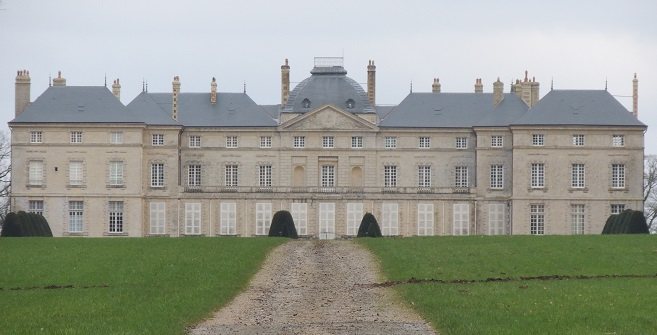
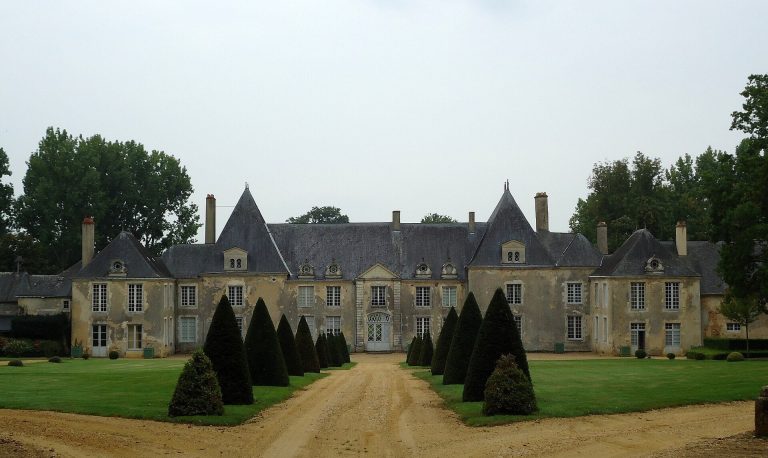
The château is organized around a formal courtyard of honour, an entrance courtyard associated with a major residence. Its principal building is a simple residential block, with a more strongly projecting pavilion at each end on the front façade than on the rear. Low outbuildings extend from the château at right angles, forming part of the wider estate arrangement.
Central façade and roof
The central axis is marked by a projecting section topped with a triangular pediment and a large broken hipped roof. This roof has two slopes on each side, with a change in pitch that creates additional space beneath it. The arrangement gives the main façade a clear central emphasis within the otherwise simple residential block.
Chapel and estate features
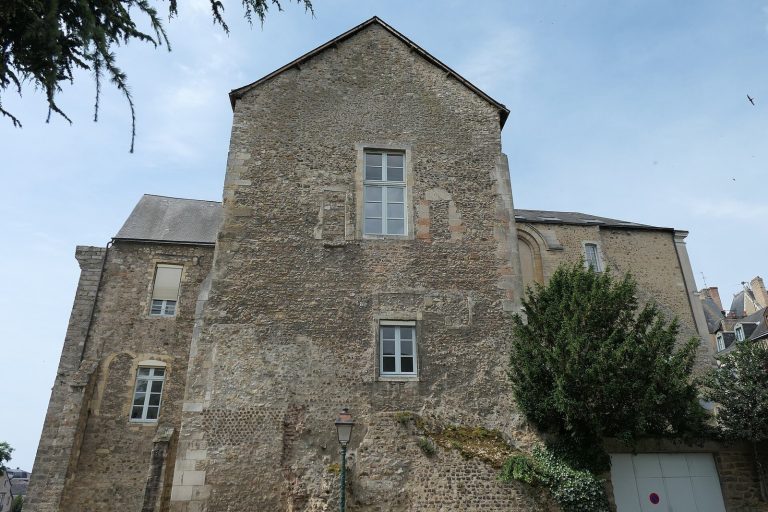
A chapel founded in 1699 is housed within the outbuildings on the left side of the courtyard of honour. The complex also includes the main staircase with its wrought-iron railing, together with moats that form part of the château’s surviving physical setting. The gatehouse, farm buildings, and other outbuildings belong to the protected estate group.