Château de Gonnord: A Historic Fortified Castle in France
Site at a Glance
- Rating
- 5
- Popularity
- Very Low
- Country
- France
- Primary era
- Early Modern
- Eras represented
- Medieval, Early Modern
- Civilizations
- French
- Site type
- Military
- Remains
- Castle
On this page7 sections
History
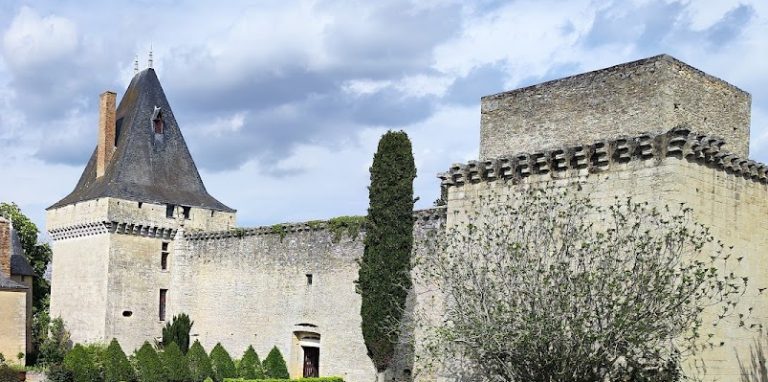
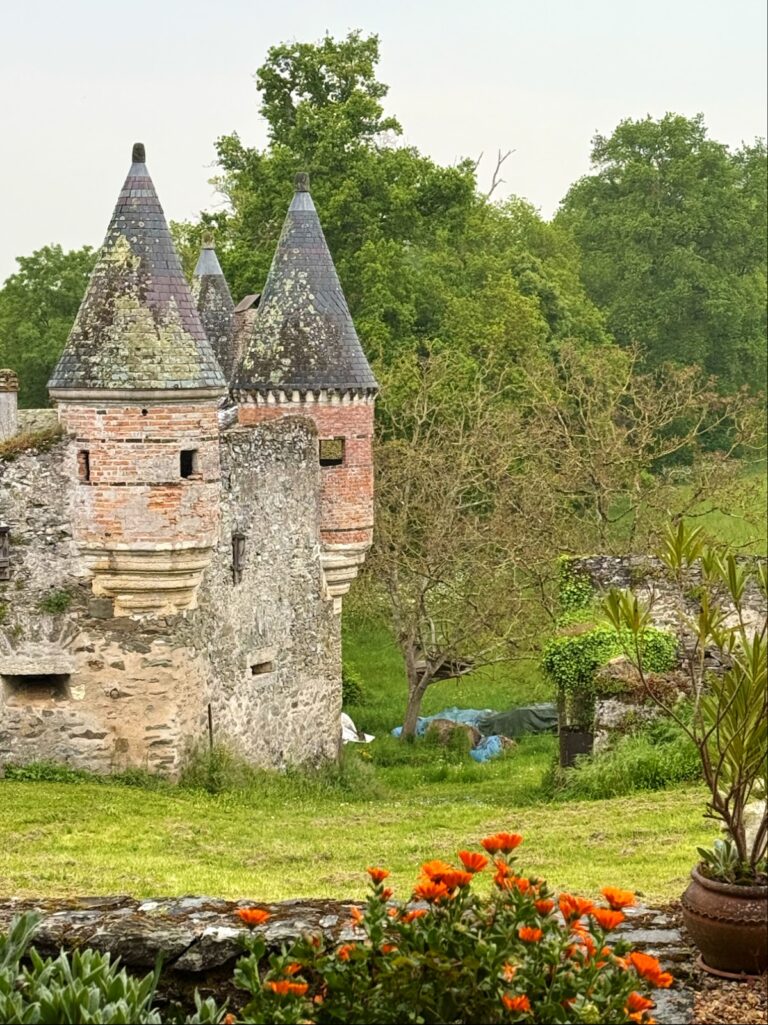
Château de Gonnord is a fortified castle in France, located at Chemillé-en-Anjou. A castle stood on the site from the eleventh century, and its later reconstruction produced a square complex with high towers. The site passed through several noble families and was repeatedly damaged during conflicts that shaped the history of western France.
Medieval origins and reconstruction
The first castle was plundered and destroyed during the Hundred Years’ War, the prolonged conflict fought mainly between the English and French crowns from the fourteenth to the fifteenth century. Reconstruction began from the fifteenth century, creating a square-plan fortress with tall towers. The property subsequently came into the hands of the du Bellay family, the Cossé-Brissac family, and the La Forest d’Armaillé family.
Sixteenth-century residence
Château de Gonnord was connected with prominent figures of sixteenth-century France. Charles IX stayed there in October 1565, the Duke of Anjou stayed at the castle in 1580, and Henri IV stayed there in 1589. Artus de Cossé-Brissac, a nobleman of the Cossé-Brissac family, died at the castle in 1582.
The castle was destroyed again during the Wars of Religion, a series of conflicts between Catholics and Protestants in sixteenth-century France. In 1575, Artus de Cossé-Brissac undertook its reconstruction in the Italian Renaissance style, an architectural revival of classical forms that developed in Europe from the fifteenth century onward. This rebuilding included arcades around the courtyard.
Administration, destruction, and later history
Administration of the castle was entrusted to a tax collector, an official responsible for collecting revenues. The office remained for generations in the Dudoyer family. Joseph Dudoyer held it in 1704, followed by his son Joseph and then his grandson Étienne, who was the father-in-law of the shipowner Jean Peltier Dudoyer.
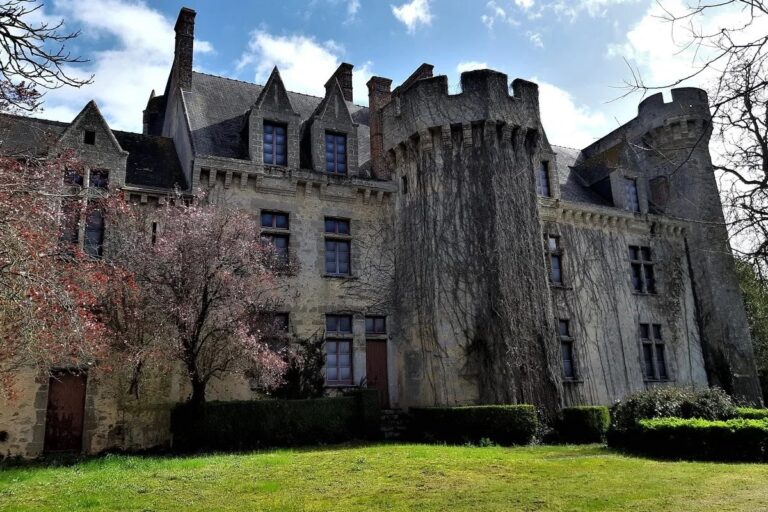
During the Wars of the Vendée, counter-revolutionary uprisings in western France during the French Revolution, the castle was burned twice. It was not rebuilt afterward. By the nineteenth century, it stood in ruins, and its stones were taken for reuse. At the beginning of the twentieth century, the roof was renewed, and a boule de fort club was established on the ground floor. The municipality later purchased the castle and landscaped the area around the pond. Château de Gonnord was listed as a French historic monument in 1926.
Remains
The surviving site combines the remains of a fortified square castle with later recreational and landscaped features. Its medieval and Renaissance form was organized around a courtyard and strengthened by high towers. The south facade is the principal surviving part of the castle fabric, while the renewed roof gives that remnant a later protective covering.
Fortified castle and Renaissance details
The castle’s square plan and high towers reflect the reconstruction begun from the fifteenth century after the medieval destruction. The Renaissance rebuilding of 1575 added arcades around the courtyard. One arcade is surmounted by the Cossé family motto, “Avecque le temps…” These elements preserve the connection between the defensive medieval complex and its later Renaissance transformation.
Interior use and landscaped grounds
The complex includes a theater room and a boule de fort playing area on the ground floor. This traditional French bowling game is played on a strongly curved surface. Around the surviving castle stands a park with a pond, whose surrounding area was landscaped after the municipality acquired the property.