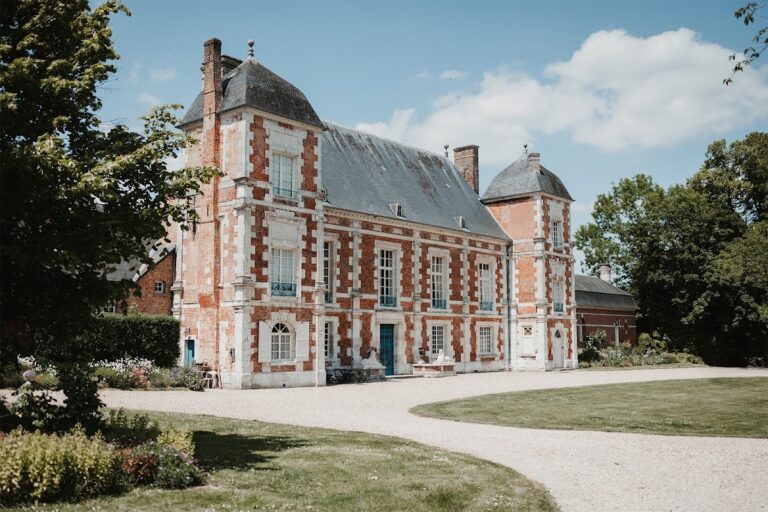
Château de Vascœuil: A Historic Residence and Cultural Centre in France


Site at a Glance
- Rating
- 4.4
- Popularity
- Low
- Country
- France
- Primary era
- Medieval
- External website
- Open
- Eras represented
- Medieval, Early Modern
- Civilizations
- French, Norman
- Site type
- Domestic
- Remains
- Castle
On this page9 sections
History
Lordship and ownership
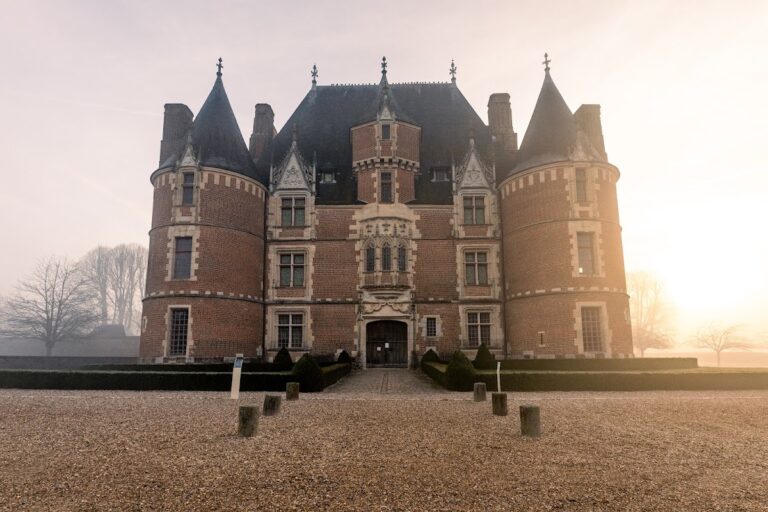
The Château de Vascœuil is a historic château in Vascœuil, France, whose present residence incorporates elements from the fourteenth and sixteenth centuries and is crowned by a twelfth-century octagonal tower. The lordship of Vascœuil, a territory governed by a lord, depended on Saint-Denis-le-Thiboult and belonged to Gilbert de Vascœuil in 1080. The fief, a landed estate held through a feudal relationship, remained in the La Haye family until 1505, when it was sold to Guillaume Le Gras, a merchant from Rouen.
The domain later formed part of the Duchy of Longueville, a French territorial duchy ruled by dukes. It remained within the duchy until 1694, when the last duke died without descendants and the king of France took possession of his lands.
Jules Michelet at Vascœuil
During the nineteenth century, the château became closely associated with Jules Michelet, the French historian known for his multivolume histories of France and the French Revolution. Michelet made several extended stays at Vascœuil between 1843 and 1860. He first lodged with Madame Dumesnil, with whom he was in love, and later stayed with her son Alfred Dumesnil. Alfred became Michelet’s son-in-law, principal disciple, and the owner of the château.
Modern cultural use
Since 1970, the château has housed a regional art and cultural centre that regularly presents exhibitions. The programme was initiated by Maître François Papillard, then the owner and a Paris lawyer. The estate now functions as a museum, combining the Jules Michelet Museum with its exhibition activities.
The château and its grounds also have protected heritage status in France. The domain was designated a registered natural site in 1942 and a classified natural site in 1944. The colombier, or dovecote, was listed as a historic monument in 1985, while the façades and roofs of the logis, the principal residential building, received the same protection in 1991.
Remains
Château and estate layout
Tower and residential buildings
The château is a former residence composed of fourteenth- and sixteenth-century elements, with a twelfth-century octagonal tower rising above it. The complex includes the logis, a colombier, and a farm, all enclosed within the property. A cour d’honneur, or formal forecourt, lies before the château and contains the colombier.
Garden and sculpture gallery
The estate extends across a three-hectare formal French garden. The adjoining park contains an open-air sculpture gallery with approximately fifty original works. Its collection includes bronzes, marbles, ceramics, and mosaics by artists including Georges Braque, Mikhail Chemiakin, Jean Cocteau, Salvador Dalí, Pierre Székely, Victor Vasarely, and Antoniucci Volti.
Jules Michelet Museum
A seventeenth-century grange houses the Jules Michelet Museum. Inside is a reconstruction of Michelet’s study, which was originally situated at the top of the château’s tower. The reconstructed room recalls the place where Michelet wrote his History of France and History of the French Revolution.