Château de Sainte-Marie: A Medieval Castle in Esterre, France
Site at a Glance
- Popularity
- Medium
- Country
- France
- Primary era
- Medieval
- Eras represented
- Medieval
- Civilizations
- English
- Site type
- Military
- Remains
- Castle
On this page4 sections
History
Origins and medieval control
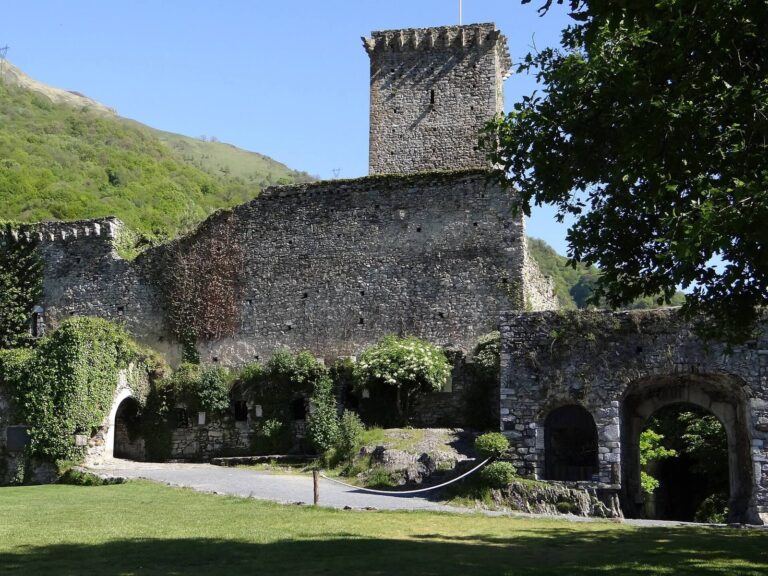
Château de Sainte-Marie is a ruined castle in Esterre, France, built in the tenth century by Centule III, Count of Bigorre. Its later history was shaped by contests over control of the valley. An earlier origin has been proposed, including possible Arab occupation of the site.
In the fourteenth century, the Knights Hospitaller, a Catholic religious and military order, occupied the castle before the English took possession. The English held it until 1404, when Jean II de Bourbon, Count of Clermont, drove them out with valley inhabitants led by Aougé de Coufitte. Their defeat ended English occupation of the valley. The English had largely rebuilt the castle in the second half of the fourteenth century.
Abandonment and preservation
The castle was gradually abandoned. A chapel in front of it, known as the Priory of Sainte-Marie, had fallen into ruin by around 1800 and was later demolished. The château has protected historic-monument designations dated 1930 and 2023; the chapel remains were listed in 1930.
Restoration began in the 1980s, with work to consolidate and light the castle. Brambles covered the site until 1988. A legend also links the castle to Arsène Lupin, a fictional gentleman thief, who supposedly escaped through a tunnel.
Remains
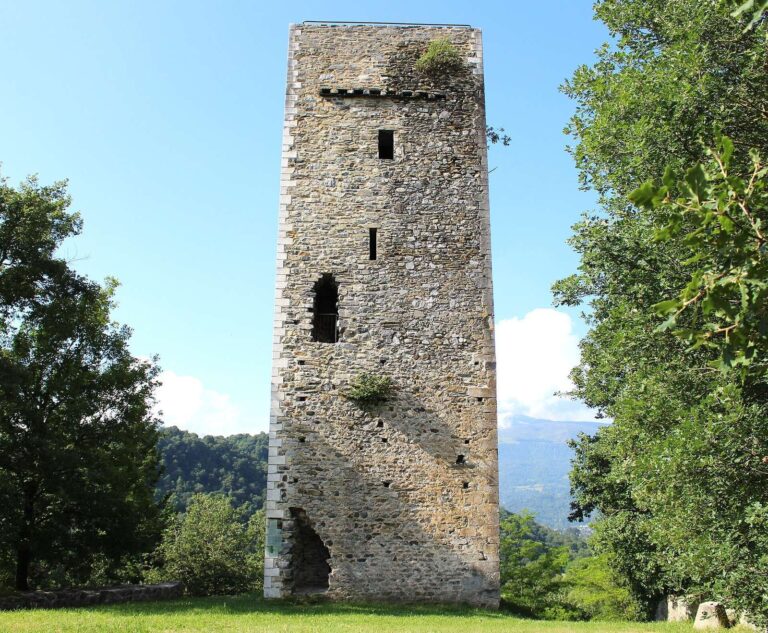
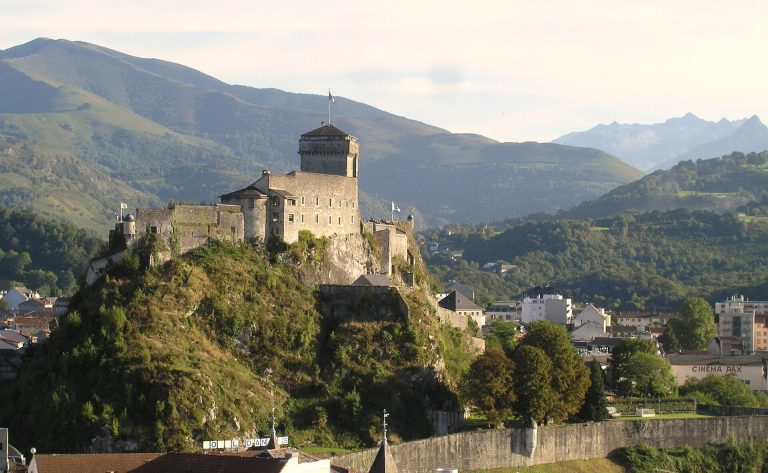
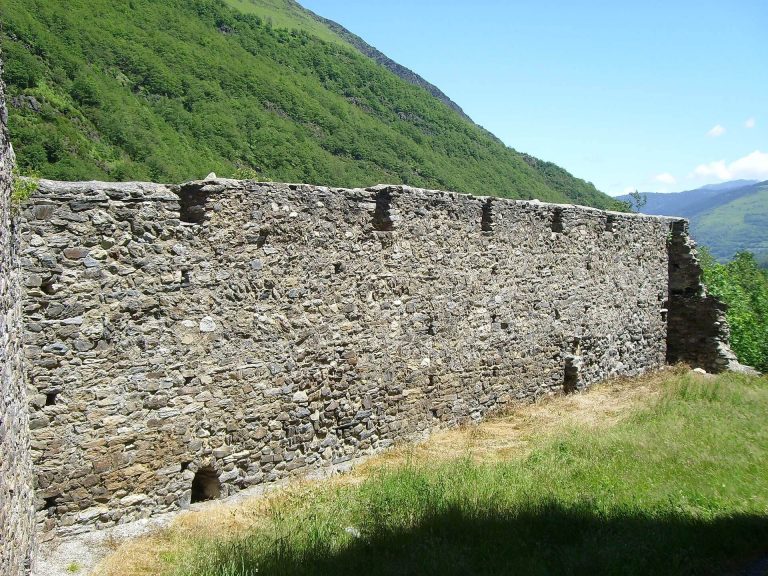
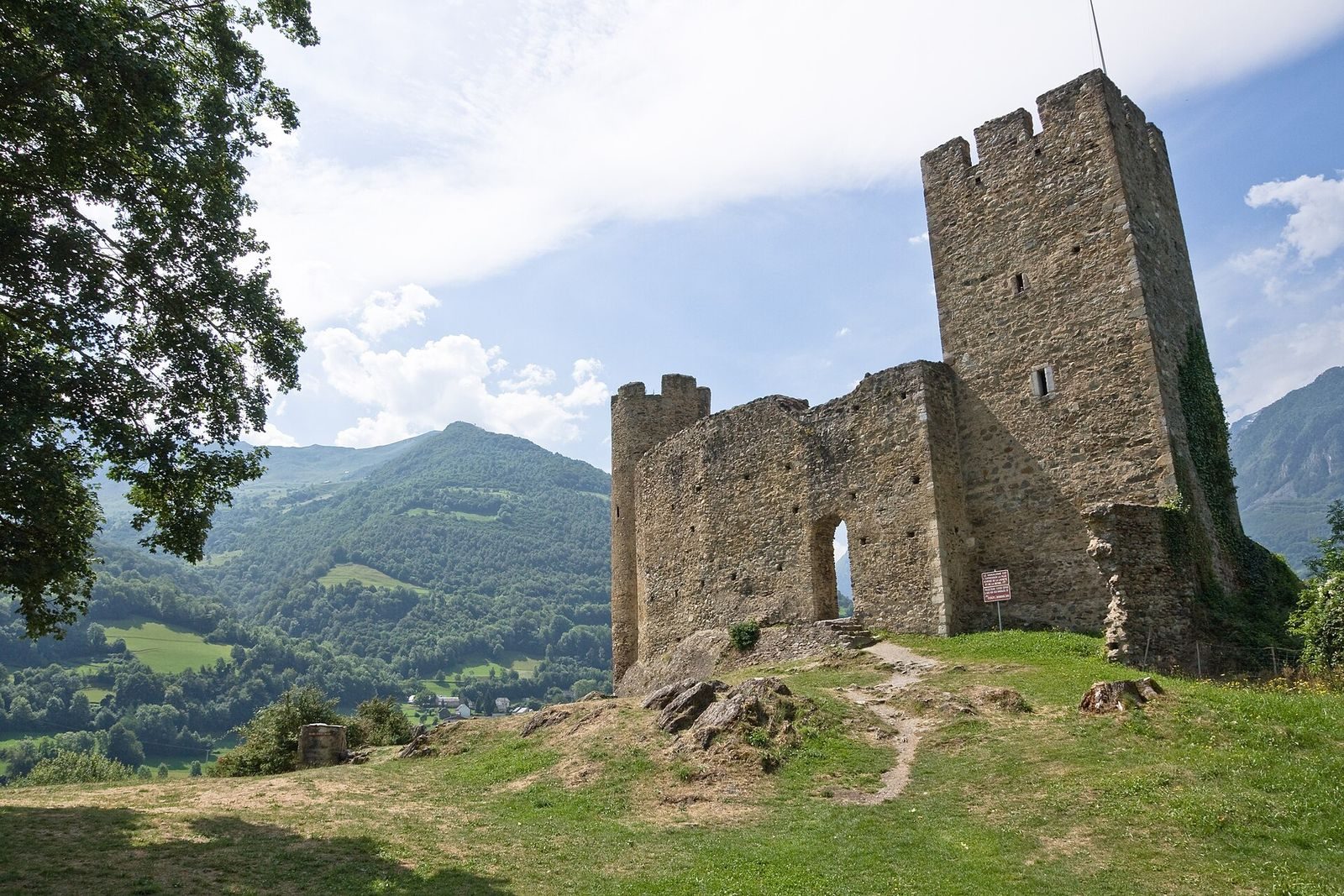
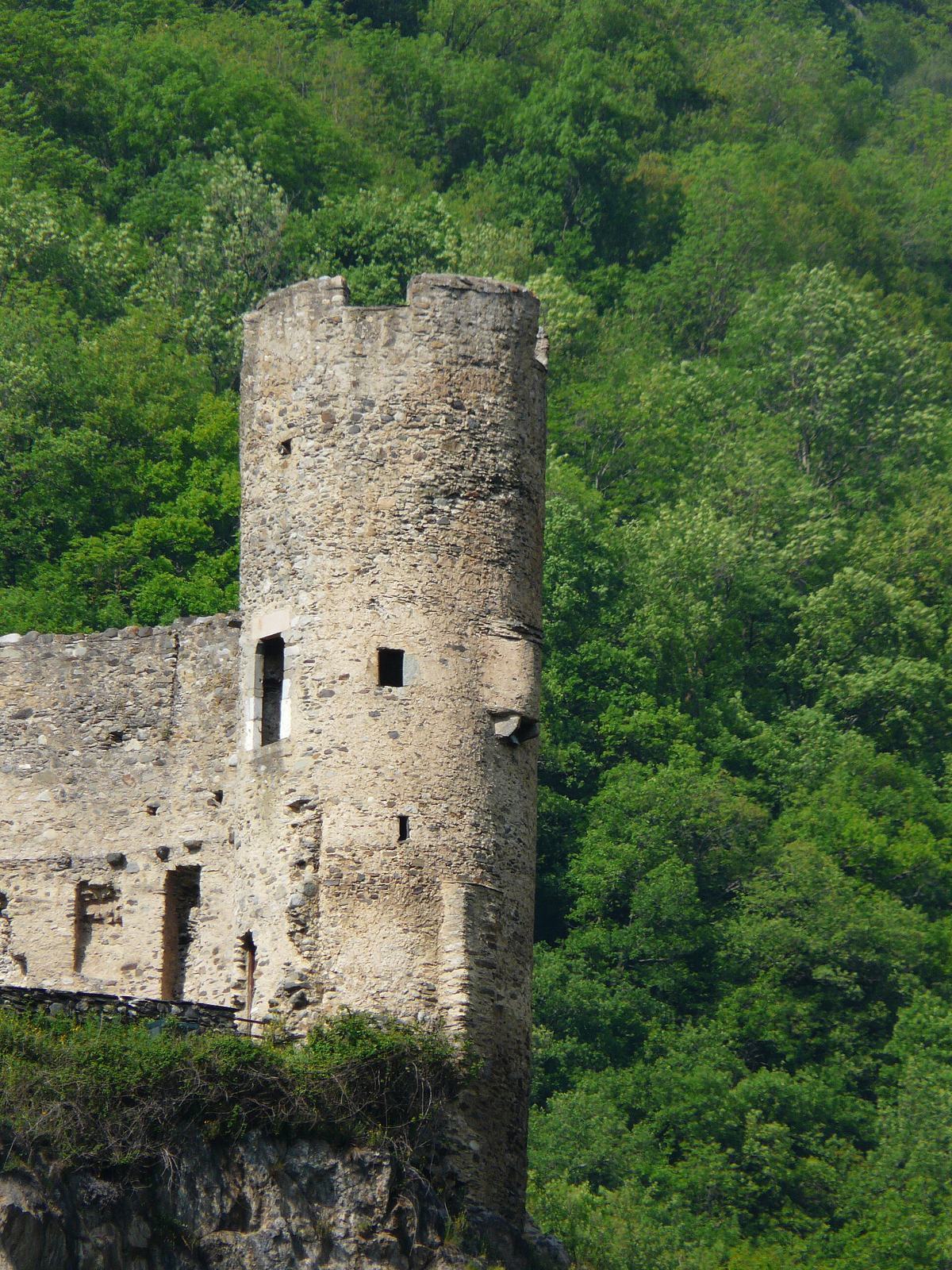
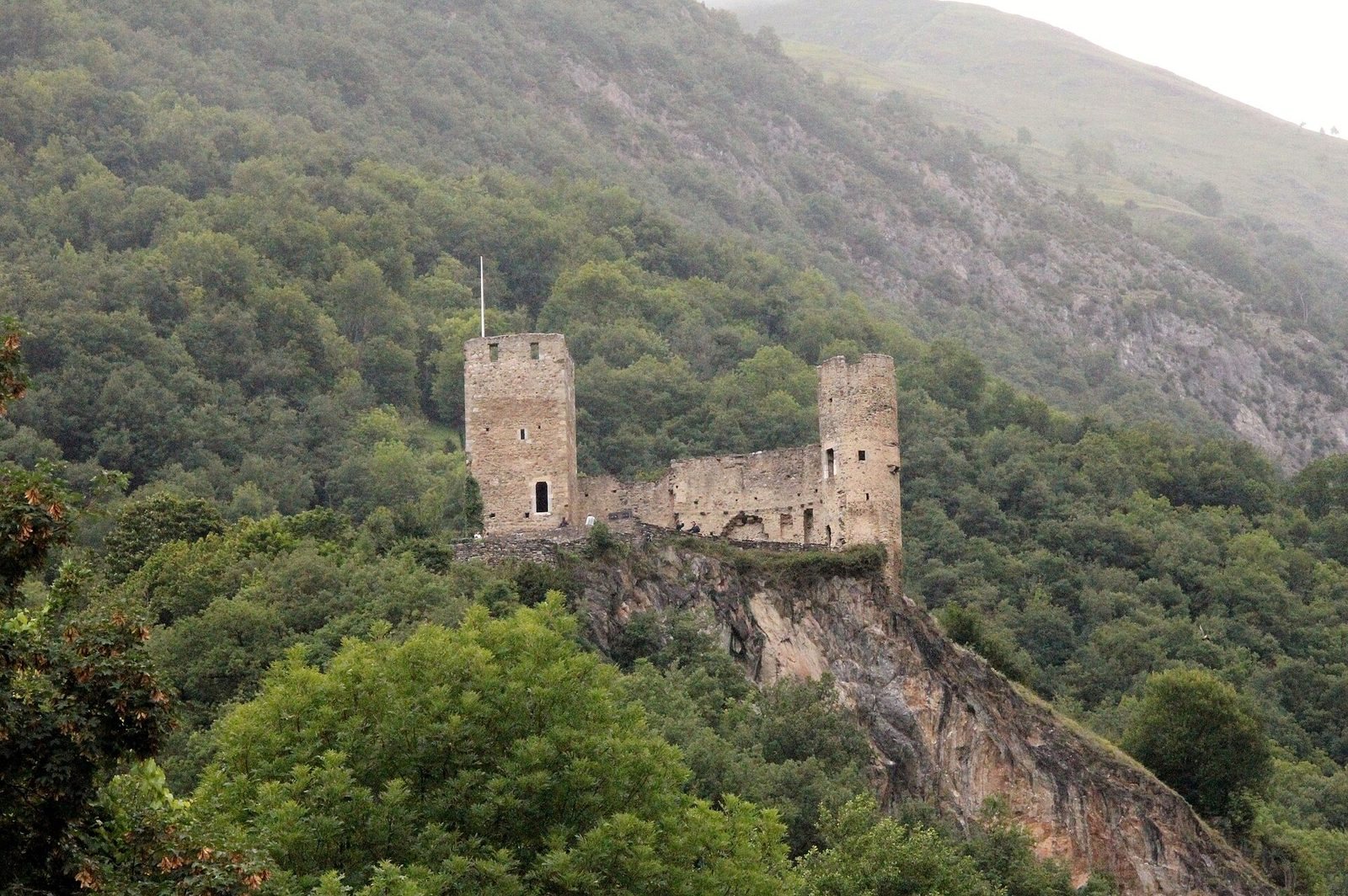
The ruined castle stands on a rocky outcrop at an altitude of 630 metres, in Esterre, though it is often associated with Luz-Saint-Sauveur. Its position overlooks Luz-Saint-Sauveur, Esquièze-Sère, and Esterre. Within its very narrow enclosure, the surviving structures are a round tower and a square keep. The square tower on the north has narrow openings for shooting arrows and raised sections alternating with gaps along its summit. In the late nineteenth century, the square tower was in poor condition and used as a barn; the round keep was also in very poor condition.