Słupsk Castle: A Ducal Residence in Pomerania
Site at a Glance
- Popularity
- Medium
- Country
- Poland
- Primary era
- Early Modern
- Eras represented
- Early Modern
- Civilizations
- Duchy of Pomerania, Holy Roman Empire, Kingdom of Prussia
- Site type
- Domestic
- Remains
- Palace
On this page8 sections
History
Słupsk Castle is a former ducal residence in Słupsk, Poland. Bogislaw X established the residence in 1507, and it was completed in 1509. The castle became a home of the Griffins, Pomerania’s ruling dynasty, and was rebuilt in the Renaissance style during the late sixteenth century.
Foundation and Renaissance rebuilding
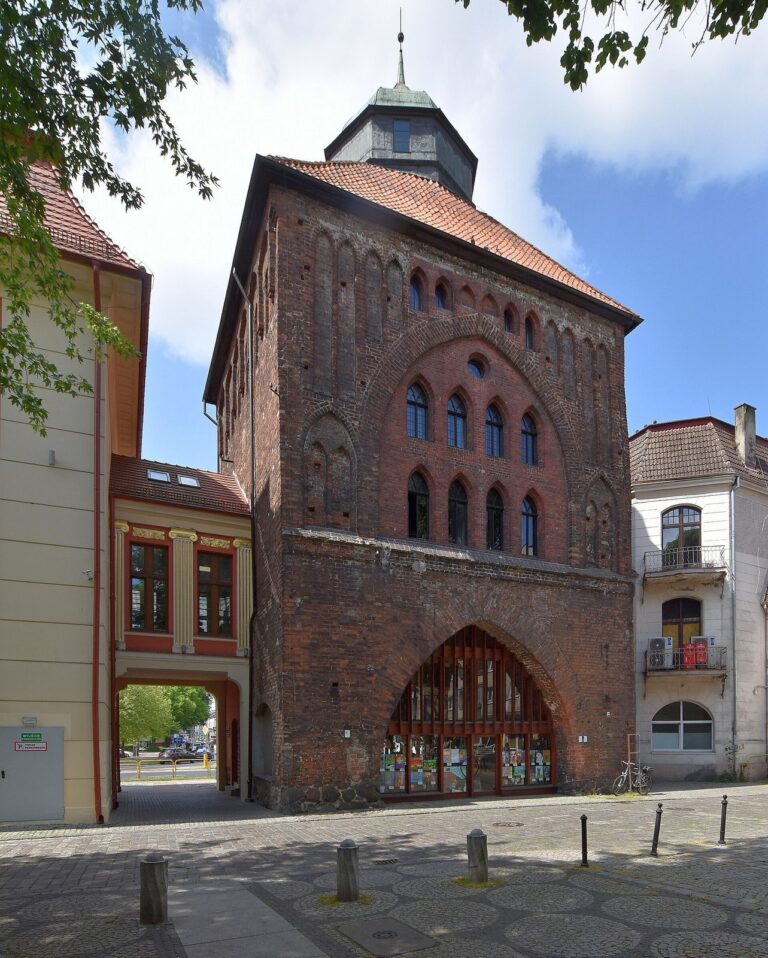
In the early Middle Ages, the Pomeranian dukes had a residence across the Słupia River. In 1339, Bogislaw V sought to establish another residence within the medieval town, near the Mill Gate, but the townspeople opposed the plan. Bogislaw X’s later foundation followed a change in local government that had removed residents’ participation.
The castle served the Griffin dukes during the sixteenth and seventeenth centuries. It underwent a Renaissance rebuilding from 1580 to 1587, with work following architect Wilhelm Zacharias’s plans from 1586.
Ducal and administrative use
From 1600 to 1623, the castle was the widow’s residence of Erdmuthe, wife of Johann Friedrich. From 1624 it belonged to Duchess Anna and Bogislaw de Croy. After Farther Pomerania passed to Brandenburg in 1648, the building became an administrative centre. By 1653 it was already deteriorating. The Pomeranian dukes’ art collection had been kept there, but in 1731 part of the castle inventory went to Berlin and another part was auctioned.
Military use and the museum
During the eighteenth century the castle served as a grain store and as an arms store for a territorial defense force. Later in that century it was converted into barracks. A fire in 1821 was followed by renewed use for grain storage. The castle burned out toward the end of the Second World War.
Słupsk Castle is now the seat of the Museum of Central Pomerania. Its collections and exhibitions cover the region’s history, the Griffins, Słupsk and its residents, historical art, and coins and medals. Until 2017, the museum displayed a collection of works by Stanisław Ignacy Witkiewicz, described as the world’s largest collection of his work.
Remains
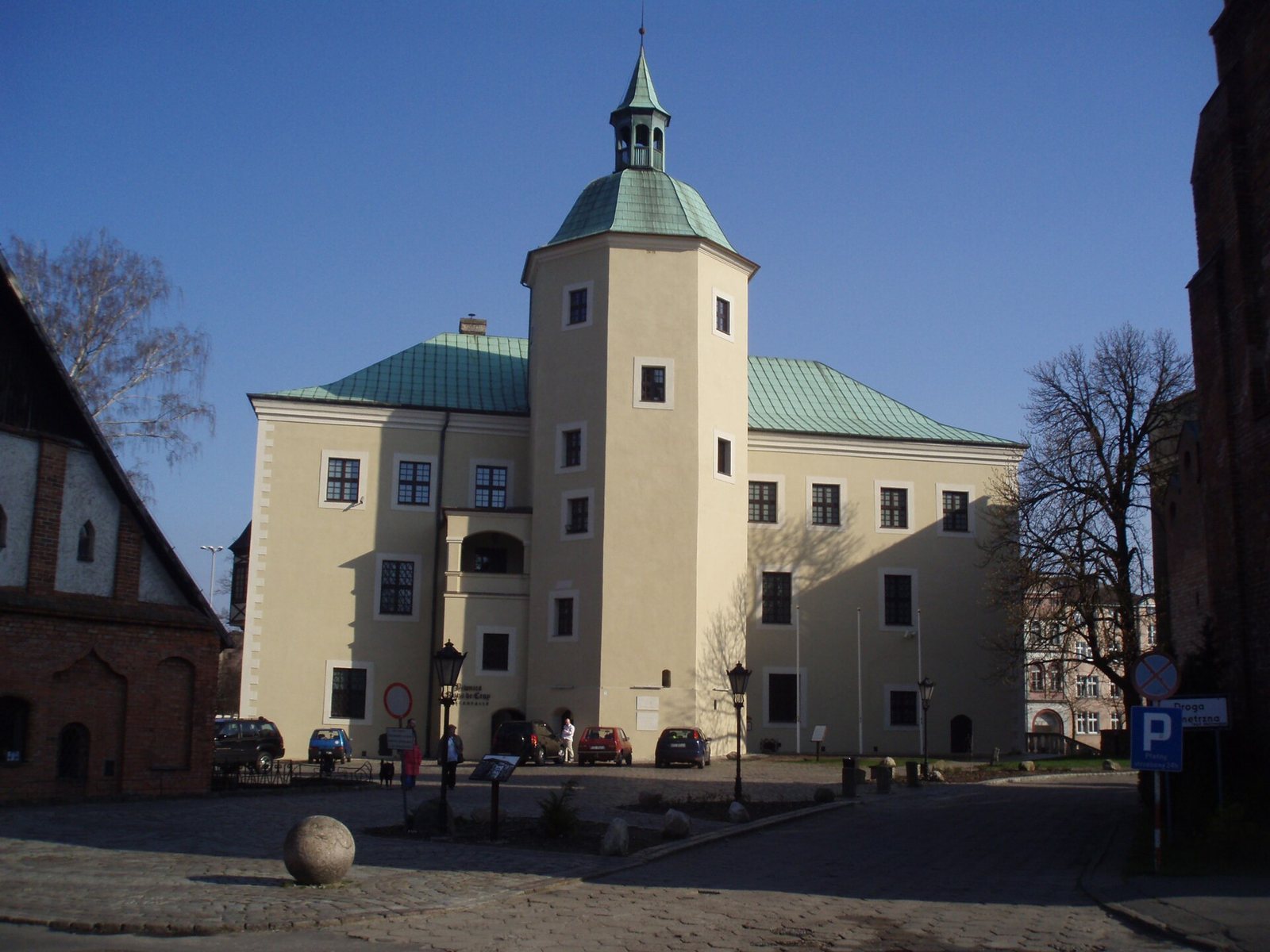
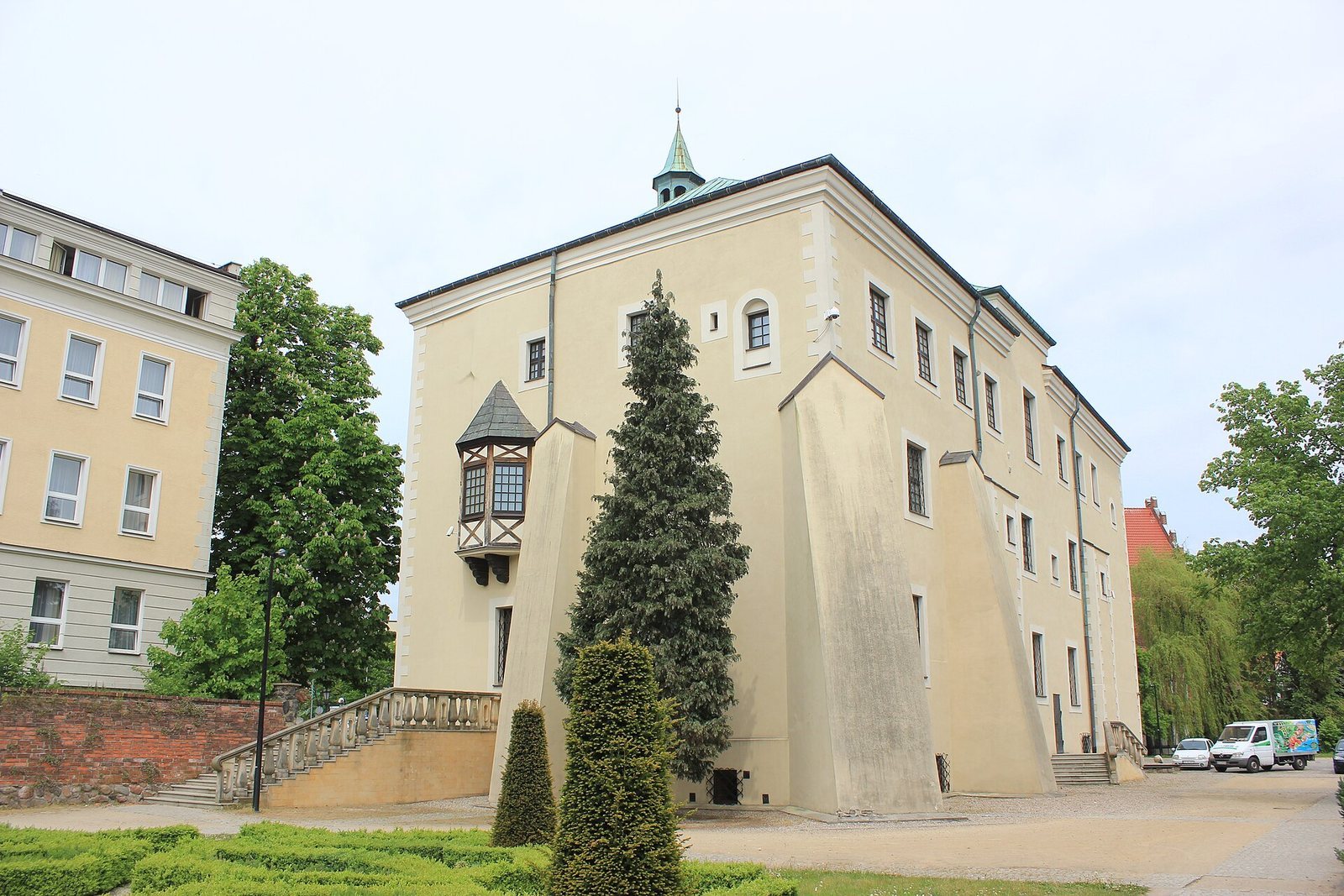
The castle stands in Słupsk’s Old Town, within the former medieval stronghold and near the Słupia River. A nearby castle mill is about two centuries older than the castle. The surviving complex reflects its Gothic origins, Renaissance rebuilding, and later alterations.
Castle house and tower
The original Gothic residence had two storeys and a defensive tower facing the town. The Renaissance rebuilding retained two storeys and added large windows and bay windows on the east and west fronts. The tower gained a loggia, an open-sided gallery built into the structure. Inside, columns supported vaulted ceilings, and the second floor held a large Knights’ Hall, a castle hall for formal gatherings. The interior design was similar to that of Szczecin Castle. Eighteenth-century alterations removed almost all the vaults, replacing them with timber-beam ceilings; a fourth storey was added and the tower was lowered. The 1958–1965 restoration reconstructed the upper part of the tower. A 2007 renovation renewed the facade and replaced the windows.
Service buildings and church
From 1589, half-timbered utility buildings, made with a visible timber frame filled with other materials, were built along the Mill Canal. A former monastery church was connected to the castle and used as a grain store; after restoration, it was consecrated as St John’s Church. An inventory from 1682 lists the main house, kitchen, stables, gatehouse, chancellery, revenue office, a passage to the church, and the church itself.
Gardens and museum displays
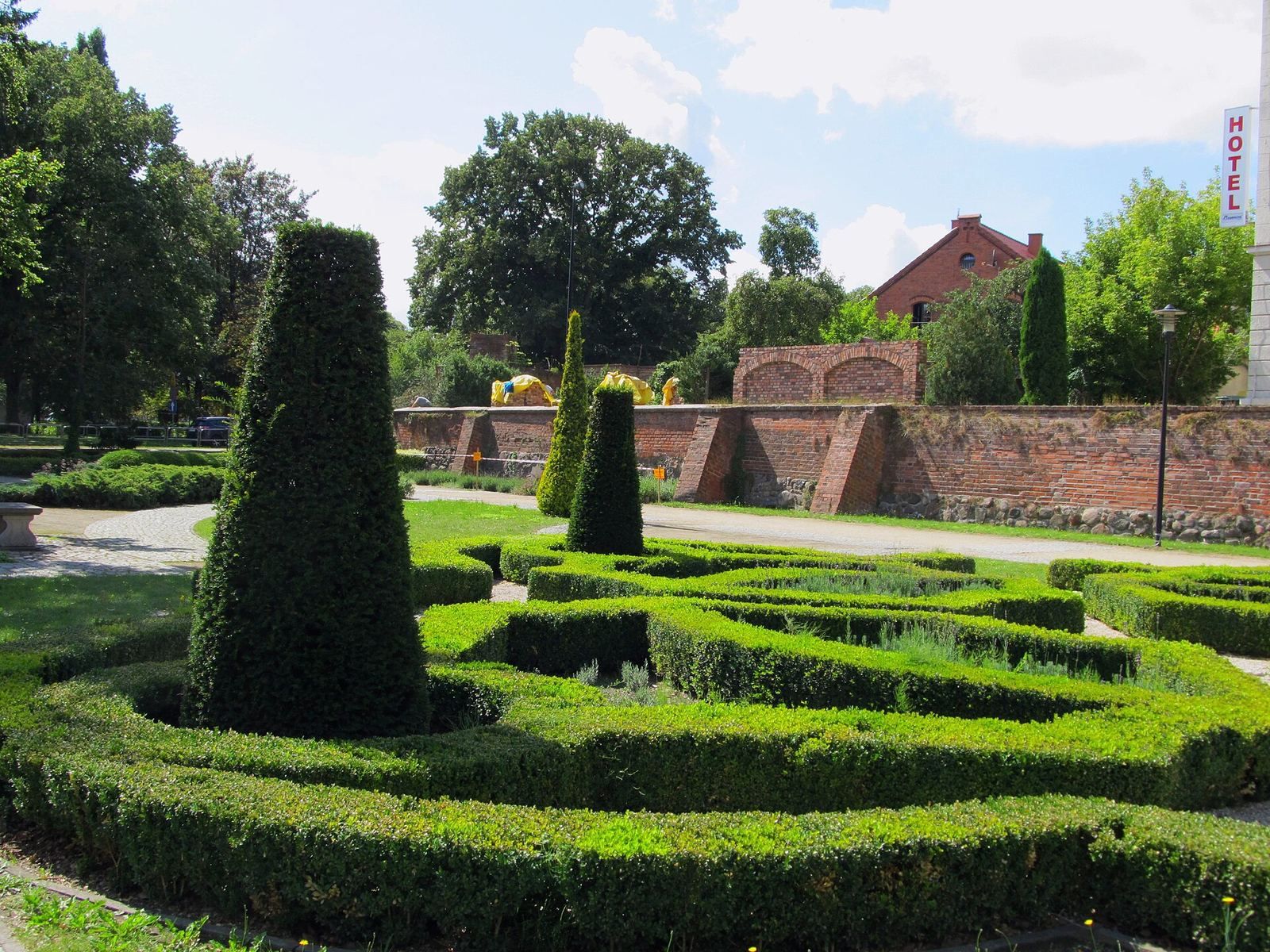
Erdmuthe’s castle garden included an herb garden. Gardens on the Castle Street side were reconstructed in 2007. Among the museum’s exhibits is a map of the Duchy of Pomerania published in 1618.