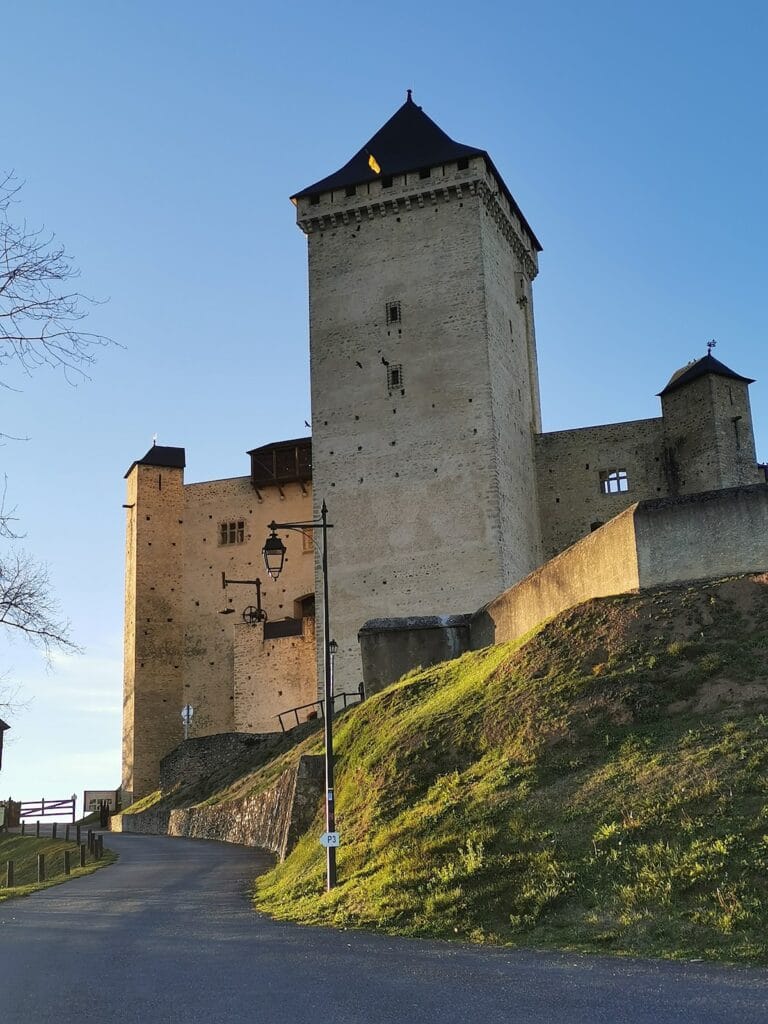
Castle of Lourdes: A Medieval Fortress and Pyrenean Museum in France


Site at a Glance
- Rating
- 4.5
- Popularity
- Medium
- Country
- France
- Primary era
- Medieval
- External website
- Open
- Eras represented
- Medieval, Early Modern, Modern
- Civilizations
- French
- Site type
- Military
- Remains
- Castle
On this page16 sections
History
The Castle of Lourdes is a historic fortress in Lourdes, France, whose origins are traced to the Roman period. Built on a rocky promontory above the town, it controlled the entrance to the seven valleys of the Lavedan and routes through the foothills of the Pyrenees.
Early fortress and medieval rulers
Charlemagne besieged the fortress in 778, when it was reportedly held by Mirat, a Muslim leader. A later legend says that Mirat surrendered after being promised continued possession of the castle if he converted to Christianity. According to this tradition, he received the name Lorus, which supposedly gave rise to the name Lourdes.
During the eleventh and twelfth centuries, the castle was the residence of the Counts of Bigorre, medieval rulers of the former County of Bigorre in the central Pyrenees. It also functioned as a stronghold controlling movement through the surrounding foothills. In the thirteenth century, it passed to the Counts of Champagne, who also held the crown of Navarre, before entering the domain of the French crown under Philip the Fair.
English occupation and medieval expansion
The Treaty of Brétigny transferred the castle to the English in 1360. It returned to France at the beginning of the fifteenth century after two sieges. The fortress reached its definitive medieval expansion during the fourteenth century, when successive defensive enclosures were developed and the keep was constructed.
The keep is attributed to Gaston Fébus, the fourteenth-century ruler of Foix and Béarn who was known for strengthening fortifications in the Pyrenean region. After the siege of 1406, the keep was raised further, reinforcing the castle’s defensive role.
Royal prison and military fortress
Under Henry IV, the castle became a royal residence in 1590. During the seventeenth century it was converted into a royal prison, and French kings used it to imprison opponents during the seventeenth and eighteenth centuries. After the French Revolution, it continued to serve as a state prison.
In 1685, Vauban, Louis XIV’s principal military engineer and the leading French designer of fortified defenses in the seventeenth century, proposed improvements to the castle. Some of these were carried out under Louis XIV’s successors. Further fortification continued during the seventeenth through nineteenth centuries.
In the nineteenth century, French military engineers converted the fortress into a barracks and added buildings including a powder magazine. Their work also destroyed most of the ancient Roman walls. Excavations and building operations during this period brought Roman sculpture fragments, votive altars, which were religious offerings, and foundations of ancient walls to light.
Museum and heritage protection
The castle began housing the Pyrenean Museum in 1921 through the efforts of Louis and Margalide Le Bondidier. They assembled collections devoted to the history and culture of the Pyrenees, and conceived the museum as a regional institution representing the entire French and Spanish Pyrenean range. The museum remains housed in the castle.
The Castle of Lourdes has monument historique protection in France. It was listed in 1933 and classified on 21 September 1995. The former parish church of Saint-Pierre de Lourdes was demolished in 1904, and its furnishings were transferred to the chapel within the castle.
Remains
The fortress occupies a dominant rocky promontory in the centre of Lourdes, at the entrance to the Lavedan valleys. Its layout developed through successive defensive enclosures. The oldest surviving remains date from the eleventh and twelfth centuries and form the foundations of the present fortifications, while later medieval and military additions occupy the same fortified complex.
Keep and defensive enclosures
The keep
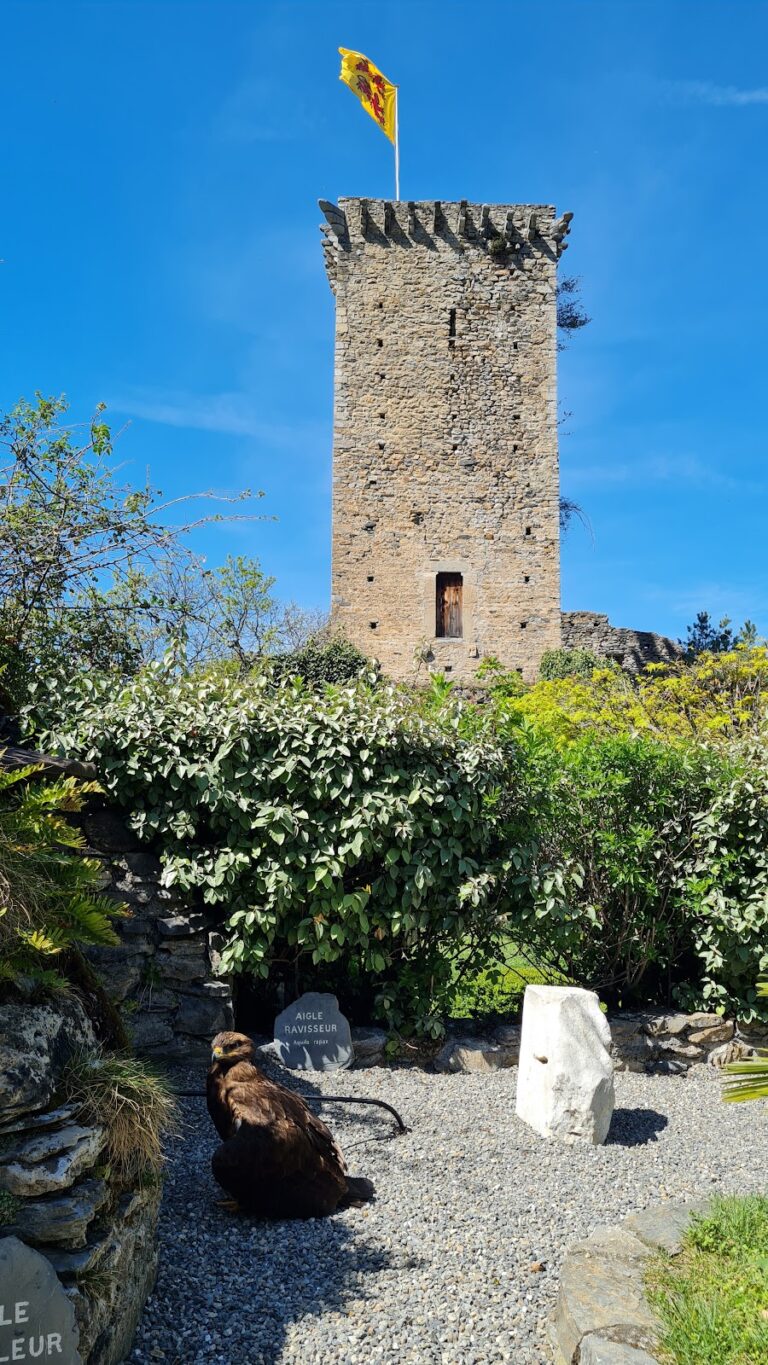
The keep rises 26 metres and originally dominated three other towers that have since disappeared. A dungeon stands beside its entrance, and a spiral staircase of 104 steps leads to the summit. Its construction belongs to the fourteenth century, with the tower later raised after the siege of 1406.
Entrance defenses
The main entrance is protected by a drawbridge reconstructed in 1842. Its horn-shaped structure operates through the counterweight of a large stone. A defensive passage at the entrance contains an iron grille and an assommoir, an opening through which defenders could drop missiles or other objects onto attackers.
Artillery installations and water supply
South Cavalier and Chausenque Bastion
The South Cavalier is a raised artillery platform. At its western end, a corner turret served as a lookout for a sentry. The Chausenque Bastion, a projecting fortified position designed to support defensive fire, is the first artillery tower and dates from the fifteenth century. It has two levels of loopholes.
Cistern and military buildings
A cistern with a capacity of 130 cubic metres collected rainwater within the fortress. The complex also contains a courtyard and garden, latrines belonging to the residential building, and military artillery installations. Nineteenth-century military construction added a powder magazine and other barracks buildings.
Chapel, cemetery, and archaeological remains
Notre-Dame-du-Château Chapel
The Notre-Dame-du-Château chapel was formerly the chapel of the Counts of Bigorre. Its present structure was built with reused materials from the demolished parish church of Saint-Pierre. Inside are early-eighteenth-century Baroque furnishings transferred from Saint-Pierre during the period associated with Bernadette.
Pyrenean cemetery
The Pyrenean cemetery contains funerary slabs from different periods and several stone coffins. It forms part of the castle complex alongside the chapel, courtyard, garden, residential remains, and defensive works.
Roman discoveries
Roman remains found during nineteenth-century military-engineering works include fragments of sculpture, votive altars, and foundations of ancient walls. These archaeological finds are exhibited on the site, linking the surviving medieval fortress with the earlier activity associated with the promontory.