Pouey-Mayou Dolmen: A Neolithic Burial Monument in France
Site at a Glance
- Popularity
- Low
- Country
- France
- Primary era
- Stone Age
- Eras represented
- Stone Age
- Civilizations
- Unclassified
- Site type
- Burial
- Remains
- Burial Mound
On this page9 sections
History
Prehistoric monument and later reuse
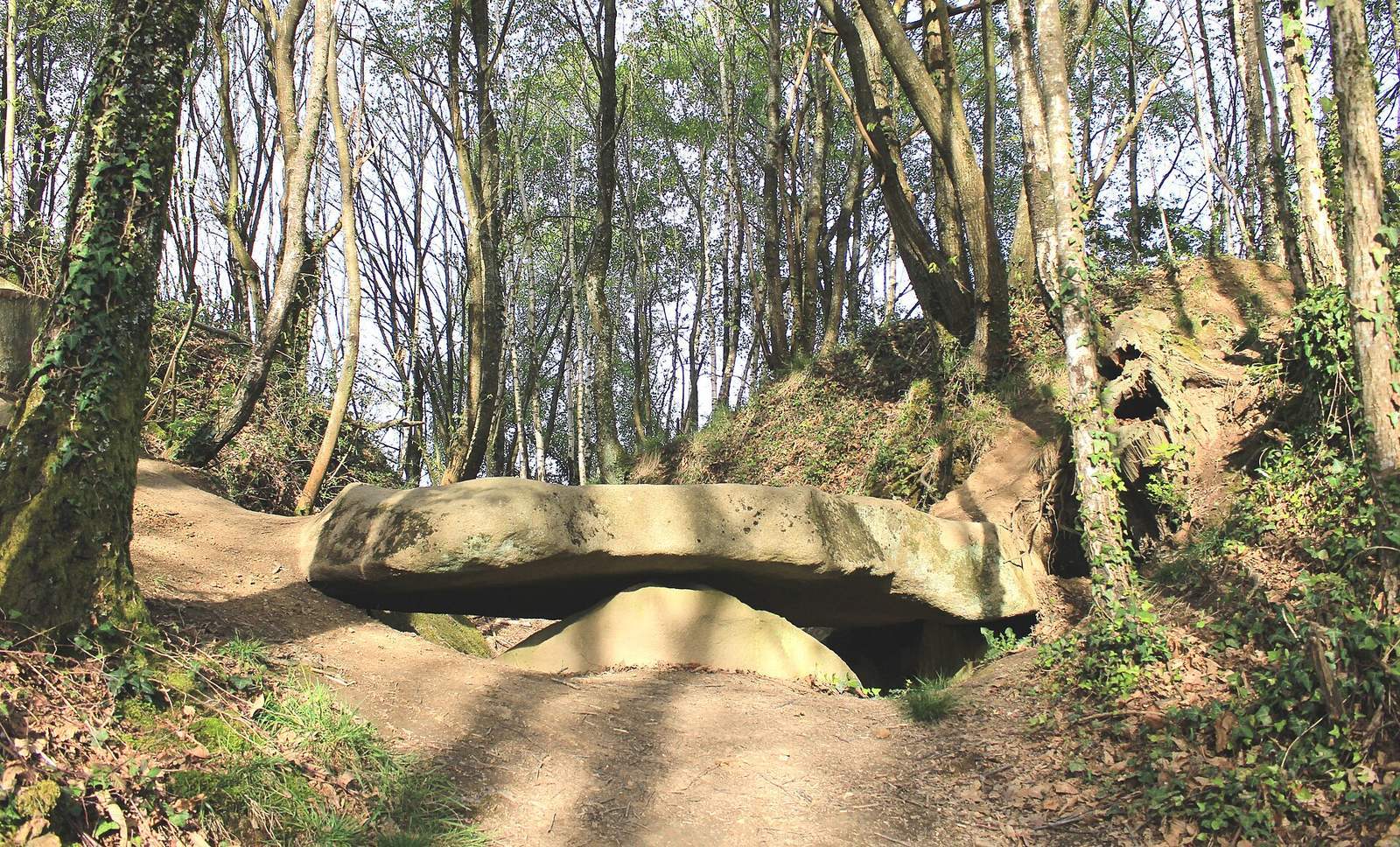
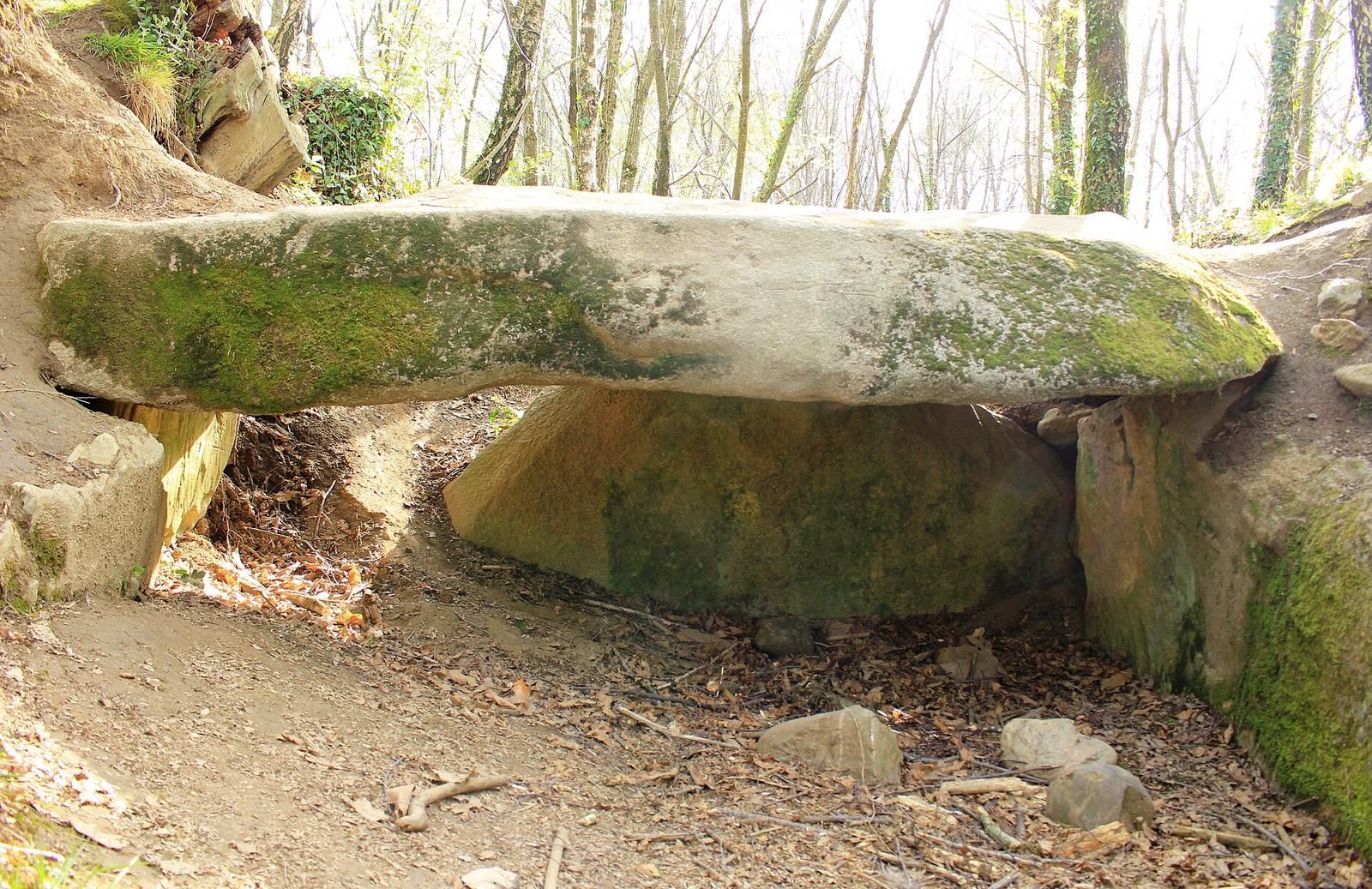
The Pouey-Mayou dolmen is a Neolithic burial chamber built from large stones at Bartrès in southwestern France. It belongs to an isolated group called the Dolmens of the Basque Country, a cultural region that spans parts of northern Spain and southwestern France. The mound was later reused for a telegraph tower. Staff officers also placed a fixed surveying marker on it while measuring the surrounding landscape.
Excavation and protection
The landowner, Mr. Clouchet, began excavating the monument, and the burial chamber had been emptied by 1879. Édouard Piette continued the work during the winter of 1879-1880, with assistance from Aymar de Saint-Saud. While Piette was away, workers sent word that they had found a gold necklace and ivory knives. Piette later blamed the discrepancy on what he called Gascon exaggeration, although he considered it possible that some objects had been taken by their finders.
France classified the dolmen as a protected historic monument in 1889.
Remains
Setting and mound
The monument stands at the western edge of Ossun Forest, at an elevation of 540 m and about 1 km east of Barlest in a straight line. The Peyre Hicade standing stone lies 800 m to the south, and the Peyre-Dusets dolmen is also nearby. The area around Pouey Mayou hill has the largest concentration of preserved dolmens in the Pyrenees. In Occitan, Pouey Mayou means “main mound”; pouey means “height” and mayou means “highest.” The burial mound originally measured about 45 m across and 3.6 m high. Farmers cut into its eastern side while removing earth. Piette’s 4.70 m-deep trench ran east to west and divided the mound into two equal halves. At its summit, two ash layers containing charcoal and intensely burned bones were separated by 20 cm of soil. The larger layer was 20 m across and up to 15 cm thick, while two Iron Age layers lay above the dolmen.
Burial chamber
Stone construction
The chamber opens to the east. Two long granite slabs form its southern side, while five slabs make up the northern side, three sandstone and two granite. It measures 7.37 m long, 4.30 m wide at the eastern end and 3.70 m at the western end. The ceiling is 2.60 m high at the entrance and 2 m at the rear; the dolmen is 1.5 m high. Four capstones covered the chamber. One remains at the eastern end, while the other three are fractured and have fallen inside. A pebble covering about 2 m thick encircled the structure.
Interior deposits
Inside, clay layers alternated with beds of flat stones. The upper layer was white clay mixed with ash, charcoal and fragments of cremated human bone. Gray-to-black clay lay below it, followed by yellow clay resting on natural ground, which had been dug out to a depth of 0.58 m. Piette found a small number of human bones, including part of a skull. He inferred two burials, one to the north and one to the south, with the bodies placed against the chamber walls and apparently deposited in a seated position.
Finds from the mound
Piette recovered an olive-shaped gold bead, a worked flint knife and pottery fragments. Farmers had collected a sword and vases from the eastern part of the mound, but those objects have since been lost. An arrowhead was found on the mound around 1965.