Saint-Bonnet-les-Oules Castle: A Fortified Residence in France
Site at a Glance
- Popularity
- Medium
- Country
- France
- Primary era
- Medieval
- Eras represented
- Medieval
- Civilizations
- Unclassified
- Site type
- Military
- Remains
- Castle
On this page7 sections
History
Saint-Bonnet-les-Oules Castle is a fortified residence in France whose origins date to the late twelfth century. It is characterized as neo-medieval, and its 1876 restoration followed a neo-Renaissance approach. Its history traces successive changes of ownership among noble families and military figures.
Origins and medieval transformation
The château began as a fortified house, first belonging to the counts of Forez and later to the counts of Auvergne, medieval rulers of the counties that bore their names. The d’Angérieux family, described as close to the counts of Forez, acquired the residence and transformed it into a fortified castle during the thirteenth century.
Hector d’Angérieux
In the sixteenth century, Hector d’Angérieux, also known as de Saint-Bonnet, became involved in a conspiracy led by Charles III de Bourbon, a French nobleman and military leader who served as Constable of France, the kingdom’s senior military commander. Hector was imprisoned for a year at the Conciergerie, a prison complex in Paris, before King Francis I secured his release.
Bartholy ownership and later transfers
At the beginning of the seventeenth century, the château was sold to the Bartholy family, an influential Italian family descended from the Medici and related by cousinship to the French kings. The Bartholy family had fled to France after a failed conspiracy with Philippe Strozzi against Cosimo I de’ Medici, ruler of Florence and Tuscany. A few years earlier, their ancestor Giuliano de’ Medici had been assassinated.
Hélène de Bartholy, the family’s sole heir, married Camille II Savary de Brèves on 29 September 1661. Camille was a grandson of François de Savary de Brèves, a French ambassador who served in Constantinople from 1591 to 1605 and in Rome from 1607 to 1614. François was also a scholar of Eastern languages and cultures, and tutor to Gaston d’Orléans, brother of Louis XIII.
On 17 May 1719, the Bartholy family sold the château to Gaspard de Corbeau de Montverdun, a major general of the Dragoons, troops trained to fight on horseback and on foot. Gaspard worked directly with the Grand Dauphin, the title of Louis XIV’s eldest son and heir, to recreate that army. After Gaspard died without children, the château passed by sale to the de la Frasse de Senas family in 1728, then to the Flachat family in 1736. The Flachats were a prominent family of Lyon aldermen. In 1782, the château was sold to the Vincent de Soleymieu family, also known as Vincent de Saint Bonnet. It is now owned by the Roquigny-Iragne family.
Restoration and protection
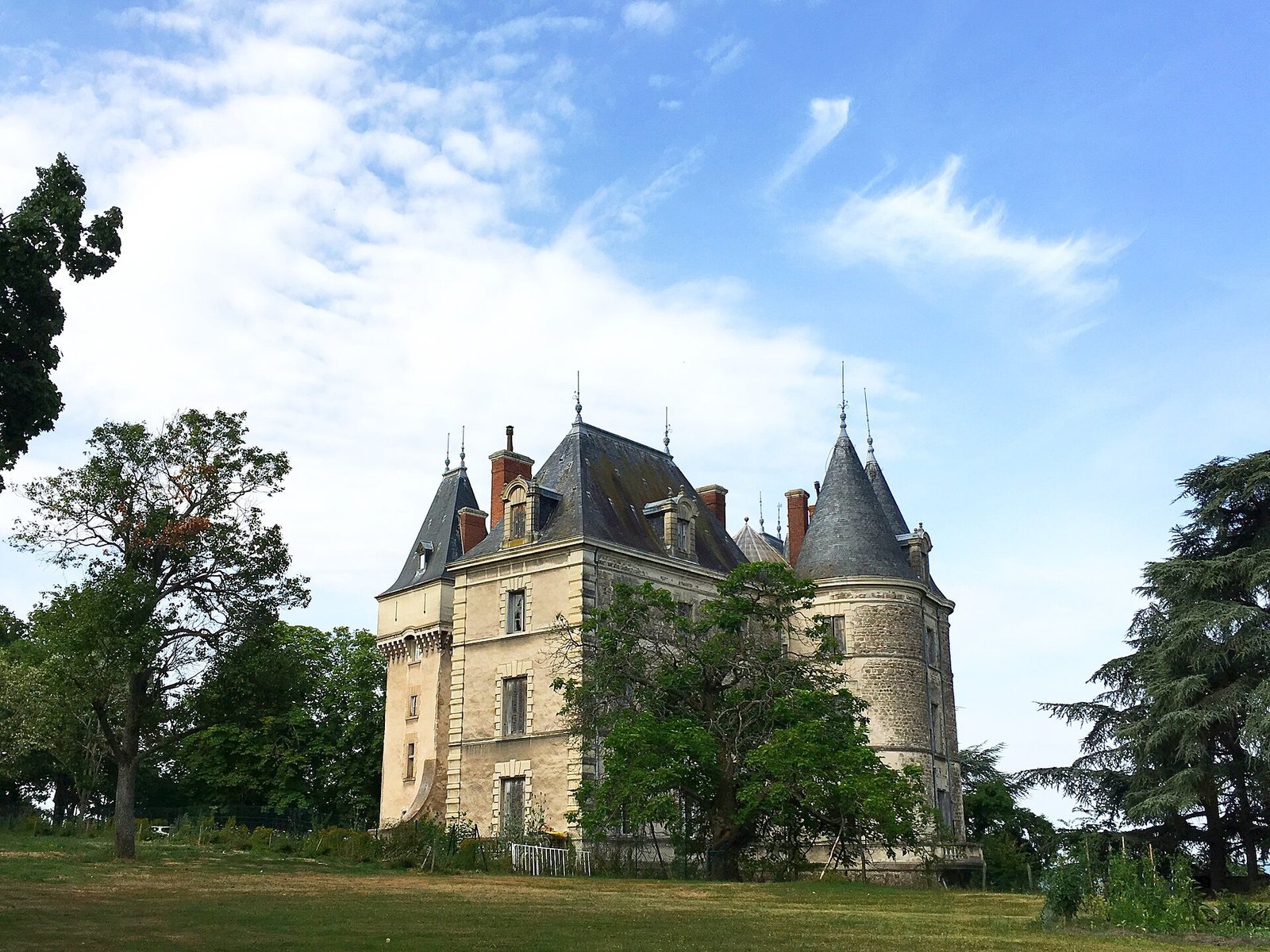
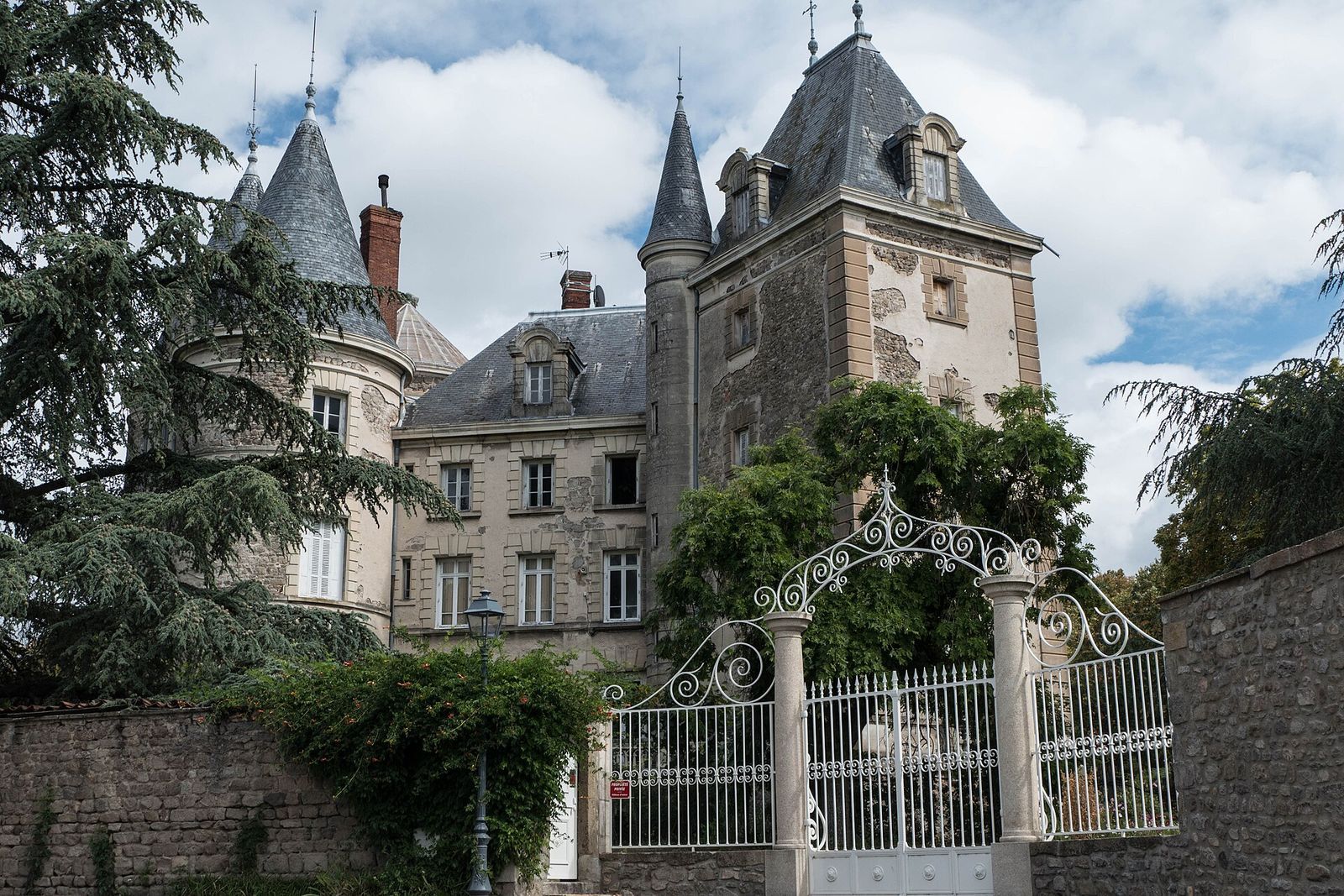
Louis Bresson restored the château in 1876 in the manner of Viollet-le-Duc, a French architect and restorer known for influential work on medieval buildings. The château was listed as a French historic monument in 1984, and the protection was extended to the whole château and associated features in 2022. That year, it also received Heritage Lottery funding toward restoration of part of its roof.
Remains
Architectural form and surviving features
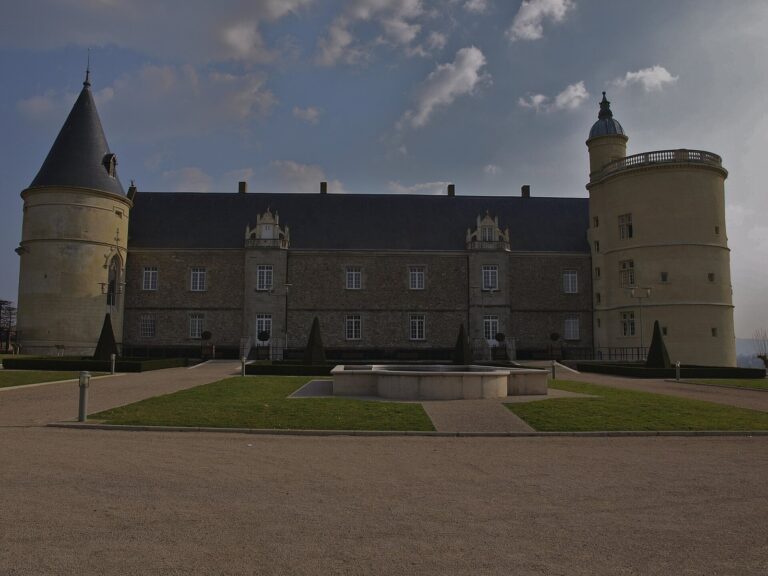
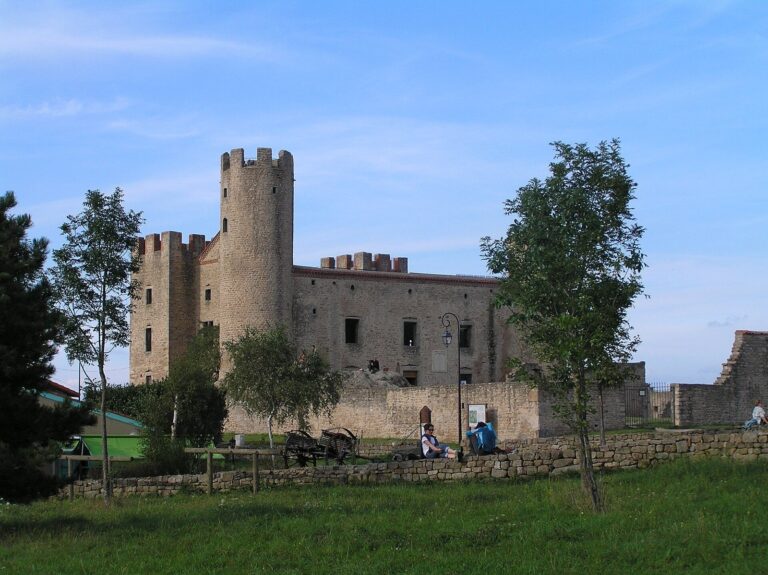
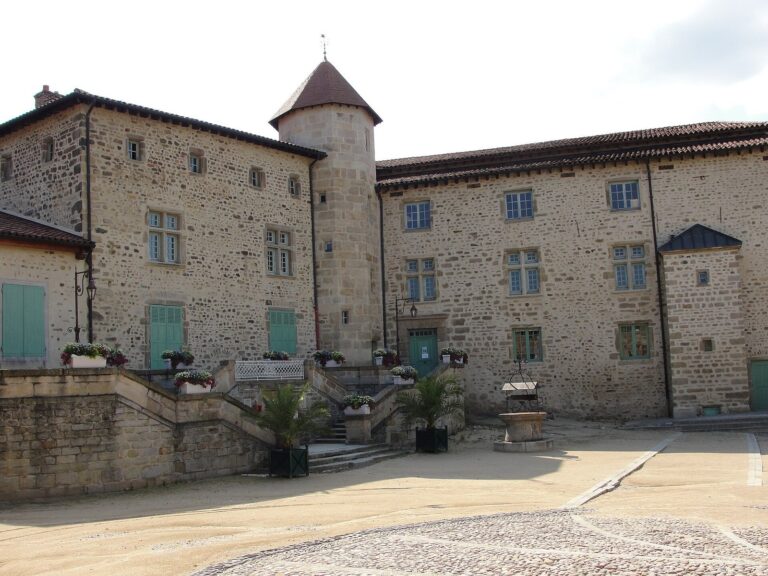
The château has a neo-medieval character, with a protected ensemble that includes its façade and roofs, courtyard, moats, entrance gateway, and decorations. Inside, a grand staircase retains its wrought-iron railing. A ground-floor room in the keep, the castle’s principal fortified tower, has wall paintings. The garden is excluded from the protected area.