Grand’Église: A Gothic Parish Church in Saint-Étienne, France
Site at a Glance
- Popularity
- Medium
- Country
- France
- Primary era
- Medieval
- Eras represented
- Medieval, Modern
- Civilizations
- French
- Site type
- Religious
- Remains
- Church
On this page12 sections
History
Early parish and medieval rebuilding
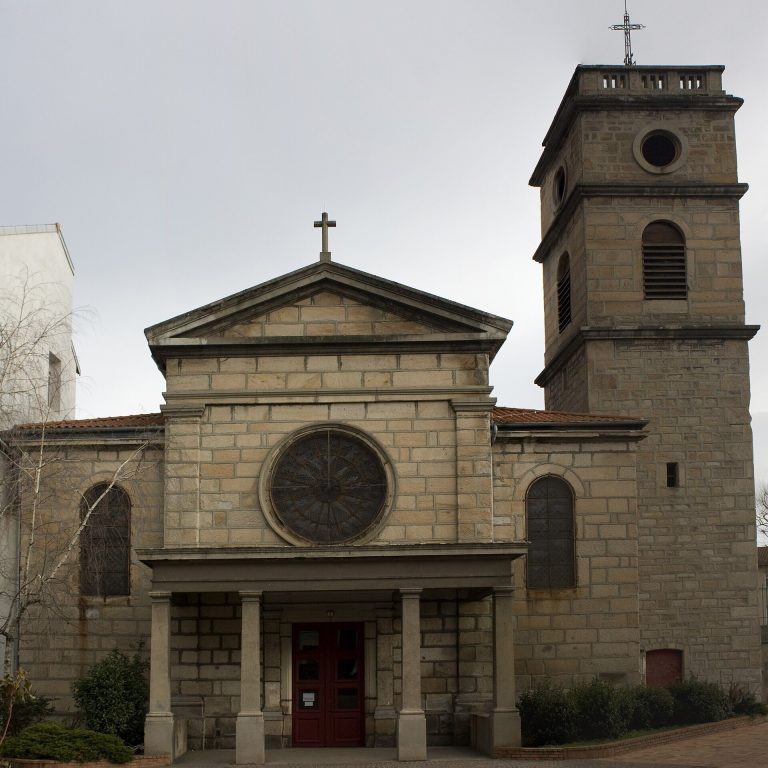
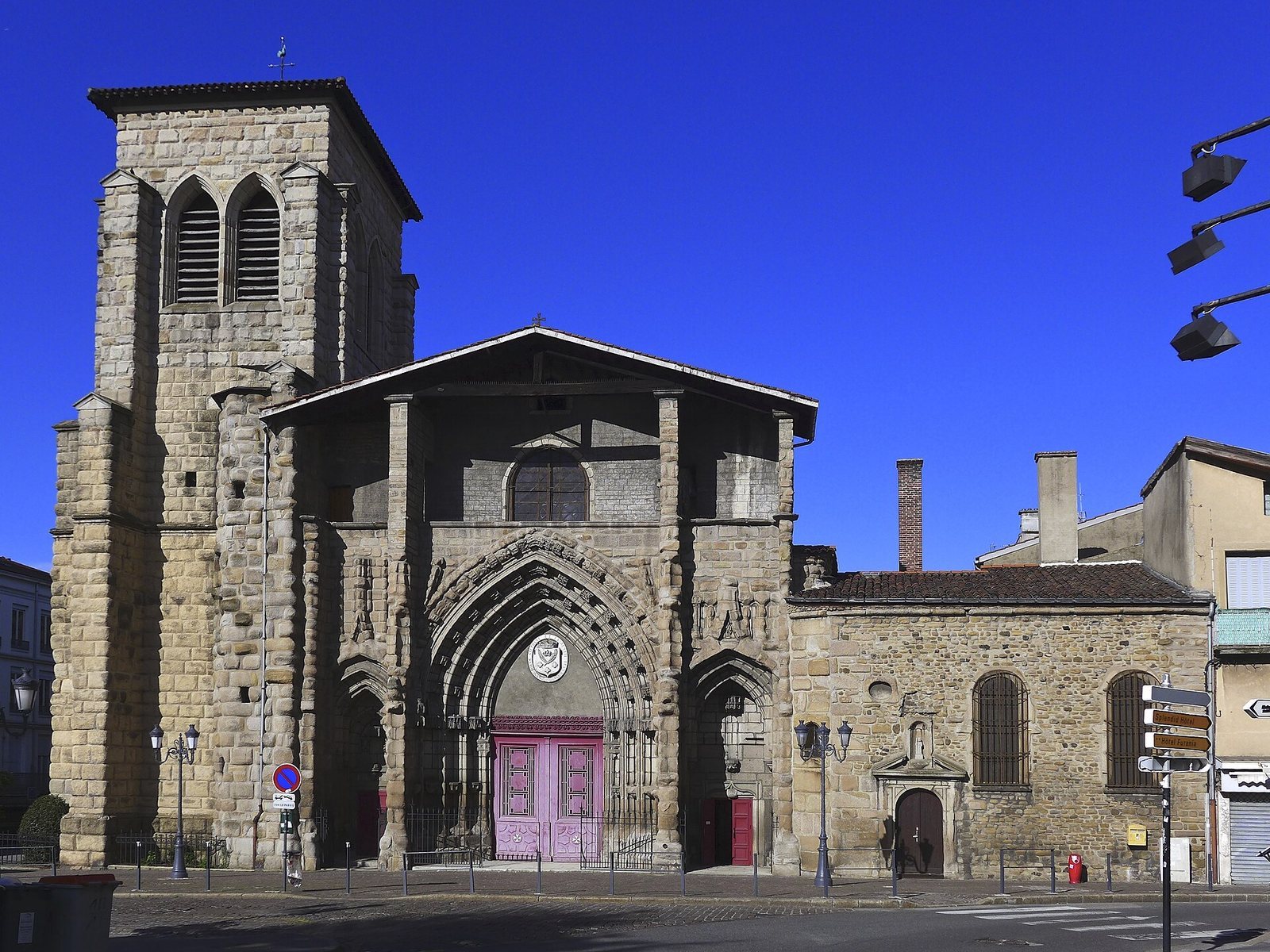
Grand’Église is a Catholic parish church in Saint-Étienne, France, built in the Forez Gothic style between 1450 and 1480. Its dedication to Saint Stephen, regarded in Christian tradition as the first martyr, may point to a foundation in the fifth century. References to an earlier chapel dedicated to him and to its chaplain suggest that a place of worship preceded the present church, although its relationship to this site is uncertain. A church called Saint-Étienne-de-Furan appears in records around the year 1000, within the Jarez ecclesiastical district. It gave the town its name, but it is not known whether it stood where Grand’Église now stands.
By the late twelfth and early thirteenth centuries, the parish extended from the headwaters of the Furan to Saint-Priest-en-Jarez. Its development took place amid a conflict between the counts of Forez and the archbishops of Lyon, which lasted from 1030 to 1173. The parish was initially under the patronage of the lord of Saint-Priest-en-Jarez, who owed allegiance indirectly to the Frankish king. After Forez and Lyonnais separated in the mid-twelfth century, the settlement of 1173 placed the parish among localities described as being “at the liberty” of the Church of Lyon.
In 1310, Jocerand d’Urgel, lord of Saint-Priest-en-Jarez, left 100 Viennese sols toward construction of the church of Saint-Étienne-de-Furan. The bequest points to rebuilding before the present church. The destruction of local archives during the Hundred Years’ War left little evidence for the building’s earlier chronology, and mercenary troops present from 1359 to 1362 may have interrupted construction.
Construction and later use
The present church was built from 1450 to 1480 and dedicated jointly to Saint Stephen and Saint Lawrence, a Roman deacon and martyr. Its choir lay in ruins in 1469 and was rebuilt in Flamboyant Gothic style before 1486. Antoine Blein the Younger was regarded as the founder of the original society of priests of Saint-Étienne in 1475.
The church was repeatedly damaged and pillaged, notably during the French Wars of Religion from 1562 to 1598. During the French Revolution it was put to industrial use as a forge workshop.
Parish memory and modern status
Jacques Toizac, parish priest, died in 1643 after contracting plague while caring for the sick. Guy Colombet served as parish priest from 1664 for about forty years. Both men were buried at the Chapel of Notre-Dame-de-Consolation at Montat. Their remains were found during roadworks in 1862 and transferred to chapels in Grand’Église in 1866. The church has been listed as a historic monument since 1949 and belongs to the Catholic parish of Saint-Étienne-Saint-Benoît in the Diocese of Saint-Étienne.
Remains
Building and plan
Built of Carboniferous sandstone, the church is an example of the regional Forez form of Gothic architecture. Its plan is cross-shaped, with a five-bay nave, or central hall divided into five sections, flanked by side aisles and lateral chapels. A transept, the crosswise arm of the church, does not extend beyond the aisles, and an apse forms the end of the building. The choir is in Flamboyant Gothic style, a late Gothic form known for elaborate flame-like tracery.
Bell tower and interior fittings
The bell tower holds six bells tuned to B-flat 2, E-flat 3, F 3, G-flat 3 (fixed), G 3, and A-flat 3. The church also contains a large Mutin-Cavaillé-Coll organ dating to 1922. Stained glass in the choir was made in 1840 by the glass painter Émile Thibaud.
Sculpture and commemorative works
Entombment
A sixteenth-century sculptural group representing the Entombment is carved from polychrome wood.
Saint Stephen relief and flanking statues
A nineteenth-century stone relief depicts the stoning of Saint Stephen and is attributed, together with the two flanking statues, to Joseph-Hugues Fabisch. The figures are identified as martyred deacons by their long robes, Gospel books, and martyr’s palms. The figure on the left represents Saint Lawrence of Rome, leaning on the gridiron associated with his death.
Virgin and Child
A white-marble Virgin and Child, made in 1861, is the work of the Saint-Étienne sculptor Étienne Montagny.
Work commemorating the town’s vow
A work in the church commemorates a vow made by Saint-Étienne’s aldermen on 21 November 1629, asking the Virgin Mary to protect the town from plague. They promised an annual procession in her honour on that date, the Feast of the Presentation of the Virgin. The work is attributed either to Antoine Reynard or to Louis-François Staron, but its authorship is uncertain.