Château de Mercuès: A Medieval Fortified Castle and Wine Estate in France


Site at a Glance
- Rating
- 4.5
- Popularity
- Low
- Country
- France
- Primary era
- Medieval
- External website
- Open
- Eras represented
- Medieval, Early Modern
- Civilizations
- French
- Site type
- Military
- Remains
- Castle
On this page11 sections
History
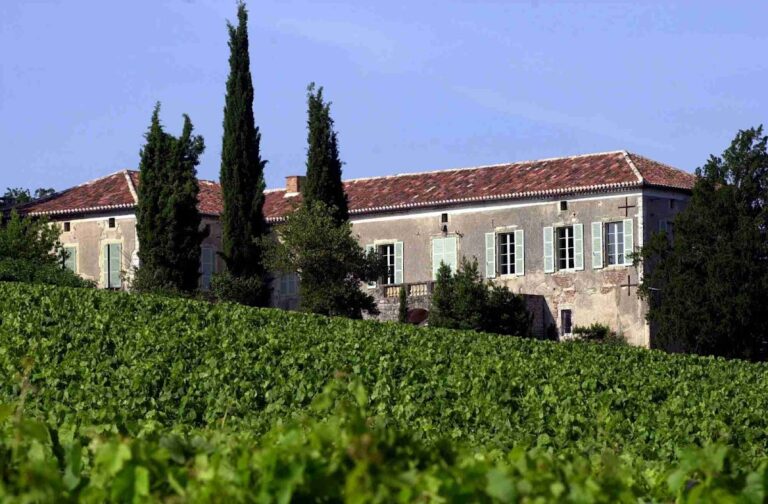
Château de Mercuès is a medieval fortified castle in France, at Mercuès near Cahors in the Lot department of Occitania. Built principally between the thirteenth and seventeenth centuries by the bishops of Cahors, it served for seven centuries as the summer residence of the counts-bishops, who combined ecclesiastical leadership with territorial and political authority. Its elevated position helped protect the approaches to Cahors and command the Lot valley.
Early references and medieval defense
The site appears in the seventh-century Life of Saint Didier, which refers to it as the “Camp of Mercury.” Saint Didier, also venerated in Quercy as Saint Géry, was a seventh-century Christian bishop. The suggestion that a fort already stood there at that time remains conjectural, and the oldest surviving parts of the present castle date no earlier than approximately the thirteenth century.
The bishops of Cahors probably built the castle to defend the city against English attacks and bands of routiers. These armed groups operated as raiders and mercenaries during periods of medieval warfare, extorting towns and plundering the countryside. Mercuès helped secure the approaches to Cahors and played an important part in the medieval wars of southern France.
Episcopal residence and continued construction
Construction continued through the seventeenth century, while the bishops remained the castle’s owners and principal users. The building also had an administrative role. Official episcopal documents were issued from Mercuès, including a mandate dated 9 June 1666. Nicolas Sevin, Bishop, Baron, and Count of Cahors, issued the document concerning the Grand Pardon of Rocamadour from “our castle of Mercuès.”
From ecclesiastical property to private ownership
After 1793, the castle passed through several changes of ownership. Bishop Balthazard Cousin de Grainville became its owner, but following his death it returned to private hands and was left almost uninhabited.
In 1861, toward the end of his episcopate, Bishop Bardou bought Mercuès from M. Lacoste-Lacroux and undertook major works. He bequeathed the castle in 1862 to the minor seminary of Montfaucon, a Catholic secondary school for boys who might pursue clerical careers. The seminary later sold it for 40,000 francs to Bishop Grimardias, who sought to restore both its former appearance and its former ecclesiastical function.
Twentieth-century history and wartime events
Following the 1905 separation of Church and state, Château de Mercuès became state property. The French state sold it in 1906 to the physician Jean-Louis Faure, who made it his home. On 27 December 1913, the 20-hectare Mercuès estate was designated a classified site, a high level of French protection for landscapes and areas of artistic, historical, scientific, legendary, or picturesque interest. On 15 September 1947, the castle’s façades and roofs were entered on the register of French Historic Monuments.
The castle had a complex history during the Second World War. Professor Faure lent it to the artist Yvonne Lévy-Engelmann, who worked under the auspices of the Jewish organization responsible for country stays. More than 80 Jewish children fleeing the occupied zone were sheltered at the castle before being moved to Espère until 1943. As the danger of raids increased, they were dispersed toward the Creuse and then the Alps in an attempt to reach Switzerland. Some were arrested and deported in spring 1944.
Faure was also involved in collaboration, and the castle served Vichy officials as a “civic center” for young men. The Vichy regime was the French government that collaborated with Nazi Germany. On 22 November 1942, Guillaume de Tournemire and Georges Lamarque met at the castle, formalizing the Compagnons de France’s alignment with the Resistance through the Alliance network. The Compagnons de France was a youth movement created under Vichy that later included members who joined the Resistance, while the Alliance was a French Resistance intelligence network. A commemorative plaque on the estate records the meeting.
Restaurant, hotel, and wine estate
After 1947, Faure’s two daughters inherited the castle and opened a restaurant there. This was its first opening to the public, a function it has retained. Georges Héreil became the owner in 1966, invested in the property, and transformed the sisters’ inn into a gastronomic restaurant. He also made Mercuès a training center for Chrysler France, whose president he had become, and had previously brought the castle into Relais & Châteaux, an international association of luxury hotels and restaurants.
After Héreil’s death in 1979, a difficult succession resulted in legal proceedings and an auction. The court favored a regional wine merchant whose project preserved the hotel and restaurant while restoring the castle vineyard. The estate is now owned by the G. Vigouroux family and functions as a wine estate, hotel, and gastronomic restaurant. Its restaurant is Michelin-selected.
Remains
Château de Mercuès is an elevated fortified complex overlooking the Lot valley and the approaches toward Cahors. Its surviving fabric dates principally from the thirteenth to the seventeenth centuries. The estate also includes a 35-hectare vineyard extending across the communes of Caillac and Mercuès, linking the historic building with a continuing agricultural use.
Fortified castle and interiors
Castle fabric
The castle’s surviving fabric belongs principally to the long period of construction that began no earlier than approximately the thirteenth century and continued through the seventeenth century. Its position above the Lot valley gave the fortified building a defensive command over the approaches to Cahors. The façades and roofs received protection under the French Historic Monuments system in 1947, while the wider 20-hectare estate had already been designated a classified site in 1913.
Rooms and decorative interiors
The château contains 25 rooms and five suites, with interiors individually arranged in historical styles or periods including Louis XVI, Louis XIV, and Art Deco. The Bishop’s room includes a parquet floor with a sundial set opposite the window, allowing the occupant to read the time on waking. The commemorative plaque for the 22 November 1942 meeting is located on the estate.
Vineyard and wine production
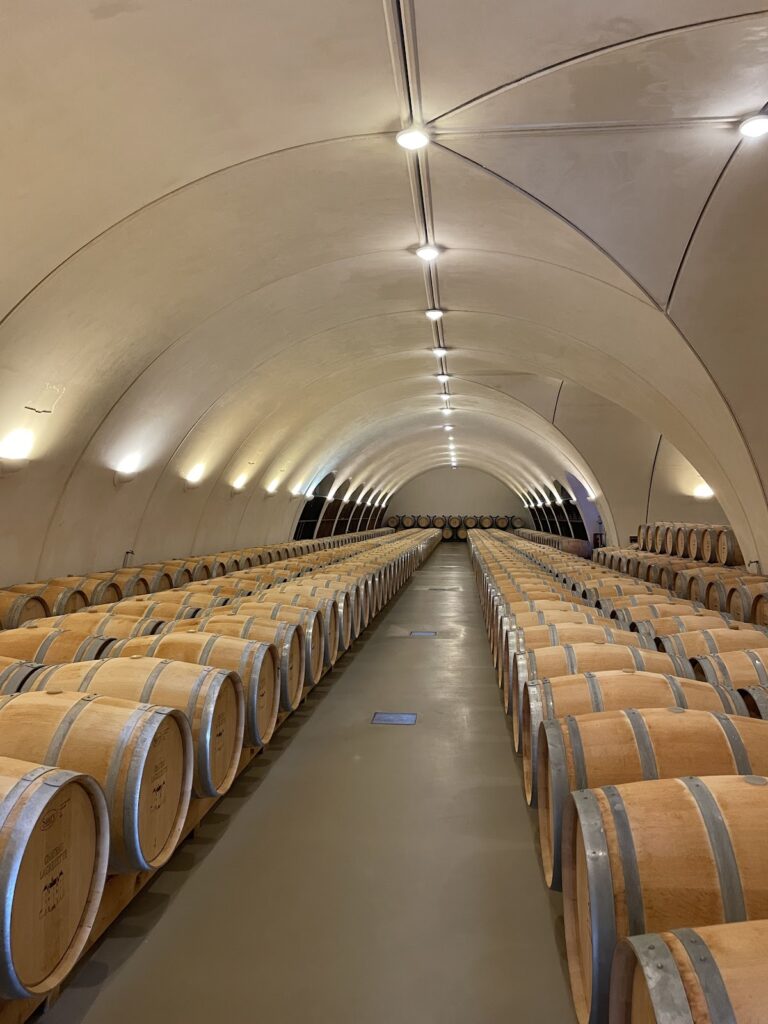
The vineyard covers 35 hectares on clay-limestone land in Caillac and Mercuès. It is planted chiefly with Malbec, also called Côt, alongside smaller areas of Merlot and Tannat and several plots of Chenin for white wine. The vines are planted at a density of 6,666 plants per hectare, a practice intended to produce concentrated wines capable of lengthy ageing.
The estate produces red, white, and rosé wines. Its red wines include Icône, made entirely from Malbec; Grand Vin, a blend of Malbec and Merlot; 6666, made entirely from Malbec; Les Evêques, made entirely from Malbec; and Les Ailes, composed of 90 percent Malbec and 10 percent Merlot. Le Chenin de Mercuès is made entirely from Chenin, while L’Arpège de Mercuès is made entirely from Malbec. Icône, Grand Vin, 6666, Les Evêques, and Les Ailes carry the Cahors AOP designation, a protected regional wine designation strongly associated with Malbec. Le Chenin de Mercuès and L’Arpège de Mercuès carry the IGP Côtes du Lot designation.
Nearby sites