Château Lagrézette: A Fortified Château and Wine Estate in France



Site at a Glance
- Rating
- 4.6
- Popularity
- Low
- Country
- France
- Primary era
- Medieval
- External website
- Open
- Eras represented
- Medieval, Early Modern
- Civilizations
- County of Toulouse, French
- Site type
- Domestic
- Remains
- Castle
On this page8 sections
History
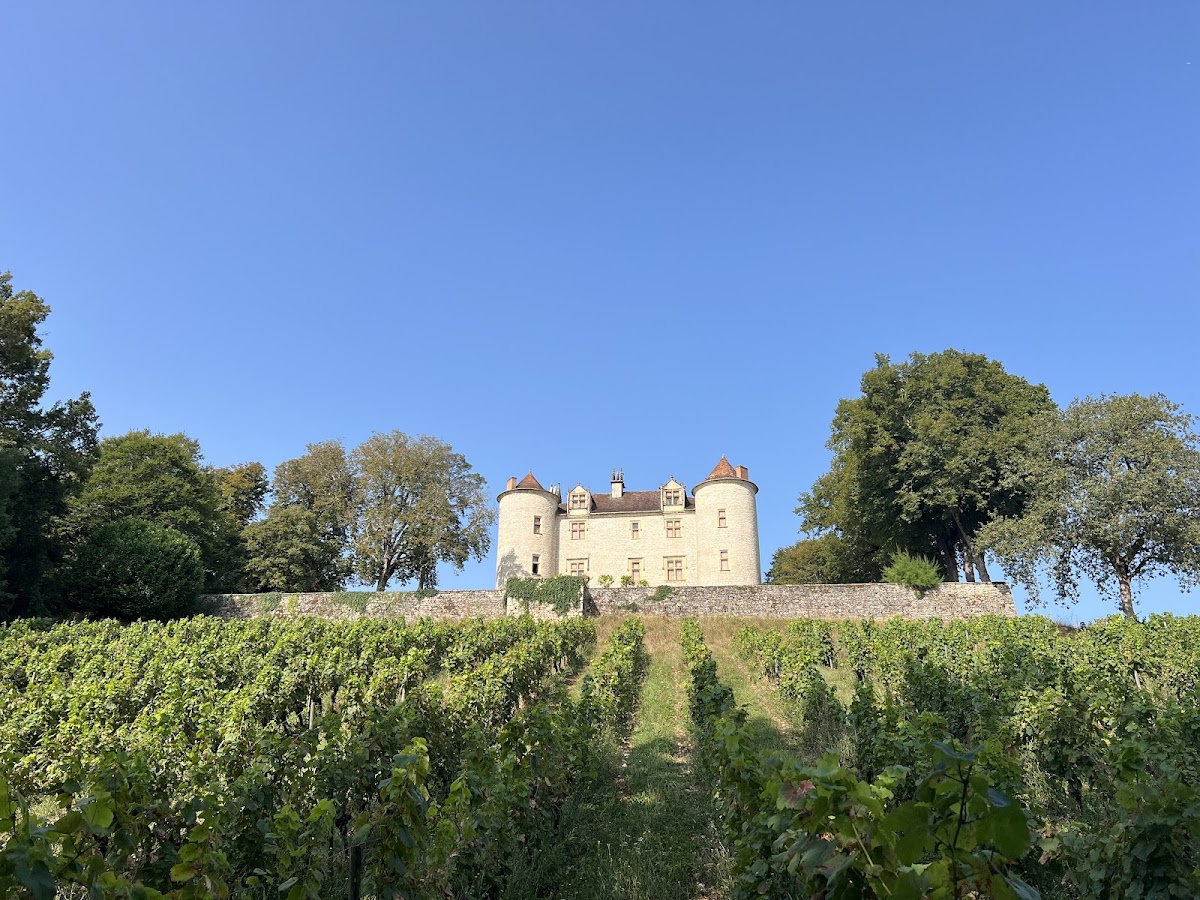
Château Lagrézette is a fortified château in Caillac, France, overlooking the Lot valley from a rocky scree. A fortified house occupied the site in the twelfth century, while the date of the present château remains uncertain. Its architecture combines the character of a medieval residence with Renaissance decoration.
The Massault family and the château’s foundation
Adhémar de Massault planned the château on the petite Grèze, a consolidated mass of stones within his property. His son Pierre carried out the project in his memory and dedicated it to his daughter Marguerite. The estate took the name La Grézette when the plans were prepared. After her father’s death, Marguerite inherited the château and married Pierre de Maffre de Camburat in 1503.
The property later passed through the families of Malegat, Lebrun, de Belcastel, de Malartic, and Ambert. General Jean-Jacques Ambert, a divisional general during the French Revolution, became its owner through his marriage to Sophie-Amable de Malartic. Their son Joachim Ambert was born at the château on 8 February 1804. He later became a brigadier general, inspector general of the gendarmerie, France’s national military police force, and a councillor of state during the Second Empire, the period when Napoleon III ruled as emperor from 1852 to 1870. He also served as mayor of Paris’s 8th arrondissement and worked as a writer, biographer, and historian.
Later owners and twentieth-century revival
Jules Duverger, a wholesale merchant from Cahors whose business had extensive connections with Asia, subsequently acquired the château and held it until the First World War. Count Jean-Roger Alexandre, known as Axel de Barde and descended from the Leroy de Barde family, owned it until 1934. The property was then sold to Madame Roux-Marcé and passed to the Chevalier family around 1939 or 1940.
By the 1930s, both the château and its vineyards had declined. Alain-Dominique Perrin discovered the estate in 1979, purchased it in 1980, and carried out a twelve-year restoration that returned the vineyard to production. Perrin, who had been president of Cartier SA from 1975 to 1988, began replanting Malbec in 1980 and worked with consulting oenologist Michel Rolland and soil microbiologist Claude Bourguignon on the estate’s wine production.
Château Lagrézette has been protected as a French historic monument since 21 October 1982. In France, this status protects buildings or sites because of their historical or architectural importance. The protection includes the château, its staircase, dining room, chapel, carved fireplaces in the large first- and second-floor rooms, and pigeon loft.
In 1984, Alain-Dominique Perrin and his wife Mathé, founders of the Fondation Cartier pour l’art contemporain, hosted artists at the château. The sculptor César and painters including Robert Combas, Di Rosa, and Jean-Charles Blais contributed to the decoration of several rooms. The estate now functions as a wine property. Its vineyard is described as the oldest in southwestern France, while local wine-growing tradition was already highly regarded by the seventh century.
Remains
The fortified château
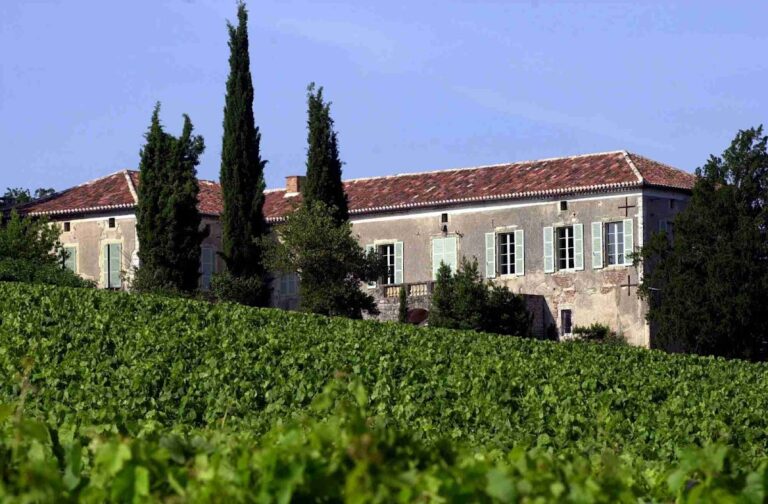
Château Lagrézette stands on a consolidated rocky scree above the Lot valley. The main building is flanked by two round towers, giving the residence a fortified form, while Renaissance decoration provides a more refined architectural character. The surviving complex includes a staircase, dining room, chapel, large rooms on the first and second floors with carved fireplaces, and a pigeon loft.
The vineyard landscape
The vineyard covers 60 hectares across second- and third-level terraces. Its soil consists of silty clay over gravel and rests on Kimmeridgian limestone, bedrock associated with an interval of the Late Jurassic more than 150 million years ago. The estate lies between the 44th and 45th parallels, at equal distances from the Atlantic Ocean, the Mediterranean Sea, and the Pyrenees. Its predominantly continental climate brings cool, wet winters and hot, dry summers.
The subterranean winery
The estate’s subterranean winery was built in 1992 and renovated in 2011. Its three levels use gravity to move grapes and wine through production. Malbec, a red-wine grape variety originating in southwestern France and traditionally known there as côt, is the principal variety cultivated. Hand-harvested grapes arrive at sorting tables on the winery’s highest level, are destemmed, move downward for parcel-by-parcel vinification, and then pass to the barrel cellar for ageing.
Artistic decoration
Contemporary works by César, Robert Combas, Di Rosa, and Jean-Charles Blais form part of the decoration of certain rooms. These additions belong to the château’s later cultural history while remaining within its historic interior setting.
Nearby sites