Château de Lussan: A Fortified Lords’ Residence in France


Site at a Glance
- Rating
- 4.4
- Popularity
- Medium
- Country
- France
- Primary era
- Early Modern
- Eras represented
- Medieval, Early Modern
- Civilizations
- French
- Site type
- Military
- Remains
- Castle
On this page10 sections
History
Medieval Fortress and Audibert Residence
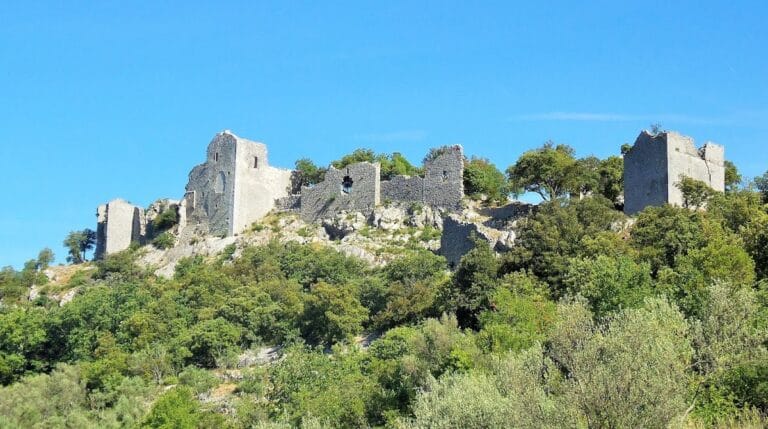
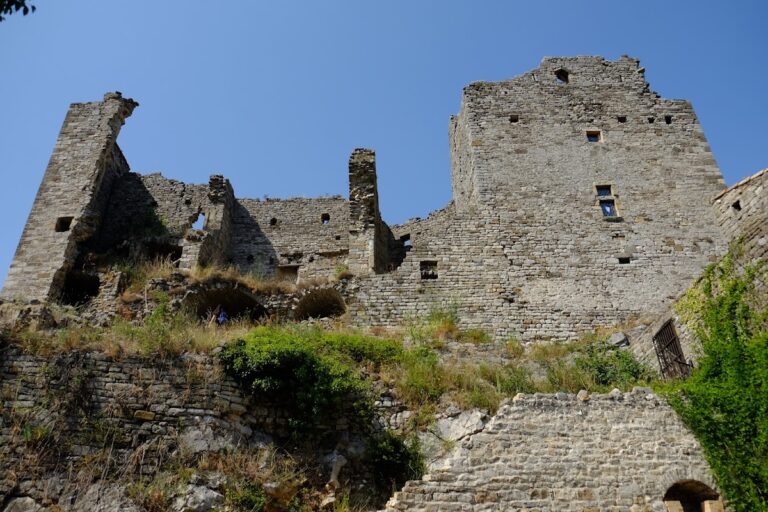
Château de Lussan is a fortified residence in France, at the entrance to the upper town of Lussan. It was the stronghold of the Audiberts, the seigneurial family that held the lordship of Lussan, and its elevated, difficult-to-reach position reinforced its defensive purpose.
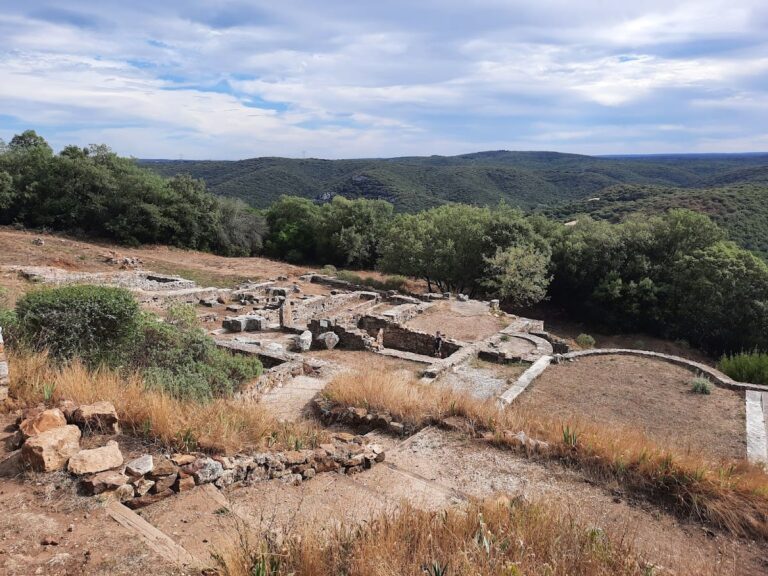
The first fortress on the site was Château du Verger, which appeared in the eleventh century. Traces of its twelfth-century fortifications survive within the defensive system and ramparts later developed by the lords of Lussan.
Rebuilding and Expansion
The present château was constructed from the late fifteenth through the sixteenth century. Its rebuilding produced a residence adapted to both contemporary defensive needs and domestic life. Further reconstruction during the seventeenth century made the building more comfortable as a residence.
In the mid-fifteenth century, Gaspard d’Audibert began building the lower Château de Fan after returning from a campaign in Italy. Positioned at a road junction leading toward the Lussanenque, the local territory around Lussan, it was intended to guard the approaches to the lords’ domain and followed the model of the principal fortress.
Although the region passed through periods of unrest, Château de Lussan was never seriously attacked. Its defensive position and difficult access probably helped it remain practically intact, along with much of the surrounding built fabric.
The Audibert Inheritance
The château’s later history was connected to the marriage of Maria Gabriella d’Audibert de Lussan, daughter and heiress of Jean d’Audibert de Lussan. In July 1700, she became Duchess of Albemarle through her marriage to Henry FitzJames, the illegitimate son of King James II of England and Arabella Churchill. After James II’s defeat at the Battle of the Boyne in 1690, father and son fled to France.
FitzJames later became a grand prior of the Order of Malta, a Catholic religious and military order whose grand priors administered major territories, and was appointed admiral of a planned expedition from Toulon in 1702. He died unexpectedly in December of that year. Maria Gabriella married John Drummond, 2nd Duke of Melfort, in May 1707.
Protection and Civic Use
Château de Lussan was listed as a historic monument in France on 4 June 1926. The great hall in the northeast wing received a separate listing on 22 November 1985, with its decoration dated to the second half of the sixteenth century. The commune of Lussan owns the château, which now contains the town hall and municipal services.
Remains
Fortified Buildings
Château de Lussan
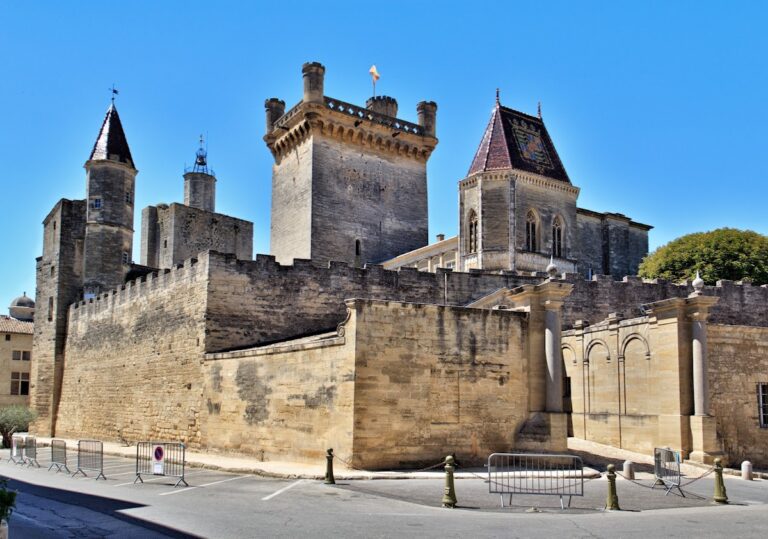
The château has a square plan with four round corner towers. One of these towers was later converted into a campanile, a bell tower incorporated into another building, and fitted with a wrought-iron finial and a clock. The building occupies a defensible hilltop position associated with the upper town of Lussan.
Château de Fan
The lower Château de Fan stood at a road junction serving the Lussanenque. It was built with four corner towers on a model similar to that of Château de Lussan, expressing the same concern with controlling access to the surrounding territory.
Great Hall Decoration
On the first floor of the northeast wing, the great hall has an artistically significant ceiling. A broad frieze accompanies a series of painted wooden beams, whose decoration specialists attribute to the second half of the seventeenth century.
The decoration combines rich Renaissance ribbon ornament with arabesques, flowing patterns based on stylized foliage and intertwined forms. Framed ornamental panels called cartouches contain varied scenes, mythological figures, allegories, and landscapes. The ceiling was painted over in the eighteenth century after its style had become outdated. That covering helped preserve the decoration, which was restored during the 1980s.
Nearby sites