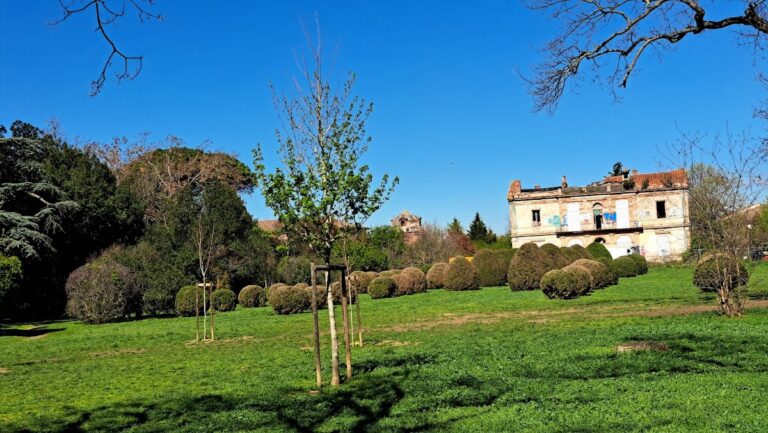
Château de Launaguet: A Historic Château and Town Hall in France


Site at a Glance
- Rating
- 4.6
- Popularity
- Very Low
- Country
- France
- Primary era
- Modern
- Eras represented
- Modern
- Civilizations
- French
- Site type
- Domestic
- Remains
- Castle
On this page5 sections
History
Château de Launaguet is a historic château in France, built in 1845 after an earlier manor on the estate was destroyed by fire in 1805. The estate was purchased in December 1843 by Jacques-Henri Dufay, Baron de Launaguet, whose career included serving as Prefect of Montauban and later as a Master of Requests, a senior legal and administrative official on the French Council of State.
Reconstruction and municipal use
The present château was restored by Auguste Virebent, an architect based in Launaguet. Jacques-Henri Dufay’s tomb is located in a chapel in front of the current church, linking his memory to the estate and the surrounding community. In September 1991, the château became communal property and was converted into the town hall.
Château de Launaguet was classified as a French historic monument on 11 February 1993. It is also listed in the Mérimée architectural-heritage database under reference PA00094690.
Remains
The surviving château includes documented northwest and southeast façades, an entrance marked by the coat of arms of Jacques-Henri Dufay, Baron de Launaguet, and small projecting watch-turrets. These turrets, known as échauguettes, were traditionally used for lookout or defensive purposes. One is called the “lizards” watch-turret and another the “snakes” watch-turret.
Exterior decoration
Terracotta, or fired clay used for architectural decoration and sculpture, forms part of the château’s exterior ornament. Auguste Virebent’s work includes terracotta griffons, legendary creatures represented with an eagle’s head and wings and a lion’s body. Two griffon sculptures are documented, while a terracotta lion’s head is set into the northwest façade.
Memorial chapel
A chapel standing in front of the current church contains the tomb of Jacques-Henri Dufay, Baron de Launaguet. The chapel forms a separate memorial element associated with the man who purchased the estate before the present château was built.