Château de la Trousse: A Manor Estate in Ocquerre, France
Site at a Glance
- Popularity
- Medium
- Country
- France
- Primary era
- Modern
- Eras represented
- Early Modern, Modern
- Civilizations
- French
- Site type
- Domestic
- Remains
- Manor House
On this page7 sections
History
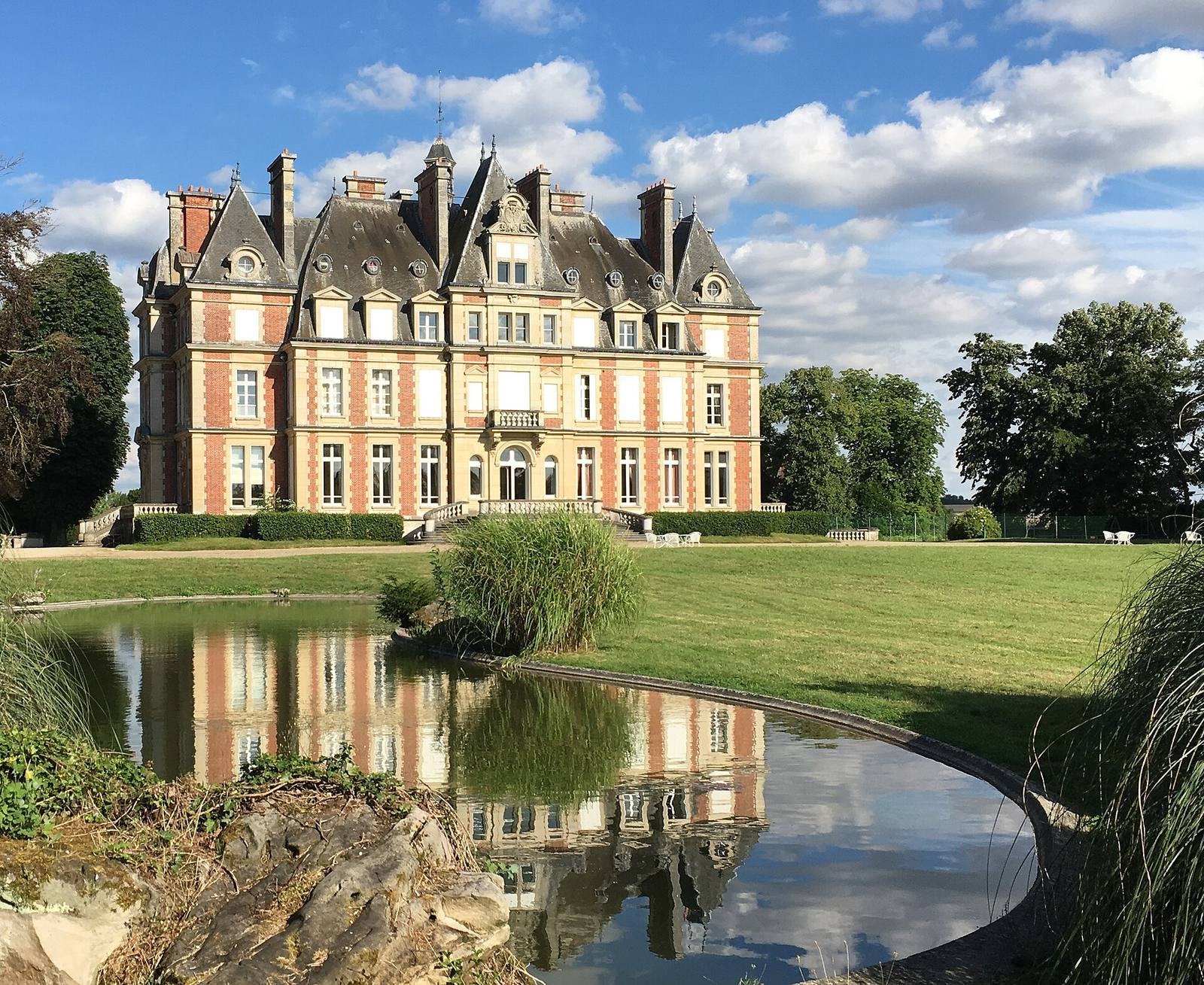
Château de la Trousse is a manor estate in Ocquerre, France. Its original château was built around 1630 during the reign of Louis XIII by Sébastien Le Hardy. The present château is a later building, completed in 1865. The estate served as a family home for generations and later experienced military occupation during both world wars.
The Le Hardy family
The Le Hardy family lived at the estate until 1791. Tradition links its name to a visit by Louis XIV around 1651, when he is said to have praised the château as well fitted out. The remark may have inspired the name. That same year, the family received the hereditary title of marquis.
During the 1680s, Philippe-Auguste Le Hardy commissioned architect Libéral Bruant to renovate and improve the property. In 1684, Philippe-Auguste’s only child, Marie-Henriette, married Amedeo Adolfo dal Pozzo, a prince from northern Italy and Marquis of Voghera. The couple inherited the estate after Philippe-Auguste’s death in 1691. Their granddaughter, Marie-Henriette-Augustine-Renée d’Alpozzo de La Trousse (1748–1836), later inherited it and sold it in 1791 to Charles-Guillaume Baudon, Count of Mony-Colchen.
Revolution and nineteenth-century rebuilding
The Baudon family retained the estate until 1998. It fell into disrepair during the French Revolution, the period of political and social upheaval that began in 1789. In 1814, French troops under Napoleon Bonaparte set fire to the orangery to signal the approach of Cossacks, communities historically associated with mounted warriors in eastern Europe. In 1829, the owners allowed speculators to sell building materials to raise funds.
In 1865, Count Charles-Victor Baudon de Mony-Colchen, grandson of the 1791 purchaser, completed a new château. He also oversaw improvements to the orangery and stables and the creation of gardens.
Wartime occupation and later use
In the later years of the First World War, United States troops were stationed at the château in connection with the battles of Château-Thierry and Belleau Wood. After the war, the count placed a memorial at the entrance in gratitude for his son’s survival.
German forces requisitioned the estate during the Second World War and used the courtyard attics as a field hospital. Allied troops advancing from Normandy reached the property on 24 August 1944, and a tank battle followed. A German tank was hit on the driveway. Fighting ended the next day, when Paris was liberated.
In 1998, Count Xavier Baudon de Mony sold the estate to Dutch owner Hans Musegaas. The family could no longer meet the rising maintenance costs, and the younger generation did not wish to take on the responsibility. The château and its buildings were subsequently renovated and converted into private apartments, with co-owners sharing upkeep and improvement work.
Remains
Buildings and grounds
The estate covers about 40 hectares. Its present château is the newer principal building, while the orangery and stables date to 1630 and were renovated during the nineteenth-century works. Gardens were laid out as part of that period of improvement. Other features include a chapel, a prison, and a dovecote, a structure for housing pigeons. The orangery was used to shelter citrus and other tender plants.
First World War memorial
The First World War memorial is at the château entrance on the D401.