La Coindrie Castle: A Historic Estate in Argentonnay, France
Site at a Glance
- Country
- France
- Primary era
- Modern
- Eras represented
- Modern
- Civilizations
- French
- Site type
- Domestic
- Remains
- Castle
On this page8 sections
History
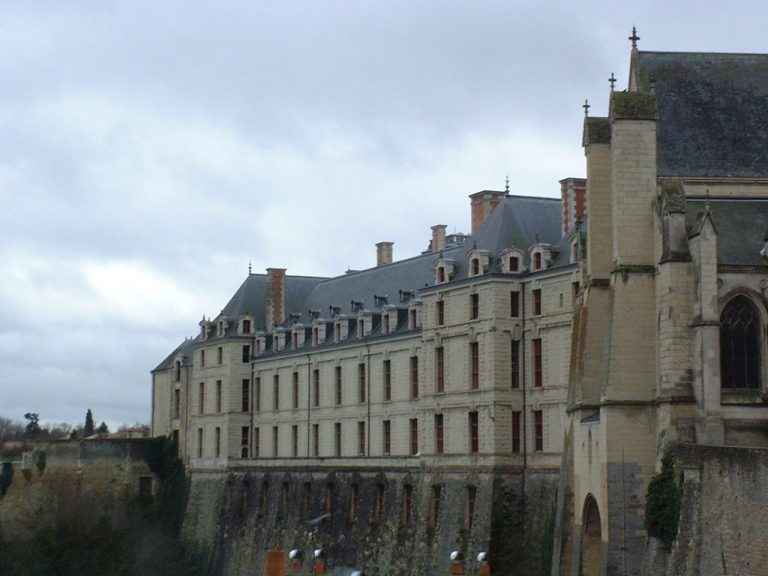
La Coindrie Castle stands at the entrance to the former municipality of La Coudre in Argentonnay, France. A fortified residence was first established there from the thirteenth century, while the present château dates to a late nineteenth-century rebuilding inspired by the French Renaissance, a sixteenth-century architectural period in France. The estate passed through several families before Revolutionary-era violence destroyed the earlier château.
Garnier, La Coudre, and Guillet ownership
A branch of the Garnier family held the lordships of La Coudre and La Coindrie from the mid-thirteenth to the late fourteenth century. Its two earliest known ancestors, both named Pierre, served as mayors of Poitiers several times between 1230 and 1283.
In the fifteenth century, ownership passed to the La Coudre family and then, through marriage, to the Guillet family. The Guillets held the estate until about the middle of the seventeenth century.
The Richeteau family
The estate later came under a branch of the Richeteau family, whose members used the titles lords of La Coudre and La Coindrie. The family originated in the Thouars region and supplied three mayors of Poitiers during the seventeenth century. Its members were recognized as noble from 1600 through their service as mayors and aldermen. The La Coudre and La Coindrie line traced its descent to Louis Richeteau, an esquire, a rank within the French nobility, and lord of La Coindrie in the late sixteenth century.
After Louis died in 1574, the family succession passed from father to son through Jehan, a second Louis, Urbain-Marie, and Urbain-Stanislas-René-Marie, who died in 1734. Jehan and the second Louis both served as mayors of Poitiers in the mid-seventeenth century. Henri-Charles-Urbain-René de Richeteau, born in 1726, married Catherine-Mélanie Hunault de la Chevallerie in 1753. Their eleven children were born at the château between 1754 and 1768.
The French Revolution and its aftermath
During the French Revolution, four of Henri-Charles-Urbain-René’s children emigrated. His eldest son, René-Louis-Pierre, was styled lord of La Coudre. Another son, Louis-Alexandre-François, led a local band in the Vendée uprising, a counterrevolutionary revolt against the Republican forces. In August 1792, he joined forces led by Adrien-Joseph Delouche and Gabriel Baudry d’Asson in an attack on Bressuire. Captured, he was executed by firing squad on 28 August. The execution took place either at Bressuire or at Thouars.
On 5 January 1794, men from one of Brigadier General Louis Grignon’s infernal columns, Republican military formations used to suppress the uprising, attacked La Coudre. They shot several inhabitants as they left Mass and burned and destroyed the château. A local tradition also tells of a farmer whose feet were burned after she refused to surrender the owners’ belongings.
The youngest son, René-Louis, arrived from Nantes the next day and found the château in ruins. He fled toward Angers, but was intercepted, tried, and guillotined on 8 January 1794, aged 25. The other siblings left the region for Maine-et-Loire. Their surviving brother Joseph-Louis-Marie remained at La Coudre and settled in an isolated house. He served as mayor of the commune from 1808 to 1830, and his daughter married there in 1826. He died after 1833.
The Monnier rebuilding
Octave Monnier acquired the estate in 1865 and commissioned a new château on the ruins of the earlier one in the late nineteenth century. Monnier and his family moved in between 1871 and 1876. Four generations of the family served successively as mayors of La Coudre from 1881 to 1990, and the estate remained in Monnier hands until 2019. The last male member of the La Coudre branch of the Richeteau family died in 1917.
Remains
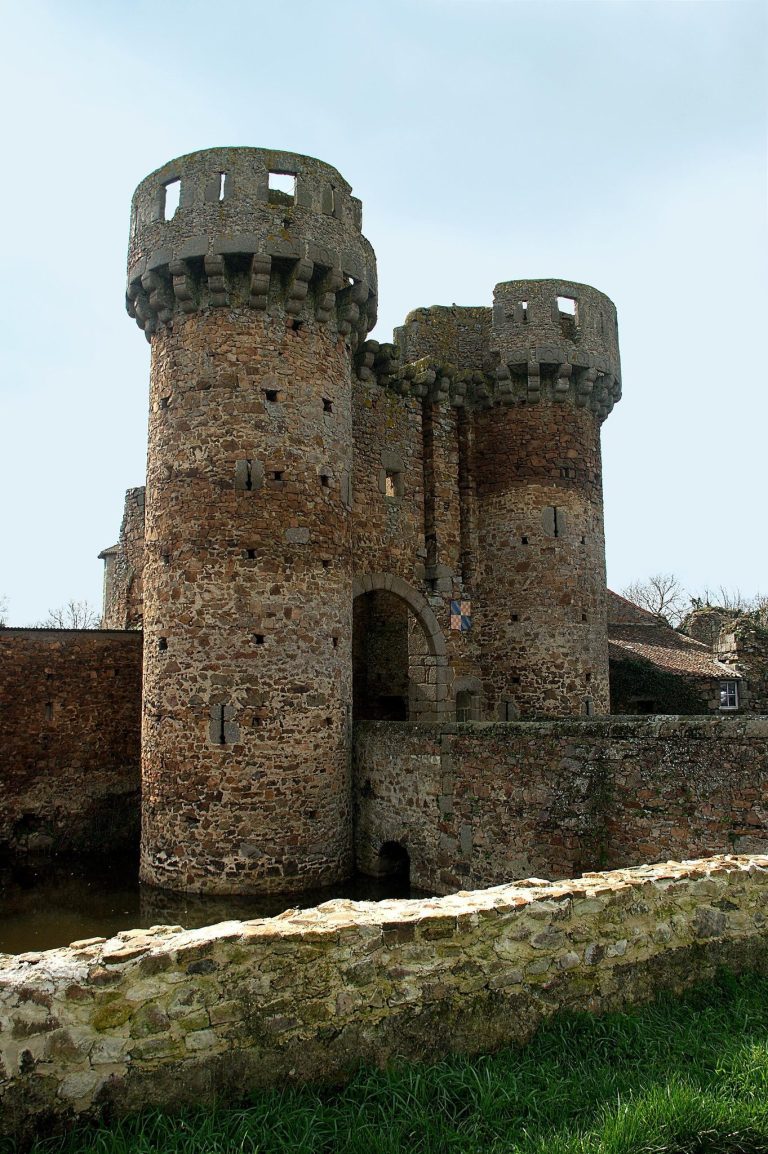
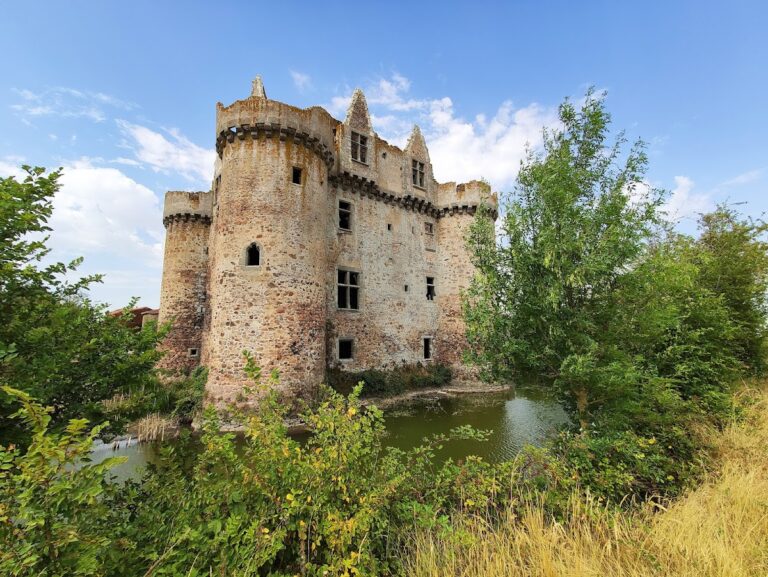
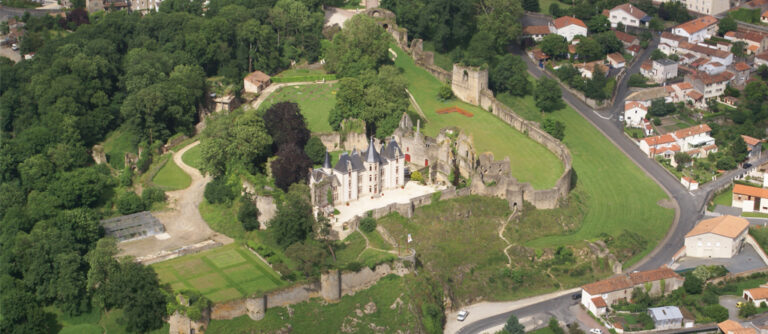
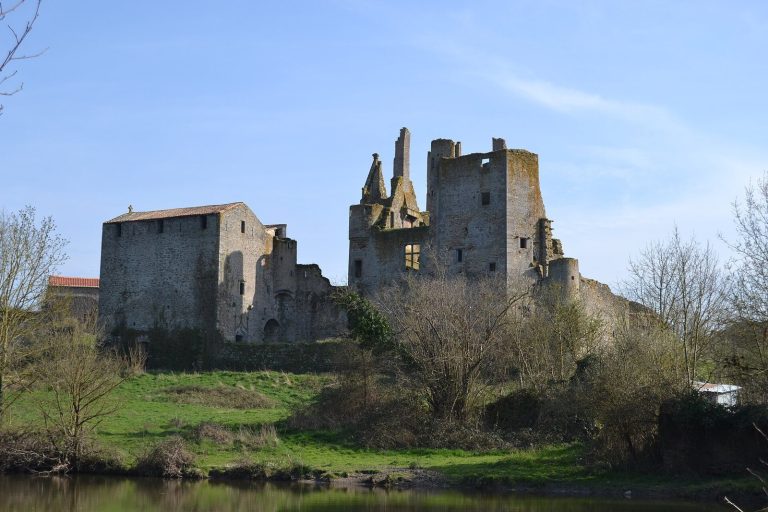
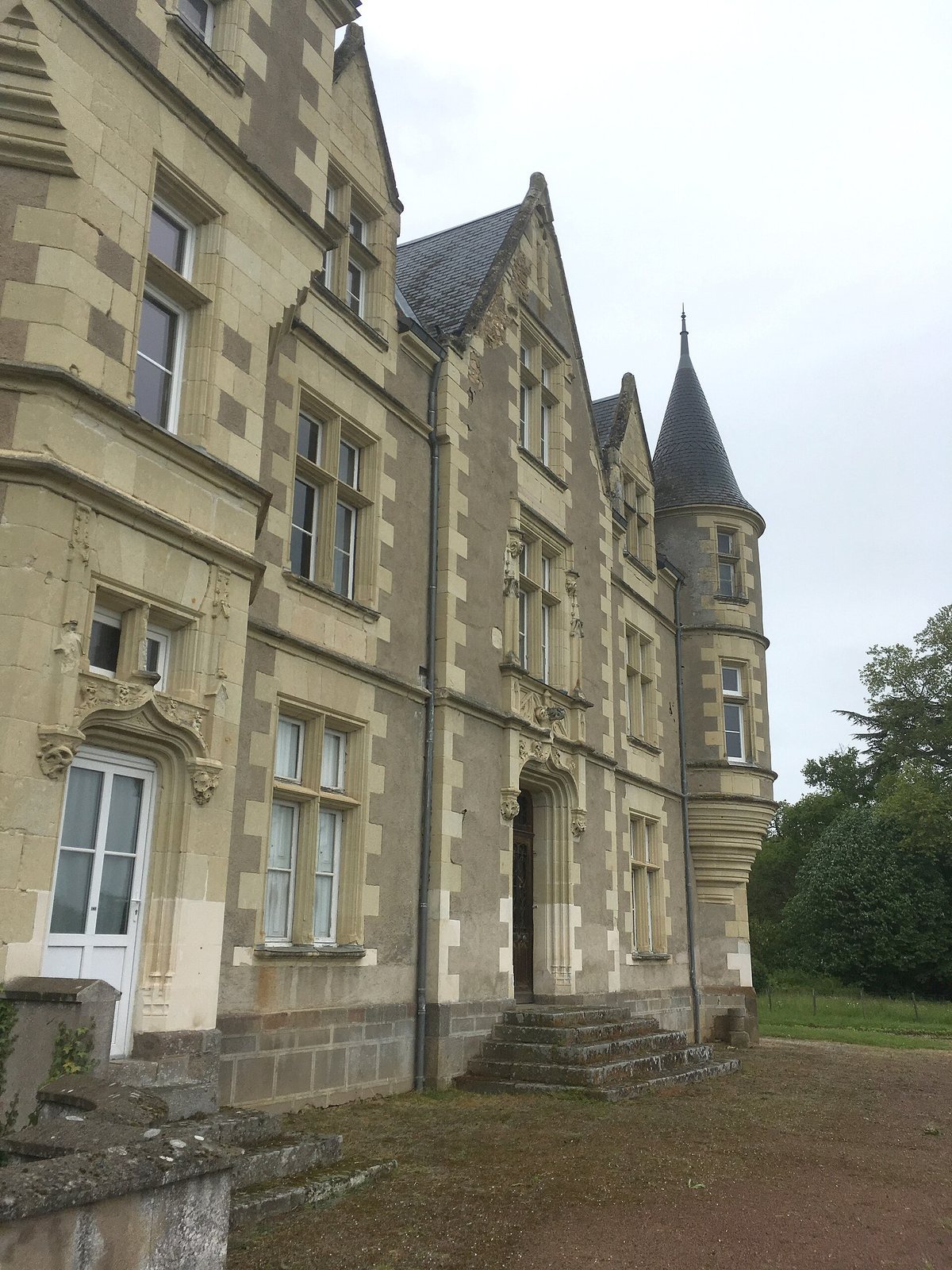
The surviving estate combines an almost square, French Renaissance-inspired château with two park buildings. Moats surround the château, while a substantial farmhouse stands about 100 metres to its south and a guardian’s lodge forms part of the park complex.
The château and moats
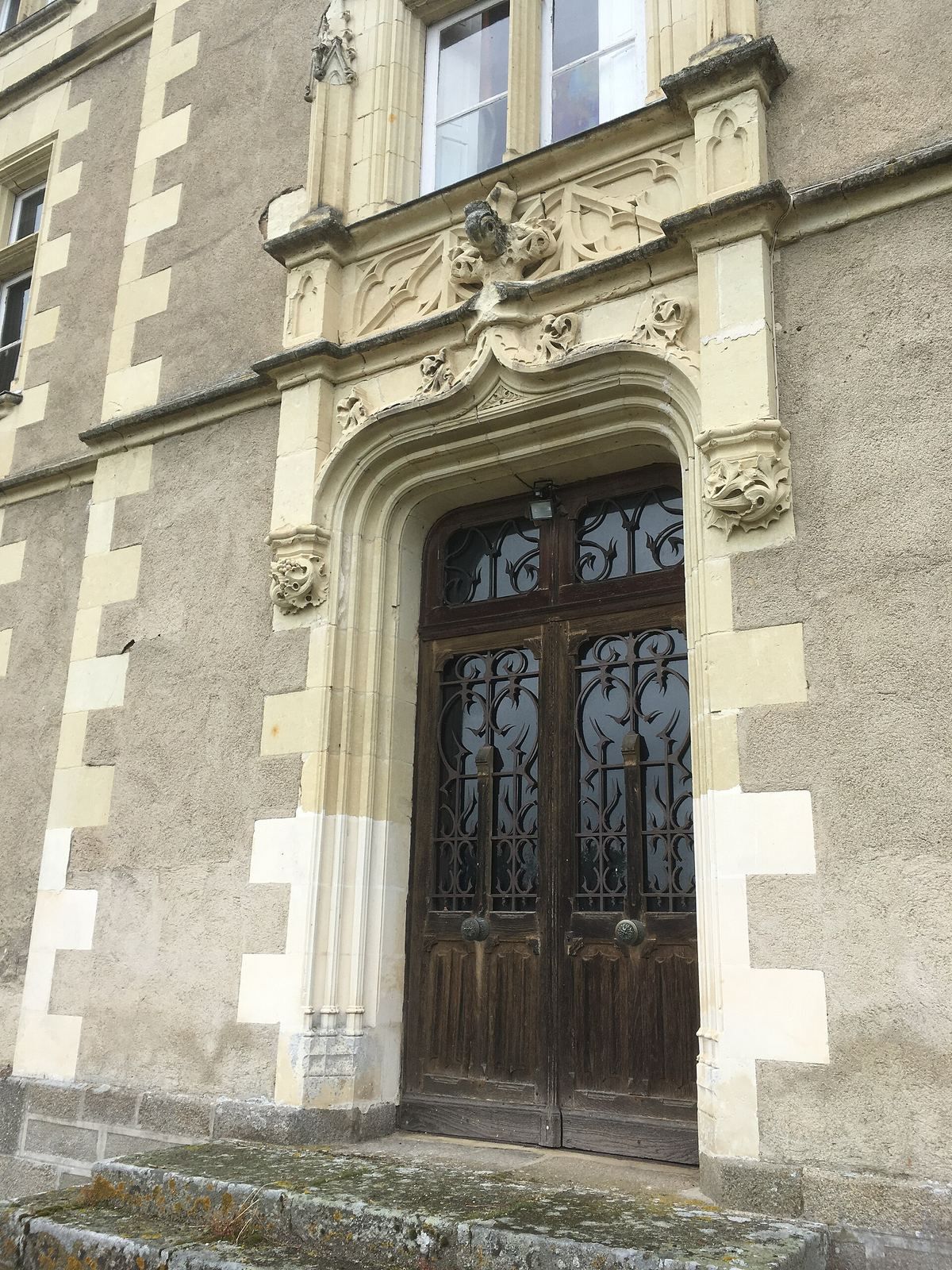
The château has three levels, with the uppermost partly beneath a mansard roof, steep on its lower slope and shallow above. Numerous windows are divided by horizontal and vertical stonework. A triangular gable marks the principal façade, which is flanked by a large square corner tower and a cylindrical tower resting on projecting masonry supports. The surrounding moats were already present during the Richeteau period.
Farmhouse and lodge
The farmhouse has two wings arranged at right angles and is built in the Second Empire style, associated with Napoleon III’s French regime of 1852 to 1870. It served, among other purposes, as a stable. A guardian’s lodge in the same style completes the park’s buildings.