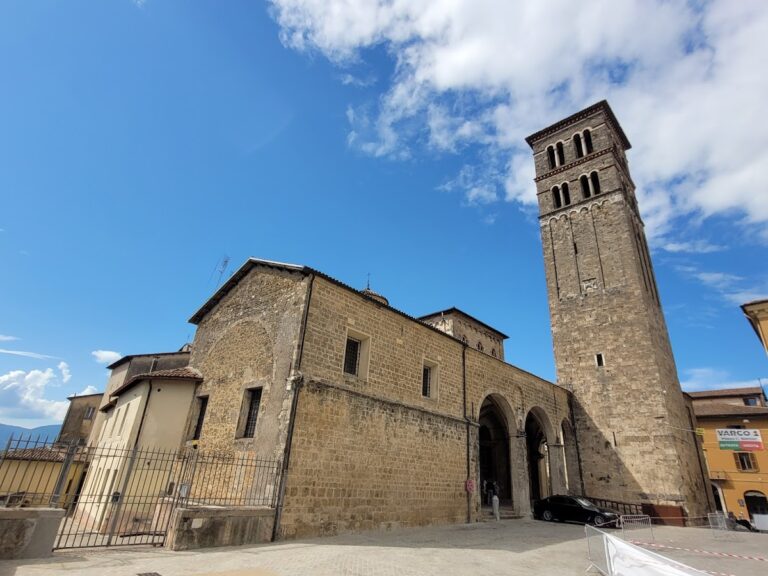
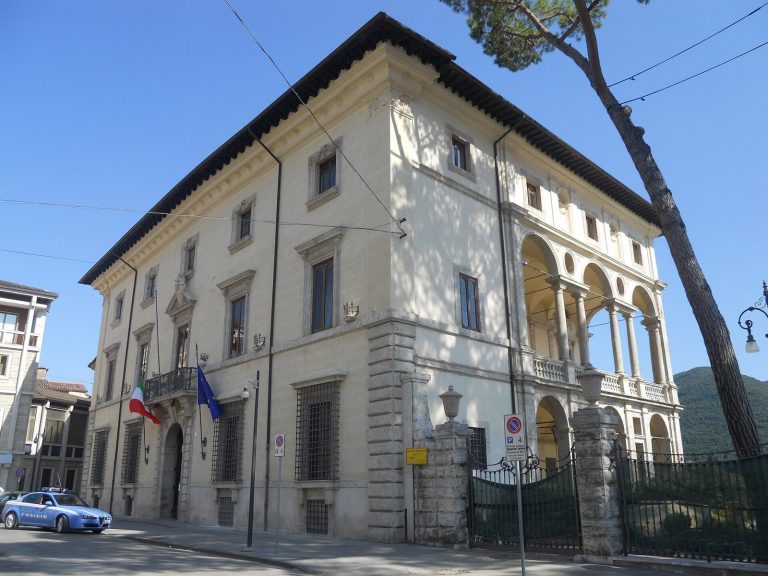
Santa Scolastica: A Baroque Church in Rieti
Site at a Glance
- Country
- Italy
- Primary era
- Early Modern
- Eras represented
- Early Modern
- Civilizations
- Papal States
- Site type
- Religious
- Remains
- Church
On this page11 sections
History
Foundation and rebuilding
Santa Scolastica is a Baroque church in Rieti, Italy; its first church was established in 1334 beside a Benedictine women’s monastery. Benedictine refers to a Catholic monastic tradition shaped by the Rule of Saint Benedict. The monastery was one of three founded outside Rieti’s then-settled area during the 14th century, alongside Santa Caterina and San Benedetto. The convent of Santa Margherita joined it in 1453, followed by Sant’Andrea in 1498.
By the late 17th century, the church had become too small for the nuns. Francesco Fontana prepared a plan for a new building in 1695, now preserved in the Rieti State Archive. The rebuilding may also have been prompted by earthquakes in 1639 and 1672. On 3 April 1696, Bishop Ippolito Vincentini laid the first stone and dedicated the church to Saints Andrew and Scholastica. Antonio Maria Ravazzani directed the construction and stucco work. The church was blessed in 1704 and consecrated by Bishop Bernardino Guinigi on 1 May 1717. Financial constraints left its interior bare for an extended period.
From monastery to parish
In 1813, during Napoleonic rule, the period of political control associated with French emperor Napoleon Bonaparte, the monastery was taken from the nuns and converted into a judicial prison. It remained Rieti’s principal prison until a replacement opened at Vazia in 2009. After the monastery’s suppression, Bishop Saverio Marini entrusted the church to the Society of Saint Aloysius Gonzaga, named for a 16th-century Italian Jesuit and Catholic saint. The Congregation of the Lovers of God took over in 1816.
Santa Scolastica became a parish in 1929, after the demolition of San Giovanni in Statua to make way for the Hotel Quattro Stagioni. The Piarist Fathers, a Catholic religious order especially associated with education, moved to the church from their former home in Piazza Vittorio Emanuele II. The parish was suppressed in the late 1980s, and the church was placed under the Cathedral parish. The Piarists later moved to a newly established parish in the Micioccoli district and left Rieti in 1997. Santa Scolastica was deconsecrated during the 20th century.
Reuse and earthquake damage
Under an agreement with the Diocese of Rieti, the Varrone Foundation renovated the church and adapted it as an auditorium for conferences, concerts, and other cultural events. In 2010, the foundation promoted the restoration of its Catarinozzi organ by the Pinchi company of Trevi. Damage from the 2016 Amatrice earthquake led to the building being declared unusable in 2019.
Remains
Plan and exterior
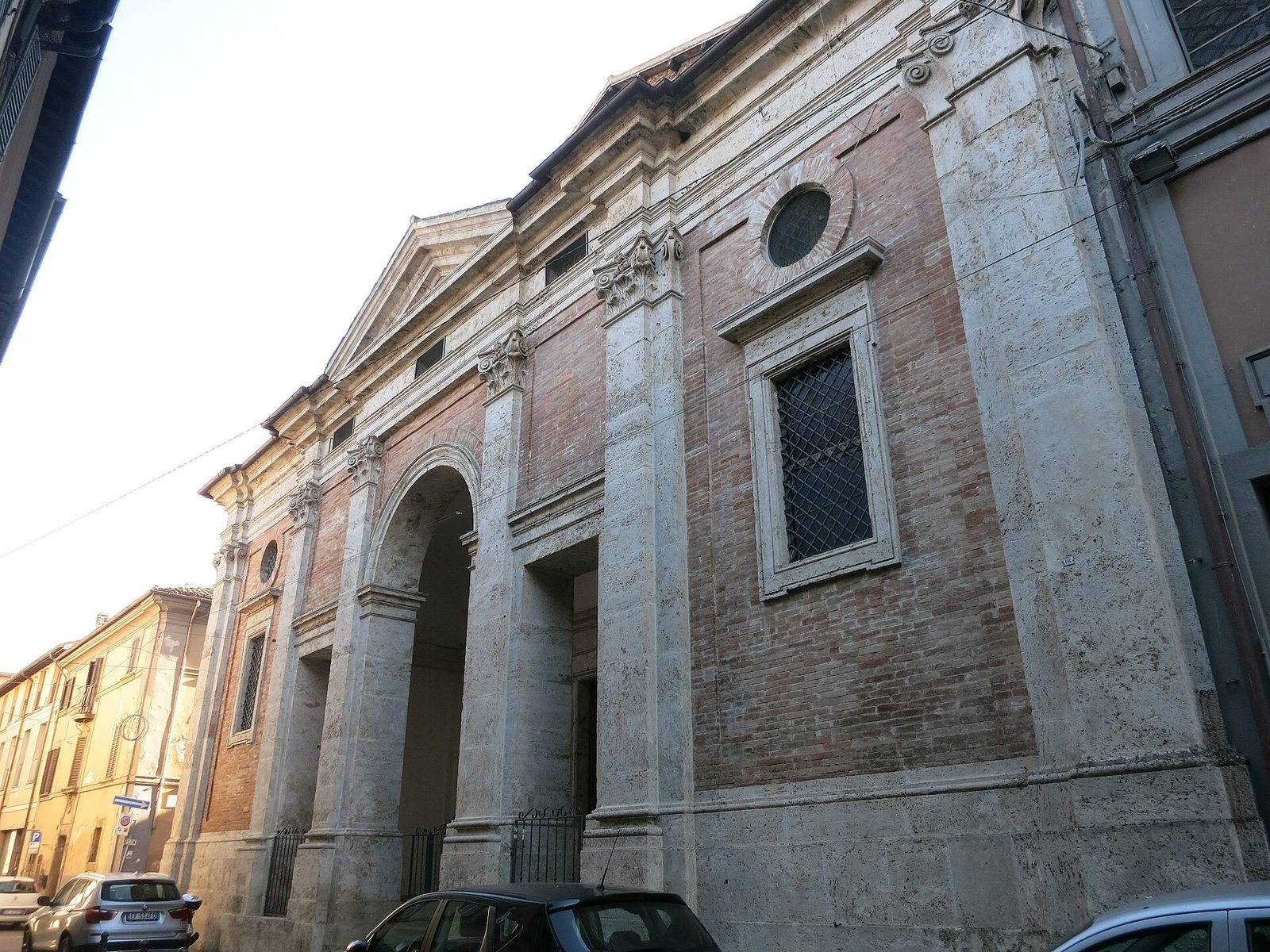
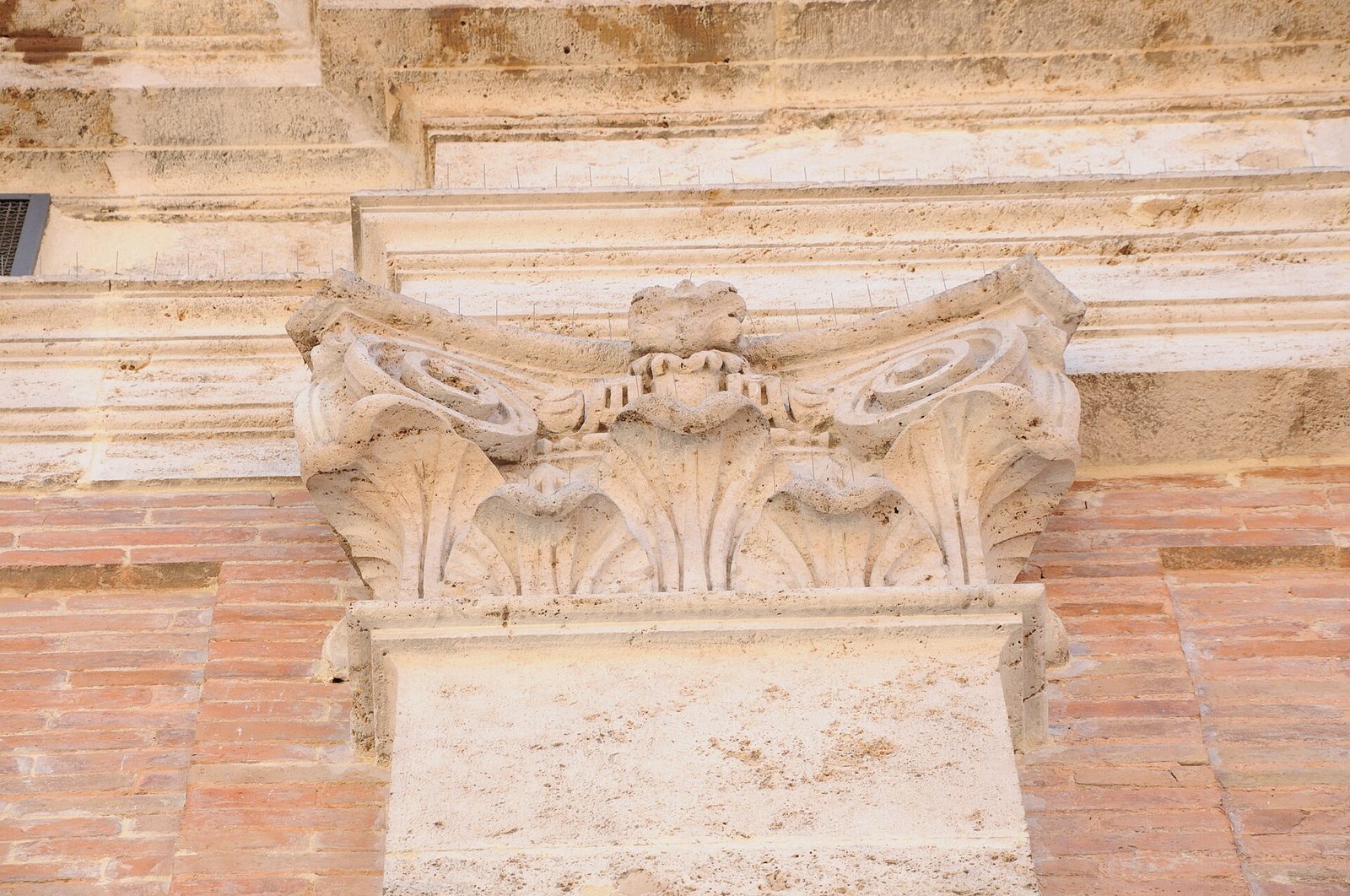
The church has a Greek-cross plan, with four arms of roughly equal length arranged around a central space. Its façade combines red brick and white travertine. A large central arch flanked by two narrower openings frames the entrance portico, while brick roundels top the two windows beside it. A large pediment crowns the front, and the dome sits within a polygonal outer housing. Santa Scolastica is described as the only church in Rieti with a Greek-cross plan.
Interior and furnishings
Organ
Above the entrance portal is a gilded wooden organ made by Cesare Catarinozzi of Affile. It is dated either 1720 or 1732 and has an identical counterpart in San Benedetto church. The Pinchi company of Trevi restored it in an intervention promoted in 2010 by the Varrone Foundation.
Main altar
The main altar stands on three steps, and the apse behind it is decorated with polychrome marble. Its altarpiece, painted by Gerolamo Pesci around 1753, shows the Virgin surrounded by Saints Scholastica, Benedict, Sylvester, and Margaret.
Right altar
The right altar holds a 294-by-195-centimetre oil painting on canvas of the crucifixion of Andrew, one of Jesus’s twelve apostles, accompanied by the archangels Gabriel, Michael, and Raphael. The painting may date from before 1605. In 1672, Giovanni Pietro Bellori attributed it to Andrea Sacchi, an identification followed for many years by local historians including Angelo Sacchetti Sassetti; Antonio Gherardi was also proposed as its painter. Roberto Longhi later placed it within the school of Annibale Carracci, an interpretation supported by Federico Zeri. Liliana Barroero and Lidia Saraca Colonnelli ruled out Innocenzo Tacconi within that attribution and considered Antonio Maria Panico more likely, noting his work in the Rieti area.
Left altar
The left altar contains Antonino Calcagnadoro’s 1903 oil painting of the Virgin appearing to Saint John the Evangelist and Saint Joseph Calasanz, the priest who founded the Piarist order. The painting was transferred from San Giovanni in Statua.