Château de la Durbelière: A Historic Château in France


Site at a Glance
- Rating
- 4.5
- Popularity
- Low
- Country
- France
- Primary era
- Medieval
- External website
- Open
- Eras represented
- Medieval, Early Modern
- Civilizations
- French
- Site type
- Domestic
- Remains
- Castle
On this page8 sections
History
Château de la Durbelière is a historic château in Saint-Aubin-de-Baubigné, France, rebuilt in the fifteenth century and later enlarged with Renaissance-style decoration. The site stands in the Deux-Sèvres department and developed from an earlier feudal construction.
Medieval foundations and rebuilding
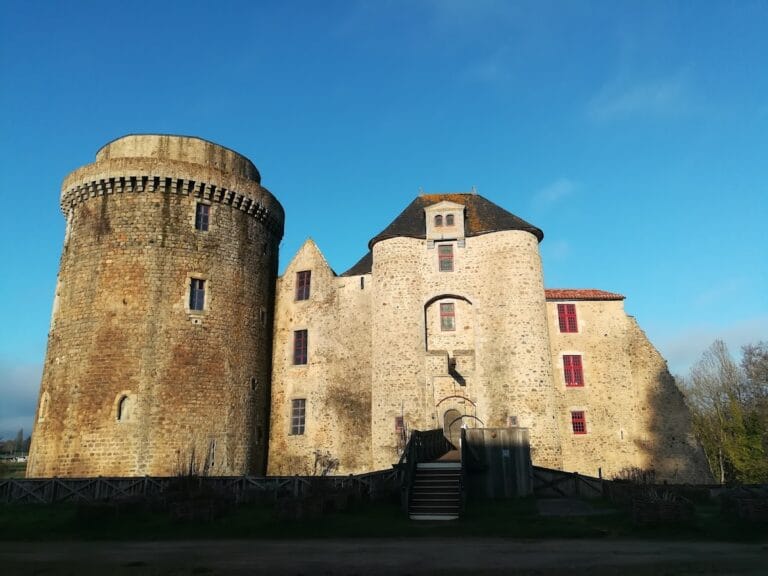
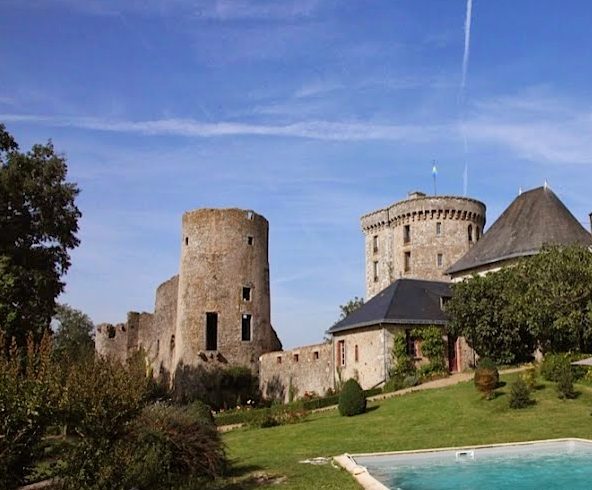
The Rorthais family held the site from 1250. In 1460, Thibault de Rorthais rebuilt the château on the foundations of an earlier feudal structure, probably dating from the tenth or eleventh century. The form and history of that earlier construction are not precisely known. Parts of the buildings around the ruins retain watch turrets and loopholes associated with the fifteenth-century rebuilding.
Meulles and Rochejaquelein ownership
Renée de Rorthais brought the estate to the Meulles family through marriage in 1603. Between 1620 and 1630, Pierre de Meulles commissioned extensions and decorative improvements, including Renaissance-style architectural features. In 1679, another marriage transferred the château to the du Vergier de la Rochejaquelein family.
The Vendée Wars and later protection
Henri de La Rochejaquelein was born and lived at the château. During the Vendée Wars, a series of counter-revolutionary conflicts in western France during the French Revolution, he served as a general of the Catholic and Royal Army, the principal royalist and Catholic force associated with the uprising. The château was burned five times between 1793 and 1794, leaving the residence in ruins.
The ruins received historic-monument protection on 26 October 1927. The ancillary buildings and grounds were listed on 15 October 1993, and the château, moats, dovecote, boundary walls, and pond were classified on 8 January 1996. In France, classification as a historic monument is a legal designation protecting important buildings and sites. The property was selected in 2018 by a national mission identifying immovable heritage considered at risk. Mauléon has owned the site since 8 September 2023, while the association La Durbelière maintains it and organizes activities there.
Remains
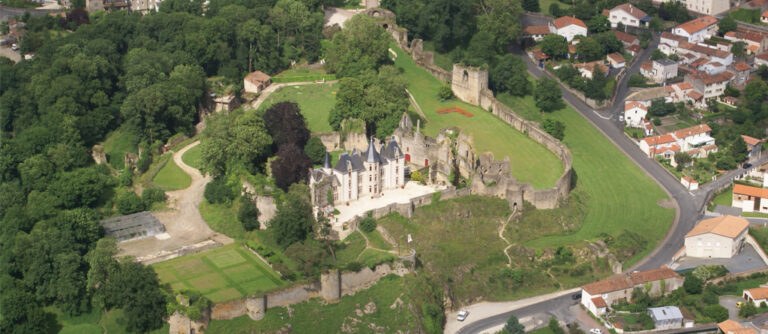
The surviving complex combines the ruined fifteenth-century château with later buildings and surrounding features dating broadly from the fifteenth through the eighteenth centuries. The imposing residence stood within moats and measured approximately 60 by 30 metres, with 49 rooms. The château is now ruinous, while the moats and several ancillary structures remain.
The château and Renaissance additions
The main residence was rebuilt in 1460 on earlier foundations. Its later enlargement between 1620 and 1630 added a portal, balustrade, windows, and fireplaces in the Renaissance style, a form of architecture inspired by the European cultural period that followed the medieval era. Weathering and the fires have left the principal château as a ruin, but the surviving remains convey the scale of the former residence.
Surrounding buildings and grounds
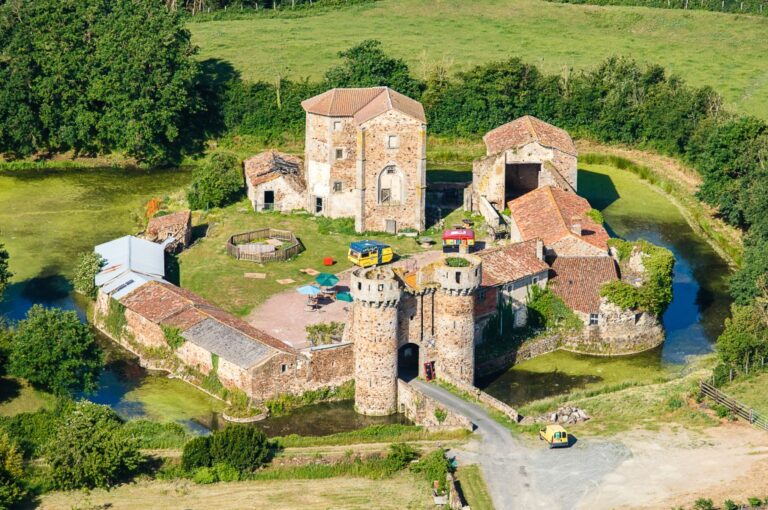
The buildings surrounding the ruins retain watch turrets and loopholes from the fifteenth-century rebuilding. The moats, boundary walls, pond, and ancillary buildings also survive. Among these structures is a dovecote, a building designed to house and raise pigeons. These remains are progressively deteriorating.
Underground passages and reconstruction model
Underground passages are associated by legend with a connection to the church of Saint-Aubin-de-Baubigné. The passages have been sealed. A scale model at the Saint-Aubin-de-Baubigné town hall reconstructs the château as it appeared before the fires and the subsequent effects of weathering.