Château de Kervoazec: A Nineteenth-Century Estate in Saint-Goazec


Site at a Glance
- Rating
- 4.7
- Popularity
- Very Low
- Country
- France
- Primary era
- Modern
- External website
- Open
- Eras represented
- Modern
- Civilizations
- French
- Site type
- Domestic
- Remains
- Manor House
On this page7 sections
History
Château de Kervoazec is a nineteenth-century building in France, located in Saint-Goazec, Finistère. Louis Monjaret de Kerjégu built it in 1850 on the site of the former village of Tregoazec, which comprised the hamlets of Trégoazec Creis, Tregoazec Huella, and Tregoazec Izella. A deputy was an elected member of the French National Assembly, while a departmental councillor served in the local administration of a French department. Kerjégu held both roles and made the estate a centre for horse breeding and agricultural education.
The Kerjégu family estate
Louis Monjaret de Kerjégu established an agricultural school, or ferme-école, at the estate. This type of institution combined agricultural production with practical instruction in farming methods. He later bequeathed the château to his brother, François Marie Monjaret de Kerjégu. François Marie’s daughter, Anne Monjaret de Kerjégu, married Count Eudes de Rouvroy de Saint-Simon, a French aristocrat. Eudes later served as mayor of Saint-Goazec from 1919 to 1929.
Eudes de Rouvroy de Saint-Simon had Ker Maunoir built in the grounds for his daughter. After his death, the château, then known as Château de Saint-Simon, passed to the de Foucault family from 1932 through the marriage of Pierre de Foucault and Geneviève de Rouvroy de Saint-Simon.
Political activity and wartime use
Geneviève de Rouvroy de Saint-Simon operated a lace workroom at the château from 1916 to 1928. An ouvroir was a workshop or charitable workroom where goods were produced, in this case lace. Pierre de Foucault supported Action Française, a French nationalist and monarchist movement, and presided over its local section. He organized major political meetings at the château attended by Léon Daudet and numerous Camelots du Roi, the movement’s activist youth organization.
The German army occupied the château from May 1944 and used it as quarters for a company of the 3rd Parachute Engineer Battalion. Afterward, the building served as a regrouping centre for children from Brest.
Changes to the estate
The estate originally covered approximately 50 hectares. Most of its land was progressively sold during the 1950s, leaving a present-day park of 8 hectares. Renovations have taken place since the 1990s. In 2015, Château de Kervoazec operated as a guesthouse and provided rooms for festive events.
Remains
The park and water features
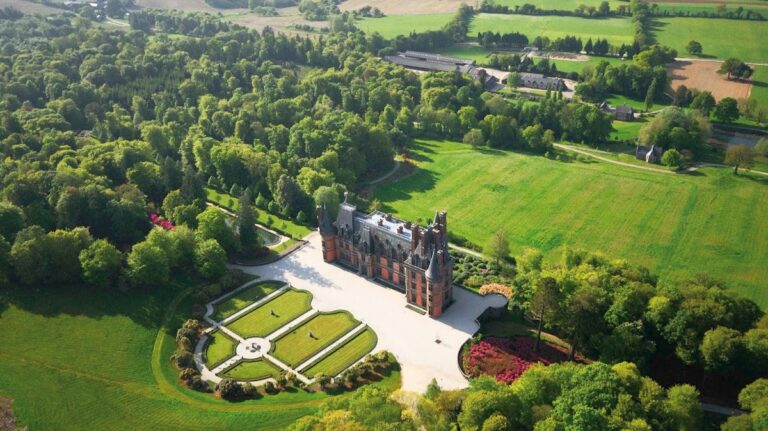
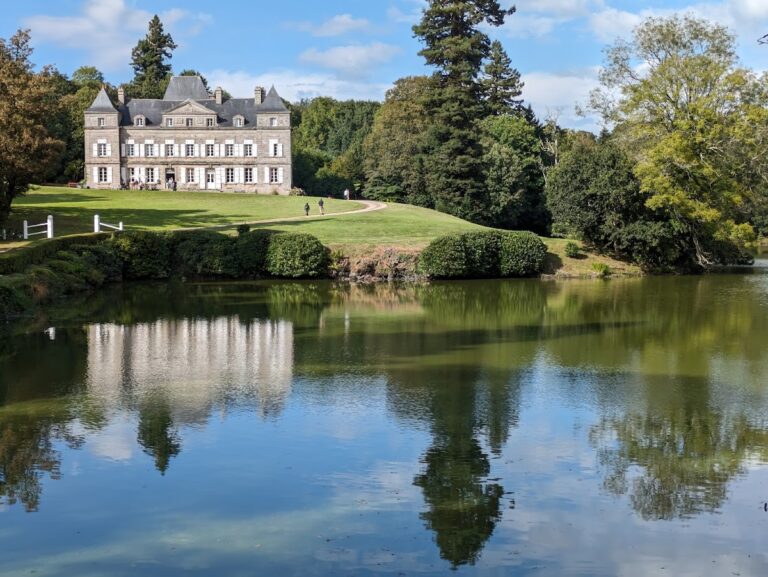
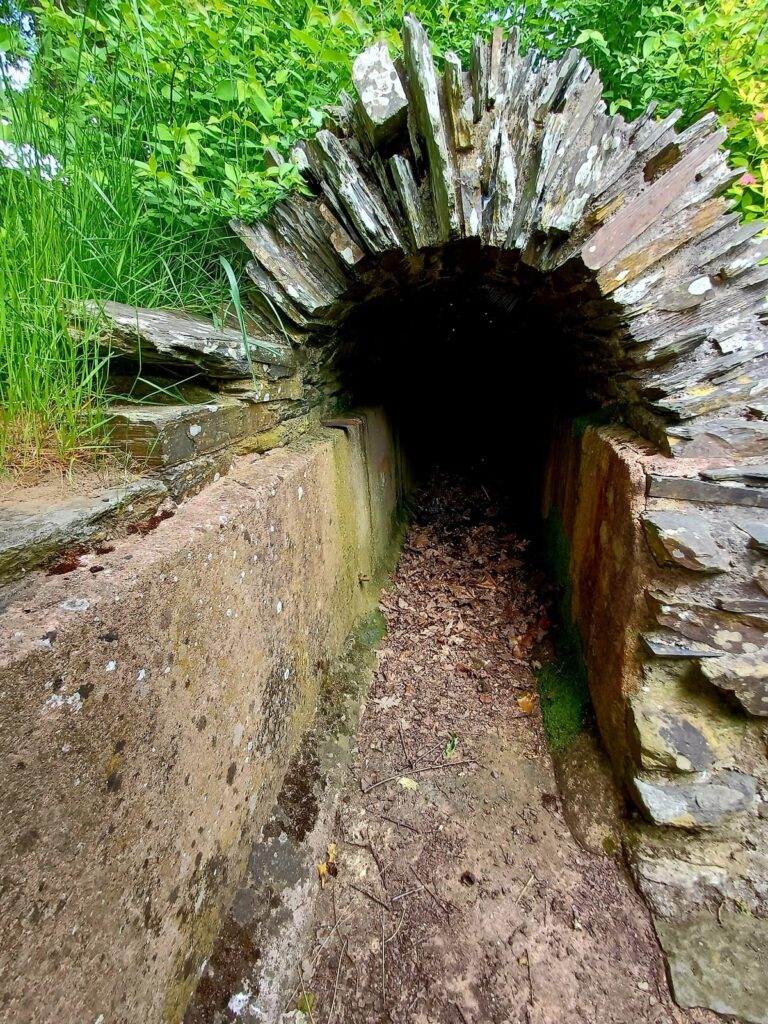
Château de Kervoazec stands on the former site of Tregoazec village, within grounds that include gardens and woodland. The historic estate also contained a winter garden with exceptional exotic plants. A pond in the grounds is fed by a spring, whose water is now commercially bottled under the brand name “Isabelle.” A swimming pool is also associated with the current grounds.
Ker Maunoir
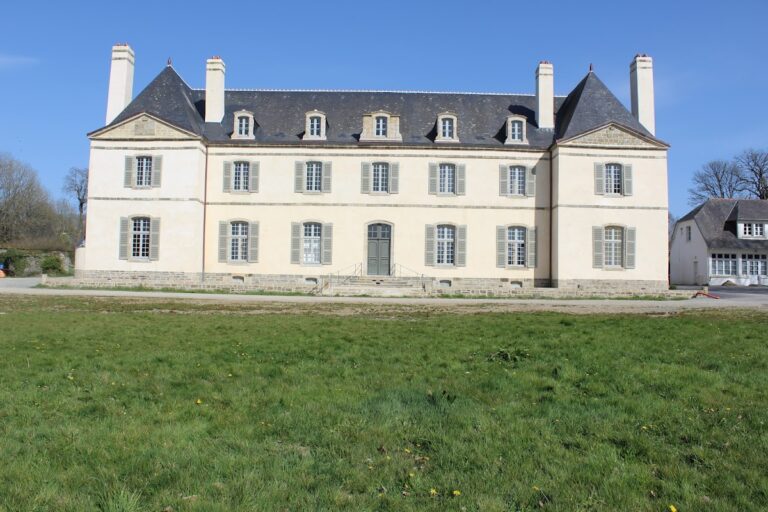
Ker Maunoir is a separate residence built in the park by Eudes de Rouvroy de Saint-Simon for his daughter. It forms part of the estate’s surviving group of residences and grounds alongside Château de Kervoazec.
Nearby sites