Château de Détilly: A Renaissance Residence in France

Site at a Glance
- Rating
- 4.9
- Popularity
- Very Low
- Country
- France
- Primary era
- Early Modern
- External website
- Open
- Eras represented
- Medieval, Early Modern
- Civilizations
- French
- Site type
- Domestic
- Remains
- Castle
On this page7 sections
History
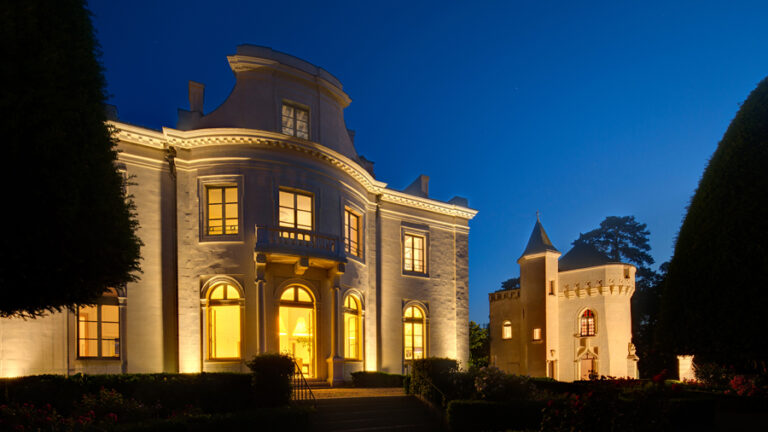
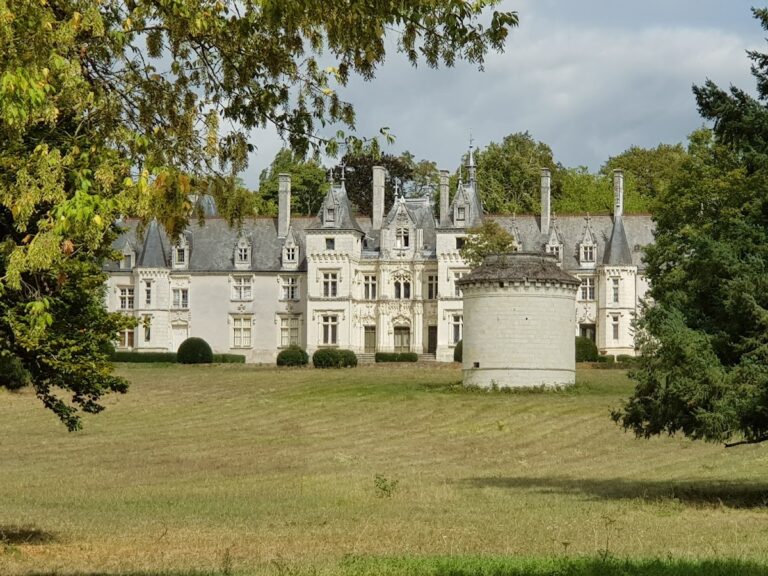
Château de Détilly, also known as Destilly, is a château in France, in Beaumont-en-Véron. The present residence belongs to the Renaissance, a European cultural and architectural period that revived interest in classical forms, and was built from the late sixteenth to the early seventeenth century after the destruction of an earlier fortress.
From villa to lordship
The château stands on the site of a tenth-century villa called Destilliacus. Because of its proximity to Château de Chinon, the estate later became a châtellenie, a territorial lordship organized around a château or fortified residence with local judicial and administrative authority.
In 954, the lands belonged to Joseph II, Archbishop of Tours, who probably used them as a hunting lodge. He later gave them to Gombaud, the first known lord of Destilly. The estate passed to the Brizay family around 1200, then to the Valori family in 1466. In 1555, it passed first to Adam de Hodon and later that year to Beaudouin de Champagne.
Destruction and rebuilding
Philippe de Valori reclaimed the domain in 1560 through the right of lineage withdrawal, a legal mechanism that allowed family members to recover property transferred outside the family line. The estate remained with his descendants until the middle of the eighteenth century.
In 1562, Gabriel I de Montgommery, a sixteenth-century French nobleman and military commander, stormed the fortress, plundered it, and set it on fire. He massacred the garrison and inhabitants who had taken refuge there. More than 400 people died, including two children of the lord of Château de Chinon. The château was rebuilt on the ruins, producing the form of the Renaissance residence that survives today.
Modern ownership and protection
Alfred Sirven owned the château from 1991. At the end of the 1990s, the courts seized its furnishings, and the property was sold at auction in 2001 to an Anglo-American couple based in California. Since 2020, it has belonged to a Franco-Australian couple. The entrance gate has been protected as a historic monument since 14 September 1949, meaning that it received official heritage recognition for its historical or architectural importance.
Remains
Château de Détilly stands in the hamlet of Détilly and comprises a seigneurial residence, a chapel, and outbuildings. The surviving complex combines the Renaissance-period residence built after 1562 with an earlier medieval chapel and a monumental entrance gate positioned within the park.
Entrance gate
The former monumental entrance gate stands inside the park and frames the principal avenue. Its stone entablature, the horizontal architectural section above the opening, is flanked by two ornamental side elements and crowned by a triangular pediment, the classical triangular section at the top of a façade. Two coats of arms once appeared on the gate. During the French Revolution, a period of political upheaval in France, they were hammered away; they probably bore the arms of the Valori family.
Chapel
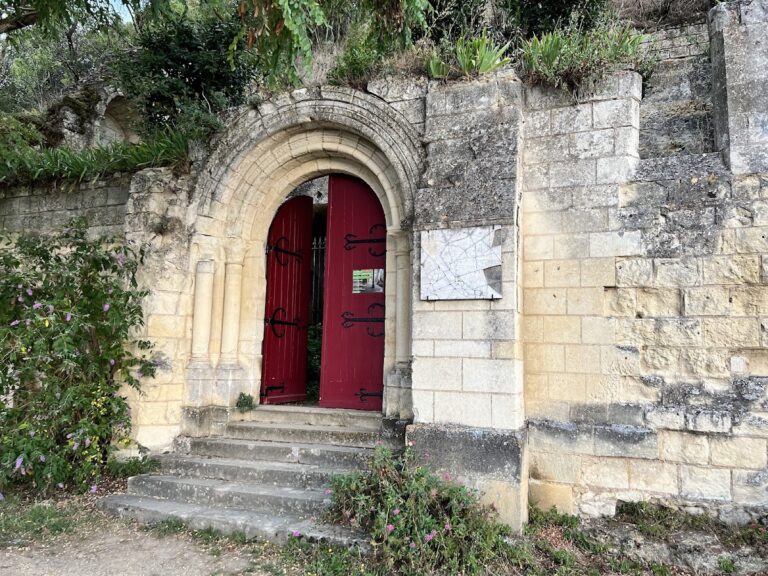
The chapel is a rectangular thirteenth-century building formerly dedicated to Saint Mark and Our Lady of Pity. It probably replaced an oratory established by Robert de Pocé and consecrated in 1135 by Hugues d’Étampes, Archbishop of Tours.
The building was temporarily used as a cellar and granary before being returned to its original function. Its interior consists of a single nave, the principal longitudinal space of a church or chapel, beneath a timber roof framework rebuilt in the sixteenth century. A pointed-arch doorway opens in the façade, and windows of the same form provide its lighting.