Château de Coulaine: A Historic Estate in Beaumont-en-Véron

Site at a Glance
- Rating
- 4.8
- Popularity
- Very Low
- Country
- France
- Primary era
- Medieval
- External website
- Open
- Eras represented
- Medieval, Modern
- Civilizations
- French
- Site type
- Domestic
- Remains
- Castle
On this page14 sections
History
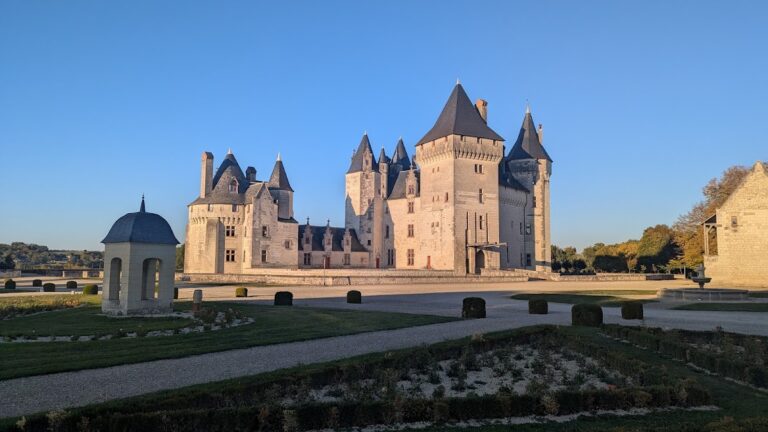
Château de Coulaine is a historic château and agricultural estate in France, located at Beaumont-en-Véron. Construction began around 1470, and the building is a characteristic example of Flamboyant Gothic architecture, a late medieval style known for elaborate tracery and carved ornament. The estate later became known for silkworm raising and viticulture, while its medieval residence was reshaped by nineteenth-century landscaping.
The Garguesalle estate
The Coulaine estate entered the Garguesalle family at the end of the fourteenth century. Ownership remained within the family thereafter, sometimes passing through female heirs. Jehan de Garguesalle III, who held the high royal office of grand écuyer de France, an equestrian officer of the French crown, and served as governor of Chinon from 1461, modified the château after construction began. His work gave the building much of its present character.
From its beginnings, Coulaine functioned as a mixed agricultural and viticultural estate. Its activities included crop cultivation, livestock raising, market gardening, and cider orchards. Viticulture and silkworm raising became particularly prosperous, shaping the estate’s economy for several centuries.
Silk production and agricultural change
Silkworm raising developed at Coulaine after Louis XI established a silk manufactory at Tours in 1470. The estate produced silk thread, but its most active trade concerned silkworm eggs. This commerce became Coulaine’s principal source of income before wine production assumed that role. Disease affecting silkworms weakened the activity, which probably ended at Coulaine toward the close of the nineteenth century.
During the nineteenth century, the estate adopted the character of an English-style landscaped park. Leisure and residential use gained importance alongside agriculture, and half of the agricultural outbuildings were demolished. The entrance gate was also removed, changing the relationship between the château, its courtyard, and the surrounding grounds.
Vineyard continuity and revival
The vineyard originally occupied three nearby enclosed parcels, although their exact extent is uncertain. The named parcels included Clos du Bas, Clos de la Maison, Les Quarts, and La Herpinière. A family harvest journal shows that the vineyard was larger in the eighteenth century. Between 1824 and 1960, Coulaine continued producing wine, at least for local consumption, despite limited surviving information about this period.
Phylloxera, a vine pest that devastated European vineyards in the nineteenth century, severely reduced the estate’s vines. From the 1960s, several parcels were replanted through mass selection, which propagates chosen planting material from a vine population, and grafting onto resistant rootstocks. The planting material included vines that had survived the disease, among them vines from the former Turpenay enclosure acquired at the beginning of the twentieth century. Turpenay had belonged to Turpenay Abbey in the thirteenth century after a donation by the lord of Beaumont.
From 1987, extensive areas of neglected vineyard land and former orchard parcels were replanted, including La Garenne de Coulaine. Cereal cultivation and livestock raising were abandoned. The estate converted to organic agriculture between 1994 and 1997 and became the first officially organic estate in the Chinon appellation, the legally defined Chinon wine area. It now produces about 90,000 bottles each year from 18 hectares, including 10 hectares owned since the estate’s origins.
Literary association and protection
Antoine Rabelais, father of the sixteenth-century writer François Rabelais, is said to have visited Coulaine as a lawyer and notary. François Rabelais later referred to the estate in the “Picrocholine Wars,” satirical episodes in his work Gargantua. In one passage, Brother John of the Entommeures recalls that Coulaine’s pages once made garters from his frock.
Château de Coulaine has been protected as a registered historic monument since 28 April 1944.
Remains
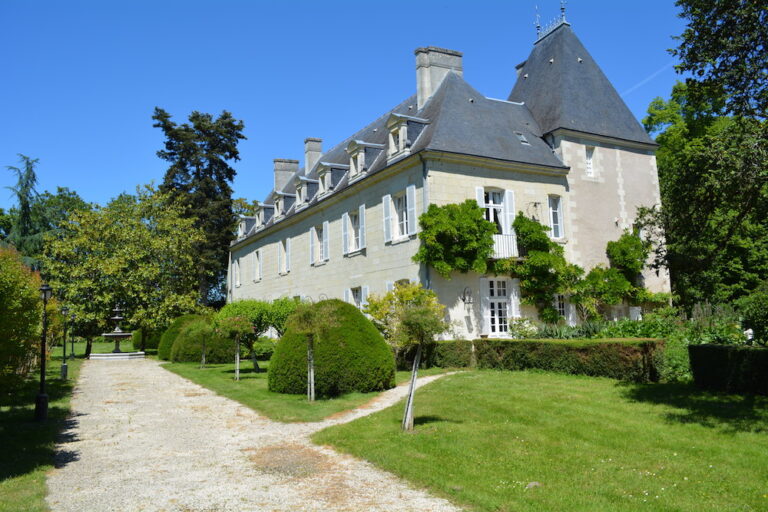
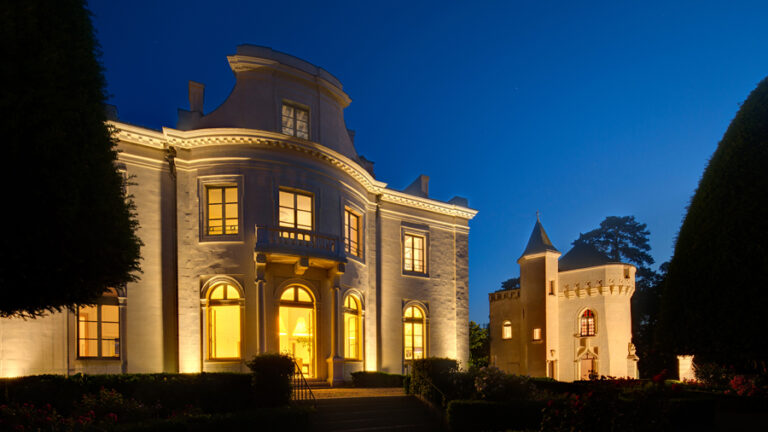
Château de Coulaine stands on a hillside at Beaumont-en-Véron. Its medieval structure remains prominent, although the building also reflects an Italian influence through its preference for openings rather than strongly defensive forms. The residence, agricultural buildings, park, vineyard parcels, and underground tuffeau caves together preserve the physical arrangement created by successive medieval, agricultural, and nineteenth-century phases.
Residence and agricultural buildings
Flamboyant Gothic residence
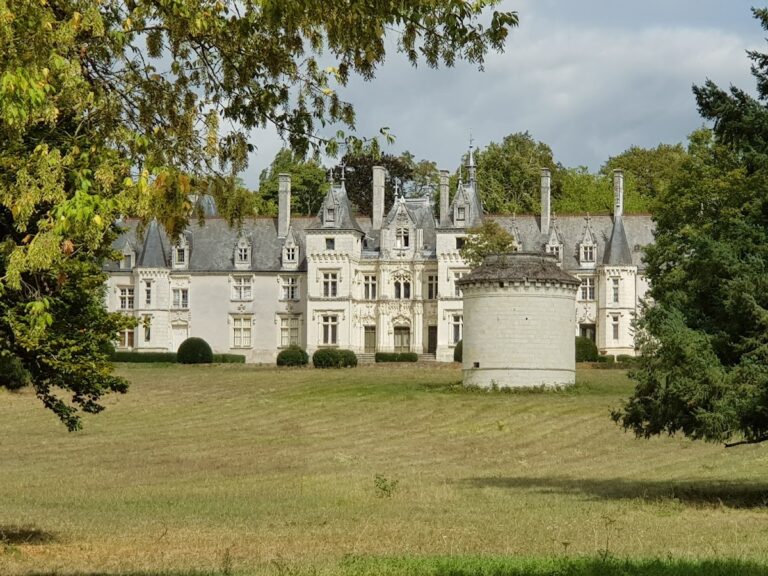
The château is built in the Flamboyant Gothic style. Its nineteenth-century additions retained the building’s architectural grace while adding Gothic-inspired carved details around the openings, including crockets, cabbage-leaf motifs, and pinnacles. Until about 1850, the residence formed part of a Touraine manor arrangement centered on a closed courtyard, with agricultural outbuildings on either side and access through a gate made of tuffeau, a soft local limestone.
Orangery and tuffeau caves
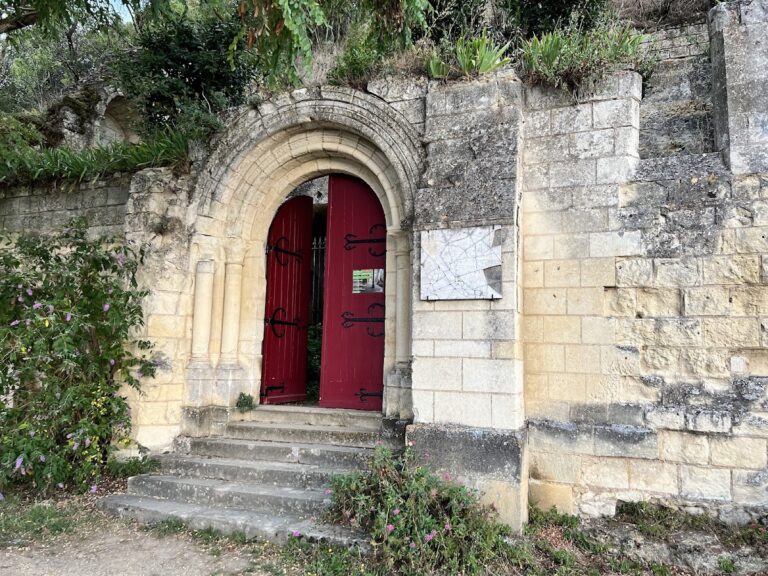
A large orangery was added at the southern end of the surviving agricultural buildings. Designed to shelter citrus trees and other plants, it has a strongly Neo-Gothic appearance, with immense glazed pointed arches. Nearby tuffeau caves began as quarries for building stone, linking the underground spaces directly to the materials used in the estate’s construction.
Silkworm buildings
The first silkworm-rearing building, locally called a verrerie in Touraine, occupied the principal agricultural outbuilding later demolished in the nineteenth century. That building also contained the wine press and a cellar. A second building for raising silkworms, constructed around 1850, survives but is no longer used for that purpose.
Park and vineyard landscape
Landscaped park
The nineteenth-century landscaping removed half of the agricultural outbuildings, the entrance gate, and its adjoining icehouse. This created a long perspective aligned with the entrance of the former keep and extending toward the nearby Vienne beyond the bocage. A small chalet overlooking the vineyard remains visible within the park. The grounds also once included a Chinese pavilion and a “sunbox”; the Chinese pavilion has since disappeared.
Enclosed vineyard parcels
Vines were concentrated around the château in three distinct enclosed parcels. Their names included Clos du Bas, Clos de la Maison, Les Quarts, and La Herpinière. Older parcels were later used for grazing livestock or replanted as orchards, while extensive replanting from 1987 restored vineyard land, including La Garenne de Coulaine.
Wine production
Coulaine produced both red and white wine from varieties including Gouais, Muscat, “Gros Rouge,” Cabernet Franc, and Chenin, also known as Pineau de Loire. Gouais, Muscat, and “Gros Rouge” were generally reserved for workers’ consumption. After harvest, grapes were crushed and fermented beneath a cap of marc, the layer of grape skins and other solids that rises during fermentation. The wine matured in large vats or barrels, including barrels from Bordeaux, while surplus wine was sold in barrels to merchants in Chinon and as far as Tours.
Nearby sites