Manoir de la Motte Beaumanoir: a Fifteenth-Century Château in France


Site at a Glance
- Rating
- 4.4
- Popularity
- Low
- Country
- France
- Primary era
- Medieval
- External website
- Open
- Eras represented
- Medieval, Modern
- Civilizations
- Duchy of Brittany, French
- Site type
- Domestic
- Remains
- Castle
On this page9 sections
History
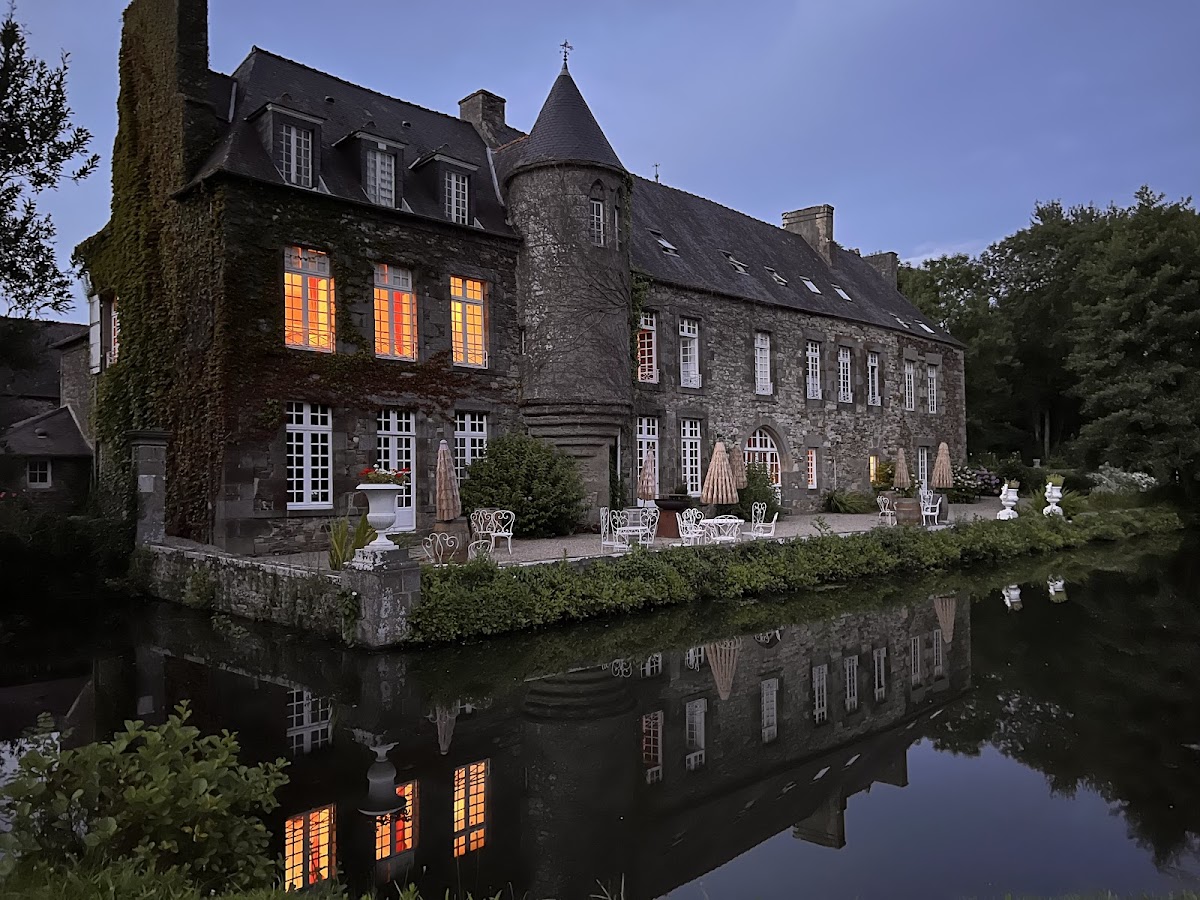
Manoir de la Motte Beaumanoir is a fifteenth-century château in France, situated across the present communal boundaries of Plesder and Pleugueneuc in Brittany. The estate developed from the former Motte seigneurial estate, a landed domain administered by a lord, and became associated with several noble families over the centuries.
The Boutier and Gruel Estate
The estate first belonged to the Boutier family and later passed to the Gruel family during the fourteenth and fifteenth centuries. Its changing ownership was reflected in its names, as it was successively known as Motte-Boutier and Motte Gruel. The present château was built by the Boutiers in the fifteenth century, when a residential gatehouse was also added to the estate.
In the middle of the sixteenth century, the domain became a fief of the Beaumanoir family. A fief was a feudal holding linked to rights and obligations within the feudal system. The recorded succession of owners also includes the Saint Gilles family, alongside the Boutier, Gruel, Beaumanoir, La Bourdonnaye Montluc, and Lorgeril families.
The Lorgeril Period
In 1764, Jean Thomas Baptiste de Lorgeril, a captain in the king’s navy, purchased the seigneurial estate from Louis Charles Marie de La Bourdonnaye Montluc, president of the Parliament of Brittany. That institution served as Brittany’s high judicial and administrative court under the French monarchy. The property remained with the Lorgeril family for approximately two centuries.
During their ownership, the château was enlarged to the east and west. In the early nineteenth century, Louis de Lorgeril, who later became mayor of Plesder and Rennes, constructed a new east wing and agricultural outbuildings. These works gave the residence much of its present appearance. In August 1815, he organized what is described as France’s first agricultural comice in the château’s western avenue leading toward Plesder. A comice agricole was a public agricultural gathering intended to encourage farming knowledge and rural improvement.
Abandonment and New Uses
After Paul de Lorgeril died on 25 January 1953, the château was abandoned. Paul had been the last Lorgeril to live there. In 1977, a private owner, Mr Bernard, acquired the property and began its rehabilitation. The estate was subsequently converted into a hotel-restaurant.
Marine Mechin purchased the château in 2001 with the intention of creating a wellness centre. After a later change of ownership, the western dependencies were converted into a reception hall. The château then became a bed-and-breakfast establishment and an events venue, particularly for weddings.
Remains
The surviving estate combines the fifteenth-century château with later residential additions, service buildings, and landscaped features. Its built form reflects both the original seigneurial residence and the changes made during the Lorgeril period and the early nineteenth century.
Residence and Service Buildings
The Château
The main château dates from the fifteenth century and was enlarged eastward and westward during Lorgeril ownership. A new east wing was added in the early nineteenth century, contributing to the building’s present form. Rehabilitation after 1977 included an extension to the west wing.
Agricultural Complex
The early nineteenth-century agricultural complex contained stables, a cowshed, a sheepfold, a poultry house, a hayloft, and a press. Some ruined outbuildings were demolished during the rehabilitation begun after 1977. The western dependencies now include a reception hall.
Water Feature
A pond was created in 1985 as a reminder of a pond that had existed on the property during the nineteenth century.