Château de Chevreaux: A Ruined Fortified Castle in France
Site at a Glance
- Rating
- 4.5
- Popularity
- Low
- Country
- France
- Primary era
- Medieval
- External website
- Open
- Eras represented
- Medieval
- Civilizations
- Holy Roman Empire
- Site type
- Military
- Remains
- Castle
On this page8 sections
History
Château de Chevreaux is a ruined fortified castle in Chevreaux, France, built before the twelfth century on a rocky site above the Bresse plain. It served as the seat of a seigneurie, or lordship administered by a noble lord, and later acquired the title of barony around the beginning of the sixteenth century.
Early history and the Coligny lords
In 974, Manassès III, Lord of Coligny, gave the lands of Chevrel and Chastel to the monks of Gigny-sur-Suran, a monastic foundation in the Jura. The castle itself appears in written evidence by 1158, when it was mentioned in a document issued by monks of Miroir Abbey, a medieval Cistercian monastery.
The Coligny family held Chevreaux from the castle’s construction until 1332. Among its holders were Humbert de Coligny, who founded Miroir Abbey, and Guerric de Coligny. The Montluel lords also possessed the lordship from 1270 to 1332. Their connection began when Guy de Montluel married Marguerite, daughter of Guillaume III of Coligny-le-Vieux.
The Vienne and Damas successions
In 1332, control passed to the Vienne family and remained with it until 1651. The succession followed the marriage of Marguerite de Montluel, Lady of Chevreaux and daughter of Guy de Montluel and Marguerite of Coligny, to Philippe of Vienne. Around the beginning of the sixteenth century, the lordship received the rank of barony, giving its holder a higher noble title.
In 1651, Claude-Alexandrine de Vienne, Lady of Antigny, Ruffey, and Chevreaux, married Claude II de Damas du Breuil. Through this marriage, the lordship passed to the Damas family.
Destruction in wartime
After the death of Charles the Bold, the Burgundian duke whose death in 1477 preceded the French seizure of his territories, Château de Chevreaux was captured and dismantled on the orders of Louis XI, king of France from 1461 to 1483. This destruction probably took place around 1480.
The castle suffered further damage during Henri IV’s invasion of Franche-Comté in 1595. Henri IV was king of France from 1589 to 1610, and the conflict damaged the gatehouse.
On 2 April 1637, during the Ten Years’ War, a conflict fought in Franche-Comté from 1635 to 1644 as part of the wider Thirty Years’ War, the Duke of Longueville besieged the castle. After resisting for three days, the defenders were overcome. The castle was captured, pillaged, and thoroughly sacked. Its keep withstood cannon fire, but attackers then destroyed it by undermining the structure, while parts of the fortifications were demolished.
Modern restoration
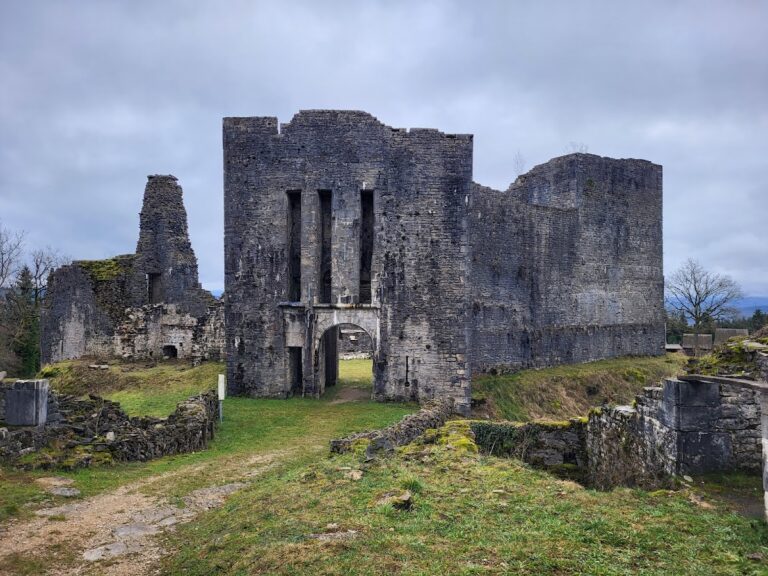
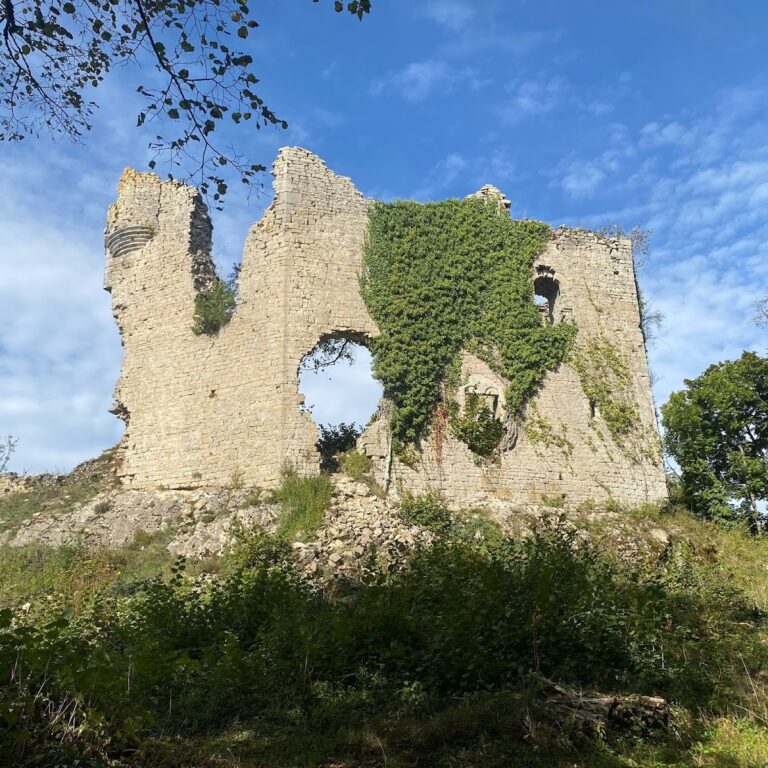
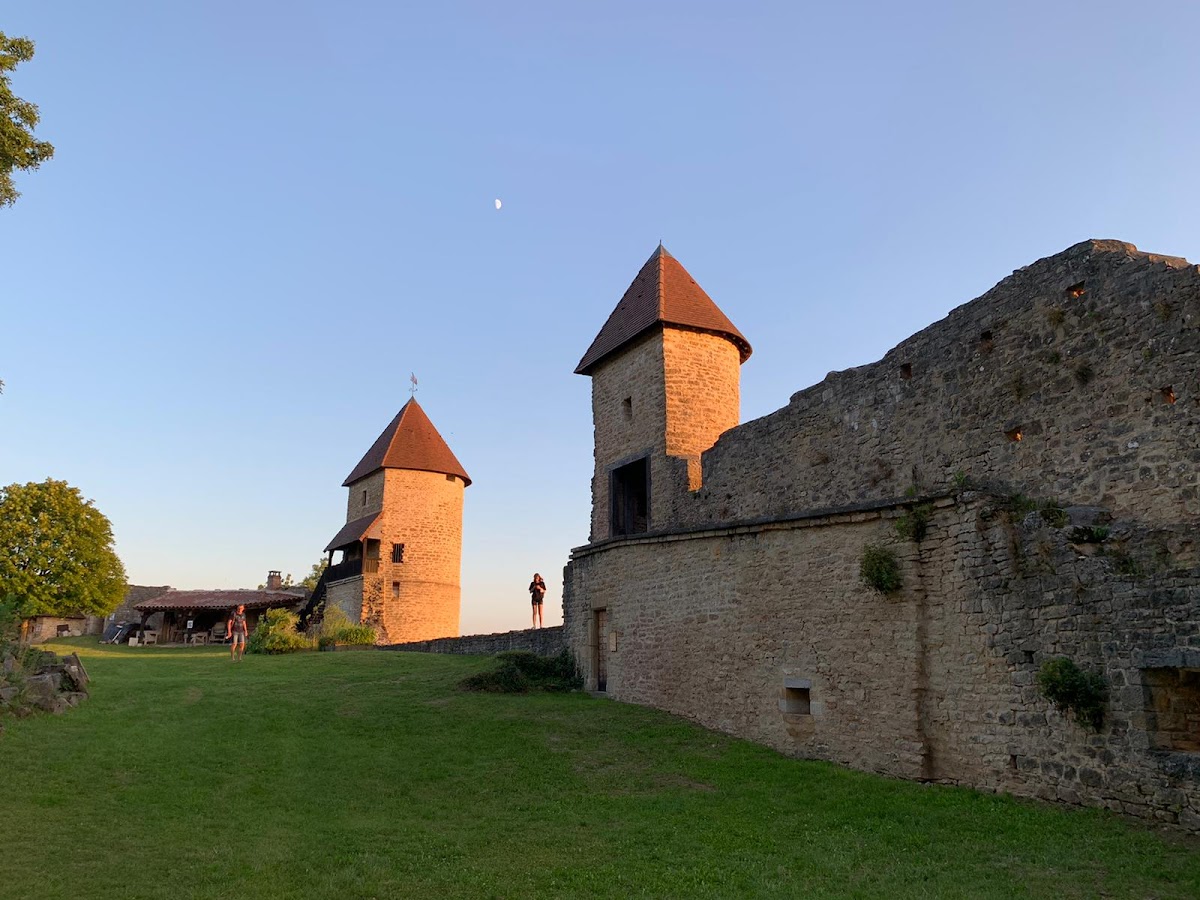
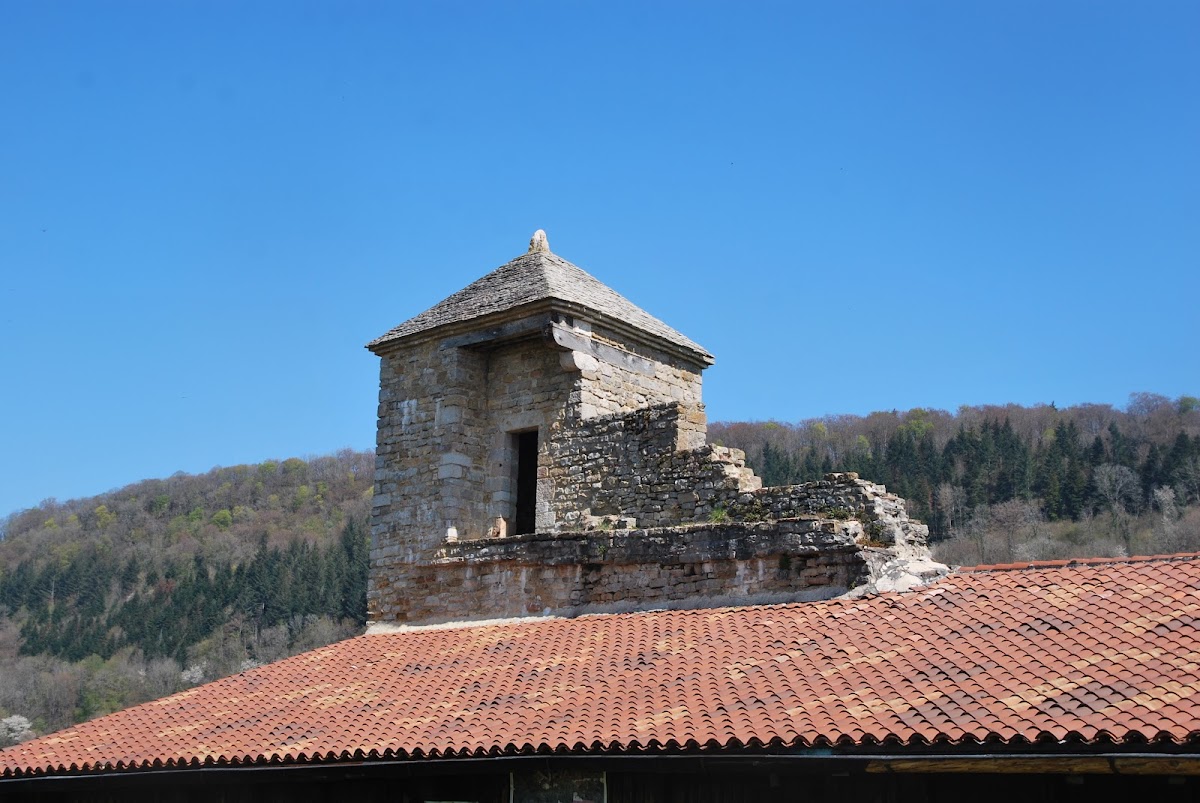
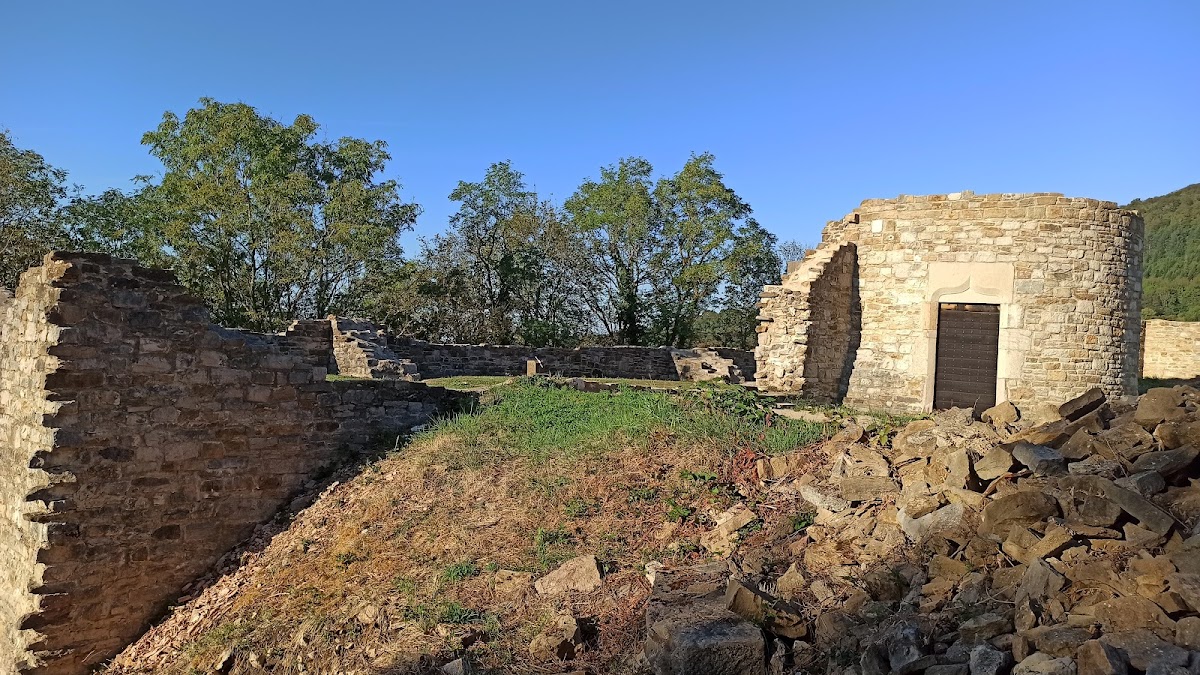
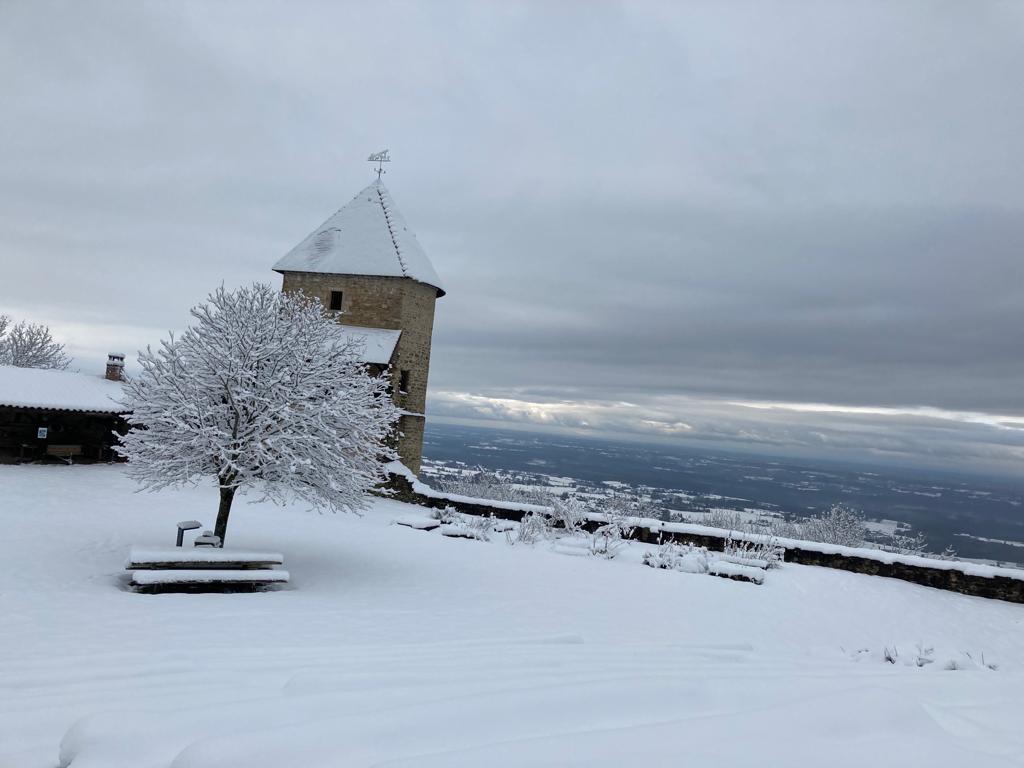
Château de Chevreaux has remained a ruin, with parts of its fortifications surviving after the destruction of 1637. Restoration campaigns at the site have been carried out since 1990.
Remains
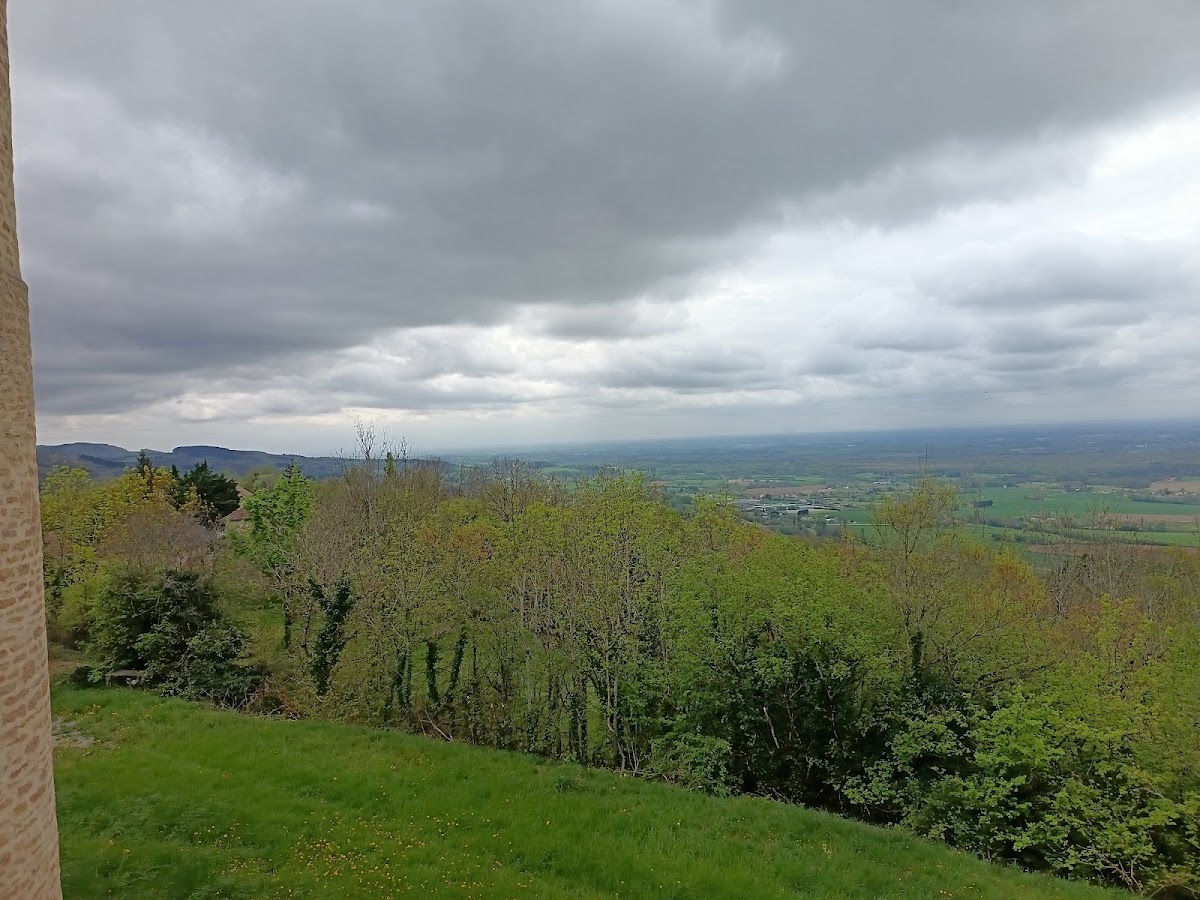
The château occupies a rocky base at an altitude of 473 metres and overlooks the Bresse plain. Its surviving remains belong to a fortified complex organized around a keep, a gatehouse, towers, and a strong curtain wall, meaning a defensive wall connecting fortified elements. The castle and residential buildings formed a substantial complex before wartime destruction reduced it to a ruin.
Fortified complex and domestic buildings
A description from 1628 presents the site as a fortified castle and residence defended by towers and a strong curtain wall. The complex contained twelve rooms with fireplaces, showing that the fortress also served as a lordly dwelling. Its domestic and service spaces included a chapel, kitchen, wine store, five or six granaries, vaulted cellars, stables, ovens, a bakery, and gardens.
Keep and gatehouse
The castle’s keep was its principal fortified tower. It survived cannon fire during the siege of 1637 but was then destroyed by undermining. The gatehouse, which controlled the defended entrance, had already been destroyed during the damage inflicted in 1595. These losses form part of the surviving ruin, whose fortifications were only partially demolished during the later siege.