Château d’Andelot: A Gothic Fortified Castle in France


Site at a Glance
- Rating
- 4.6
- Popularity
- Very Low
- Country
- France
- Primary era
- Medieval
- Eras represented
- Medieval
- Civilizations
- Holy Roman Empire
- Site type
- Military
- Remains
- Castle
On this page6 sections
History
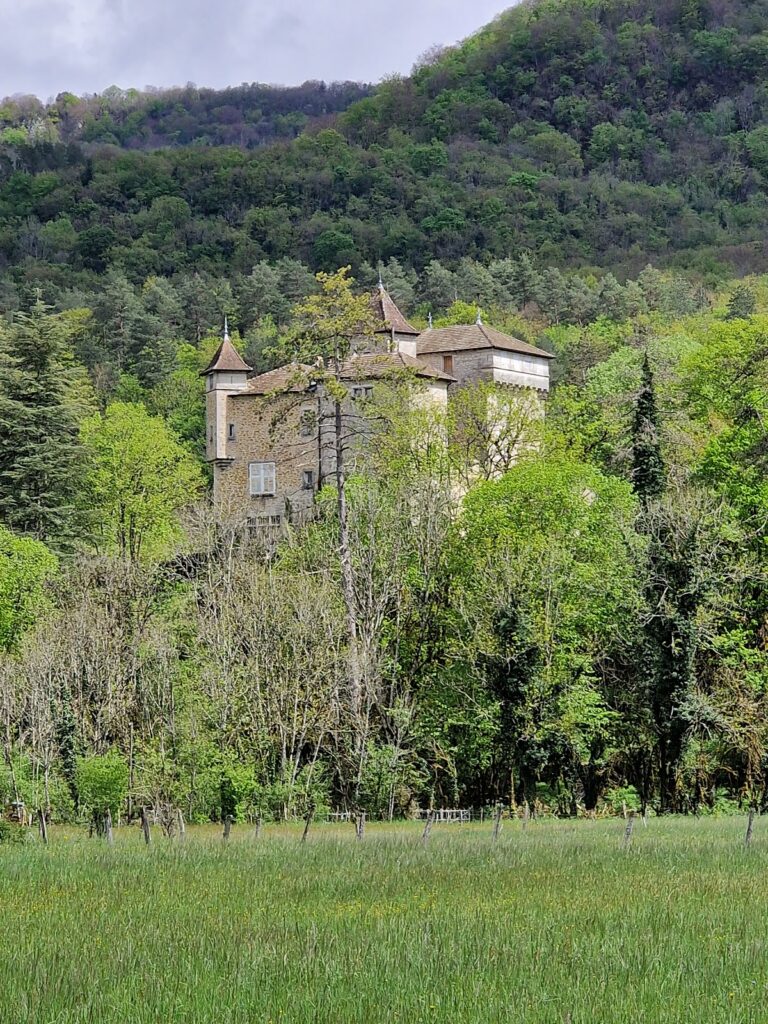
Château d’Andelot is a former seigneurial residence in Andelot-Morval, France, built as a medieval Gothic fortified castle in 1206. A seigneurial residence was the principal manor of a feudal lord. The surviving remains form part of a much larger fortress that controlled access through several fortified enclosures.
Medieval Origins and Coligny Ownership
The castle belonged to the powerful Coligny family from its construction until the 1660s. It then passed to Gilbert V de Langheac through his marriage to Barbe de Coligny, Marquise of Andelot. In 1702, their grandson Marie-Roger sold the property to Joachim Guyénard, president of the Parliament of Besançon, the ancien régime’s highest judicial institution in Franche-Comté.
Revolutionary Destruction and Later Restoration
During the Great Fear, a wave of rural unrest in France in July and August 1789, villagers burned the castle along with the charters that recorded their servitude and the seigneurial archives. The Guyénard family emigrated to the United States during the French Revolution. After confiscation by the revolutionary state, the castle was sold as national property in 1807 to the Viot family, who retained it until 1924.
In 1924, Guyénard descendants Ferdinand Lammot Belin and his cousin Pierre S. du Pont reacquired and restored the property. It subsequently passed to their descendants and is currently identified as belonging to the Chanel family. The fortified gate was entered on France’s register of historic monuments in 1926, a category of heritage protection placing a designated building or feature under official oversight. The castle is also listed in the French Ministry of Culture’s Mérimée architectural-heritage database under reference PA00101799.
Château d’Andelot continued to have wider historical associations in the twentieth century. In 1938, it hosted the Duke of Windsor, Edward VIII of the United Kingdom after his 1936 abdication, together with several ambassadors, including Japan’s ambassador, in connection with a diplomatic matter. At the end of the Second World War, the castle served as a refuge for Allied forces involved in the liberation of French territory.
Remains
Fortified Enclosures and Gates
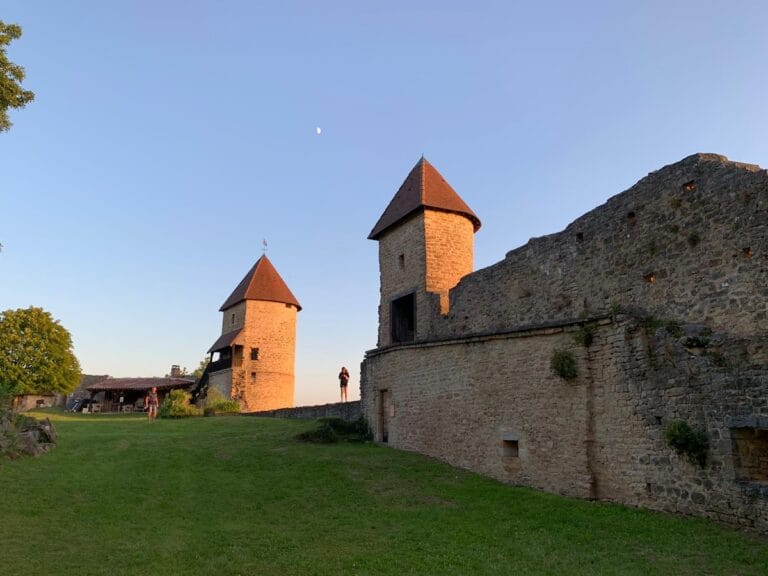
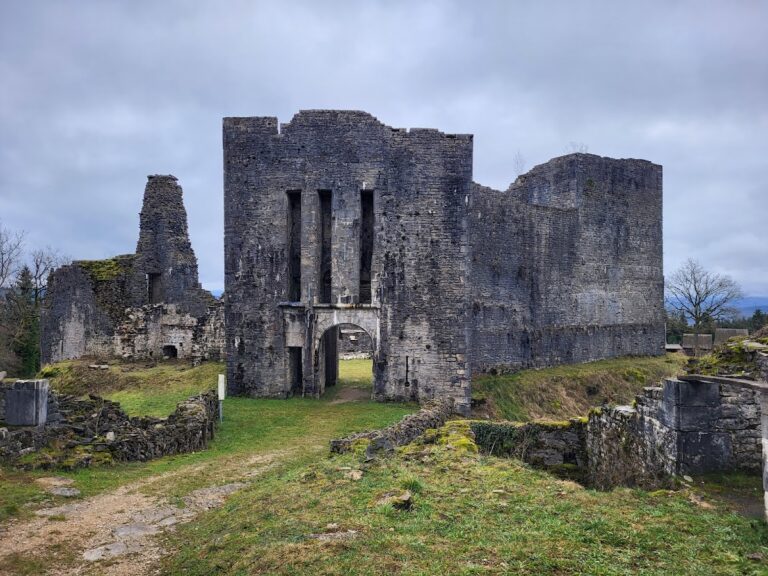
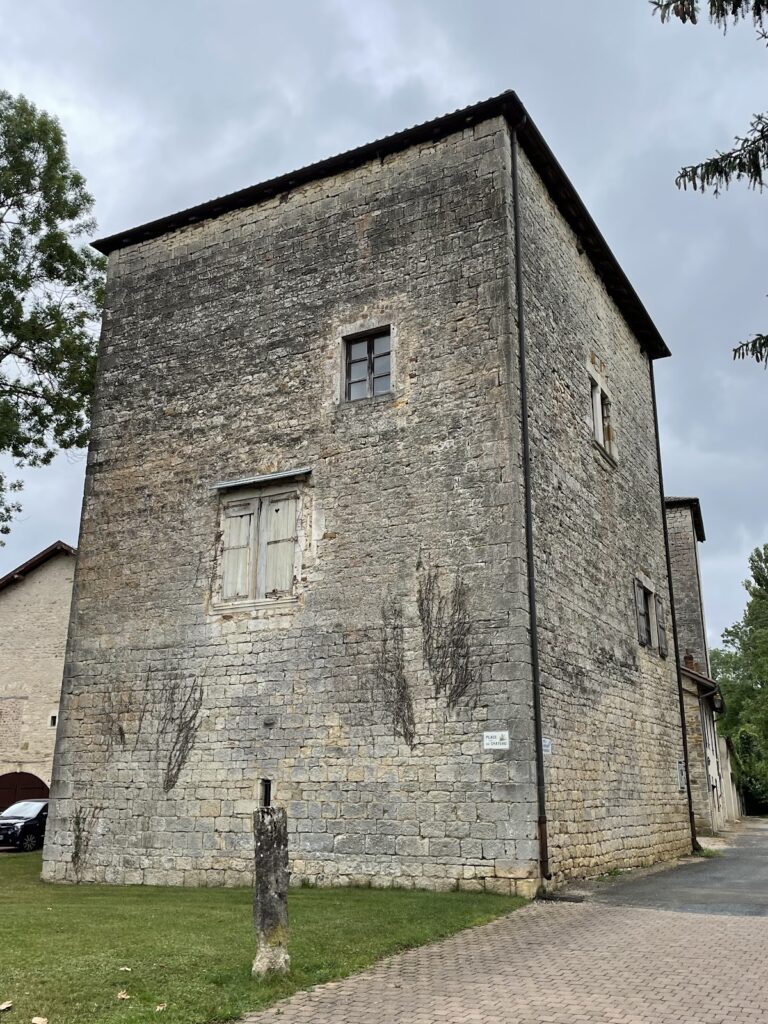
The surviving castle is a fragment of a larger medieval fortress. Until the French Revolution, reaching the keep required crossing drawbridges at three tower-equipped gates and passing through three successive enclosures. Broad moats separated these defensive areas, creating a layered approach to the principal fortified tower. One tower associated with the final gate served as a prison.
Keep and Third Entrance
The keep, the castle’s principal fortified tower with defensive and residential functions, is one of the main surviving elements. The other principal survival is the third entrance, which dates from the 14th century. Together, these structures preserve the central defensive organization of the Gothic fortress and the controlled route through its successive gates.