Burg Hohengundelfingen: A Medieval Hilltop Castle in Germany


Site at a Glance
- Rating
- 4.8
- Popularity
- Low
- Country
- Germany
- Primary era
- Medieval
- External website
- Open
- Eras represented
- Medieval
- Civilizations
- Holy Roman Empire
- Site type
- Military
- Remains
- Castle
On this page6 sections
History
Burg Hohengundelfingen is a ruined medieval hilltop castle in Germany, near Gundelfingen in what is now Münsingen, Baden-Württemberg. It originated around 1200 and became the principal seat and ancestral castle of the free noble family of Gundelfingen, which is documented from the twelfth century. Swigger IV of Gundelfingen, who lived from about 1160 to 1228, is considered a possible builder, while the surviving masonry of the keep dates from the early thirteenth century. The castle was first mentioned in 1236.
The Gundelfingen Family and Habsburg Ownership
The family’s decline began with an inheritance division in 1250. After 1293, Hohengundelfingen was sold to the Habsburgs, a major European ruling dynasty whose medieval and early-modern possessions and influence extended across central Europe. The castle subsequently passed among numerous owners and was repeatedly pledged as security. Members of the Gundelfingen family themselves became pledge-holders on several occasions.
In 1389, Hohengundelfingen was described as a Burgstall, a term for the site or remains of a ruined or destroyed castle. The description indicates that the castle had apparently been destroyed during the preceding conflict between Eberhard the Greiner, the epithet of Count Eberhard II of Württemberg, and the imperial cities, self-governing cities subject directly to the Holy Roman Emperor.
Later Proprietors and Conservation
In 1774, Hohengundelfingen became the sole property of the von Landsee family after a payment of 5,000 gulden. During the same year, Carl Joseph Imperial Count von Palm, who lived from 1749 to 1814, purchased the ruin and its associated property for 68,000 gulden. He was elevated to the rank of Imperial Prince in 1783, and he and his descendants adopted the designation “Palm-Gundelfingen,” taken from their immediate imperial lordship.
The loss of imperial immediacy in 1805, which ended the direct subordination of the territory to the Holy Roman Emperor and transferred sovereignty to a territorial ruler, brought Hohengundelfingen under the Crown of Württemberg. In 1812, the Palm princes sold the property to Baron von Gumppenberg-Pöttmös. The Neu-Ulm manufacturer Hans Römer acquired the complex in 1939 and commissioned extensive repairs and supplementary works that continued for 17 years. Burg Hohengundelfingen is now designated as a cultural monument.
Remains
The Ruined Upper Castle
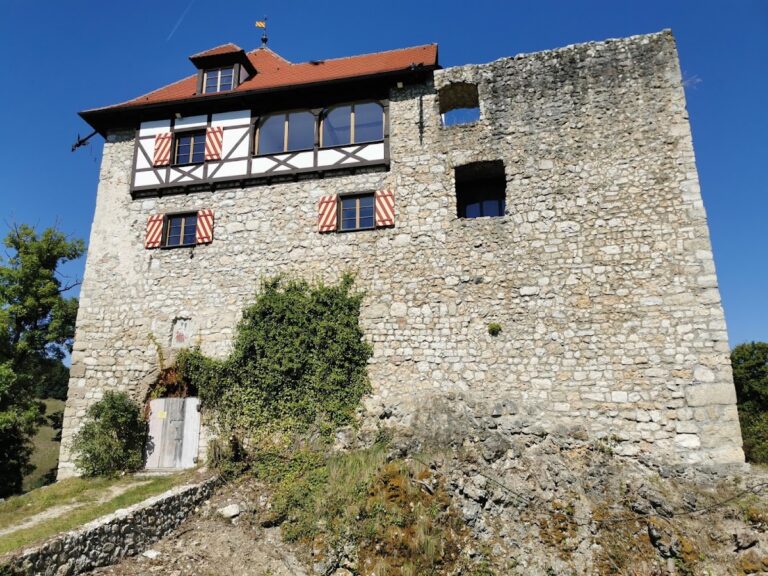
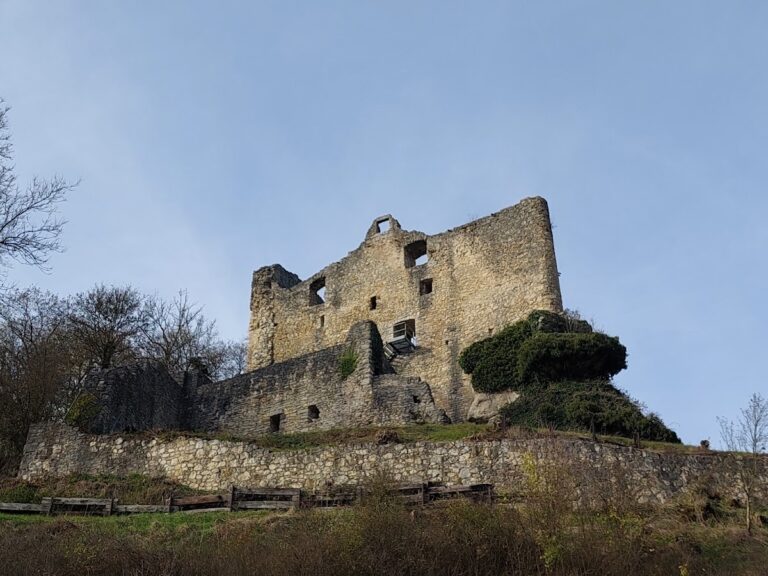
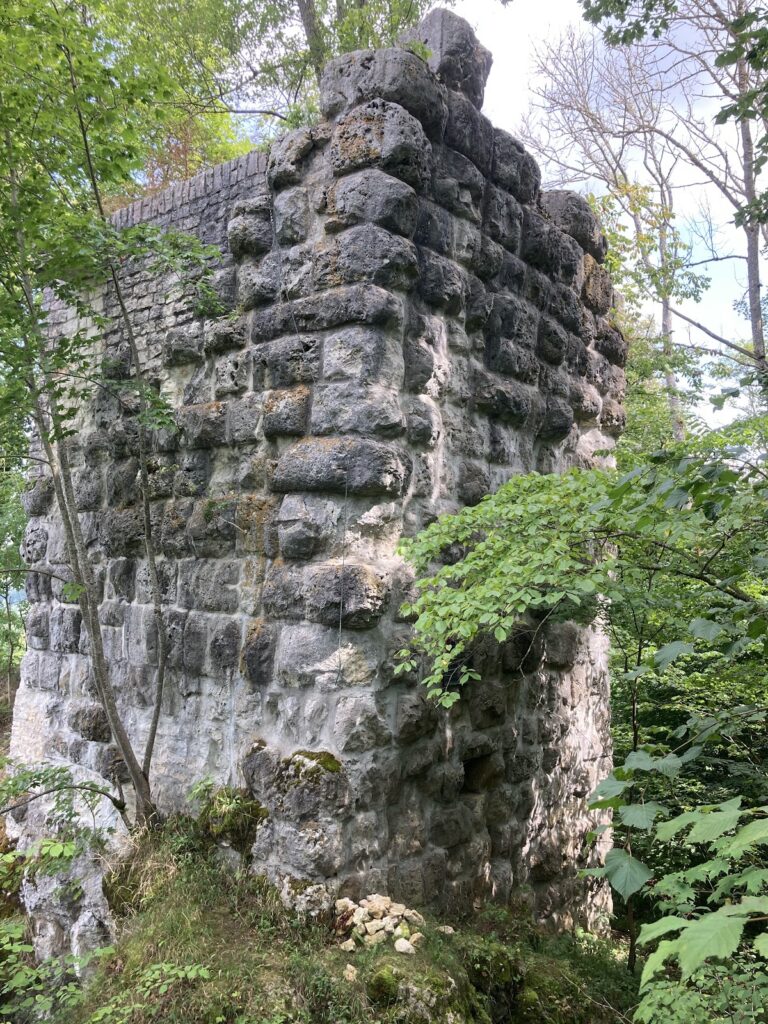
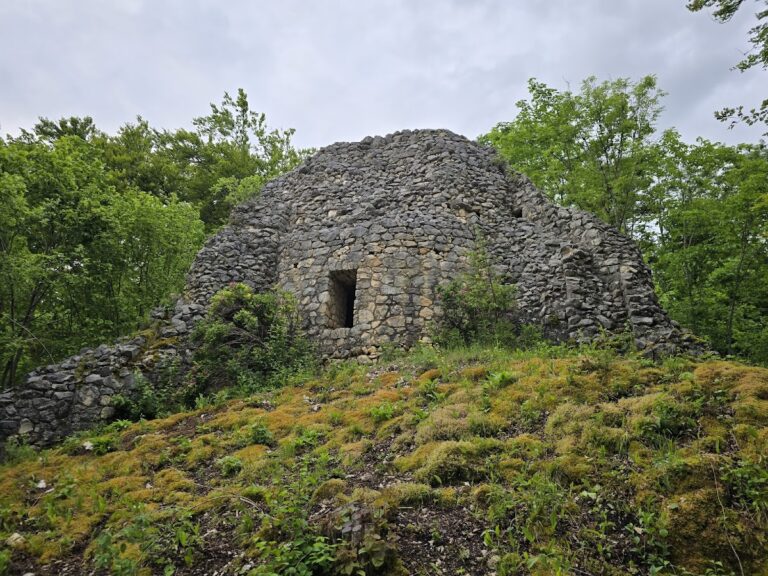
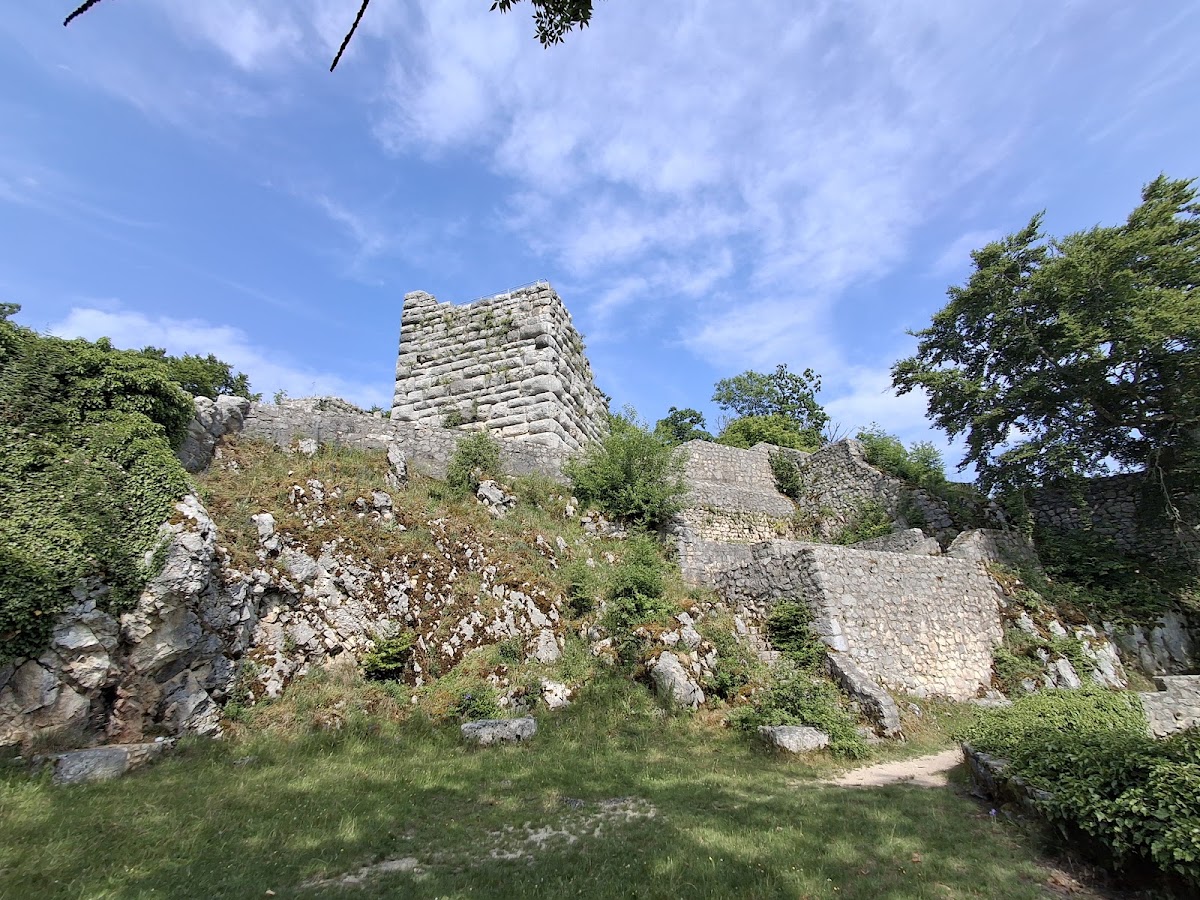
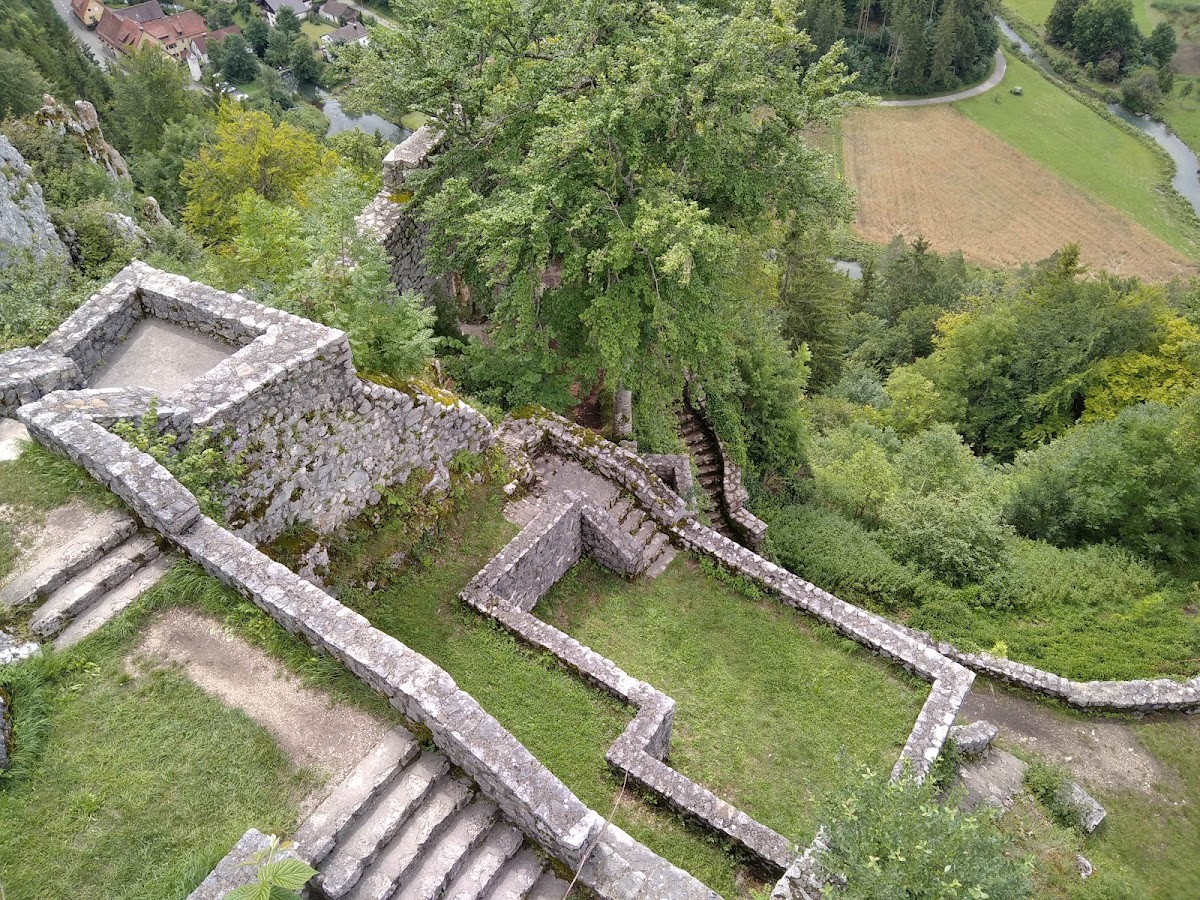
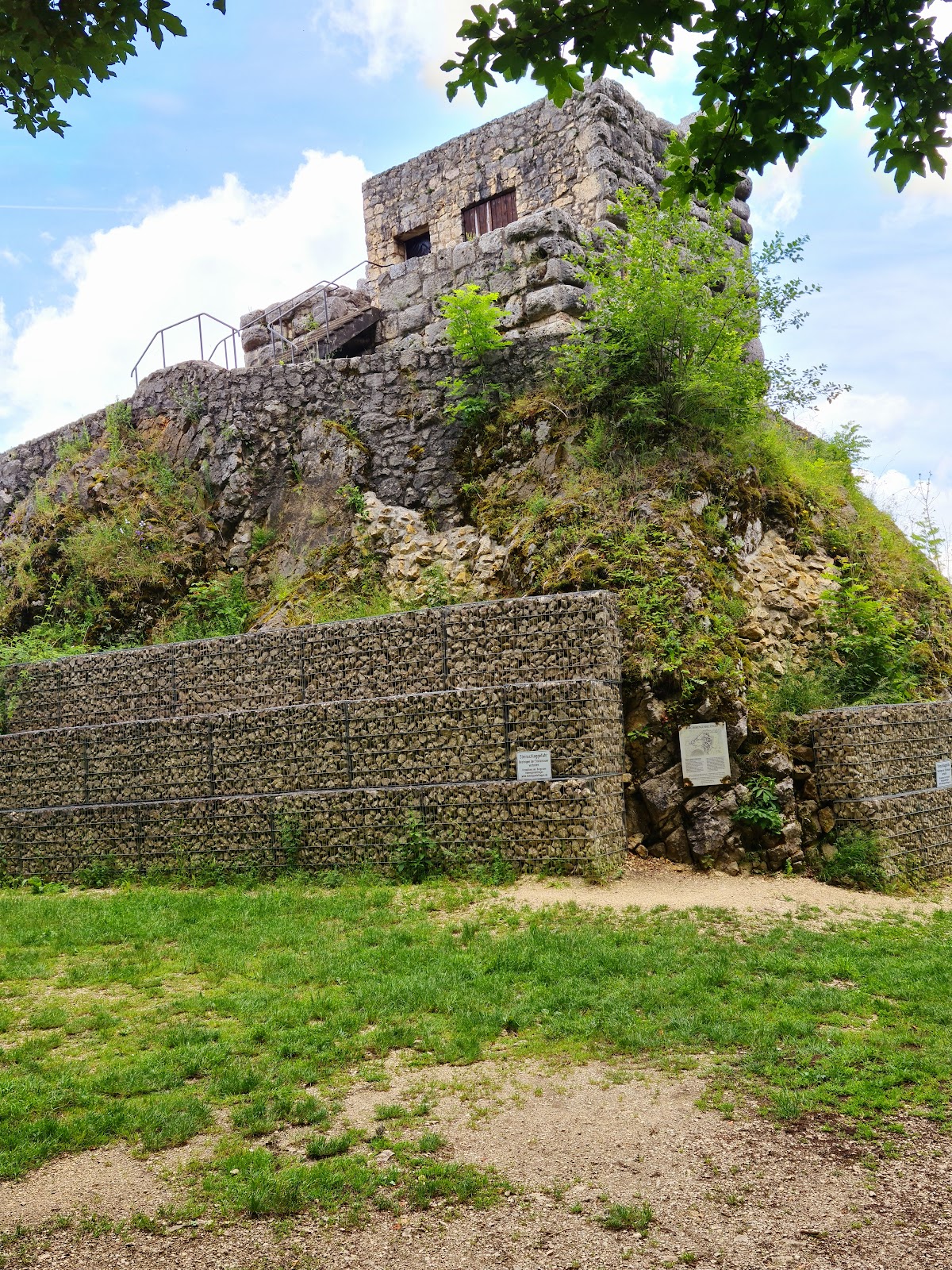
Burg Hohengundelfingen survives as a ruined hill castle at approximately 725 metres above sea level above the Lauter Valley. The surviving complex consists of the upper castle, whose masonry uses Buckelquader construction. This technique employs roughly dressed stone blocks with projecting central faces, creating a rusticated surface associated with medieval fortifications.
The Keep
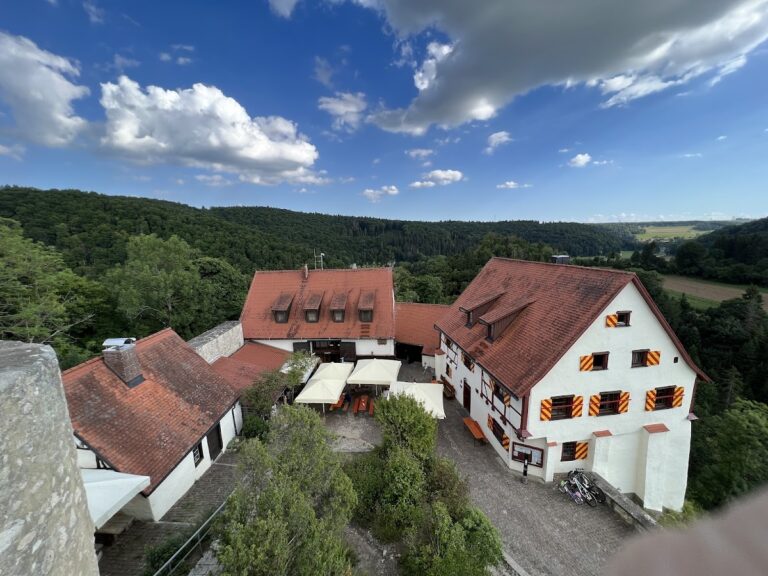
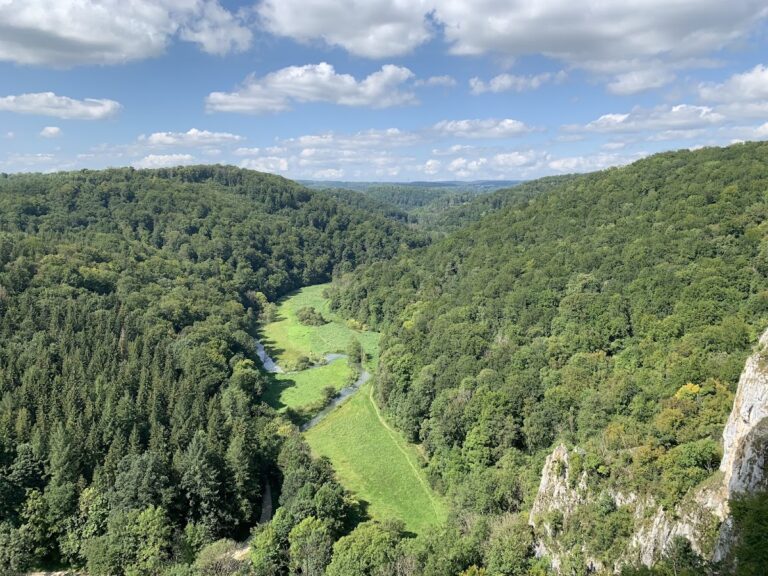
The keep retains masonry from the early thirteenth century and now stands about 12 metres high. Its elevated position, together with other points within the ruin, provides views over the Lauter Valley and far across the southern and western Swabian Alb plateau.
Nearby sites