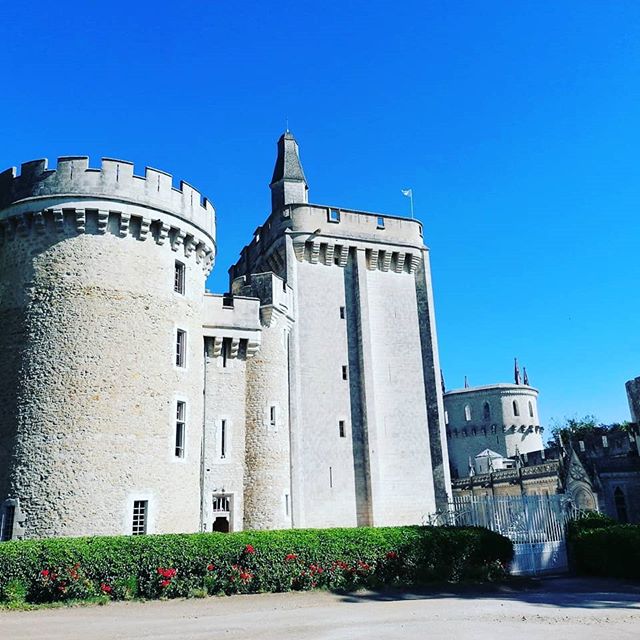
Château de Châteaubrun: A Medieval Fortress in Cuzion, France
Visitor Information
Google Rating: 4.7
Popularity: Very Low
Country: France
Civilization: Medieval European
Site type: Military
Remains: Castle
History
The Château de Châteaubrun is located near the village of Cuzion in France. This medieval fortress was established by the Western European feudal society during the Middle Ages. Its origins trace back possibly to the late 12th century, traditionally credited to Hugues le Brun, who was the lord of Lusignan and count of La Marche from 1180 to 1208.
Documentation confirms the castle’s presence from the reign of King Philip IV of France (1285–1314), when it was connected to the Naillac family. Throughout the Middle Ages, the château served an important territorial function by marking the border between the châtellenies (administrative districts governed by a castellan) of Gargilesse and Crozant. This positioning made it a significant defensive and administrative point in the region.
By the time of the French Revolution in the late 18th century, the fortress still preserved features suited to its defensive purpose, although it was showing signs of decline. The 19th century saw the ruined château inhabited by Antoine de Forges, whose residence there inspired parts of George Sand’s novel “Le Péché de Monsieur Antoine.” This literary connection reflects the castle’s continuing cultural presence even as its military role diminished.
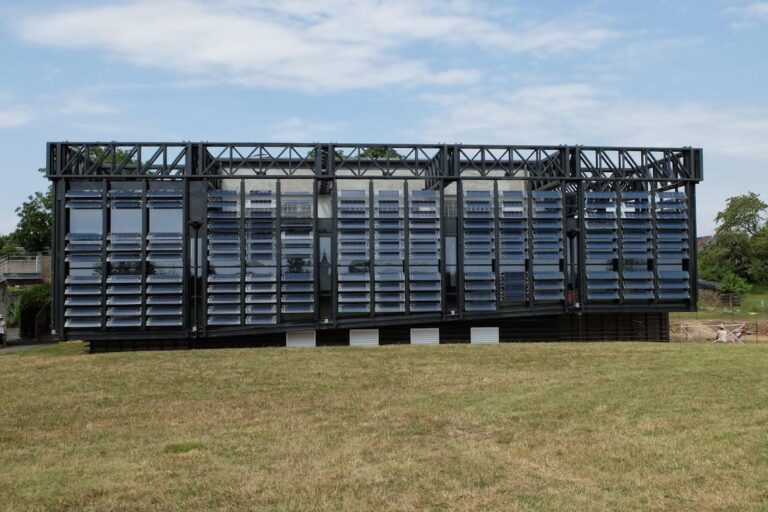
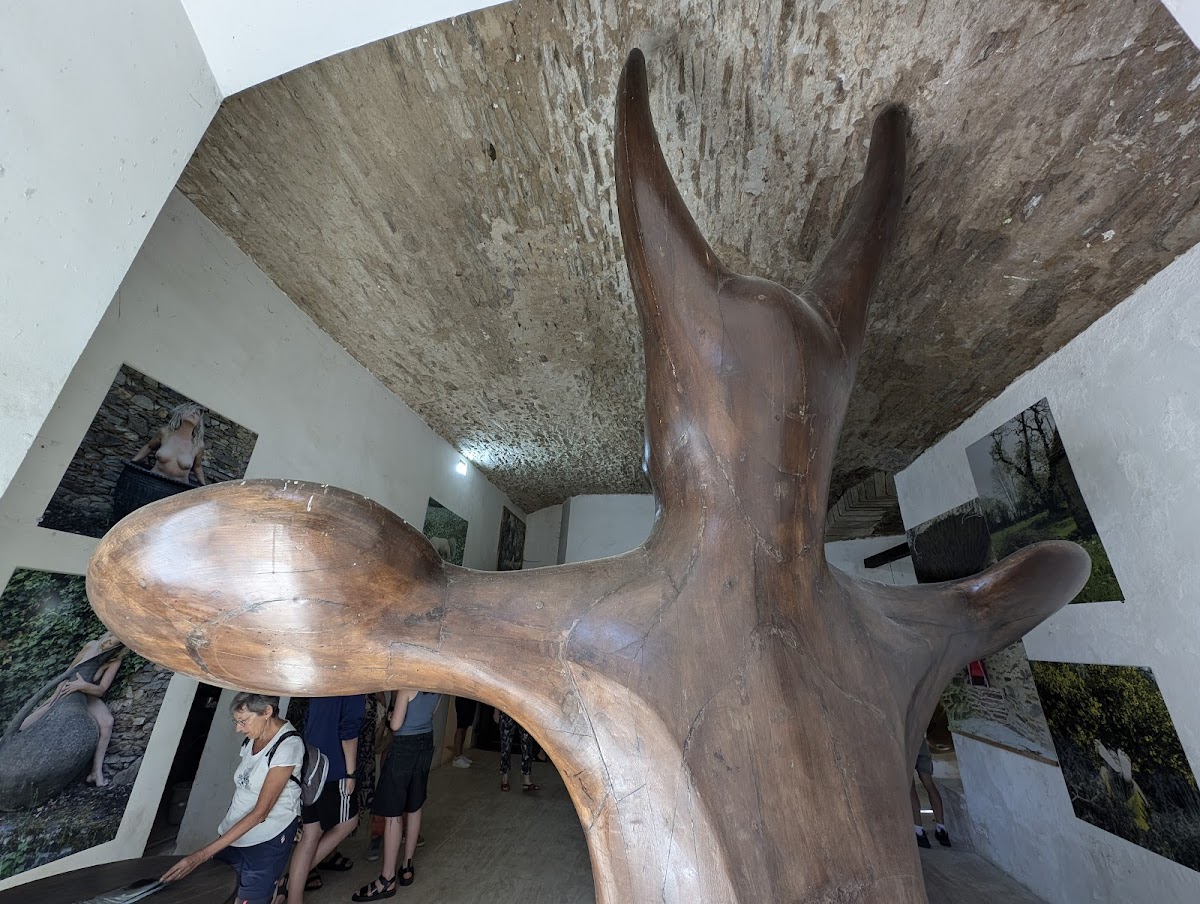
In the 20th century, the site gained official recognition as a historic monument on March 27, 1926. Efforts to preserve and restore the château have been ongoing, with contemporary artists like Guy Baudat adding new creative expressions to the site, continuing the location’s evolving narrative through time.
Remains
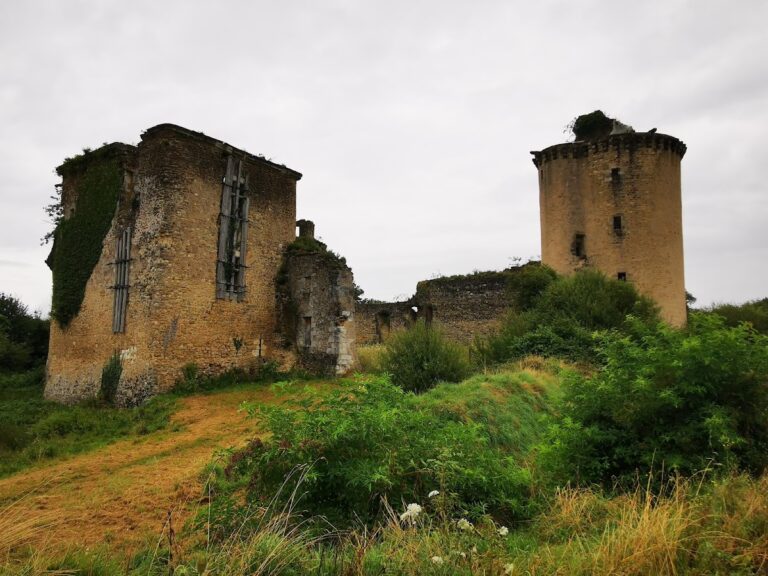
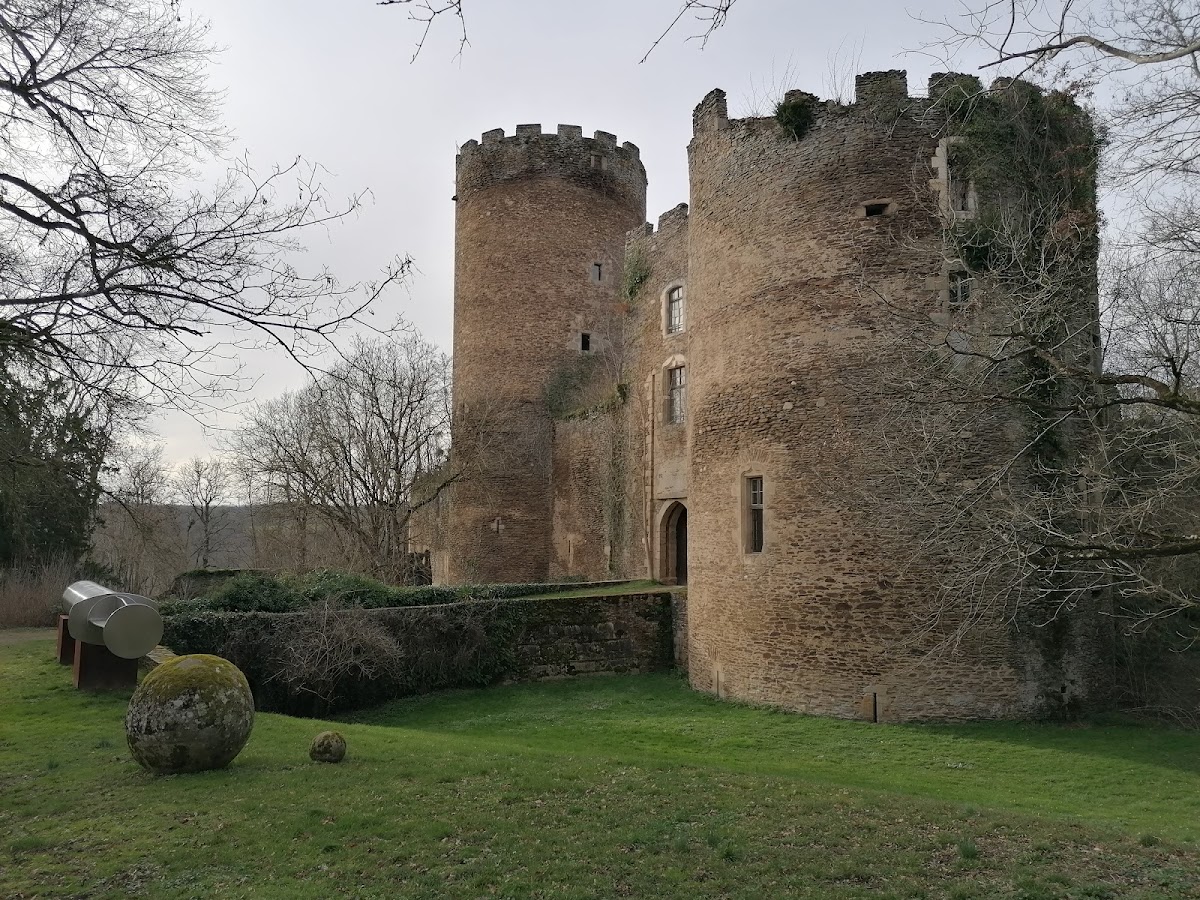
The Château de Châteaubrun stands prominently on a rocky spur separated from the Cuzion plateau, overlooking the Creuse River just over a kilometer south-southeast of the village of Cuzion. Its remains reveal a fortress designed for defense and control, demonstrating medieval military architecture adapted to its natural surroundings.
At the height of its defensive capability, around the time of the French Revolution, the castle was surrounded by a moat and enclosed within a thick defensive wall known as an enceinte. This encircling wall was strengthened with advanced works—additional fortifications projecting outward to better repel attackers. Entry into the castle was through a drawbridge spanning the moat, leading to a pointed stone arch gate. This entrance was particularly fortified with a double portcullis, gates made from closely set vertical wooden or iron bars that could be dropped quickly in defense. A tower next to the gate housed machicolations—openings in the floor allowing defenders to pour objects or liquids onto assailants—and arrow slits, narrow vertical openings for archers to shoot while remaining protected.
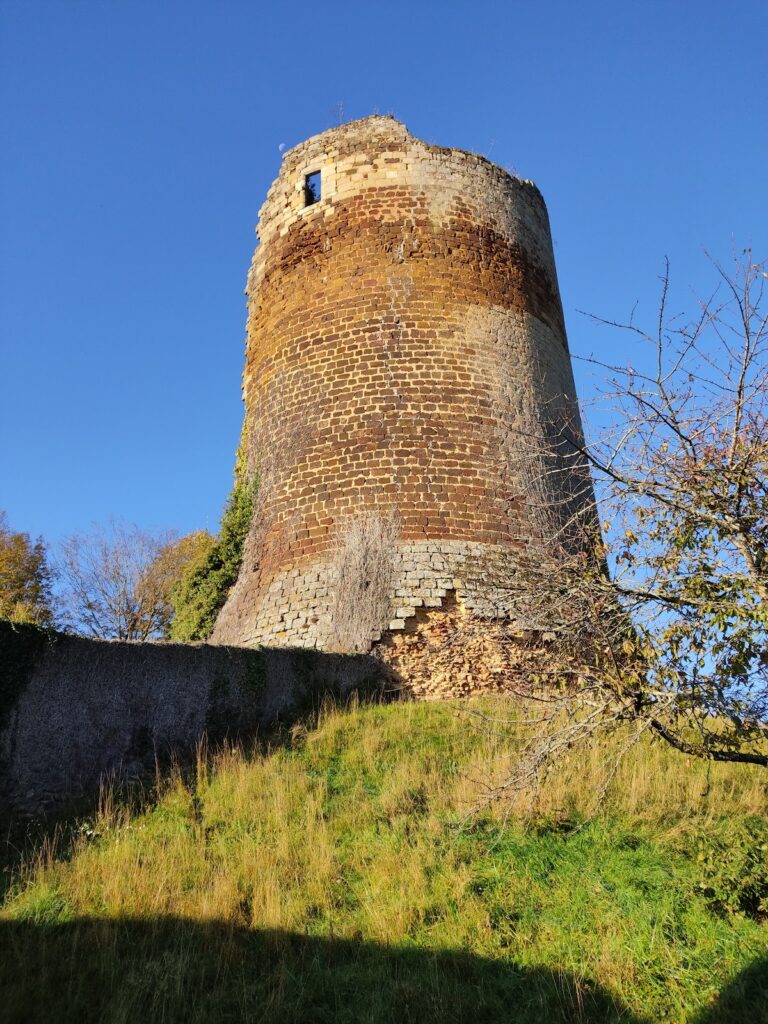
Within the castle’s enclosure lies a large circular donjon or keep, likely constructed during the 14th century. This main tower rises seven stories high and was accessed through a doorway situated several meters above the ground, a common defensive feature making it harder for attackers to breach. The donjon would have served as a last line of defense and a symbol of lordly authority.
The lord’s residence occupied the southern section of the enclosure and was a square building surrounded at its corners by round watch turrets. These turrets provided vantage points for surveillance and defense. Inside the residence, walls were decorated with mural paintings, indicating an element of domestic comfort and status within the fortress. Attached to the enceinte walls were the service buildings, known as communs, which supported the castle’s daily functions.
Today, while much of the structure lies in ruins, these features remain visible and attest to the castle’s medieval heritage. The site is currently undergoing restoration, balancing the conservation of its historical fabric with contemporary artistic endeavors.
Nearby sites