Boussac Castle: A Medieval Fortress in France
Site at a Glance
- Rating
- 5
- Popularity
- Very Low
- Country
- France
- Primary era
- Medieval
- Eras represented
- Medieval, Early Modern
- Civilizations
- French
- Site type
- Domestic
- Remains
- Castle
On this page13 sections
History
Boussac Castle is a medieval fortress in Boussac, France, rebuilt around 1400 on a site occupied in Roman times.
Roman and medieval origins
An earlier castle was built here during the twelfth and thirteenth centuries. English forces destroyed it during the Hundred Years’ War, a series of conflicts between the English and French monarchies conventionally dated from 1337 to 1453. Around 1400, Marshal Jean de Brosse rebuilt the castle on the same site. A French nobleman and military commander, he had acquired Boussac through marriage to the heiress of its earlier feudal family, a junior branch of the princes of Déols, lords of Châteauroux.
Changes and revolutionary dismantling
The castle underwent alterations in the sixteenth and seventeenth centuries. It served as the seat of a barony and possibly a viscounty, territorial lordships associated with the titles of baron and viscount.
In April 1794, pressure from a revolutionary political club in Lépaud and the Creuse department administration led the municipal council to decide, reluctantly, to dismantle the castle. Work began in July, after a contractor agreed to undertake it for 8,400 livres, possibly payable in assignats, paper currency issued during the Revolution.
Public use and literary associations
Pauline de Carbonnières, daughter of Charles Henri and later Countess of Ribeyreys, sold the castle to the municipality in 1833. The department subsequently acquired it, and from 1838 it housed the subprefecture, the local office of an official serving an arrondissement under the prefecture. After 1926, it was used as a gendarmerie barracks, a base for France’s military-status national police force.
During an inspection in the region, writer and historic-monuments inspector Prosper Mérimée and novelist George Sand discovered the six panels of The Lady and the Unicorn at the castle. The Flemish-made tapestries are now among the principal works at the Museum of the Middle Ages in Paris. Sand stayed at Boussac several times, including during an epidemic that forced her to leave Nohant and during the Franco-Prussian War of 1870–71. She wrote Journal of a Traveler During the War at the castle, and her novel Jeanne is set largely there.
The castle is also associated with publisher and political thinker Pierre Leroux. A tradition that Zizim, a son of Ottoman sultan Mehmed II and claimant in the Ottoman succession struggle, stayed at Boussac or played a part in the creation of The Lady and the Unicorn is rejected.
Protection and restoration
An order of 25 July 1930 classified the castle as a historic monument. The Blondeau couple acquired the estate in 1965 and restored and furnished the building.
Remains
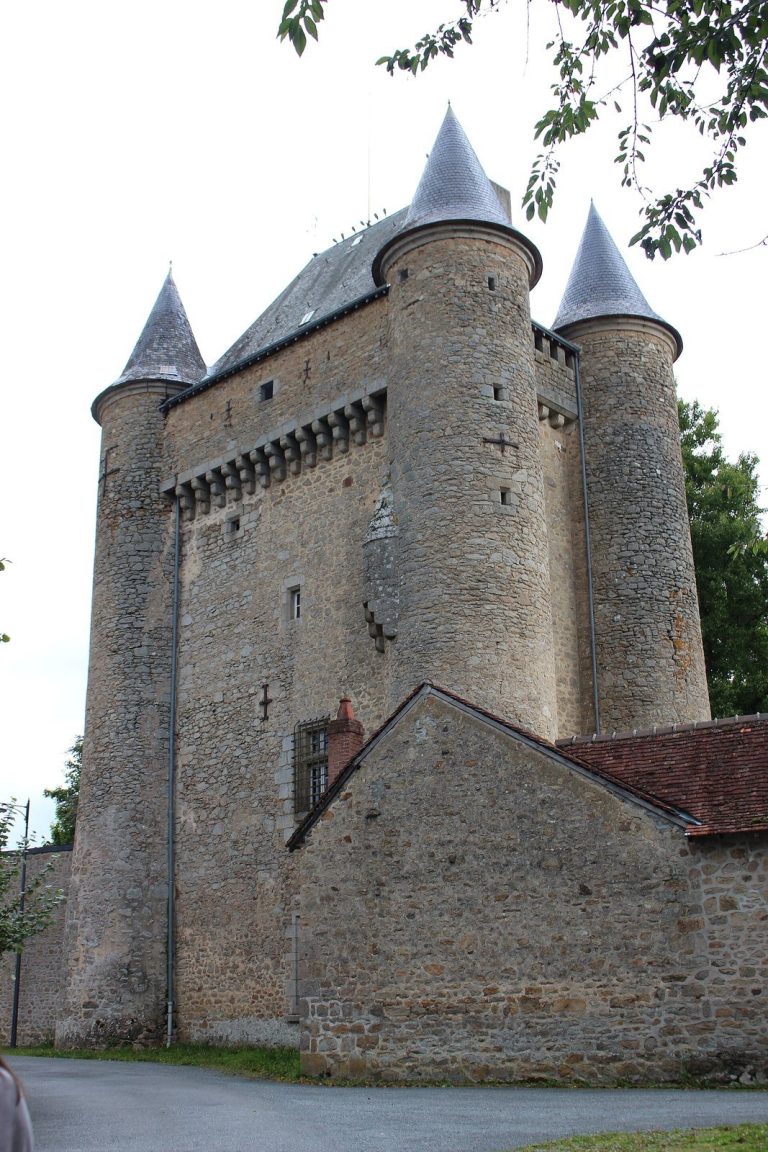
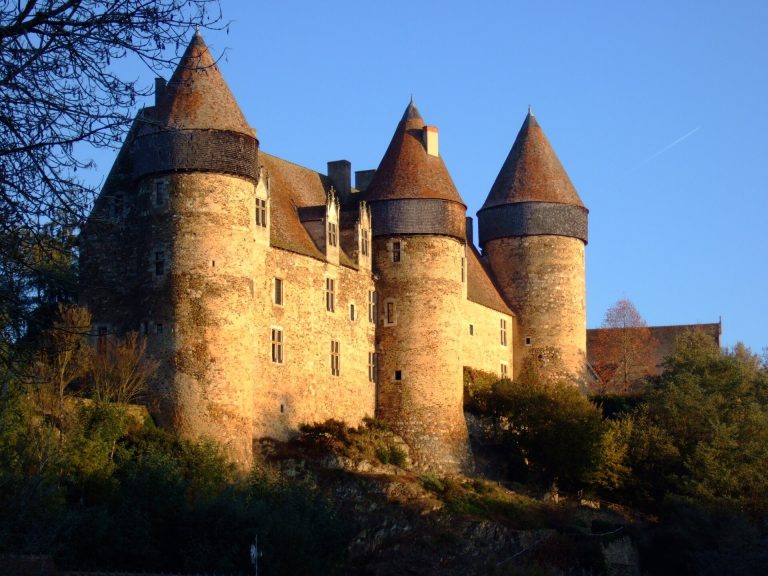
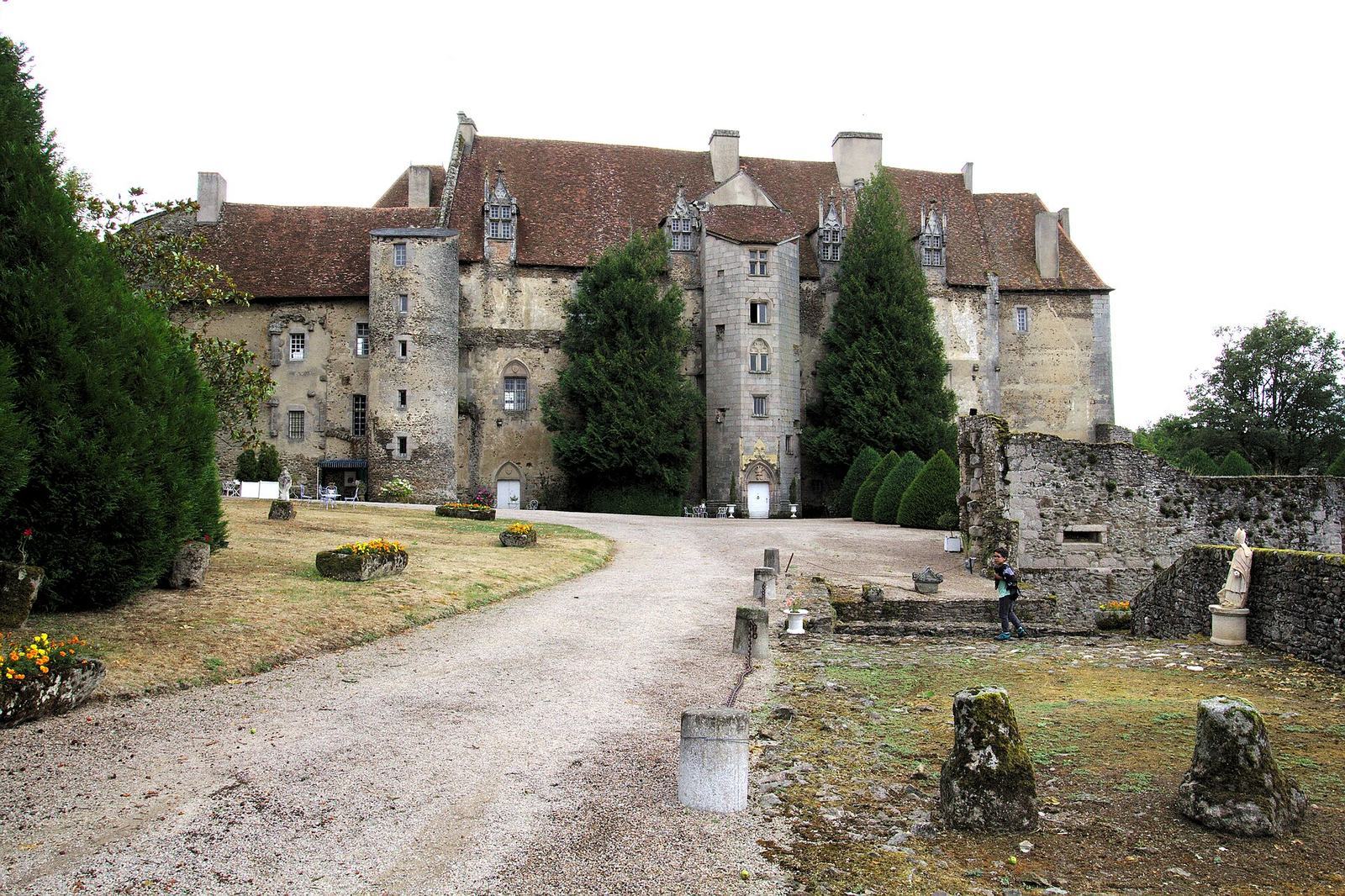
The castle occupies a leveled rocky outcrop west of Boussac, about 15 metres above the right bank of the Petite Creuse near its meeting with a small tributary. Its rectangular main building has one large round tower, two square towers and a three-sided stair turret. Brown stone gives the exterior an austere appearance.
Exterior
South facade
The south facade has rectangular towers topped with tiles. Fifteenth-century dormers are decorated with gables, ornamental peaks and panels in the Flamboyant Gothic style, a late Gothic form of elaborate decoration. A stairway doorway has a pointed arch and a sculpted panel above it. The windows on the first and second floors were altered in the eighteenth century.
Defenses and entrance
The 1794 dismantling left most of the main building standing. It filled the moats and removed the keep, tower roofs, entrance portal and fortifications. The southwest tower retains some corbels, or projecting supports, from its former machicolations, defensive structures with openings through which objects could be dropped onto attackers below. Above the entrance lintel, the stone-carved coat of arms of the Brosse family shows three brushes.
Interior rooms
Guards’ room
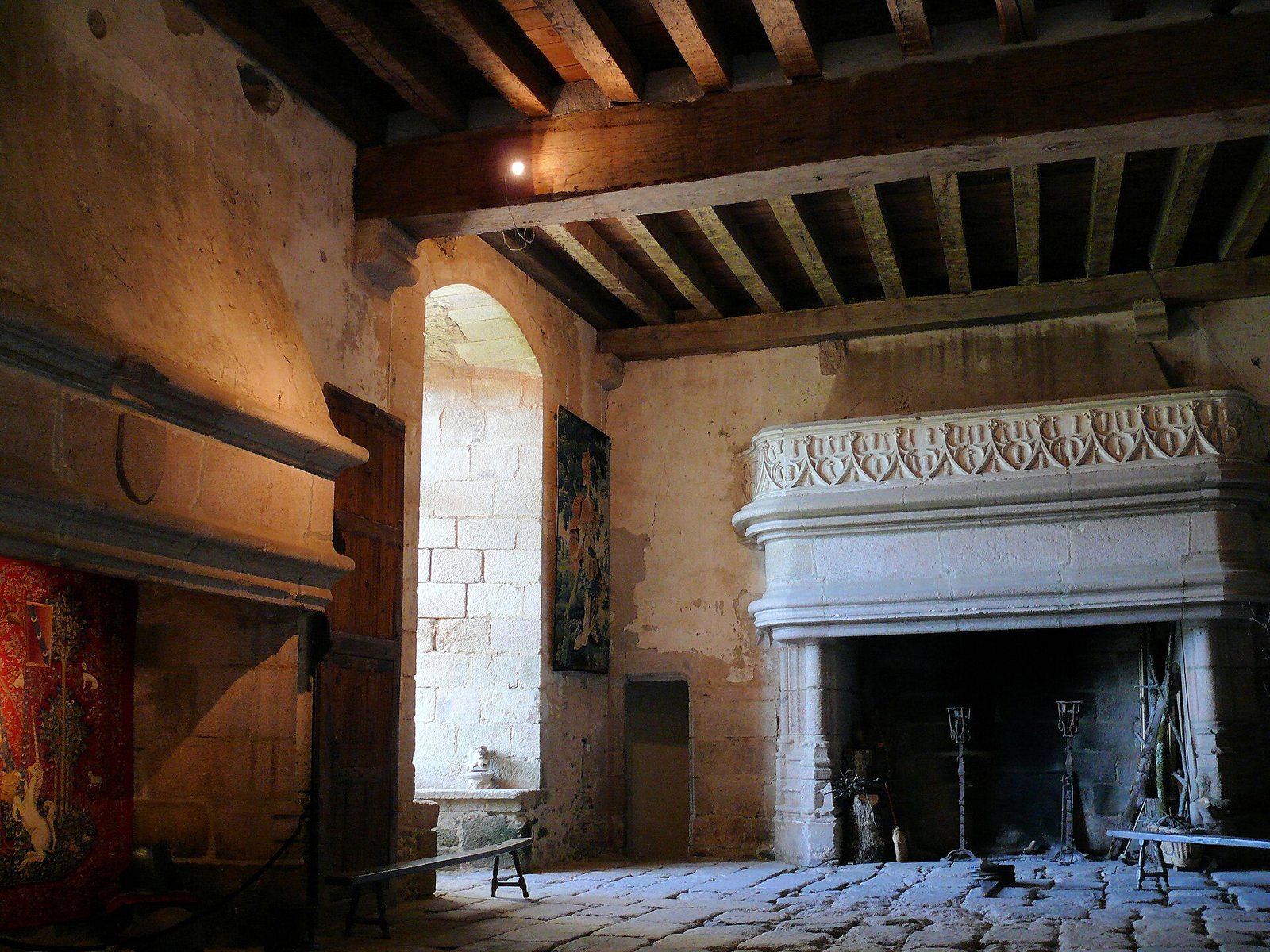
The guards’ room contains two fifteenth-century fireplaces, known as the small fireplace and the large fireplace.
Second-floor chamber
A second-floor chamber used by George Sand has wall paneling dating to the mid-eighteenth century.
Tapestries
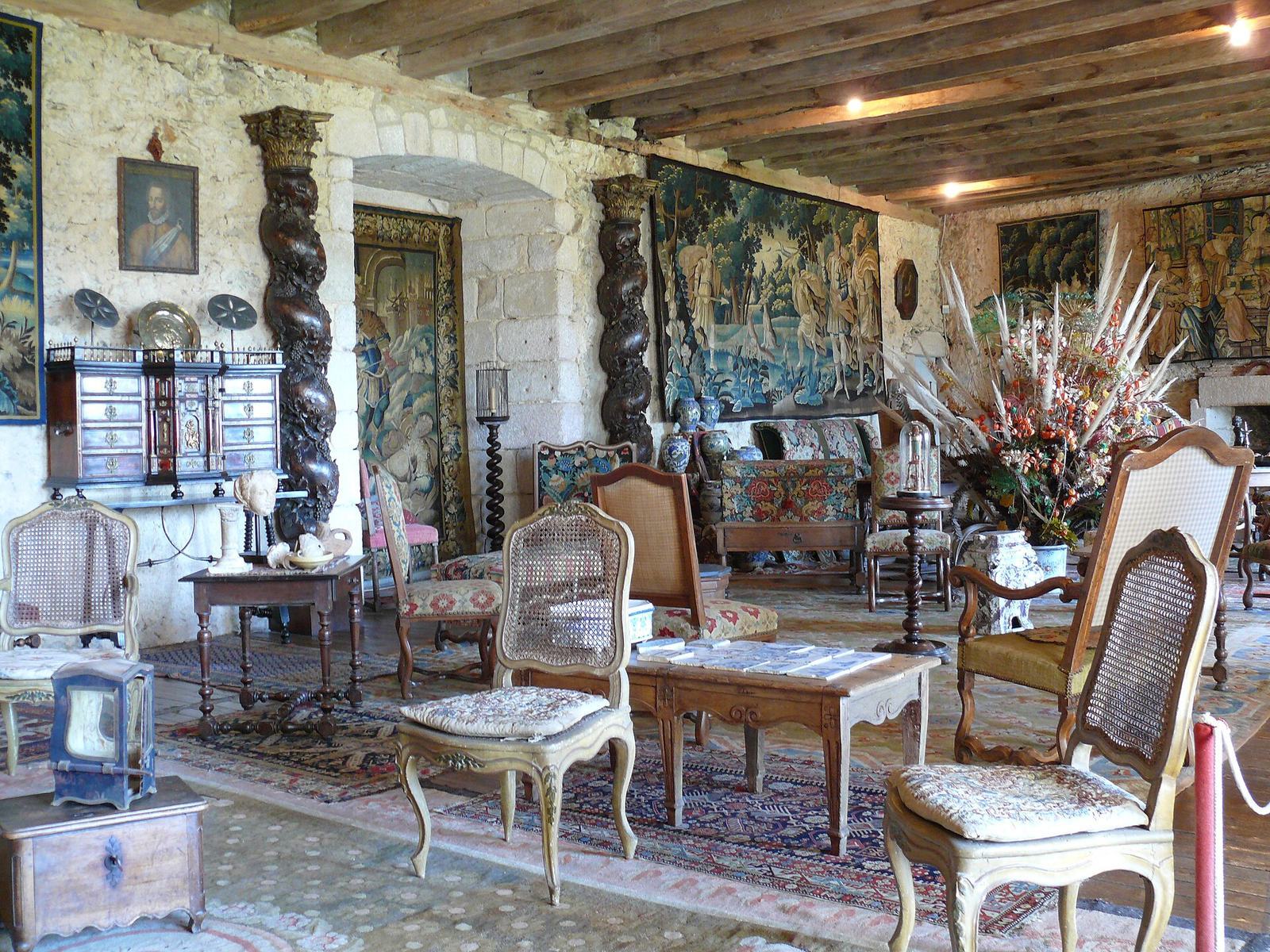
The castle holds a collection of Aubusson tapestries dating from the seventeenth century to the present. Aubusson is a French town with a long tapestry-making tradition. The first exhibition rooms include twentieth-century works by the French tapestry designers Jean Lurçat and Jean Picart Le Doux, and by Dom Robert, a Benedictine monk and tapestry artist.