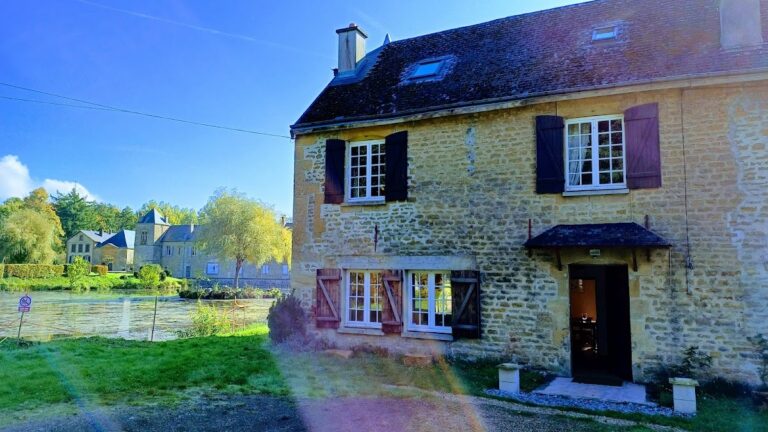
Château d’Olly: A French Manor House and Former Spinning Mill

Site at a Glance
- Rating
- 4.4
- Popularity
- Very Low
- Country
- France
- Primary era
- Modern
- External website
- Open
- Eras represented
- Modern
- Civilizations
- French
- Site type
- Domestic
- Remains
- Manor House
On this page11 sections
History
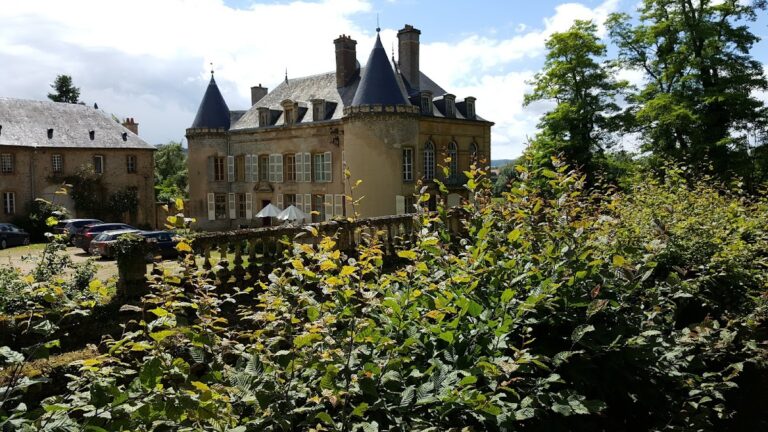
Château d’Olly is a manor house in France, in the hamlet of Olly within the commune of Illy in the northern Ardennes. Built around 1830, it appears to have occupied the site of an earlier mill known as Hollier, although the relationship between that mill, the present château, and its dependencies remains uncertain. The estate later became an industrial complex as well as a residence, reflecting the importance of water-powered production in the Ardennes.
Industrial development in the nineteenth century
The earliest recorded industrial activity at the estate was a brickworks, whose surviving chimney carries a plaque dated 1858. The principal known use was later as a filature, or textile-spinning mill where fibers such as wool or cotton are made into thread. The operation probably benefited from the regional textile industry, the hydraulic power of the Ardennes, and the Bouillonais, a railway line operated by the Ardennes Departmental Railways.
During the Battle of Sedan in 1870, the château served as the base of the Dutch ambulance, a mobile or temporary military medical service. Severe storms and a tornado struck the Illy area on 9 August 1905, affecting the Pingard and Rousseau spinning mills at Olly and leaving their workers temporarily unemployed.
Fire, wartime violence, and residential use
At about 2:30 a.m. on 11 July 1908, a fire destroyed the annex buildings used for the Rousseau family’s spinning-mill operations. The residential accommodation survived, but between 40 and 45 workers lost their jobs. Industrial activity ended, and Château d’Olly became entirely residential.
During the German occupation of France in the Second World War, the château and its surroundings were used for executions by Francist militiamen, members of the French Fascist movement associated with Marcel Bucard. On 28 August 1944, they murdered Jacques Wenzel, a retired gendarme and member of the Resistance who had sheltered men avoiding the compulsory labor service imposed during the occupation, as well as Allied airmen. A commemorative stele marks the killing.
Jeanne Colin sold the château to the painter Lucien Ardenne and his wife in 1961. Jérôme Counet and Jérôme Antoine acquired it in 2015 and began restoring the property. Château d’Olly remains a residence, while its changing industrial history continues to shape the surviving buildings, grounds, and waterworks.
Remains
Château d’Olly occupies Y-shaped ground at the confluence of the Hatrelle and Givonne rivers. Its industrial landscape was organized around channels that brought water from both rivers toward a turbine, linking the manor, former mill buildings, ponds, and underground conduits. The surviving fabric therefore includes the residential château together with remnants of brickmaking, spinning, and water-management installations.
Water-management system
Canals and turbine
Each branch of the site’s Y-shaped ground carried water from one river through an elevated canal toward an electric turbine. The turbine converted the flow into electricity for the spinning-mill workshops and also supplied mechanical power. After passing through the turbine, the water entered a vaulted underground conduit that crossed the property below ground before opening downstream into the Givonne, which runs along the site.
Intakes, ponds, and flood damage
The Hatrelle supply canal is disused and partly destroyed, and a road was later built across it. The Givonne intake still operates and feeds a pond used as a buffer basin. A canal from that pond leads toward the former turbine, while a second pond, probably used as an overflow basin, has been drained. A major Givonne flood in 1995 destroyed part of the intake and completely destroyed an artificial diversion downstream. That diversion had supplied a nearby fishpond; the pond is now fed only by the Hatrelle, and the Givonne follows its natural course.
Château and industrial dependencies
Residential château and roof
The residential accommodation survived the 1908 fire and forms the principal surviving use of the property. During the 1960s or 1970s, the roof was renewed in Eternit, a fiber-cement roofing material. The dormer windows, which project from a sloping roof, were removed, leaving plain sloping roof planes.
Brickworks chimney and former mill buildings
The dependencies once included the industrial buildings of the Rousseau spinning mill, which were destroyed in the 1908 fire. The brickworks chimney remains and carries its 1858 plaque, preserving a physical marker of the estate’s earlier industrial phase.
Orangerie
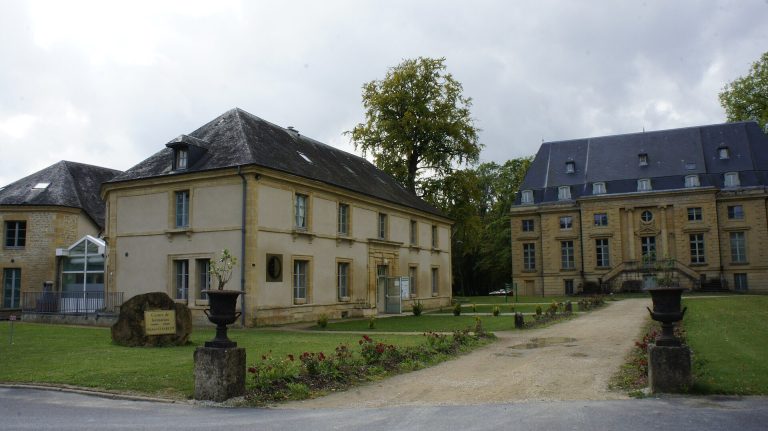
The annex known as the Orangerie already appears in photographs made before 1900. Its date and original function remain uncertain, adding another unresolved element to the sequence of changes among Château d’Olly’s buildings.