Château d’Ollwiller: A Historic Château and Wine Estate in France


Site at a Glance
- Rating
- 4.5
- Popularity
- Very Low
- Country
- France
- Primary era
- Early Modern
- External website
- Open
- Eras represented
- Medieval, Early Modern, Modern
- Civilizations
- French, Holy Roman Empire
- Site type
- Domestic
- Remains
- Castle
On this page9 sections
History
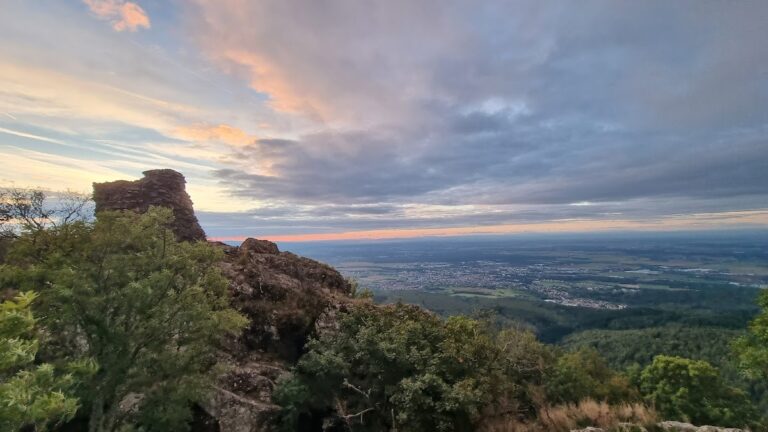
Château d’Ollwiller is a historic château and wine estate in France, at Wuenheim in Alsace, at the foot of Hartmannswillerkopf. Its documented history reaches back to 1180, while the present estate reflects medieval lordship, eighteenth-century rebuilding, twentieth-century reconstruction, and continuing viticultural use.
Medieval lordship and the Waldner family
The Ollwiller estate appears in thirteenth-century records under several forms of its name. In the early thirteenth century, Friedrich II, Count of Pfirt, gave it to the Cistercians of Lieu-Croissant Abbey. The Cistercians were a reform branch of Western Christian monasticism whose monasteries often managed large agricultural estates. In 1249, Heinrich III, Bishop of Strasbourg and overlord of the Counts of Pfirt, either confirmed this donation or enlarged it with substantial land between Wuenheim and Hartmannswiller.
In 1260, the estate was sold for 1,300 livres to the knight Conrad Waldner of Guebwiller, who bought it for himself and his brothers Hermann, Gunther, and Eberhardt. The brothers placed the property under Walter of Geroldseck, Bishop of Strasbourg, as a fief, meaning land held in return for obligations to a superior lord. They built a castle there, and in 1268 Heinrich IV of Geroldseck secured access to it during wartime.
The Waldners generally lived at Ollwiller and later held Freundstein Castle as a fief from both the Prince-Abbey of Murbach and the Bishopric of Strasbourg. They adopted the name Waldner von Freundstein only about three centuries later. Their possessions gradually became a substantial lordship in Upper Alsace, although the estate also experienced the effects of later conflicts, including the German Peasants’ War and the Thirty Years’ War.
The Baroque estate
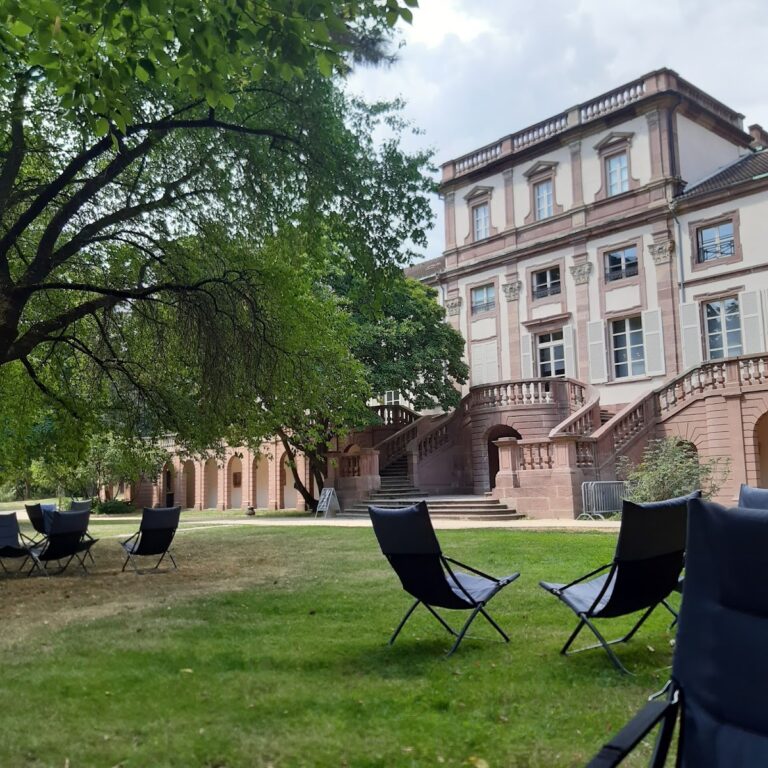
In 1750, Count Christian Frédéric Dagobert Waldner de Freundstein ordered the medieval fortress demolished. Antoine Mathieu Le Carpentier built a Baroque château on the site by 1752. The residence stood within formal French-style gardens, and the estate received prominent visitors during the eighteenth century, including Louis XV, king of France from 1715 to 1774.
About forty years later, the French Revolution expelled the Waldner von Freundstein family from its Alsatian possessions and sent them into exile. The estate itself was not confiscated. In 1825, the textile industrialist Jacques-Gabriel Gros acquired the château and estate, turning the property into a model agricultural operation and a modern wine estate. A nearby brickworks produced pipes for gas and water systems and supplied customers as far away as northern Germany and the United States.
Agricultural development and wartime destruction
An agricultural school for Haut-Rhin opened on the estate on 14 May 1849 and operated until 1853. After Jacques-Gabriel Gros died, his son Aimé Gros-Schlumberger and grandson continued to develop the property and improve the château. During the First World War, the estate was requisitioned to house and supply combatants. In December 1914, the Gros family was ordered to evacuate and took refuge in Paris, while German military engineers uprooted the vines and dug trenches protected by barbed wire.
The fighting around Hartmannswillerkopf, a mountain and First World War battlefield in the Vosges, caused the château’s destruction on 21 December 1915. French artillery fire struck the building, and the resulting fire consumed it. Combat severely damaged the estate’s land, while its vineyards and orchards needed to be replanted.
Reconstruction and the modern wine estate
Aimé Gros-Schlumberger died in Paris in 1917, and the property passed to Henry Gros-Bourcart, an agricultural engineer. He restored its agricultural and viticultural activities and rebuilt the farm and residential buildings from surviving service buildings and stables, following the earlier plans. The château itself was rebuilt in 1925 to its former size but in a considerably simpler form. The wider campaign lasted about ten years, and the estate had regained full activity by the beginning of the 1930s.
In 1959, under the direction of Jacques Henry Gros, the Ollwiller estate helped establish the Vieil-Armand wine cooperative. The property is now operated as a wine estate, and Château d’Ollwiller is one of only two Alsatian wine estates permitted to market wine under the designation “Château.” The Ollwiller wine area is an Alsace Grand Cru site, the highest geographical classification for designated vineyard areas in Alsace. It was classified as a Grand Cru in 1983, during the first delimitation of Alsace’s 25 leading wine-growing areas.
Ollwiller gives its name both to the Grand Cru and to a Pinot Noir. The estate is historically associated with vineyards now cultivated primarily with Riesling and Gewürztraminer. In 2020, Château d’Ollwiller became the property of the German Mack family, founders and owners of the Europa-Park leisure complex. A fire during the night of 8–9 May 2011 had already destroyed the oldest part of the château.
Remains
Medieval castle and Baroque château
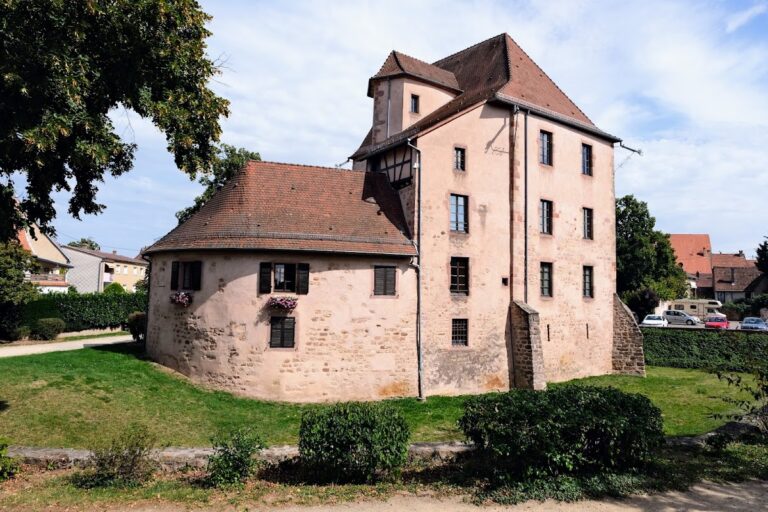
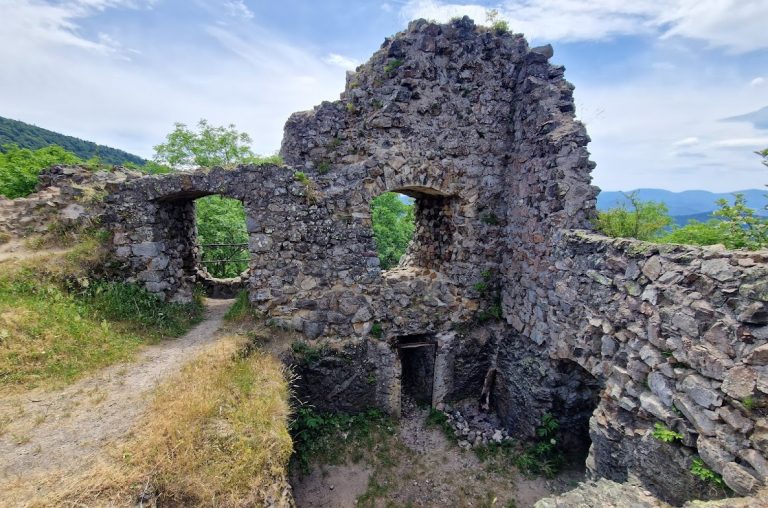
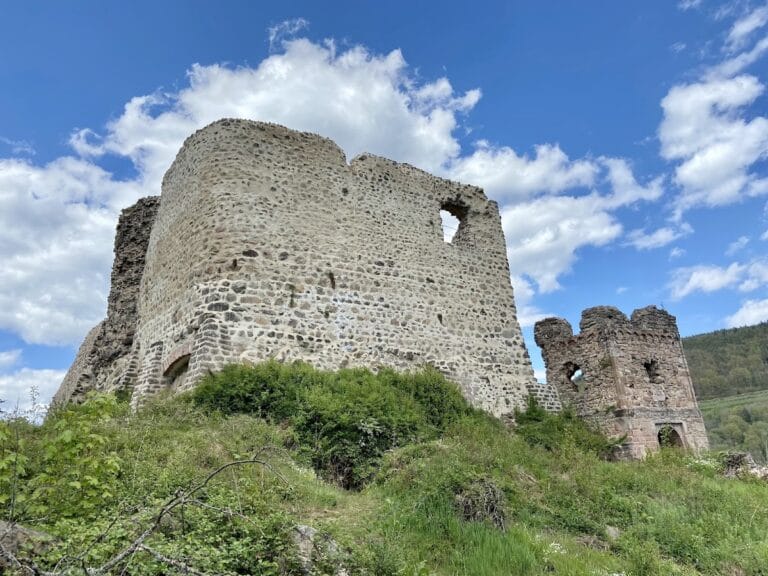
The medieval Waldner stronghold was a three-winged moated castle with a U-shaped plan. A moat, a water-filled ditch used for defence, surrounded the fortified residence. A square tower contained a drawbridge for controlled access, and one corner was marked by a round tower. This fortress was demolished in 1750 before the construction of the later residence.
The Baroque château built by 1752 had a three-storey main residential building with two perpendicular side wings framing an honor courtyard. On the east, garden-facing façade, the three central bays formed a risalit, or projecting section of the wall, topped by a triangular pediment, the upper termination of a classical façade. The château was destroyed by artillery fire and fire in 1915, then rebuilt in 1925 to its earlier size with a simpler architectural form. Its oldest part was destroyed by fire in 2011.
Gardens and ancillary buildings
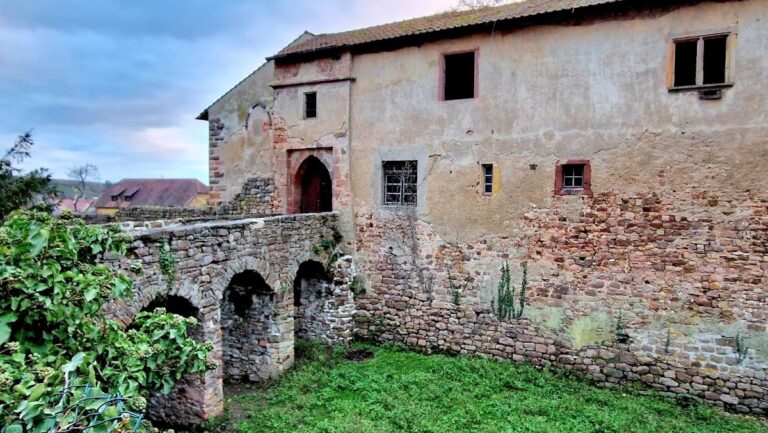
The Baroque complex included a formal garden with a garden pond. A surrounding wall enclosed the grounds, with round towers at all four corners. Jacques-Gabriel Gros later transformed the formal garden into a park. The estate also contained two groups of ancillary buildings, a farm on one side and service buildings on the other. After 1925, the former service buildings were converted for residential use by the Swiss architect François Wavre.
Ollwiller Grand Cru vineyard
The Ollwiller Grand Cru vineyard covers nearly 36 hectares between the château and Wuenheim. It lies on a south-southeast-facing slope at elevations of approximately 260 to 320 metres. The soils consist of marl and sandstone over a limestone base located 10 to 15 metres below the surface. These vineyards form the continuing agricultural setting of the château estate and support plantings primarily of Riesling and Gewürztraminer, alongside the Pinot Noir associated with Ollwiller.
Nearby sites