Château d’Armainvilliers: A Rothschild Country Residence in France
Site at a Glance
- Rating
- 5
- Popularity
- Very Low
- Country
- France
- Primary era
- Modern
- Eras represented
- Modern
- Civilizations
- French
- Site type
- Domestic
- Remains
- Castle
On this page9 sections
History
Château d’Armainvilliers is a historic estate in France, near Tournan-en-Brie, whose origins reach back to a medieval fief and whose present residence was built for Edmond de Rothschild between 1877 and 1881 in the Anglo-Norman style. The property developed through royal ownership, aristocratic inheritance, revolutionary damage, and successive rebuilding before becoming a large Rothschild country estate.
Medieval Origins and Early Lords
Armainvilliers was a very old fief, a landed estate held under feudal obligations, mentioned as early as the twelfth century. A château stood on the site by the fourteenth century. In 1544, it gave refuge to François I, king of France, after forces of Charles V, the Holy Roman emperor, captured Château-Thierry.
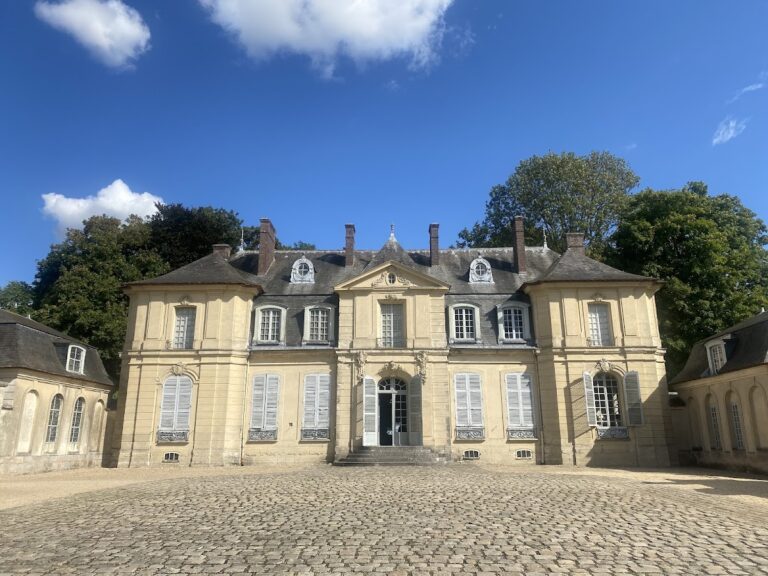
From the sixteenth century, the château served as a residence of the lords of Tournan and Gretz-Armainvilliers. During the seventeenth and eighteenth centuries, it belonged to the Beringhen family. Jacques-Louis de Beringhen, first equerry to Louis XIV, received the title Count of Armainvilliers in June 1704. That same year, Armainvilliers, Tournan, and Gretz were formed into a county, a territorial lordship and title, in his favor. His son Henri-Camille de Beringhen later held the estate.
Royal Exchanges and Revolutionary Damage
In March 1762, Louis XV exchanged the château, its lands and lordship, the estate of Pontcarré, and the dukedom of Gisors for the principality of Dombes, owned by Louis Charles de Bourbon, Count of Eu. The Count of Eu then adopted the title Count of Armainvilliers. When he died in 1775, the estate and titles passed to his younger cousin, the Duke of Penthièvre.
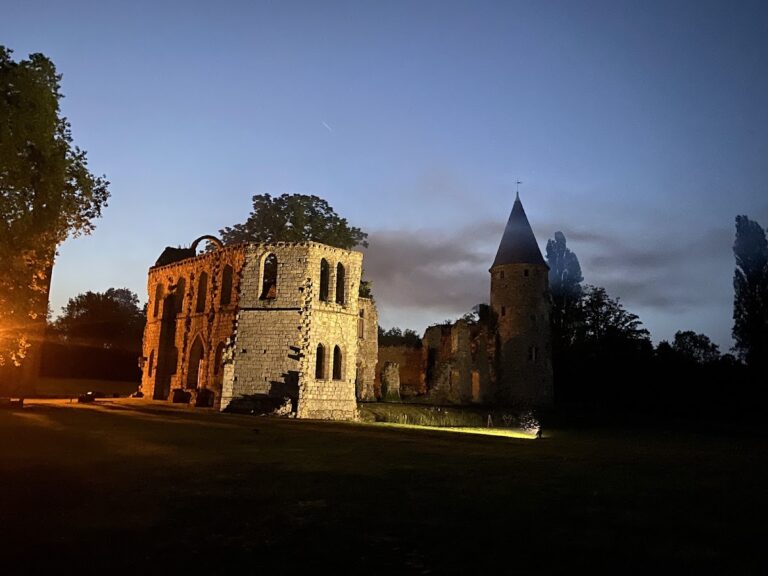
Part of the estate was destroyed during the French Revolution. In 1808, the property was acquired by Claude Bailliot, a stockbroker. During the Restoration, the period after Napoleon’s fall when the Bourbon monarchy returned to power, it went back to the estates of Louise Marie Adélaïde de Bourbon, Dowager Duchess of Orléans. After her death in 1821, Louis-Philippe transferred the property to his sister, Princess Adélaïde d’Orléans, during the partition of 1822.
The La Rochefoucauld and Rothschild Rebuildings
Angélique de La Rochefoucauld, Duchess of Doudeauville, bought the château in 1855 for 500,000 francs. The La Rochefoucauld-Doudeauville family restored the residence and redeveloped its park. Sosthènes de La Rochefoucauld, second Duke of Doudeauville and formerly an aide-de-camp to Charles X, died at Armainvilliers in 1864.
Edmond de Rothschild, a French banker and member of the Rothschild family, acquired the estate in 1877. He completely demolished the existing château and commissioned a new residence, built between 1877 and 1881. The Rothschild family retained the property until Edmond’s death in 1934, when it passed to his second son, Maurice de Rothschild. After Maurice died in 1957, ownership went to his son Edmond Adolphe de Rothschild.
The château also took on wartime uses. An infirmary was established there during the First World War, and German troops occupied it during the Second World War. In the 1980s, Hassan II, king of Morocco and a member of the Alawi dynasty, acquired the estate and carried out extensive rehabilitation work. His son, Mohammed VI, later sold the château in 2008.
A Disputed Name
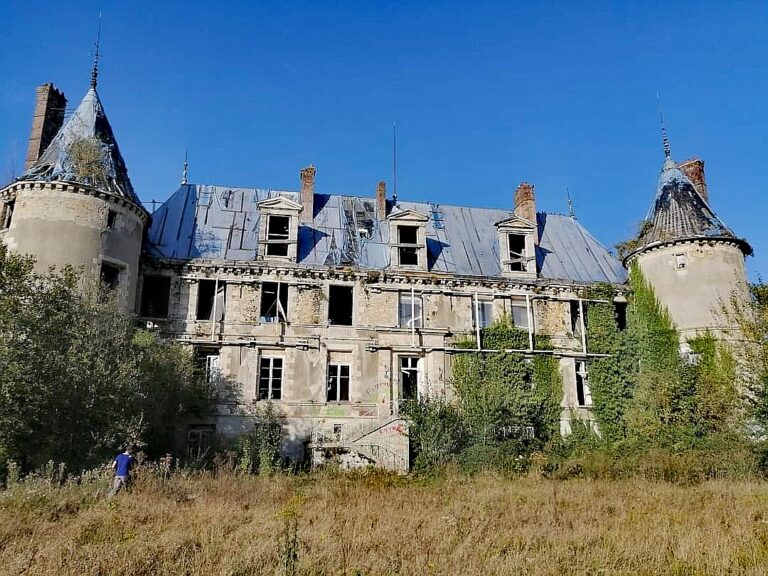
A neighboring mansion built by Émile Péreire also bore the name Château d’Armainvilliers. The Duchess of Doudeauville brought a lawsuit in 1863 over its use. That separate mansion was mistakenly bombed by the United States Air Force in 1944 and demolished in 1950.
Remains
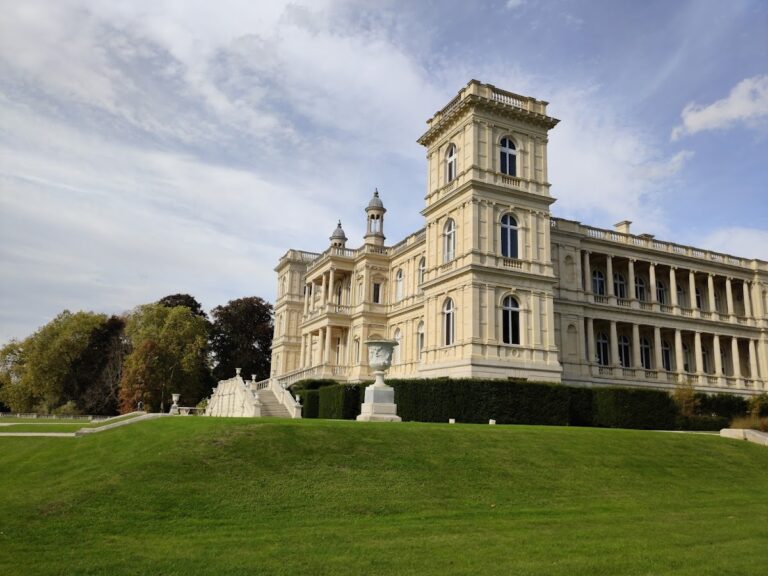
The surviving estate is centered on an S-shaped residence in the nineteenth-century Anglo-Norman style, a revival style combining Norman-inspired medieval forms with the scale and amenities of a modern aristocratic house. Château d’Armainvilliers and its domain extend across the communes of Tournan-en-Brie and Gretz-Armainvilliers. The Rothschild-period estate was described as covering about 250 hectares before expanding to approximately 3,961 hectares by the end of the nineteenth century. Later descriptions give the château 100 rooms and about 9,000 square metres of floor area on nearly 2,500 acres.
The Main Residence
Built for Edmond de Rothschild between 1877 and 1881, the present château was primarily designed by Félix Langlais and Émile Ulmann. Its Anglo-Norman form gave a medievalizing character to a residence equipped for modern aristocratic life. Additions enlarged the Rothschild estate between 1881 and 1938. The house contained seven en suite bathrooms, an unusual provision for its period.
Estate Buildings
The domain included guardhouses, farms in the Norman style, extensive service buildings, and other outbuildings. A large orangery, modeled on English examples, formed part of the estate’s supporting architecture and horticultural facilities.
Park and Water Features
Élie Lainé developed the park. Earlier arrangements of the grounds included water-filled moats around the courtyards and farmyards, a canal bordered by alleys of hornbeam, a labyrinth, and hornbeam bosquets trimmed into arcades. A large pond was also part of the designed landscape.