Chandra Kasem Palace: A Royal Residence and National Museum in Ayutthaya
Site at a Glance
- Rating
- 4.5
- Popularity
- Low
- Country
- Thailand
- Primary era
- Modern
- External website
- Open
- Eras represented
- Early Modern, Modern
- Civilizations
- Unclassified
- Site type
- Domestic
- Remains
- Palace
On this page11 sections
History
Chandra Kasem Palace is a palace complex and national museum in Ayutthaya, Thailand. Built in 1577 during the reign of King Maha Thammaracha, it began as a royal residence associated with the late Ayutthaya period and later became an important centre of royal and military activity.
Foundation and the residence of Naresuan
Maha Thammaracha built the palace for his son Naresuan, who was then serving as a Burmese-appointed viceroy in Ayutthaya. It was first called Wang Mai, meaning “New Palace,” and was also known as Wang Chan, after the palace in Phitsanulok where Naresuan lived as viceroy. The complex probably initially stood beyond the city walls, although the urban area was extended to the bank of the Pa Sak River during Maha Thammaracha’s reign.
When Naresuan became king in 1590, the palace served as his residence and headquarters. From there, he defended Ayutthaya against attacks by the Burmese army, linking the complex directly with the kingdom’s resistance to Burmese power.
The Front Palace and destruction
In later years, the palace generally housed the Uparat, the principal secondary royal office in the Ayutthaya monarchy, commonly translated as “Second King.” As the residence and institutional seat of that office, it became known as Wang Na, or “Front Palace,” and received the formal royal designation associated with the position.
The Burmese invasion of 1767 destroyed the palace, as it did many other buildings in Ayutthaya. Its ruins then remained neglected for almost a century. King Mongkut, also known as Rama IV, partially rebuilt the complex and used it as a residence during visits to the former Siamese capital. He gave it the name Chankasem Palace.
Rebuilding and museum history
Mongkut’s rebuilding added high enclosing walls and four entrance gates. Foundations of earlier structures were later found beyond those walls, indicating that the original palace grounds extended considerably farther than the surviving enclosure. The buildings now standing within the complex were largely built or rebuilt under Mongkut, sometimes following earlier plans, and were altered further under later kings.
The palace’s museum history began when Phaya Boranrachathanin, a former governor of Ayutthaya, established the Boran Museum in the former royal stables. He assembled objects from temple ruins and archaeological excavations, then moved the collection to the Chaturamuk Pavilion after 1904 and renamed it the Ayutthaya Museum. On 12 February 1936, the Fine Arts Department renamed the museum the Chantharakasem National Museum, and the entire palace area was declared a national museum. Its displays include artworks from temple ruins and excavations in the surrounding area.
Remains
The walled palace complex
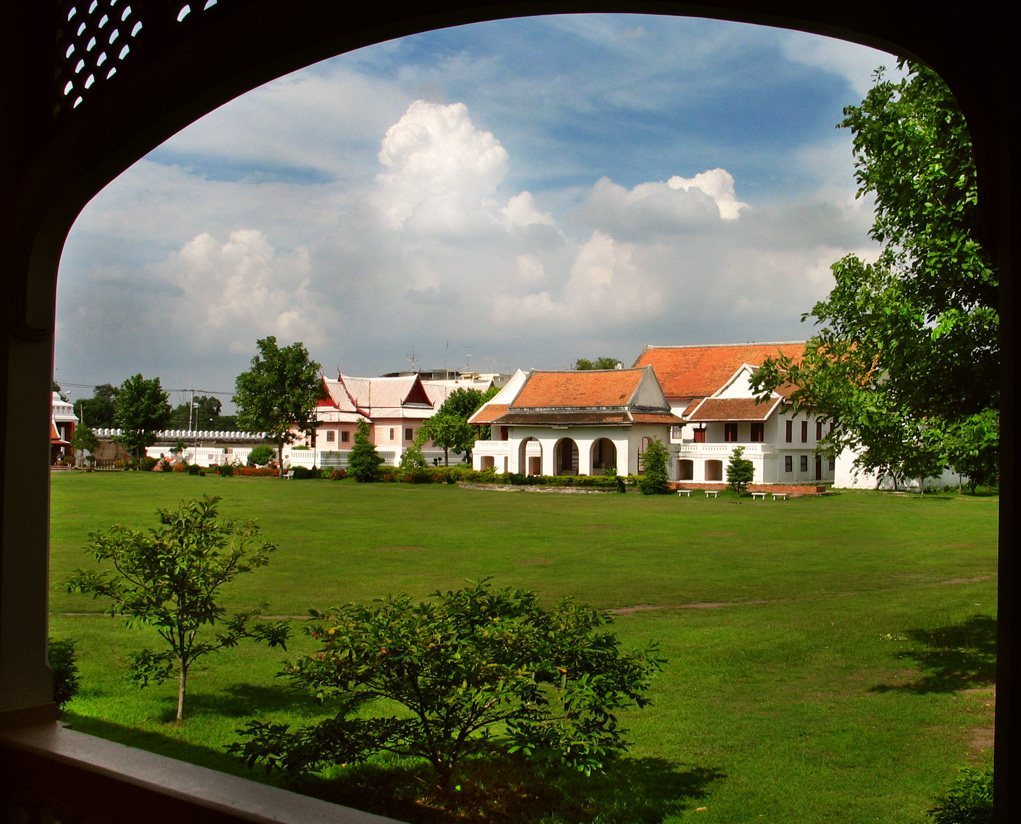
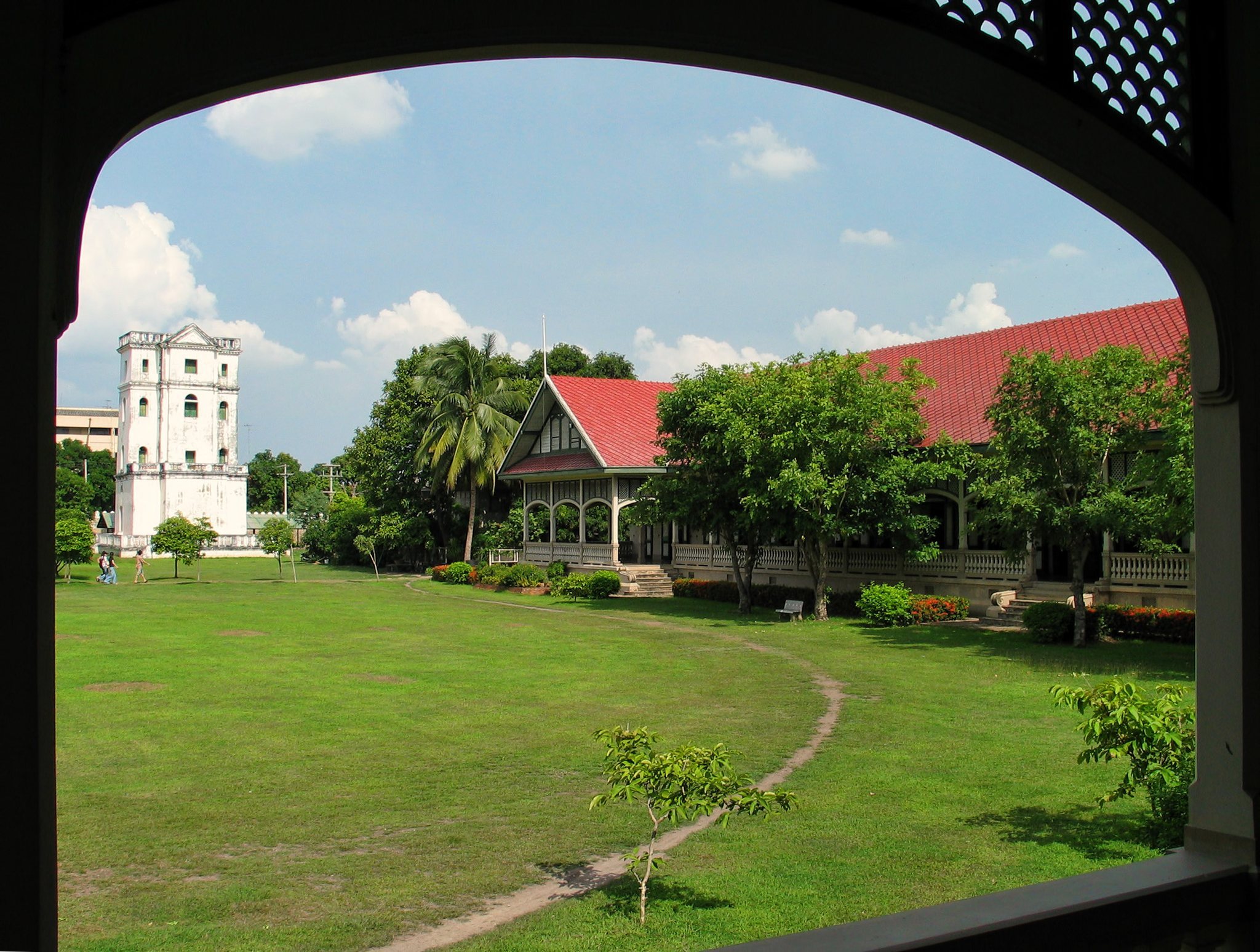
The surviving buildings stand within a walled enclosure at the northeastern edge of Ayutthaya’s main island, near the Lopburi River. The arrangement includes the Chaturamuk Pavilion beside the northern entrance, the Piman Rataya Hall at the centre, the Pisai Sayalak Tower in the southeast, a long administrative building along the southwest wall, and the former royal stables in the northwest corner. Archaeological foundations beyond the walls show that the earlier palace occupied a larger area.
Chaturamuk Pavilion
The Chaturamuk Pavilion stands beside the northern entrance. Mongkut built the wooden structure on original foundations for use as a residence, office, and throne hall during his visits to Ayutthaya. King Chulalongkorn later renovated it, while during the reign of King Prajadhipok the wooden building was replaced with stone. Personal possessions of Mongkut are displayed inside.
Piman Rataya Hall
Piman Rataya Hall is a brick building positioned in the centre of the palace grounds. It was erected on the foundations of an earlier structure, but construction was not completed until the reign of King Chulalongkorn.
Pisai Sayalak Tower
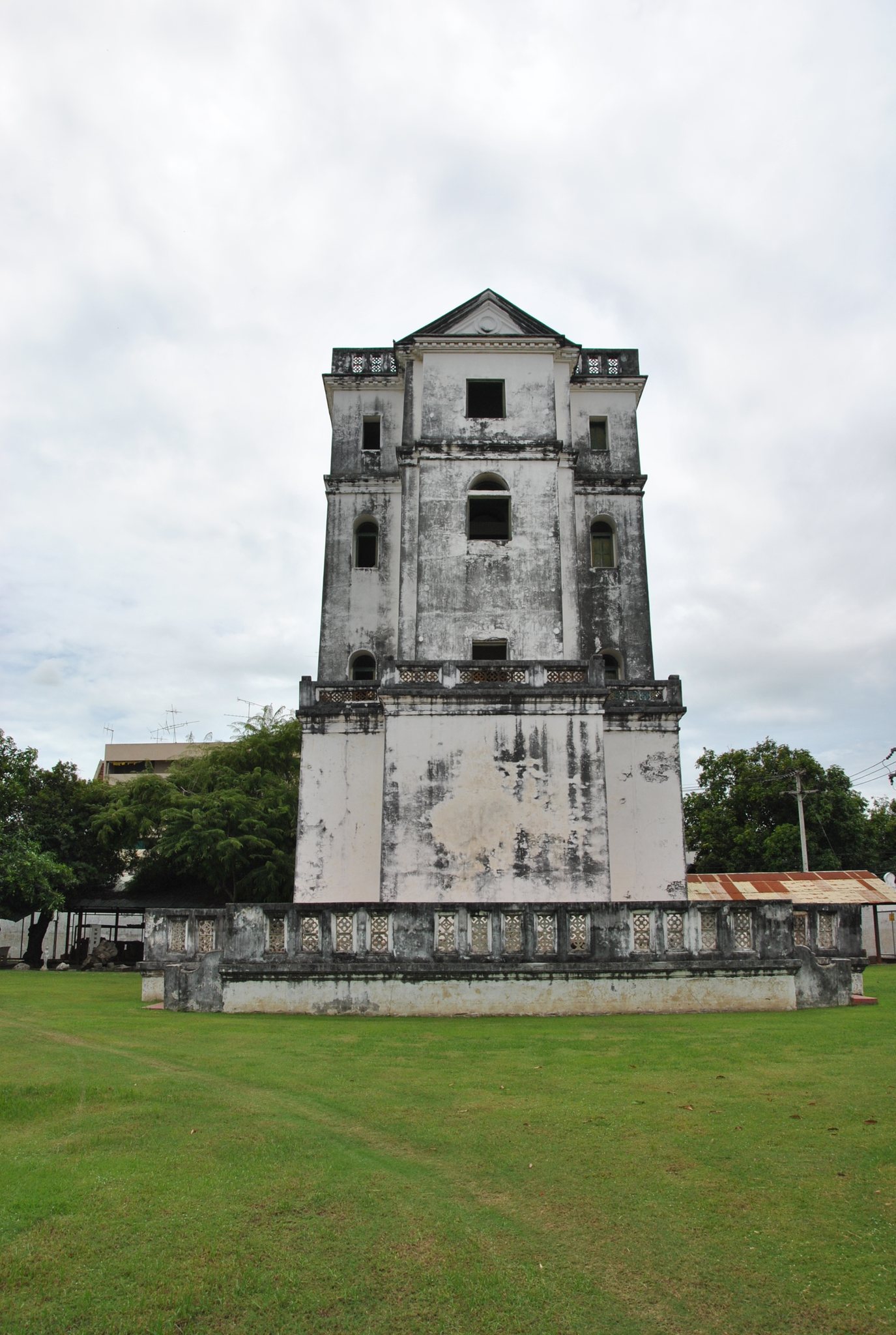
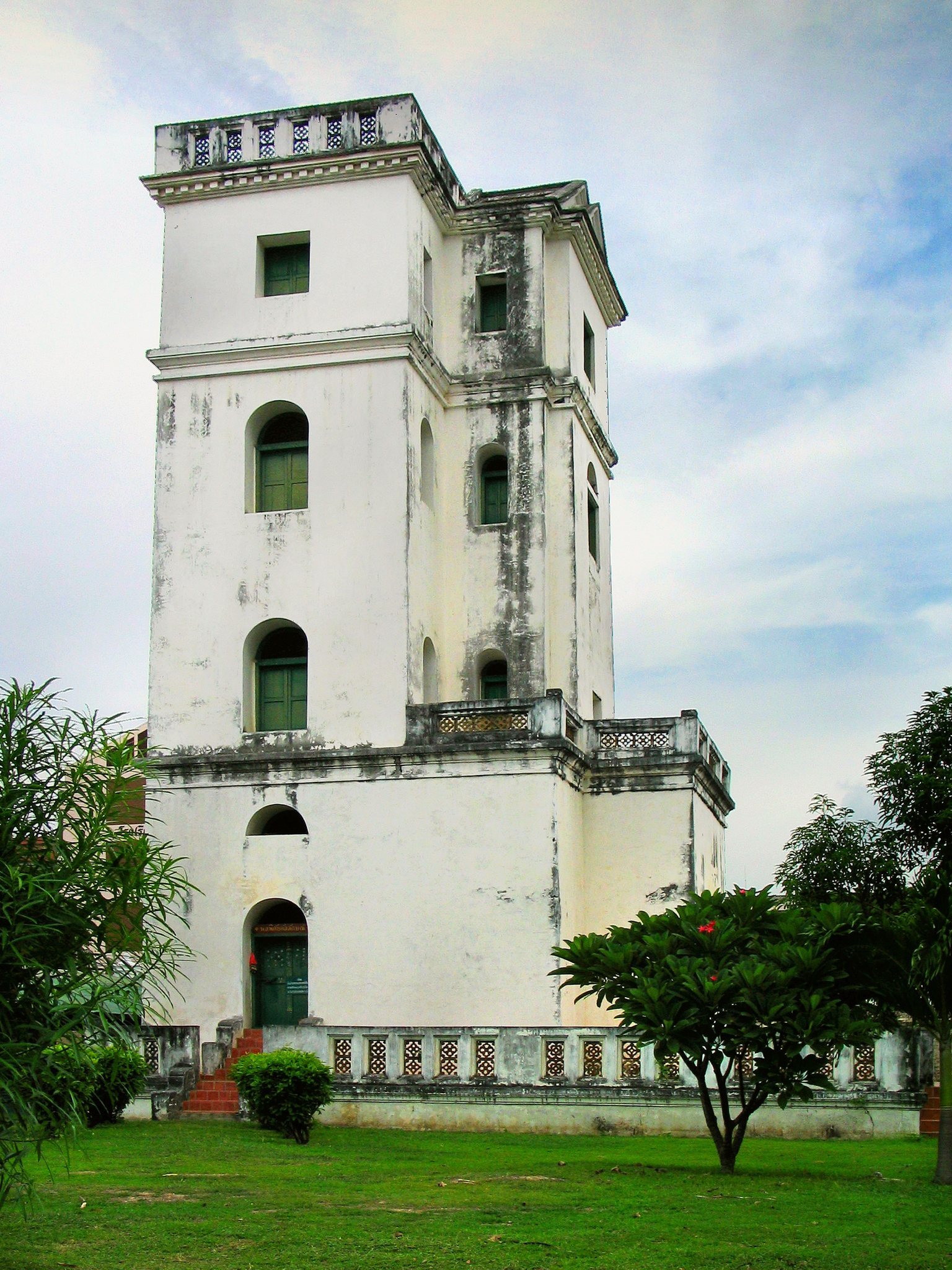
The Pisai Sayalak Tower is a four-storey brick structure in the southeastern part of the enclosure. Its European-style design was raised on foundations dating from the seventeenth century. Mongkut gave the tower its present name and installed a private observatory there, reflecting his interest in amateur astronomy.
Duek Mahatthai
Duek Mahatthai is a long former district administrative building extending along the southwestern wall. An airy terrace runs along the full length of its interior. The rooms contain old weapons, ceramics, bookcases decorated with black-and-gold lacquer painting, and an exhibition on life in the old capital.
Former royal stables
The former royal stables occupied a brick building in the northwestern corner of the grounds. The structure now houses the museum administration, preserving its place within the arrangement of the palace complex while serving a later institutional function.