Caves of Gargas: A Paleolithic Cave Art and Archaeological Site in France
Site at a Glance
- Popularity
- High
- Country
- France
- Primary era
- Stone Age
- Eras represented
- Stone Age
- Civilizations
- Unclassified
- Site type
- Civic
- Remains
- Rock Art
On this page12 sections
History
The Caves of Gargas are limestone caves at Aventignan, France, with evidence of human use from the Mousterian through the Middle Ages. The Mousterian was a Middle Paleolithic stone-tool tradition; later Paleolithic traditions represented at Gargas include the Aurignacian, Gravettian, and Magdalenian. The largest concentration of archaeological finds belongs to the Aurignacian, while most wall engravings are Gravettian and images in the upper cave are mainly Magdalenian.
Paleolithic occupation and imagery
Radiocarbon dates from animal and human-associated remains provide evidence of visits during the Paleolithic. A long-bone fragment from an animal identified as either cattle or bison dates to 31,540 ± 720 years BP. BP means before present, conventionally counted from 1950. A reindeer antler fragment dates to 25,050 ± 170 years BP. A bone splinter found in a crack in or near a hand-painted panel dates to about 26,860 ± 460 years BP. It points to visits in the late Aurignacian or early Gravettian, but does not establish when the hand images were made.
After the Gravettian occupation, the lower gallery, the cave porch, or both apparently filled in, leaving the caves inaccessible for a long period. Human visits had resumed by the fifteenth century, when graffiti appeared on the walls. The caves were probably known in local tradition by the late Middle Ages. François de Belleforest mentioned them in 1575, and Marc-François de Lassus gave a detailed description in 1758. Other wall marks include graffiti, crosses, crossbows, and a Christian invocation accompanied by a name; their dates are uncertain.
Exploration and later interpretation
Félix Garrigou found animal bones and a hearth near the present entrance in 1870. Félix Régnault investigated Bear Hall in 1873 and explored the natural bone-filled shafts known as the Gargas Oubilettes from 1884 to 1887. French prehistorians Émile Cartailhac and Henri Breuil also took part in investigations from the late nineteenth century. Régnault discovered the hand images in 1906.
In 1991, Jean Clottes observed numerous bone splinters lodged in and around the hand panel. The date of a splinter from this area supports an early visit, not a date for the artwork. Since the incomplete fingers in many images have attracted competing explanations, proposals have included ritual amputation, mourning, punishment, group identity, initiation, illness, frostbite, and deliberate finger-folding as a symbolic code. André Leroi-Gourhan proposed a hunter’s code, an idea later adopted by Marc Groenen. Michel Lorblanchet suggested that the images might serve as signatures of a clan or an artist. The cause remains uncertain.
A 2013 study by archaeologist Dean Snow compared hand and finger proportions with those of a modern student group. The method classified sex with about 60 percent accuracy in that group; applied to six Gargas impressions, it suggested that five were made by women. Later researchers questioned both the method’s limited accuracy and its application to Paleolithic people, and called for further testing of a more detailed hand-shape method before using it to interpret cave art. The caves have been classified as a French historic monument since 1910.
Remains
The caves lie in limestone at about 700 metres above sea level and have a known length of about 700 metres. They comprise upper and lower zones. The lower zone is about 140 metres long and 25 metres wide, with a curved, relatively regular outline. Niches and stalagmites divide it into three areas called Chambers I, II, and III.
Cave layout and wall art
Hand stencils
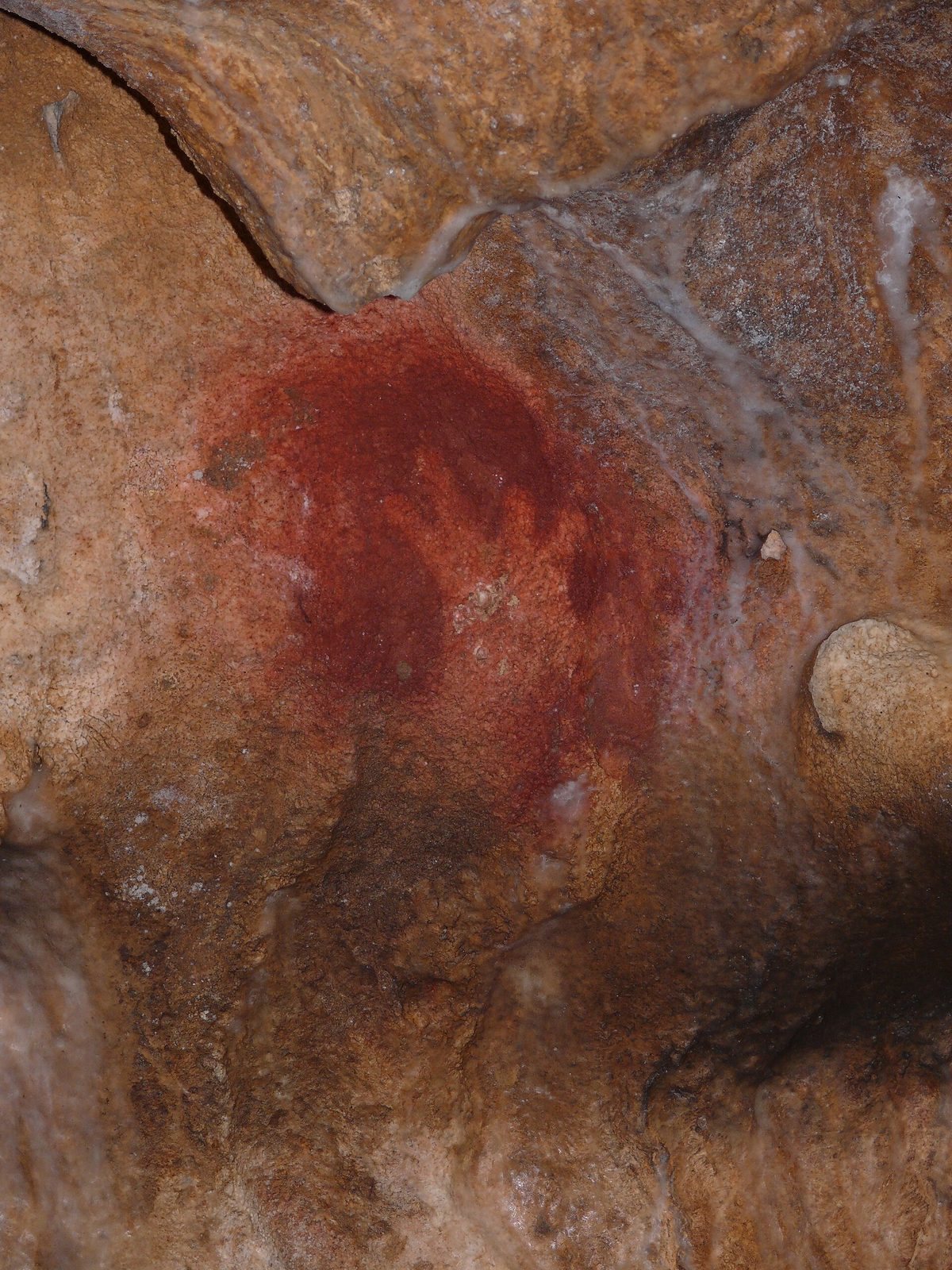
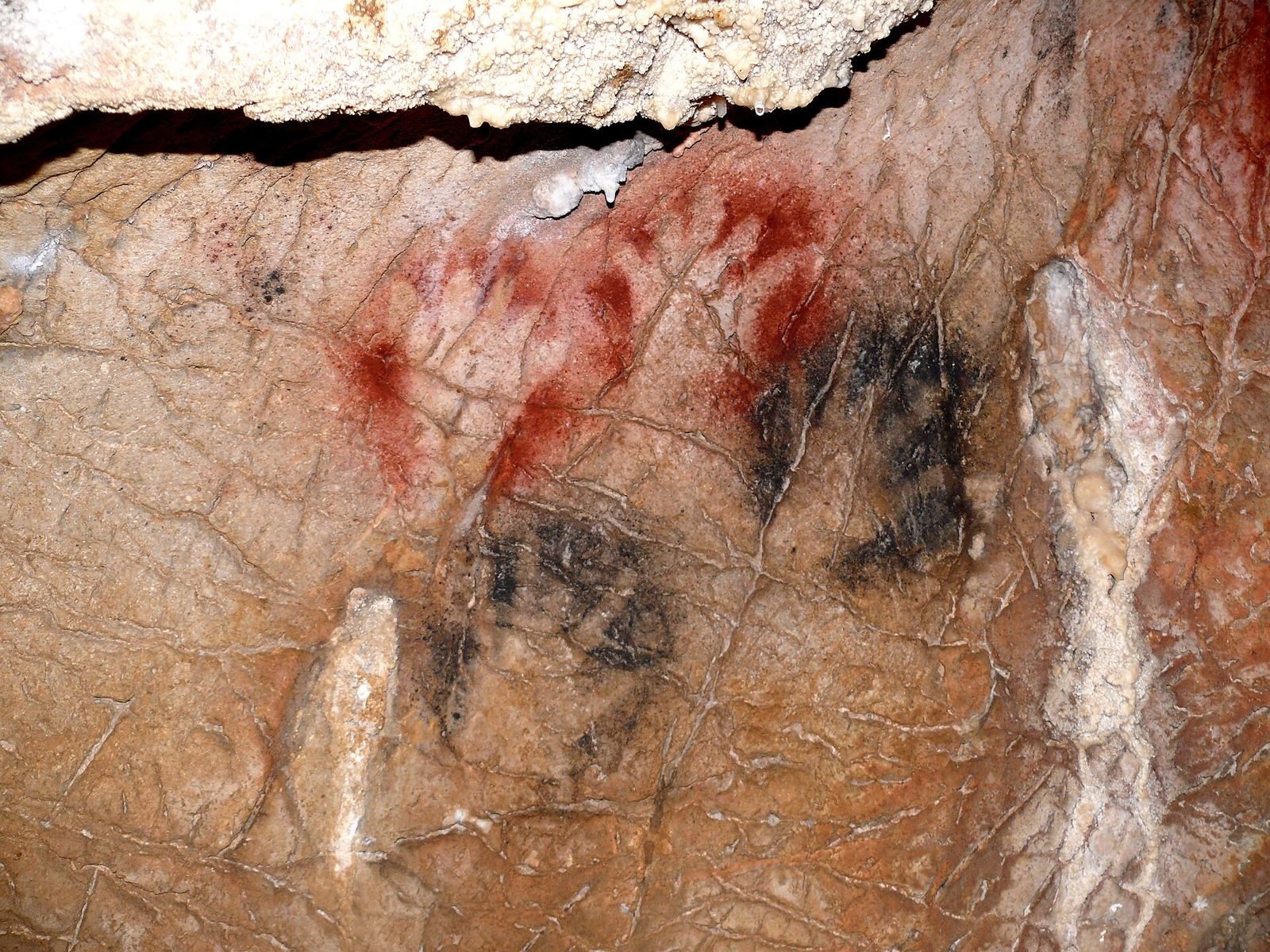
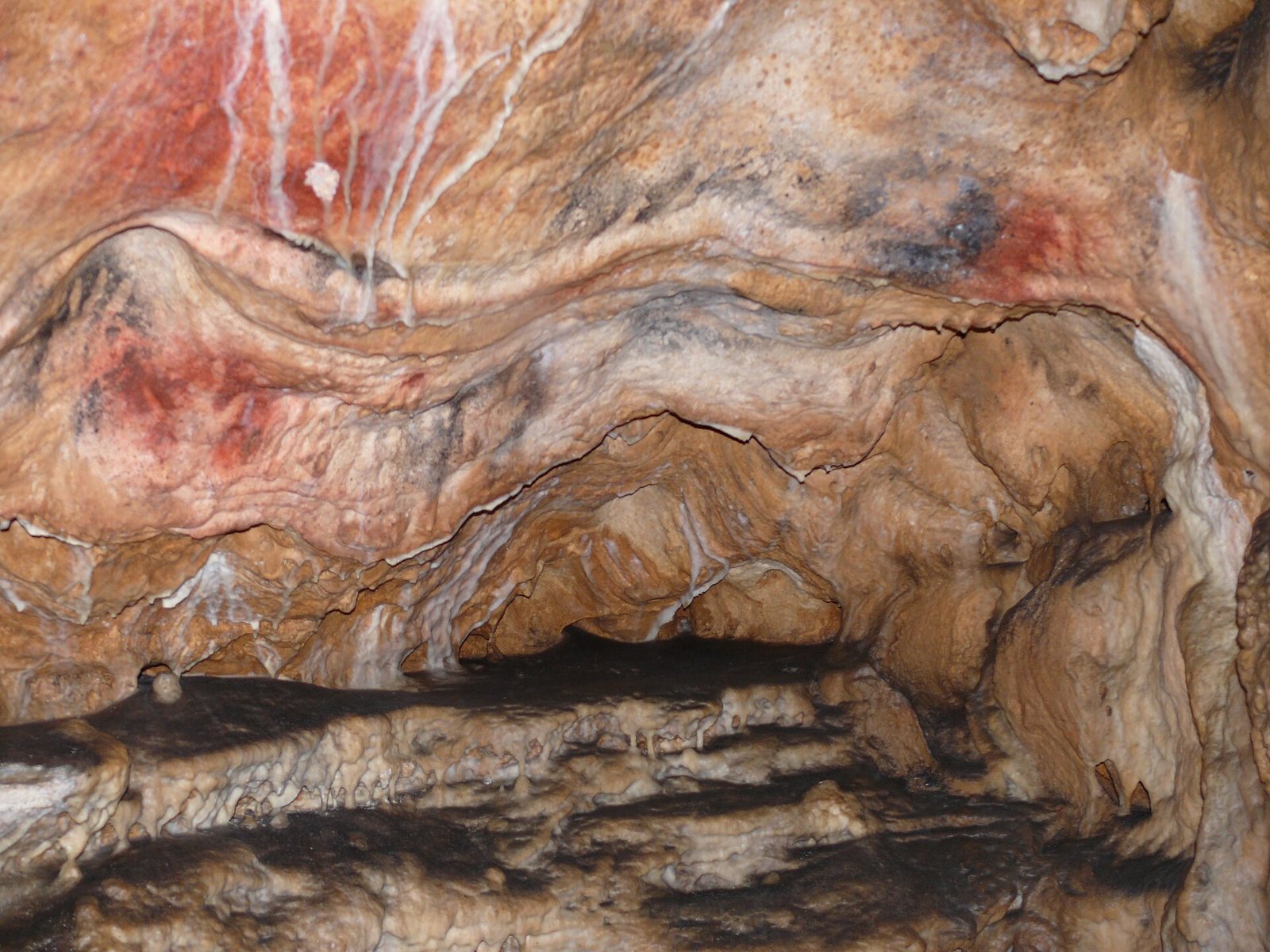
The Great Wall of Hands is in Chamber I, and the Alcove of Hands is in Chamber II. The latter name is used instead of Sanctuary of Hands so that it does not imply a religious purpose. Across the caves are 231 negative hand stencils, images made by holding a hand against a surface and spraying pigment around it. The palette includes red ochre and black manganese oxide, with ochre-toned images and one white example also described. The pigment mixture included ground iron and manganese oxides with animal fat. The hands have been attributed to people of both sexes and to ages ranging from infancy to adulthood. Some appear more than once, and many have shortened or incomplete fingers. Erosion and vandalism have damaged or erased some images.
These finger patterns have prompted varied interpretations, but none is established. Similar images with incomplete fingers occur at Tibiran, on the same mountain, and at Maltravieso in Spain.
Clay markings and engravings
In the lower cave’s Zone of Crevices, people dragged their fingers through soft clay to make designs. Interlaced, irregular lines cover more than 100 square metres of ceiling and extend across an area opposite Dungeon Passage. Meandering patterns also appear in the clay, and finger-traced designs occur elsewhere in the caves.
Figurative engravings depict horses, bison, aurochs, ibex, mammoths, deer, reindeer, and antelopes. Breuil described some bison images as reduced to basic lines. Another image shows a bird with a long beak and neck, an oval body, and long legs, but no tail; it has been compared to an ibis.
Occupation deposits and animal remains
Front occupation layers
The front part of the cave contains Middle and Upper Paleolithic occupation layers. A Gravettian layer included an engraved limestone slab alongside Noailles burins, narrow-edged stone tools used for engraving or cutting. A child’s jaw was found near animal remains, some burned or showing signs of processing, stone-working debris, and flint and quartzite tools. A fragment of a collarbone lay 30 centimetres from the jaw.
Bear Hall
Bear Hall contained remains of cave bears, horses, rhinoceroses, cattle, deer, and unidentified large felines. Water carried bones through the cave and deposited some along the sides of a stream. Bear claws also left scratch marks on the cave walls.
Gargas Oubilettes
The Gargas Oubilettes are natural vertical shafts, about 20 metres deep and branching in places. Their entrance openings measured roughly 38 to 61 centimetres across, and some bones lay in clay deposits. Finds attributed to the caves also include a wolf skull, a pierced bovid incisor, Gravettian stone tools, and a bone awl.
Cave-bear remains
In the lowest layer excavated so far, clay mixed with blocks of rock contained seven cave-bear bone or tooth remains with human-made scratches and indentations. Cave-bear bones and worked teeth were also found elsewhere. Skulls found outside the cave in 2005 had damage that may indicate removal of the part containing the teeth, especially the canines.